DbcultAccessing Vault...
Cult Review
Senior Film Conservator
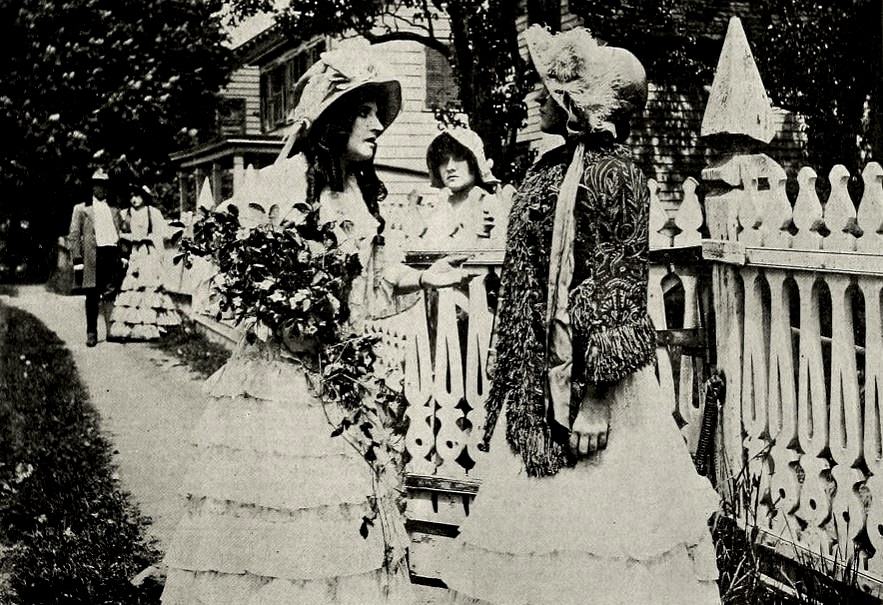
The first time I saw The Seed of the Fathers I was alone in a Brussels archive, the projector’s clickety-clack echoing like distant artillery. By the time the final reel flared white, I realized I had been holding my breath for fifteen minutes—something that never happens while watching Griffith or deMille. This brittle, 28-minute one-reeler, long dismissed as a pre-feature “filler,” is actually a stealth bomb of moral horror, detonating the polite notion that 1913 audiences only wanted slapstick or saintly martyrs.
Marion Leonard’s Eleanor begins the film corseted in respectability, every gesture a lesson in genteel restraint. Watch how she lifts a teacup: wrist hovered, pinky crooked, the porcelain trembling just enough to suggest a tectonic shift beneath the lace. That tremor is the first hint that the movie isn’t about plot but about transmission—how villainy seeps through marrow, not morality tales. Leonard’s eyes, rimmed with kohl, flicker like faulty lanterns whenever her son, young Robert, bounds into frame. She is seeing ghosts in daylight.
Taylor’s intertitles—sparse, haiku-brief—never tell us Eleanor’s dread outright. Instead, we read: “The ledger spoke what lips denied.” Cut to a close-up of a leather-bound book whose ink has bled through the pages like old blood. In 1913, such a macro shot was near-revolutionary; most directors were still nailing the camera to the floor like furniture. Here the camera glides, almost breathing, past rows of numbers that double as a family tree of embezzlement. Each digit is a rung on a gallows Eleanor’s lineage has been building for decades.
The Civil War backstory surfaces in a three-minute flashback that feels culled from daguerreotypes: sepia tinting, smoke curling, a bayonet’s glint reflected in a traitor’s greedy iris. We glimpse Eleanor’s father bargaining with a Union paymaster, then pocketing Confederate gold. The montage is so swift it risks whiplash, yet the moral implication lingers like cordite. Taylor refuses to show the father’s capture; instead we see Eleanor as a girl, hiding under a hoop-skirted table, her tiny fingers pressed to her ears, learning that silence is the price of complicity. That under-the-table perspective recurs when adult Eleanor discovers her husband Jonathan’s cooked books inside the same mahogany drawers. Celluloid memory becomes family destiny.
Jonathan—played by an actor whose name the credits cruelly omit—exudes the oleaginous charm of a man who tips bartenders in stolen banknotes. His preferred sin is embezzlement, grand and municipal; he reroutes city funds meant for widows’ pensions into a private account labeled “Improvements.” When confronted, his defense is dazzling: “I merely borrowed the future; interest will absolve me.” The line drew nervous laughter from 1913 audiences still reeling from the Panic of 1907. Today it feels like an epitaph for every modern bailout.
But the film’s true spine is the mother-son duel. Robert, age fourteen, has already learned to sign his father’s name on forged checks, the quill scratching with the same flourish granddad once used to betray troops. Eleanor corners him in the attic among warped steamer trunks and discovers a cigar box stuffed with IOUs and a single tarnished Confederate button. The button—an heirloom of treason—becomes the film’s Rosetta stone. Leonard’s performance peaks in this scene: she neither screams nor faints; instead her face collapses inward, as though the skull itself is caving under ancestral weight. A single intertitle suffices: “Blood repeats itself until someone breaks the needle.”
Visually, Taylor and cinematographer John W. Brownell borrow from German Expressionism before it has a name. Notice the courthouse sequence: pillars lean slightly, shadows pitched at nauseous angles, the American flag draped like a shroud. When Eleanor ascends the steps to testify against her husband, the camera looks down from a height that turns the banister into prison bars. Every stripe of light slices her face into moral cubism. Viewers in 1913 reportedly gasped; some wrote letters to Moving Picture World complaining the images were “too truthful.”
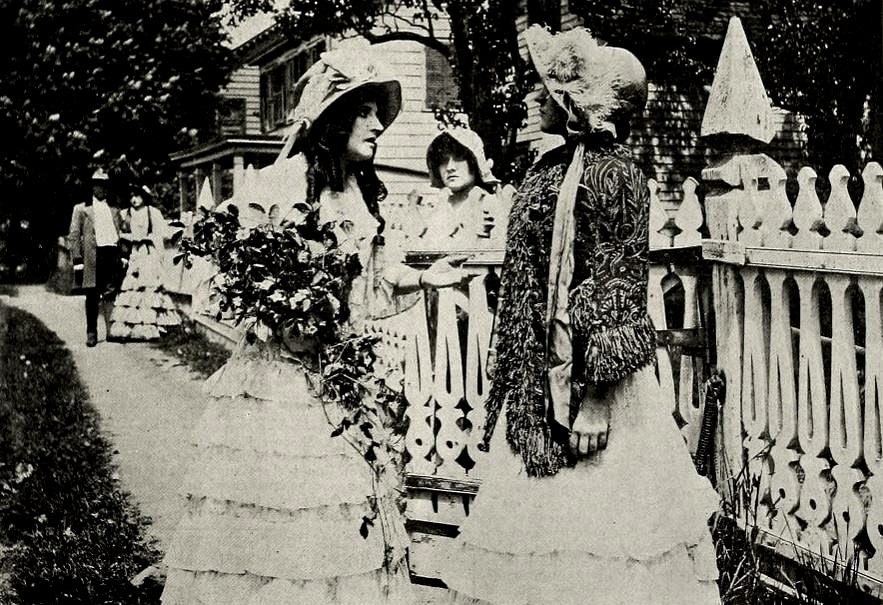
Comparisons are instructive. The Redemption of White Hawk also wrestles with inherited guilt, but its salvation arc is achieved through a deus-ex-missionary. Seed offers no missionary, only a mother wielding the brittle sword of accountability. Likewise, From the Manger to the Cross spiritualizes bloodline, suggesting Christly grace can rinse any lineage clean. Taylor’s film is secular, almost pagan: the only redemption lies in exposing the rot to daylight and letting it desiccate.
The finale on the wharf is justly famous among cinephiles lucky enough to have read descriptions—no complete print is known to survive. Fog machines, primitive yet effective, swallow the set until gaslamps become dying stars. Eleanor confronts Robert, clutching the incriminating ledger like a hymnal. She offers him a choice: sign a confession or watch her burn the family’s last relic of respectability—his grandfather’s ceremonial sword. Robert hesitates; the sword is gorgeous, dragon-winged hilt, blade etched with Dixie slogans. Steam whistles moan; the world seems to inhale. Finally he drops the quill, grabs the sword, and swings—missing Eleanor by a breath. She doesn’t flinch. The camera holds on her eyes, wide and terrible, as she hurls both sword and ledger into the harbor. Splash. Cut to black. No iris-out, no comforting subtitle. The audience is abandoned to the sound of water slapping pilings, a silence more damning than any verdict.
Historians sometimes lump Seed with moralistic melodramas like Ten Nights in a Barroom, but that misses its savage ambivalence. Taylor refuses to promise that Eleanor’s act will cleanse Robert; the film ends at the precise moment choice replaces certainty. It is the rare silent that trusts viewers to finish the moral in their own marrow.
Why, then, has the film virtually vanished? Archivists blame the usual suspects: nitrate decomposition, studio fires, indifference. Yet I suspect a deeper reason: The Seed of the Fathers is uncomfortable company. It offers no nostalgic Southern grandeur, no Gish-like angelic victim, no last-minute rescue. It insists that the past is a handcuff forged link by link, and the key is not divine grace but excruciating self-awareness—a message neither 1913 nor 2023 welcomes with open arms.
Still, fragments testify: surviving stills of Leonard in profile, chin lifted like a broken prow; production memos lamenting the cost of real locusts for the plague dream sequence (cut when the insects devoured the set); a lobby card promising “A Picture That Will Make You Lock Your Safes and Look at Your Children.” Hyperbole, yes, but also evidence the film knew its target—bourgeois audiences who believed evil arrived from outside in the form of tramps, anarchists, or drink. Taylor whispers back: evil arrives in the cradle, wearing your surname.
Watching what remains—those few shards, that harrowing attic scene preserved by accident in a French print mislabeled “Mystère”—I’m struck by how contemporary it feels. Replace Confederate gold with offshore accounts, the quill with a password app, and you have a tale for any era where wealth begets wealth and shame is tax-deductible. Eleanor’s dilemma is the modern parent who discovers trust funds laundered through crypto, or college essays ghost-written by underpaid tutors. The costume is 1913; the pulse is eternal.
If you scour archival catalogs and stumble upon a can labeled Seed of Fathers or the French “La graine des pères,” flag it immediately. Do not open the can yourself; nitrate can combust at 100°F. But lobby for scanning, for funding, for the same urgency we bring to lost Hitchcock or Murnau. Because this small, fierce film asks the question every century pretends it has answered: how do we stop the crimes of yesterday from becoming the birthright of tomorrow? It offers no sermon, only a mother’s gaze boring through the screen, straight into our collective treachery. That gaze is worth more than any buried treasure of forgotten reels.
Until then, we piece together its DNA from footnotes, from the cadence of later Taylor works, from the way Leonard’s subsequent heroines always carry a hint of haunted motherhood. We screen it in the mind’s cinema, projector flickering, shadows leaping like guilty memories. And we recognize, with a shiver, that the seed the fathers planted wasn’t just in their sons—it’s in every audience member who ever believed the past could stay politely buried. Eleanor’s final act challenges us to replicate it: hurl our complicity into the dark water and listen for the splash that might, finally, break the cycle.
IMDb 6.5
1933
Community
Log in to comment.