DbcultAccessing Vault...
Cult Review
Senior Film Conservator
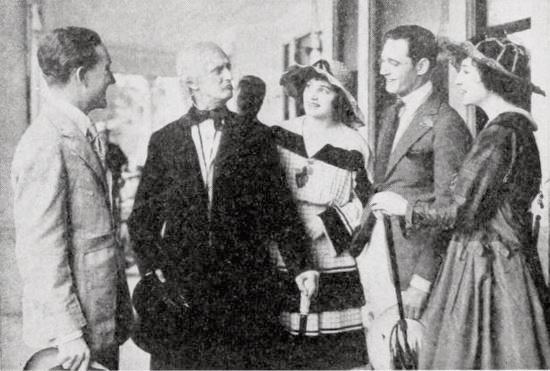
Stepping into the cinematic world of The Man Who Woke Up feels akin to unearthing a time capsule, a silent testament to a pivotal moment in American history and identity. This film, a poignant narrative from a bygone era, doesn't merely tell a story; it unravels a profound societal transformation through the intensely personal crucible of one man's struggle. It’s a compelling study in resistance, adaptation, and the often-painful process of societal evolution. As a film critic, I find myself drawn to its intricate portrayal of a South grappling with the echoes of its past and the siren call of a burgeoning, unified national identity.
At its core, the picture presents us with William Oglesby, portrayed with a compelling gravitas by George C. Pearce, an editor whose very being is steeped in the venerated, yet increasingly anachronistic, traditions of the antebellum South. His newspaper, the Oglesburg Clarion, is not merely a publication; it is a fortress, a last bastion of a fading ideology. Pearce imbues Oglesby with a palpable sense of dignity, even in his stubbornness, making his eventual awakening all the more resonant. He is a character who, despite his flaws, commands a certain respect, representing a generation wrestling with the ghosts of a devastating conflict and the bewildering pace of industrial progress.
The narrative truly ignites with the arrival of Thomas Foster, a Northern businessman and philanthropist whose very presence in Oglesburg acts as a catalyst for change. Foster, a figure of progressive ideals and economic dynamism, represents everything Oglesby vehemently opposes. The initial warmth with which the townspeople embrace Foster’s vision is a direct challenge to Oglesby’s authority and his carefully curated worldview. It’s a classic clash of titans, not of physical might, but of deeply ingrained philosophies. This dynamic immediately brings to mind the societal shifts explored in films like The Small Town Guy, where rural communities are confronted by external, modernizing forces. However, The Man Who Woke Up delves deeper into the ideological roots of this confrontation, making it a more profound examination of cultural identity.
What makes Oglesby’s resistance so compelling is its deeply personal nature. It isn't just a political stance; it's an existential one. His identity is inextricably linked to the 'Old South,' and Foster’s influence feels like an invasive species threatening the very ecosystem of his life. William V. Mong, who not only penned the screenplay but also features in the cast, crafts a script that masterfully illustrates this internal turmoil. Mong’s dual role as writer and actor suggests a profound understanding of the film's thematic heart, allowing for a nuanced portrayal of the era's complex sentiments. The pacing, typical of early silent cinema, allows these profound psychological shifts to unfold deliberately, inviting the audience to truly inhabit Oglesby’s perspective.
The dramatic tension escalates when Oglesby’s daughter, Edith, played with youthful charm and conviction by Pauline Starke, falls in love with Foster’s son. This romance is far more than a simple subplot; it is the linchpin that begins to dismantle Oglesby's rigid resolve. Starke’s performance captures the burgeoning independence of a young woman caught between her father’s entrenched beliefs and her own heart’s desires. The love story serves as a powerful metaphor for the reconciliation of North and South, a burgeoning unity that transcends historical animosities. It’s a familiar trope, yet here it feels fresh and vital, embodying the hope for a future unburdened by past grievances. The emotional weight of this forbidden love forces Oglesby to confront the human cost of his intransigence, making his ideological battle intensely personal and emotionally charged.
The casting here is particularly astute. Starke's chemistry with Darrell Foss, who plays Foster's son, feels authentic, creating a believable foundation for their bond. Their scenes together, often wordless, convey a depth of emotion that speaks volumes, a testament to the power of silent acting. This youthful romance introduces a generational dynamic that further complicates Oglesby’s position. He is not just fighting an external force; he is fighting the future, a future embodied by his own daughter’s happiness. This internal conflict is beautifully articulated through subtle gestures and expressions, a hallmark of the era’s finest performances.
Perhaps the most subtle, yet equally impactful, force eroding Oglesby’s resistance comes from within his own household: his wife, Sylvia, portrayed by Estelle Evans. Evans delivers a nuanced performance as a woman initially loyal to her husband’s convictions, but gradually, almost imperceptibly, drawn to Foster’s progressive ideals. Her conversion is not a dramatic rebellion but a quiet acceptance of what seems inherently better, more forward-looking. This aspect of the narrative is particularly insightful, illustrating how societal change often percolates from the domestic sphere outwards. Sylvia’s journey reflects the broader societal shift, demonstrating that progress isn’t always imposed but often embraced by those who recognize its inherent value.
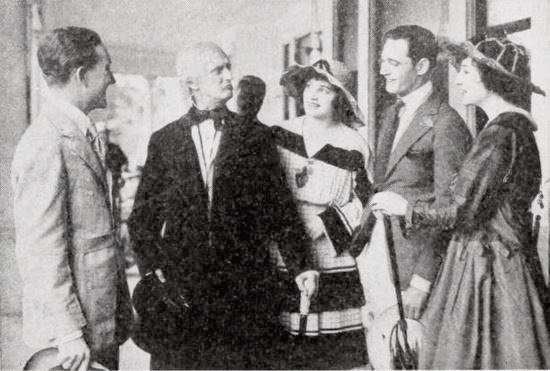
Estelle Evans’ portrayal of Sylvia is a masterclass in understated acting. Her expressions, her gradual shift in demeanor, convey a woman who is thinking, evolving, and ultimately, choosing a path that diverges from her husband’s. This creates a compelling parallel to the external conflict, suggesting that even the most formidable fortresses of tradition can be undermined by the quiet logic of progress. The film brilliantly uses Sylvia's character to show that the 'new order' isn't just about industry and commerce; it's about new ways of thinking, new social values, and a more inclusive vision for the future. Her quiet defection from Oglesby’s rigid stance serves as a powerful symbol of the inevitable shift that was sweeping the nation, making the personal political in the most intimate way.
The climax of The Man Who Woke Up is not a grand battle or a dramatic confrontation, but a profound internal shift within Oglesby himself. When faced with the undeniable reality of his daughter’s happiness and his wife’s quiet conviction, his stubborn resistance finally crumbles. This 'waking up' is not a sudden epiphany but the culmination of relentless pressure, both external and internal. It's a moment of surrender, yes, but more importantly, a moment of profound growth and acceptance. The film doesn't portray this as a defeat, but as a necessary evolution, a testament to the human capacity for change and adaptation. It’s a powerful statement on the futility of clinging to the past when the present and future demand a different perspective.
The nuanced portrayal of this transformation is where the film truly shines. It avoids simplistic good-versus-evil narratives, instead presenting a complex tapestry of human motivations. Oglesby’s acceptance is not a betrayal of his Southern heritage but an integration of it into a broader, more inclusive national identity. This theme resonates deeply, particularly when considering other films that explore societal transformation. For instance, while The Bondman might focus on more overt forms of societal rebellion, The Man Who Woke Up focuses on the subtle, yet ultimately more pervasive, shifts in individual and collective consciousness. It’s a powerful reminder that true progress often begins not with a revolution, but with a change of heart.
The film, directed with a clear vision, perhaps by a hand less celebrated in history but no less impactful in its execution, manages to encapsulate a crucial period of American reconciliation and industrial expansion. The performances, not just from the main trio but also from supporting cast members like Alberta Lee, Jim Blackwell, Harry Depp, George Hernandez, and Jean Calhoun, collectively build a believable community, making Oglesburg feel like a real place on the cusp of profound change. Their collective portrayal of townsfolk shifting allegiances and adapting to new realities adds layers of verisimilitude to the central conflict. It’s a testament to the power of ensemble acting even in the silent era, where every gesture and expression carried significant weight.
What strikes me most about The Man Who Woke Up is its timeless message. In an age where societies constantly grapple with technological disruption, cultural shifts, and the clash of entrenched ideologies, Oglesby’s journey remains profoundly resonant. His struggle to reconcile tradition with progress, to accept that which is new without entirely abandoning the old, is a universal human experience. It reminds us that progress is often uncomfortable, challenging our deepest-held beliefs, but ultimately necessary for growth. The film doesn't preach; it observes, allowing the audience to witness the slow, arduous process of change unfold.
Comparing it to other works of its time, one might see echoes of the internal conflict presented in Through the Valley of Shadows, though the shadows here are cast by history and prejudice rather than overt danger. Or perhaps the quiet domestic battles of In the Prime of Life, where generational divides also play a crucial role. Yet, The Man Who Woke Up distinguishes itself through its specific focus on the post-Reconstruction South, offering a nuanced perspective on a complex historical period. It’s a film that asks us to consider not just what we gain with progress, but what we risk losing, and how we might integrate the best of the old with the promise of the new.
The film’s portrayal of the Oglesburg Clarion is particularly noteworthy. It underscores the vital role of media in shaping public opinion and reflecting societal values. Oglesby’s newspaper is his voice, his pulpit, and his last stand. The eventual softening of his editorial stance, mirroring his personal transformation, is a subtle but powerful commentary on the evolving role of journalism in a changing world. It speaks to the responsibility of those who wield words to adapt, to inform, and ultimately, to foster understanding rather than division. This aspect alone makes the film a valuable historical artifact for media studies, showcasing how even in its nascent forms, journalism was a battleground for ideas.
In conclusion, The Man Who Woke Up is far more than a historical curiosity. It is a profound human drama, a testament to the enduring power of narrative to explore complex societal themes through the lens of individual experience. It’s a film that resonates because it speaks to the universal challenge of confronting change, of letting go of cherished beliefs, and of finding a new path forward. It’s a film that, in its quiet power, truly awakens the viewer to the intricate dance between tradition and progress, leaving a lasting impression long after the final frame fades to black. A truly essential watch for anyone interested in the social fabric of early 20th-century America and the timeless struggles of human adaptation.
IMDb —
1919
Community
Log in to comment.