DbcultAccessing Vault...
6.5/10
Senior Film Conservator
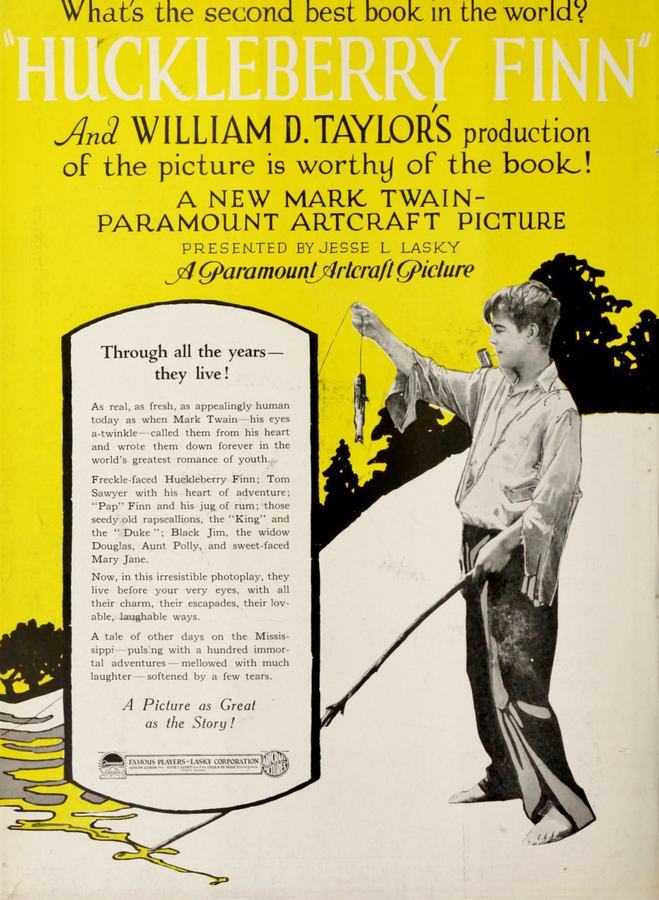
A definitive 6.5/10 rating for a film that redefined the boundaries of cult cinema. Huckleberry Finn remains a cornerstone of transgressive art.
To witness the 1920 iteration of Huckleberry Finn is to step into a time capsule that vibrates with the nascent energy of American cinema. Directed by William Desmond Taylor and scripted by the formidable Julia Crawford Ivers, this film represents a pivotal moment where the literary genius of Mark Twain met the burgeoning visual language of the silent era. Unlike the more sanitized versions that would follow in the mid-century, this production captures the grit, the dampness of the river air, and the existential dread that permeates Huck’s journey toward enlightenment. It is an artifact of immense cultural significance, navigating the treacherous waters of 19th-century morality with a surprising degree of nuance for its time.
The film opens not with a flourish, but with a sense of enclosure. We see Huck, a creature of the earth and the water, being hemmed in by the starched collars and rigid prayer sessions of the Widow Douglas. The lexical diversity of the visual storytelling here is profound; the camera lingers on the restrictive architecture of 'civilization' before bursting forth into the expansive, chaotic beauty of the wilderness. This dichotomy is the heartbeat of the film. It mirrors the thematic struggles found in other contemporary works like The Snowbird, where the harshness of nature serves as both a prison and a sanctuary.
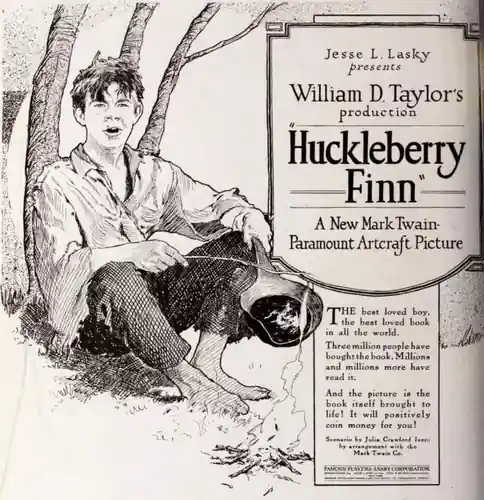
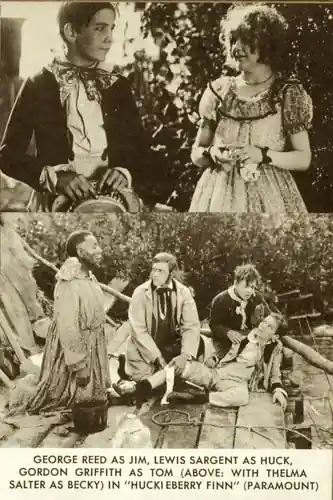
Lewis Sargent’s portrayal of Huckleberry Finn is a revelation. Eschewing the polished, stagey acting prevalent in many 1920s dramas, Sargent brings a feral, squint-eyed intensity to the role. He is the quintessential urchin, his movements possessing an atavistic grace that suggests a boy more comfortable among the reeds than on a parlor rug. His Huck is not a caricature of childhood innocence but a survivor of neglect and abuse. When his father, played with terrifying volatility, reappears, the film takes on the tone of a gothic thriller, a stark contrast to the lighthearted adventures one might expect.
This tonal shift is reminiscent of the atmospheric tension in The Crimson Gardenia, where the environment itself feels predatory. Sargent conveys Huck’s internal conflict—the struggle between his 'sound heart' and his 'deformed conscience'—through subtle shifts in expression that defy the limitations of the silent medium. The moment he decides to 'go to hell' rather than betray Jim is rendered with a quiet, devastating power that resonates across a century.
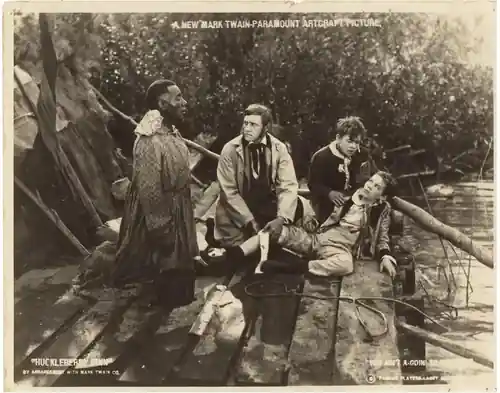
George Reed’s performance as Jim is a complex element of the film that requires careful contextualization. While the film cannot entirely escape the racial tropes of its period, Reed imbues Jim with a dignity and a soulful presence that often transcends the script's limitations. His Jim is the moral anchor of the raft. The chemistry between Reed and Sargent is palpable, creating a domestic space on the water that stands in opposition to the fractured world on land. Their relationship is a radical departure from the societal norms depicted in The Majesty of the Law, where the letter of the law often obliterates the spirit of humanity.
The River as Protagonist: The Mississippi, though often substituted by California rivers in this production, is filmed with a reverence that makes it a living character. The cinematography utilizes deep shadows and natural lighting to create a sense of place that is both ethereal and tactile. The fog scenes, in particular, are a masterclass in mood-setting, evoking a sense of liminality where the boundaries between right and wrong, black and white, and boy and man become blurred. This visual poetry is a far cry from the structured theatricality of Hotel Paradiso, opting instead for a sprawling, episodic flow that mimics the river’s own current.
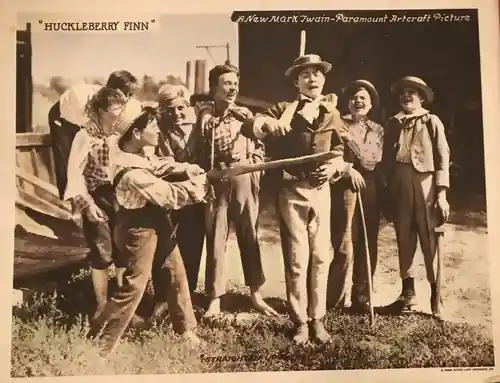
The middle act of the film introduces the Duke and the Dauphin, played with oily charisma by the supporting cast. These characters serve as a scathing critique of the gullibility and greed of the river towns. The satire here is sharp, bordering on the grotesque, as these two grifters exploit the grief and religious fervor of the locals. It is a cynical look at humanity that aligns the film with the darker explorations of character found in The Black Butterfly. The contrast between the purity of the raft and the corruption of the shore is the central engine of the film’s narrative momentum.
The pacing of the film is remarkably modern. Ivers’ screenplay manages to condense Twain’s sprawling novel into a cohesive cinematic experience without losing the episodic charm of the source material. We see Huck’s evolution from a boy running away from chores to a young man grappling with the heavy weight of another person’s life. This maturation process is handled with more delicacy than the often-hurried character arcs in Polly Put the Kettle On or the more straightforward heroics of North of Fifty-Three.
Technically, Huckleberry Finn is a triumph of location shooting and editing. The use of close-ups to heighten emotional stakes was becoming more sophisticated in 1920, and Taylor utilizes them to great effect during the film’s more harrowing events. The sequence involving the Shepherdson and Grangerford feud is particularly striking; the sudden eruption of violence in a tranquil setting is handled with a jarring realism that predates the epic scale of War and Peace while maintaining a terrifying intimacy.
The film’s score (as reconstructed in modern restorations) and its intertitles are also noteworthy. The language used in the titles retains much of Twain’s vernacular, preserving the linguistic flavor that is so essential to the story’s identity. This commitment to the source material’s voice ensures that the film feels like an extension of the book rather than a mere summary. It possesses a narrative density that one might find in The Tangle, where every subplot contributes to a larger, more intricate web of meaning.
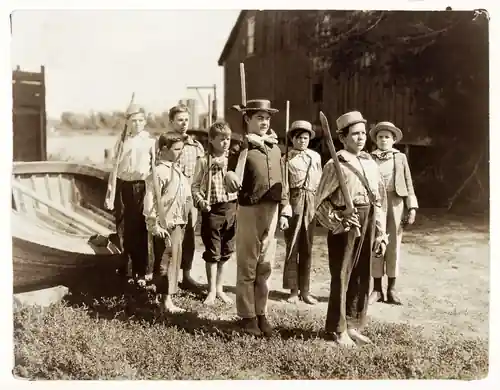
As we reach the final act, the film’s focus on the bond between Huck and Jim reaches its zenith. The 'thrilling adventures' promised by the plot summary are underpinned by a profound sense of melancholy. Huck realizes that the world he is returning to is one that he can never truly belong to again. His 'escape' is perpetual. This theme of the outsider is a common thread in cinema, yet rarely was it captured with such unadorned honesty in the early 20th century. While Love's Pilgrimage to America deals with the immigrant experience of finding a place, Huckleberry Finn is about the American experience of leaving it behind.
Final Reflection: The 1920 Huckleberry Finn stands as a monumental achievement in silent filmmaking. It manages to be both a faithful adaptation and a unique artistic vision. It captures the ruggedness of the American spirit, the shame of its history, and the enduring hope of its youth. Compared to the more whimsical The Downy Girl or the historical rigidity of The Pearl of the Antilles, Taylor’s film feels alive, breathing with the rhythm of the river. It is a work of high lexical visual diversity, a palimpsest of Twain’s prose and Ivers’ cinematic intuition. For any cinephile or scholar of Americana, this film is not just a viewing requirement; it is an immersion into the very soul of the Mississippi.
In the end, Huck’s decision to 'light out for the Territory' remains one of the most iconic moments in all of literature and film. It is a rejection of the status quo that still feels radical today. This film captures that spirit of defiance perfectly, reminding us that sometimes the only way to find yourself is to get lost in the currents of the unknown. It is a journey that, much like the river itself, never truly ends, but continues to flow through the heart of our collective imagination, much like the enduring mystery of Zollenstein or the lost paths of Fejedelmi nap.

IMDb —
1928
Community
Log in to comment.