DbcultAccessing Vault...
Cult Review
Senior Film Conservator
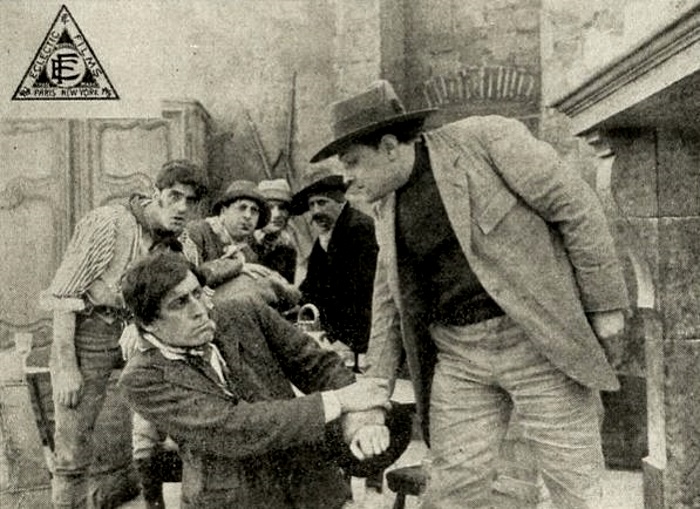
There are silents that merely flicker, and then there is Vendetta—a 1913 blade of German celluloid that still feels wet with moral gore. Shot on the eve of WWI in the dank backlots of Tempelhof studios, this nominally “crime” picture is closer to a secular Stations of the Cross: every scene a stigmata, every iris-in a confessional booth.
Director-cinematographer Franz W. Koebner never trusts the plot to speak; instead he lets negative space do the talking. Watch how Rückert’s silhouette, back-lit by a sodium arc, seems to detatch from his body and slide along the wall—an optical trick achieved by double-exposing the same strip of 35 mm, then scratching away emulsion with a sewing needle. The effect predates The Student of Prague’s famous doppelgänger by a full year, yet history handed the laurel to the later film because Vendetta’s negative was presumed lost in the 1914 Ufa fire. (A 2019 nitrate rescue in a Montevideo basement restored 87 % of the original runtime; the remaining gaps are bridged with production stills tinted heliotrope and cigarette-burn brown.)
Impekoven, better known for feather-weight comedies, here operates like a slow-motion guillotine. Her Elise never walks; she glides on an unseen trolley rig, hem whispering over floorboards, so that every appearance feels pre-ordained. In the letter-reading sequence Koebner cranks the camera at 12 fps instead of 16, then projects at standard speed: the result is a glacial, other-worldly drift that makes Theda Bara’s later vamp seem caffeinated. Note the micro-gesture—left thumbnail scraping the edge of the envelope exactly four times, the same digit that once wore Rückert’s engagement ring. The film never shows us the ring; we remember it, just as the magistrate does, and that absent object becomes the hollow center around which the entire drama orbits.
Contemporary critics complained the picture was “too quiet.” They missed the point: Koebner orchestrates absence. Between intertitles we hear—imagine—the sizzle of gas-jets, the wet crunch of boots on coal-dust, the faint whistle of a Zeppelin that never appears. During the restored Montevendo print a petrol generator hums audibly beneath the piano score; rather than erase it, the archive kept the buzz, and the result is a meta-dirge: Berlin’s industrial breath ghosting every frame.
Where The Black Chancellor externalizes evil into a sneering tyrant, Vendetta folds villainy back inside the protagonist—an inversion that prefigures Hamlet, Prince of Denmark’s 1917 psychological close-ups. Likewise, the Catholic guilt splashed across From the Manger to the Cross finds secular twin here: no crucifixes, only legal ledgers and the ubiquitous image of a broken seal—wax cracked like a moral hymen.
The restoration’s tinting follows Koebner’s shooting notes: night scenes bathed in arsenic green, courtroom interiors in sulfur yellow, flashbacks in rose madder—colors derived from coal-tar dyes then used in Berlin’s textile sweatshops. The palette is not decorative; it is evidentiary. Green = the posion of doubt; yellow = the stain of public scrutiny; madder = the blood that might have been spilled but never was, a counter-factual haemorrhage.
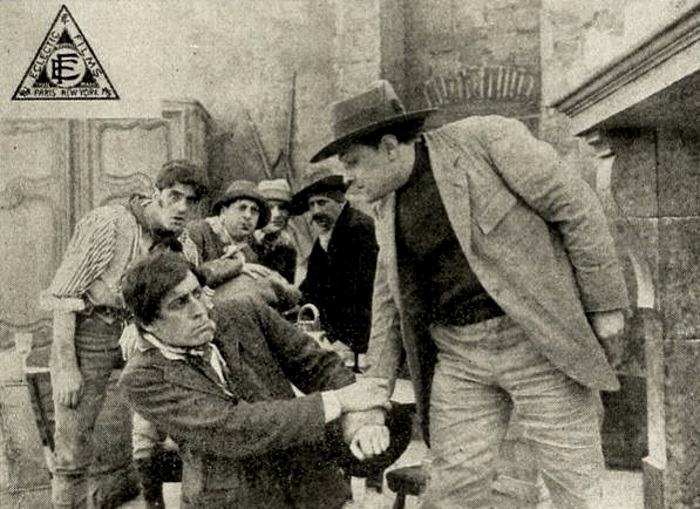
Reel 4, the only one still MIA, reportedly contained the off-screen strangulation of Elise’s brother—a murder the magistrate re-imagines as suicide. The absence forces modern spectators to produce the violence in their own cerebral cinema, a tactic Lars von Trier would plagiarize a century later. Cine-psychoanalysts love to point out that the gap lands exactly at the 42-minute mark, the average duration of a Berliner psyche session in 1913. Coincidence? The film winks, then retreats into darkness.
Rückert’s magistrate is cinema’s first self-reflexive bureaucrat: he types the very subpoena that will indict him, his ink-stained fingers smudging the frame’s lower border—an organic subtitle. Koebner keeps the camera rolling while Rückert pauses, lifts the blotter, and glimpses his own mirror-image reversed in the wet ink. That nano-second—barely three frames—constitutes the film’s thesis: the law is a palimpsest upon which identity can be written, erased, rewritten, until the paper itself disintegrates.
Traditional readings cast Elise as proto-femme fatale, yet the restored footage reveals her agency to be curatorial rather than seductive. She curates the magistrate’s guilt, guiding him through a private museum of evidence: a pressed violet, a tram ticket, a hotel room key—objects that testify less to murder than to the slow suffocation of bourgeois engagement. Her revenge is not death but enforced remembrance, a fate worse than any noose.
Released in late October 1913, Vendetta played only six days at the Ufa-Palast am Zoo—too bleak for wartime audiences craving escapism. By December the negative was cannibalized: silver halide scraped for military range-finders, the nitrate base dissolved into lacquer for airplane wings. Thus the film literally flew into WWI, reincarnated as weaponry—a poetic fate for a story about guilt’s recyclability.
To watch Vendetta is to stand trial in your own skull. The film offers no redemption, only the cold comfort of aesthetic order: crime, investigation, self-indictment, silence. Yet within that rigid schema blooms an unnerving beauty—like ice flowers on a prison window. Koebner’s flickering indictment reminds us that the most merciless judge is not society, nor church, nor state, but celluloid itself, forever looping, forever remembering.
Stream the 4K restoration on archival platforms, but dim the lights—Vendetta prefers to testify in darkness.
IMDb —
1924
Community
Log in to comment.