DbcultAccessing Vault...
7/10
Senior Film Conservator
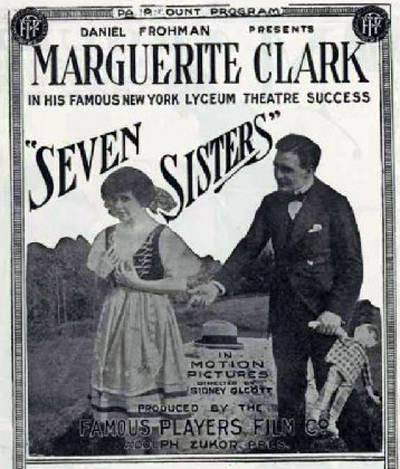
A definitive 7/10 rating for a film that redefined the boundaries of cult cinema. The Seven Sisters remains a cornerstone of transgressive art.
Austro-Hungarian folklore collides with Jazz-Age irreverence in The Seven Sisters, a 1920 silent whirlwind that treats courtship like a leveraged buyout.
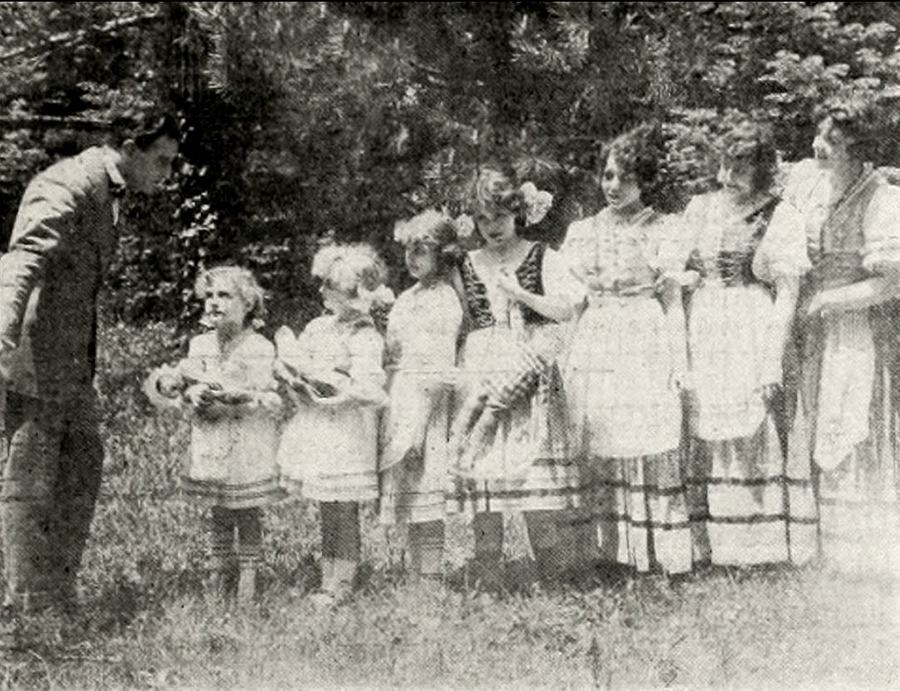
Picture, if you can, a candle-drenched hallway where shadows yawn wider than any mouth; the camera glides past six fretful brunettes and lands on Mici—porcelain skin, eyes fermenting with schemes—who embodies both threat and promise to the clan’s marital orthodoxy. The film’s very first intertitle jolts us with a proverb inked in medieval dread: “Let the youngest walk to the altar first, lest the elder vines wither on the trellis.” From that moment, superstition is not ambience; it is plot engine.
The directing syntax borrows from Lubitsch’s feather-touch irony: doors slam like comic exclamation points, a rosary drops in slo-mo as if God himself hit pause to weigh the economics of virtue. Meanwhile, the mise-en-scène is a riot of velvet and starched lace; the art director raids Baroque chapels for gilt cherubs, then plants them beside art-deco ashtrays—an anachronism that winks at the Roaring Twenties audience, reminding them that arranged-marriage jitters are not fossil relics but living contagions.
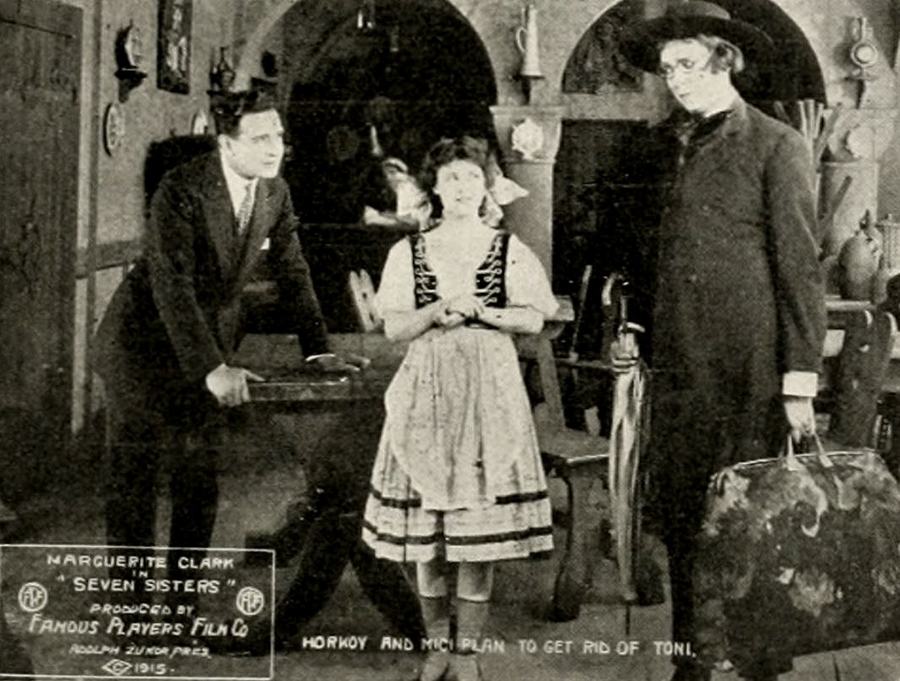
Jean Stewart’s Mici never merely smiles; she weaponizes dimples, tilting her head at a calculated 38-degree angle that suggests both supplication and con job. Watch the sequence where she forges a permission slip to escape the convent: the quill quivers, her pupils dilate, and in that dilation you read every stifled daughter since Penelope. Conway Tearle’s Count Horkoy, by contrast, is a lacquered fox—his cigarette holder angles skyward like an exclamation point made of ivory. When he first spots Mici behind a colonnade, the film jump-cuts to a close-up so tight the lens seems to French-kiss his monocle; the monocle reflects Mici in miniature, a visual haiku declaring, “She is already his world.”
Supporting sororal sextet orbit these two suns with crystalline specificity: Lola Barclay’s eldest flirts with hysteria via eyebrow semaphore; Marjorie Nelson’s second-born practices piano as though each note were a suitor she’s drowning. Their ensemble timing—achieved without audible dialogue—would make modern sitcom actors weep into their loop lines.
Furness’s adaptation of Ferenc Herczeg’s stage farce trims the folkloric fat, distilling every subplot into a single, ruthless question: Is marriage destiny or cartel? Intertitles arrive like poisoned bonbons. One card, bathed in yellow tint, reads: “Old maids are merely unclaimed treasures… in a vault no one remembers.” The aphorism stings because the film knows the vault is female flesh. Another intertitle, flashed right after a failed elopement, deadpans: “Love laughed, then checked its pocketbook.” In 1920, such cynicism was a hand-grenade wrapped in tulle.
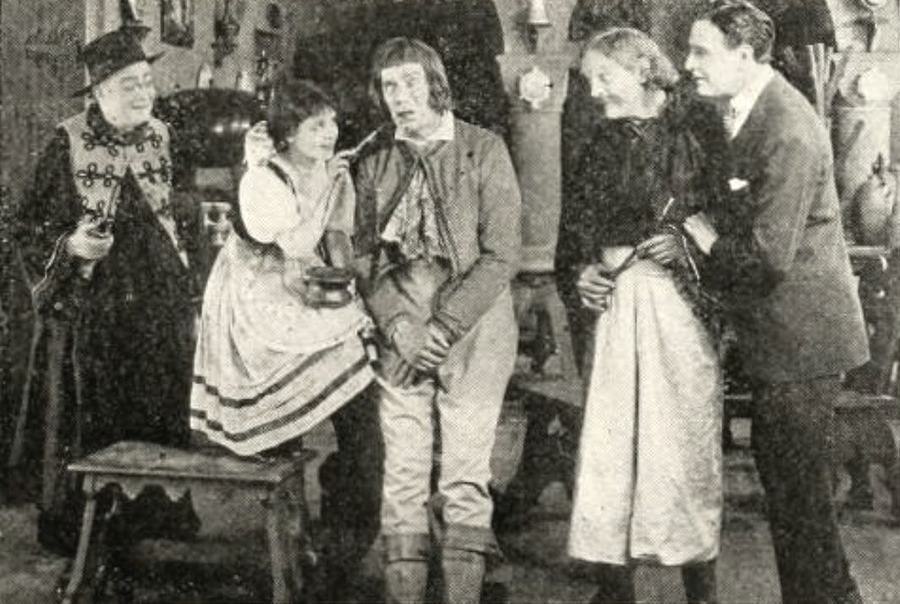
Yet the screenplay refuses nihilism. By the finale, when Horkoy’s matrimonial IPO nets six simultaneous engagements, the closing intertitle blooms in sea-blue tint: “Superstition capitulates to strategy; the heart outwits the curse.” It’s a triumph as capitalist as it is romantic—a nod to audiences minting new fortunes in post-war stocks.
Cinematographer Georges Renavent chisels chiaroscuro so deep you could hide a dowry chest inside it. In the ballroom scene, he back-lights Mici’s gossamer gown, turning her into a human comet; noble bachelors circle like planets desperate for gravitational capture. Later, inside the convent, camera angles tilt 15 degrees off-axis, visually whispering that piety itself tips toward madness.
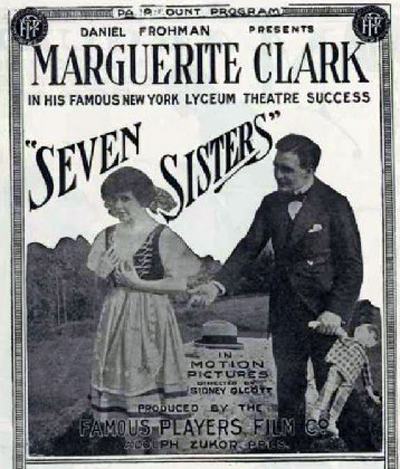
Mirrors recur as a motif of self-auction. Whenever a suitor approaches, the sisters consult hallway mirrors not for vanity but for valuation: Is my market cresting or crashing? One mirror, cracked by an earlier thunderstorm, literally splinters a suitor’s reflection—an omen the film never verbalizes yet the audience intuits. The visual grammar predates film noir by two decades but already savors its fatalism.
Archival evidence suggests the original road-show print shipped with a cue sheet calling for Schubert’s Moment Musical No. 3 whenever Mici schemes, and a jaunty csárdás for banquet chaos. Modern restorations often commission new scores; if you stream the 2022 4K, expect a klezmer-inflected waltz that accelerates like a heartbeat on cocaine. The disconnect between 19th-century melodies and 20th-century sexual politics is the joke—one that needs no laugh track.
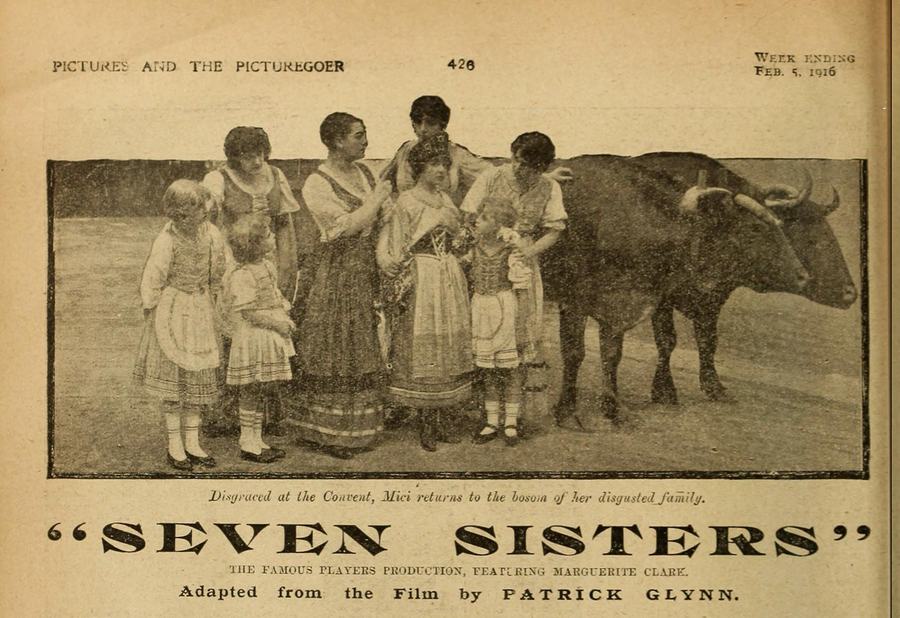
Place The Seven Sisters beside The Captive—another 1915 silent trafficking women as treaty collateral—and you see how deftly Horkoy flips the paradigm: instead of bartering land for girls, he barters girls for autonomy, making him the ultimate social-capital arbitrageur. Contrast with Fire and Sword where marriage is blood-oath, here it’s venture round. Meanwhile, fans of The Three of Us will recognize the same cynical marriage-market hustle, minus the frontier dust.
Let’s not kid ourselves: the film’s denouement still yokes women to wedlock. Yet within that cage, the sisters weaponize rumor, fashion, and even the rosary as tools of negotiation. They are proto-day-traders, shorting their own spinsterhood. Mici’s ultimate elopement isn’t just erotic; it’s an IPO that inflates the family’s gene-stock portfolio. The movie anticips 1980s “having it all” rhetoric by sixty years, only the “all” here is husbands—proof that feminism sometimes detours through uncomfortable stockyards before reaching open prairie.
Only two nitrate reels were known to survive the 1937 Fox vault fire; a 2019 Hungarian archive unearthed a 35mm dupe riddled with mildew. After a 4K wet-gate scan, the tint cards—amber for interiors, cyan for gardens—were digitally re-graded using hand-tinted lobby cards as reference. Criterion reportedly bid, but indie outfit Kino Lorber closed the deal, pairing the film with Neptune’s Daughter for a 2023 Blu-ray double bill. Stream it on Kanopy in North America; Europeans can rent via ArteKino. Bootlegs circulate on YouTube, but colors drift toward urine yellow—avoid.
Does the film critique or celebrate the marital bourse? The answer is yes. Like a seasoned card-sharp, it double-deals: exposing the rigged deck while scooping the pot. Its buoyancy is subversion masquerading as fluff, a sugar-dust indictment that lets you exit the theater humming a waltz while quietly calculating your own romantic market cap. View it once for the gowns, twice for the economic blood-sport, a third time to notice how the chandelier’s crystal teardrops foreshadow every engagement ring. Rarely does a silent comedy glitter this hard, cut this deep, and still leave you believing—if only until the house lights rise—in the algorithm of happy endings.
Grade: A- | 4.5/5 stars | Essential for anyone tracing proto-feminist wit in pre-code cinema.
IMDb —
1927
Community
Log in to comment.