DbcultAccessing Vault...
Cult Review
Senior Film Conservator
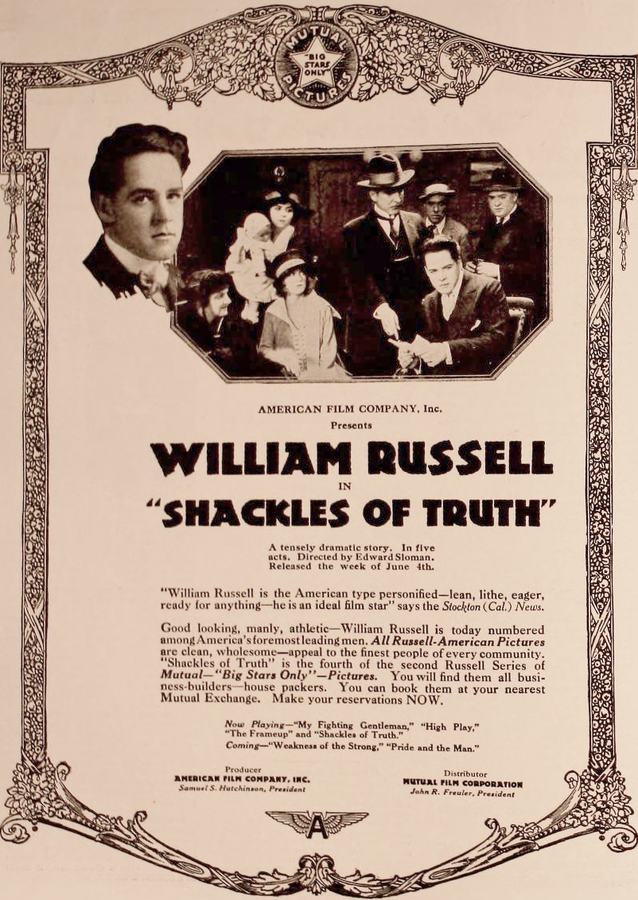
The 1917 cinematic landscape was often characterized by stark moral binaries, yet The Shackles of Truth, directed by Edward Sloman and penned by the nascently brilliant Jules Furthman, dares to inhabit the gray corridors of sacrificial mendacity. This celluloid relic is not merely a melodrama; it is a profound interrogation of how the sins of the father are visited upon the son, and how the pursuit of political power can turn a colleague into a predatory vulture. As we dissect this narrative, we find a bridge between the simplistic morality plays of the early 1910s and the complex character studies that would define the 1920s, such as The Reclamation.
William Russell portrays Gerard Hale with a stoicism that masks a roiling internal conflict. Hale is a man caught between the preservation of a legacy and the visceral reality of a hidden shame. When Mary Shores arrives with the illegitimate child of Hale’s father, the film shifts from a legal procedural into a psychological thriller. The presence of the child acts as a ticking clock, a physical manifestation of a past that refuses to remain buried. Unlike the more whimsical explorations of identity found in The Prince of Graustark or its predecessor Graustark, this film treats the discovery of a secret life with a gravity that borders on the funereal.
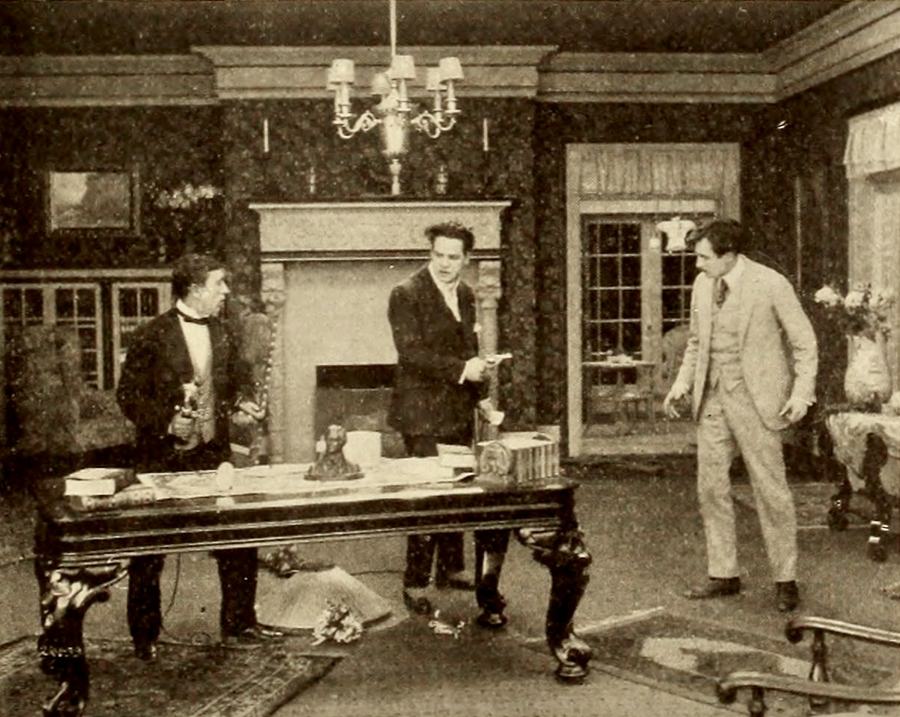
Luther Snaith, played with a chillingly calculated opportunism by George Ahearn, represents the darker impulses of the American Dream. The rivalry for the Senate seat is not a battle of ideologies but a battle of leverage. Snaith’s realization that he can use Gerard’s lie to clear his own path to the Senate and to Marion is a masterclass in narrative tension. It echoes the themes of social climbing and deception seen in The Pretenders, yet here the stakes are elevated by the fragility of a mother’s heart. The film posits a terrifying question: Is a lie told to preserve a life more virtuous than a truth that kills?
"The shackles mentioned in the title are not the chains of a dungeon, but the invisible ligatures of honor and the stifling expectations of a society that demands perfection from its leaders."
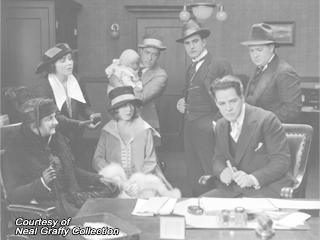
The cinematography, though limited by the technology of 1917, utilizes shadow and framing to emphasize Gerard’s isolation. When he stands in his law office—the very place where justice is supposed to be administered—he is most vulnerable to injustice. The detectives who seize Mary and Tom Shores act as agents of a blind law, unaware that their search for truth is actually facilitating a grander deception. This irony is a hallmark of Furthman’s writing, a precursor to the cynical brilliance he would later bring to Hollywood’s Golden Age. The film’s pacing mirrors the tightening of a noose, a stylistic choice also observed in the suspenseful atmospheres of The Mystery of the Rocks of Kador.
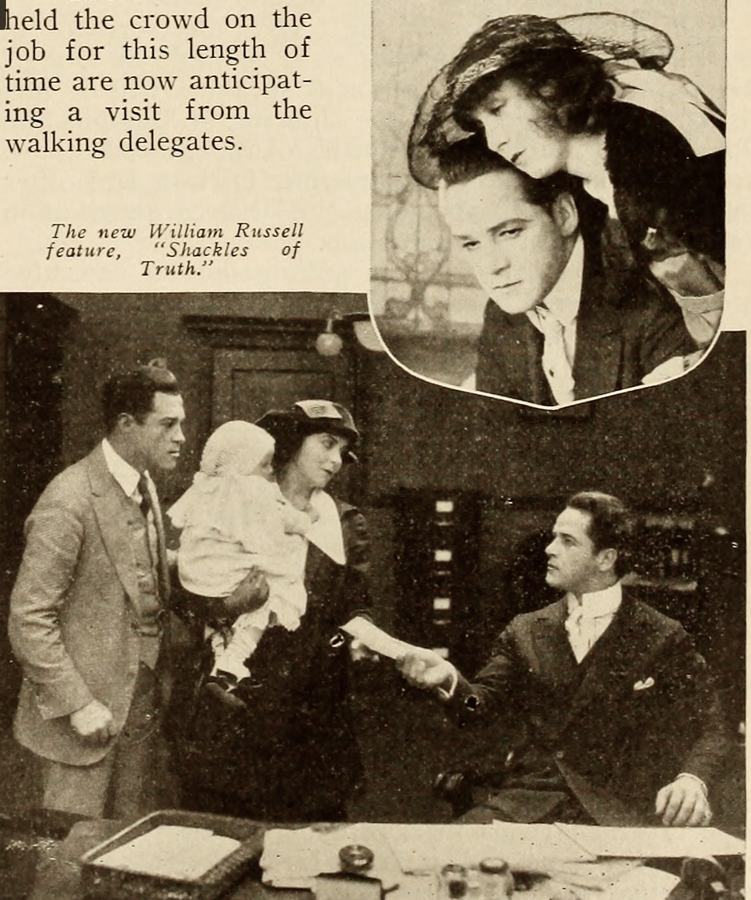
Francelia Billington’s portrayal of Mary Shores is a poignant subversion of the 'fallen woman' archetype. She is not a temptress but a victim of a patriarchal system that allows men like Gerard’s father to escape consequence while she bears the physical and social burden of their indiscretion. Her arrival is the catalyst for the film’s moral disintegration. In many ways, her character shares the quiet desperation found in A Woman Alone. When Gerard gives her the $50,000, it is an attempt to monetize his father’s guilt, a transaction that fails because human lives cannot be so easily reconciled on a ledger.
The juxtaposition of Mary and Marion—the Governor's daughter—is equally fascinating. Marion represents the idealized, untouchable femininity that Gerard is supposed to aspire to, while Mary represents the messy, hidden reality of his family’s true nature. This duality creates a tension that elevates the film above standard melodrama. It forces the audience to confront the hypocrisy of the upper class, a theme that resonates even today. The film shares a thematic kinship with The Beautiful Adventure, though it swaps that film’s lightheartedness for a somber, almost gothic dread.
The central conflict—Gerard’s decision to claim the baby as his own to protect his mother’s failing heart—is the emotional anchor of the film. Mrs. Hale, played with a fragile dignity by Lucille Ward, is the unintended tyrant of the story. Her 'ailing heart' becomes the prison in which Gerard is held. This dynamic transforms the Senate race and the romantic triangle into secondary concerns; the true battle is for Gerard’s soul. He is willing to sacrifice his reputation, his career, and his future happiness for a woman who would likely be devastated by the truth anyway. This self-inflicted martyrdom is a recurring motif in silent cinema, often seen in narratives involving parental sacrifice like The Three Godfathers.
The threat of Snaith to expose the truth unless Gerard withdraws from the race adds a layer of political noir to the proceedings. It highlights the vulnerability of those who operate on a code of honor in a world governed by those who operate on a code of power. Gerard’s refusal to let Mary tell the truth, even when his mother demands he marry her, shows the extreme lengths to which a person will go to maintain a facade. It is a psychological study in the 'sunk cost' of a lie. Having committed to the deception, Gerard finds himself unable to retreat, even as the walls close in.
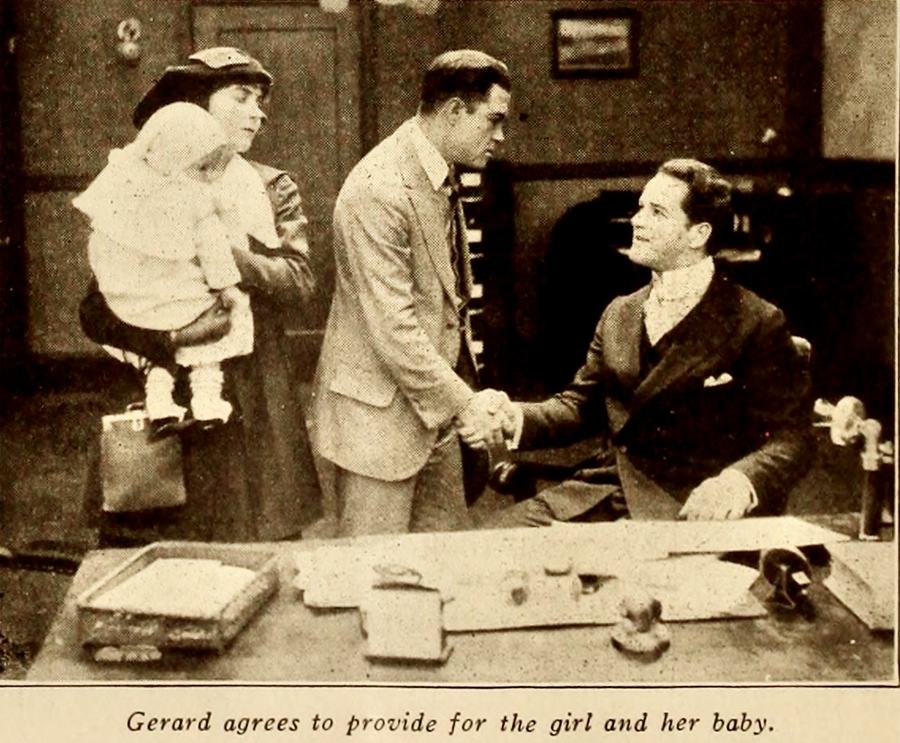
When comparing The Shackles of Truth to other films of its era, such as The Smugglers, one notices a distinct lack of physical action in favor of psychological pressure. While The Smugglers relies on the external conflict of law and crime, The Shackles of Truth internalizes the conflict. The 'smuggling' here is the illicit transport of a secret across the borders of social propriety. Similarly, the film lacks the exoticism of Protea II or the maritime romance of Mandolinata a mare, opting instead for the claustrophobia of drawing rooms and law offices.
The film’s resolution—the death of the mother—is a convenient but narratively consistent 'deus ex machina.' In the world of 1917 cinema, death was often the only acceptable way to resolve an irreconcilable moral dilemma. By dying, Mrs. Hale inadvertently liberates her son from the very shackles she helped forge. It is a grim irony that his freedom is purchased with her life. This ending lacks the hopeful resolution of The Land of the Lost, providing instead a hollow victory that leaves the protagonist scarred and solitary.
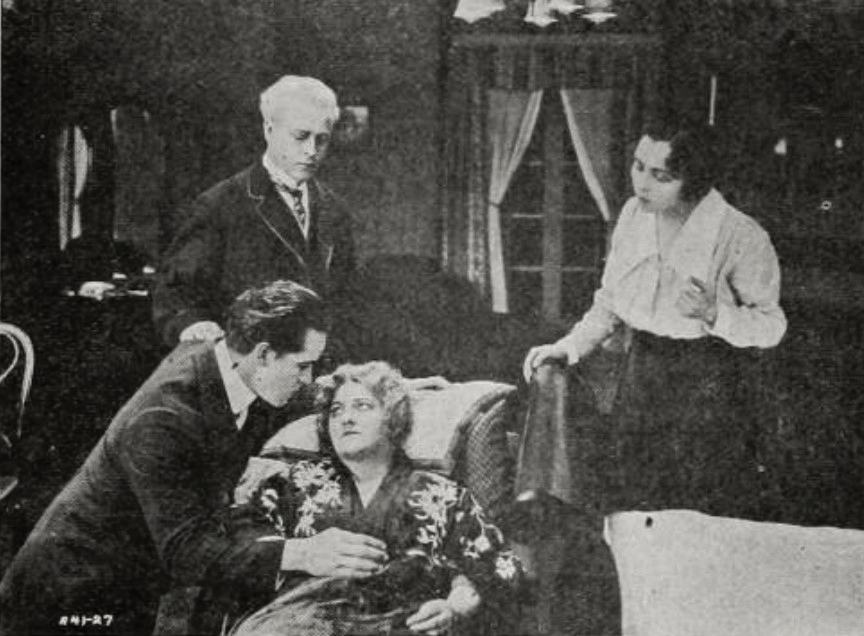
Jules Furthman’s contribution cannot be overstated. Even in this early stage of his career, he displays a knack for dialogue-heavy situations (conveyed through intertitles) that emphasize character motivation over plot mechanics. The way the information is meted out—first to Gerard, then to Snaith, then to the mother—shows a sophisticated understanding of dramatic irony. The audience knows more than the characters, which creates a sense of helplessness as we watch Gerard walk into Snaith’s traps. This narrative density is far superior to the more episodic nature of Midinettes or the straightforward mystery of The Secret of the Old Cabinet.
Visually, the film relies on the expressive faces of its cast. William Russell’s transition from a confident lawyer to a broken man is etched in the lines of his face and the slump of his shoulders. The use of close-ups during the blackmail scenes heightens the intimacy of the threat, making Snaith feel like a predator closing in on its prey. While it may not have the technical bravado of Big Jim Garrity, its focus on the human countenance as a battlefield of emotion is masterful.
The Shackles of Truth remains a vital piece of cinematic history because it refuses to offer easy answers. It suggests that truth is not a liberating force, but a destructive one, and that silence is a heavy price to pay for the peace of others. Gerard Hale is a hero not because he wins, but because he endures. He survives the machinations of Snaith and the demands of his mother, but at the cost of his innocence. In the end, as he stands freed from his lie by the finality of the grave, one wonders if he will ever truly be free of the memory of what he was willing to become.
For those interested in the evolution of the legal thriller and the melodrama, this film is an essential watch. It provides a blueprint for the themes of political corruption and familial legacy that would dominate American cinema for decades to come. It is a stark reminder that even in the silent era, the most powerful stories were those that spoke of the things we dare not say aloud.
IMDb —
1916
Community
Log in to comment.