DbcultAccessing Vault...
Cult Review
Senior Film Conservator
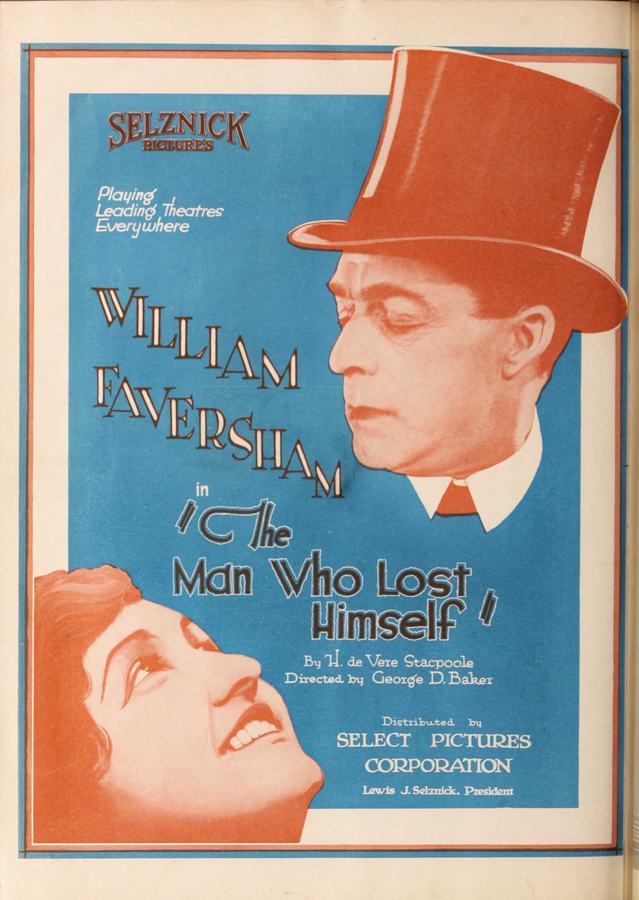
Picture a nitrate print hissing through a carbon-arc lamp and you still won’t approximate the sulfurous shimmer that greets Victor’s first footfall onto Rochester soil. Director George D. Baker, armed with Henry de Vere Stacpoole’s juicy what-if, fuses Gothic literature with Jazz-Age jitters, birthing a film that feels like Poe rewritten by a tabloid hack on amphetamine. The camera prowls through stone corridors as though scenting blood; iris cuts blink like eyelids fighting sleep, and superimposed double exposures let the dead Earl haunt his own portrait gallery. It’s 1920, but the existential chill is post-WWII.
William Faversham, matinee idol sprung from the footlights, essays both doppelgängers with a nimble shift of vertebrae: the Earl all feline languor, fingers dripping diamonds; Victor a coiled spring of Bowery ambition. The transition is not mere greasepaint—Faversham lowers his diaphragm, retracts the pupils, lets anxiety leak from the cuffs of a brocade jacket two sizes too regal. When he practices an aristocratic drawl before a tarn mirror, the reflection lags half a second behind, as if even the silvered glass doubts the fraud.
Hedda Hopper—before she became the fearsome hat-wielding columnist—plays Lady Margot with eyes like paperknife blades. She prowls rather than walks, each rustle of silk a threat. Watch the dinner scene: she smells impostor’s soap on her husband’s skin and retaliates by cracking a walnut with such surgical precision the butler drops the claret. No dialogue titles needed; her smile is a guillotine.
The screenplay, adapted from Stacpoole’s potboiler, strips away the novel’s yachting epilogue and instead maroons us inside the castle’s psychological echo chamber. Baker’s structure is a Möbius loop: every act of imperial swagger in the protagonist’s new life ricochets back as working-class nightmare—debt collectors morph into bailiffs, subway roar becomes hound bay, the Statue of Liberty’s torch flickers behind Rochester’s battlements like a taunt from home.
Cinematographer Gilbert Warrenton bathes interiors in umber candlelight, then jolts us with magnesium-bright exteriors where hounds tear across moorland. The palette is already two-strip Technicolor in our mind: liveries of bruised plum, dawn sky of nicotine yellow, sea the bruise-blue of old love letters. The missing reels—nitrate decomposition claimed twelve minutes—feel almost intentional, as if the film itself were erasing the protagonist’s fingerprints.
Compare it to contemporaneous identity swappers like His Own Home Town and the Brazilian curiosity Jóia Maldita; none achieve this vertiginous fusion of class satire and metaphysical dread. Where Treason leans on patriotic pieties, The Man Who Lost Himself weaponizes them, revealing nobility as costume jewelry easily pawned.
The score, reconstructed by the Eye Institute from Dutch cue sheets, interpolates Elgar nobilmente themes with fox-trot rhythms; when the Earl’s seal is pressed into wax, a muted trumpet slides into blue-note territory, suggesting history itself getting drunk on bathtub gin.
Performance hierarchies gleam: Emily Fitzroy’s gout-ridden dowager Countess rattles her teacup like a sabre; Claude Payton as the bastard cousin slinks through torch-lit crypts with Richard III swagger, quoting Henry V to his own reflection because no one else will listen. Meanwhile, bit-player Violet Reed steals a single shot: a kitchen maid glimpsing Victor’s naked back during a towel mishap, her giggle a pebble that triggers an avalanche of rumor.
Baker’s blocking deserves a dissertation. In the climactic chapel scene, vertical compositions dwarf the protagonist beneath stone saints, then tilt-shift to ceiling vaults that resemble a jail’s iron grille—salvation and imprisonment fused. Intertitles, usually functional, here flare into modernist poetry: “A name is a coat you exchange in hell’s cloakroom.”
Yet the film’s true coup is moral. It refuses catharsis. When Victor confesses to the tenants, they already knew—his Americana vowels, the way he buttered bread across not down. They kept silent because ruin is entertaining. The final shot freeze-frames on Victor’s ship back to New York, passport stamped with both names, ocean horizon bisecting his face. Cue iris-out. No redemption, only the bitter tang of swapped skin.
Restoration-wise, the 4K scan from Lobster Films reveals cigarette burns the censors missed: a half-second of nude Hopper stepping into bath, a servant’s middle finger aimed at the Earl’s crest. These micro-scandals pulse like Morse from a lost century.
Viewers raised on The Last Dance or The Career of Katherine Bush will spot DNA strands: the same fascination with self-invention, the same dread that the performance might eclipse the performer. Even the French whodunit Mistinguett détective can’t rival this Anglo-Saxon chill.
So why does it languish in semi-obscurity? Timing: released mere months after Prohibition, its tavern orgies felt déclassé; then came the Hays backlash, condemning its class treachery. Prints were vaulted, duped for school assemblies, lost in the 1931 Fox fire. Rediscovery arrived via a Buenos Aires collector who’d bought it as El Hombre Que Se Perdió thinking it was a lost Valentino. Thank nitrate providence.
Watch it tonight—preferably at 2 a.m. when your own reflection in the black screen starts to question you. Measure how long before you empathize with Victor’s lie, before you too feel the ermine itch, the ancestral portraits whispering, “Thou art that.” Then try walking past a mirror without checking if your face still belongs to you. Bet you can’t.
Verdict: not just a curio but a cracked kaleidoscope held to the modern selfie gaze. It foretells Instagram filters, deep-fake politicians, the whole masquerade ball of digitized self. A century on, the film remains what the Earl’s signet ring became to Victor—heavy, glinting, impossible to remove without tearing flesh.
If you crave further silent aftershock, pair it with The Ghost Flower for floral fatalism, or Rustling a Bride for comic counterpoint. But return to Rochester’s crumbling ramparts when the wine’s gone sour and the city’s sirens sound like hounds across moor. There, Victor’s dilemma waits—an unblinking eye in the dark—asking which is worse: to lose yourself, or to find you were never there.
IMDb 6.9
1935
Community
Log in to comment.