DbcultAccessing Vault...
6/10
Senior Film Conservator
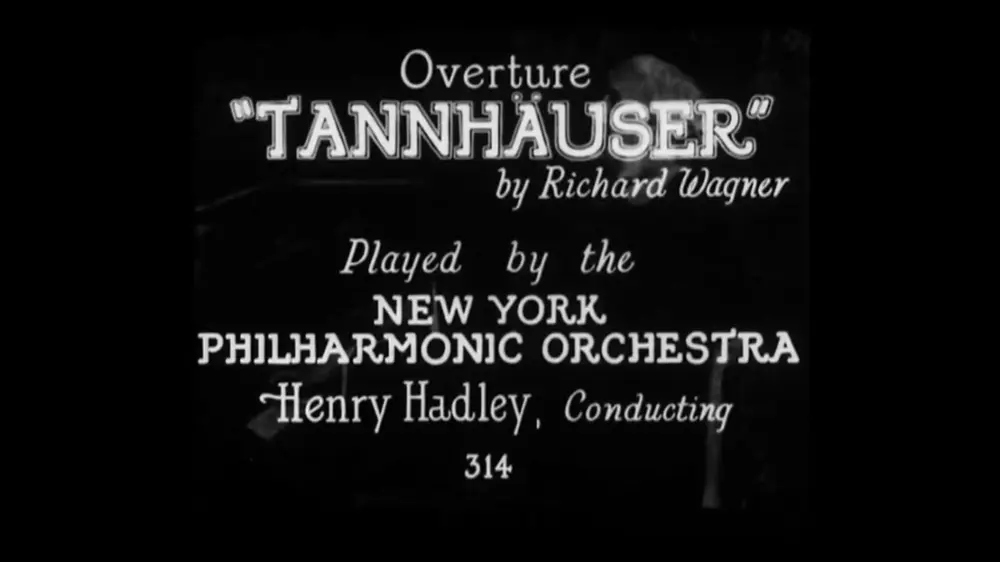
A definitive 6/10 rating for a film that redefined the boundaries of cult cinema. Overture: Tannhäuser remains a cornerstone of transgressive art.
Does a silent film of an orchestra playing classical music hold any relevance in today's hyper-stimulated cinematic landscape? Short answer: absolutely, but with significant caveats. Overture: Tannhäuser is a unique artifact, a silent concert film that defies modern expectations yet rewards patient, historically-minded viewers. This isn't a film for the casual moviegoer seeking plot twists or dynamic action; it's tailor-made for cinephiles, classical music enthusiasts, and anyone fascinated by the origins of both film and recorded performance. If you demand a conventional narrative or a bombastic visual experience, this film will likely leave you wanting.
It is a profound piece of history, an early brushstroke in the vast canvas of cinema’s attempt to capture and transmit the performing arts. Its value lies not in its entertainment factor as we understand it today, but in its profound historical and cultural significance. It works. But it’s flawed.
In the nascent days of cinema, when the very act of moving pictures was a marvel, Edwin B. DuPar undertook a truly ambitious project: capturing the New York Philharmonic Orchestra performing Richard Wagner’s 'Prelude to Tannhäuser.' This wasn't merely a performance; it was an experiment, an attempt to translate the ephemeral power of live orchestral music into the then-new medium of film. The result, Overture: Tannhäuser, stands as a fascinating, if challenging, viewing experience.
The film’s intrinsic value is undeniable. It offers a direct window into a bygone era, allowing us to witness not only the musicians but also the very aesthetic of classical performance at the turn of the century. The rigid formality, the concentrated expressions, the sheer scale of the orchestra attempting to convey Wagner’s towering score without the aid of synchronized sound — it all contributes to a powerful sense of historical immersion. It is a document, yes, but also a carefully composed visual interpretation.
This film works because it is an unparalleled historical document, offering a rare glimpse into early 20th-century orchestral performance and pioneering cinematography. It fails because its inherent technical limitations—primarily the absence of synchronized sound—make it inaccessible for many modern viewers expecting a conventional cinematic or musical experience. You should watch it if you are a dedicated student of film history, classical music, or the evolution of media, and are willing to engage with a piece on its own terms, appreciating its context over its immediate entertainment value.
Edwin B. DuPar, credited as the film's cinematographer, faced an unenviable task. How do you visually represent a sound-driven art form in a silent medium? DuPar’s approach is remarkably straightforward, yet effective for its time. He opts for a relatively static, wide shot, encompassing the majority of the orchestra. This choice, while perhaps dictated by technical limitations, inadvertently emphasizes the collective effort, the unified front of the musicians.
There’s a subtle artistry in this apparent simplicity. The camera acts as a silent observer, allowing the viewer to take in the conductor’s impassioned gestures, the synchronized bowing of the string section, the focused intensity on the brass players’ faces. Without sound, these visual cues become paramount, forcing the audience to 'hear' the music through the performers’ physical expressions and movements. It’s an exercise in empathy, a visual score.
Consider the framing: it's not dynamic, it doesn't cut to close-ups of individual instruments or musicians. Instead, DuPar holds his shot, almost daring the viewer to find the rhythm and melody in the visual ebb and flow of the performance. This static nature, far from being a flaw, becomes a defining characteristic, a testament to the era's understanding of what cinema could achieve. It’s a bold choice, whether intentional or forced, that demands a different kind of engagement than we’re accustomed to.
Richard Wagner's 'Prelude to Tannhäuser' is a composition of immense power and emotional depth, a piece that builds from solemnity to soaring ecstasy. To attempt to capture this without its most crucial element—sound—is a fascinating paradox. Yet, the choice of this particular overture is insightful. Wagner’s music, even in its visual representation, carries an inherent drama, a narrative arc that can almost be 'seen' in the performers' intensity.
The film becomes a study in silent interpretation. One can almost feel the weight of the opening chords, the tension in the rising melodies, and the eventual release in the grand, sweeping passages. The conductor, likely the aforementioned Edwin B. DuPar himself, or perhaps an uncredited maestro, acts as the visual interpreter, his movements a dance that guides the 'silent' crescendo. His gestures become the film’s most animated element, a kinetic translation of the score's dynamics.
For those familiar with the 'Prelude,' the experience is almost synesthetic. Your mind fills in the gaps, projecting the familiar sounds onto the visual cues. For the uninitiated, it’s an invitation to appreciate the physical rigor and emotional commitment required to perform such a demanding work. The film, in its silence, paradoxically highlights the pure, unadulterated passion of the musicians. It forces a focus on the human element behind the sound.
The pacing of Overture: Tannhäuser is dictated entirely by the musical piece itself. There are no cuts, no changes in perspective, just a continuous, unwavering shot. This creates a tone of respectful observation, a quiet reverence for the performance unfolding. It’s a stark contrast to the rapid-fire editing and dynamic camera work that would come to define concert films decades later, such as Hidden Charms or even more modern documentaries like Moving Silhouette Images Broadcast, which play with form and perspective.
The stillness of the camera allows for a deep, almost meditative engagement. It’s not about flashy showmanship, but about the sustained effort of a large ensemble. The film's tone is one of earnest pioneering; it doesn't try to be anything it isn't. It's a straightforward record, a testament to the early ambition of capturing live events. This unadorned quality lends it a certain charm, an authenticity that more polished productions often lack.
The lack of cuts means the viewer is fully immersed in the single perspective, much like an audience member in the balcony. This singular focus can be both a strength and a challenge. It demands patience, but rewards with an unfiltered, unmediated look at a historical performance. It’s a fascinating study in how early cinema approached the challenge of conveying complex, time-based art forms.
Yes, Overture: Tannhäuser is worth watching, but only if you approach it with the right mindset. It is not a film for passive entertainment. It is an active historical engagement.
It serves as a crucial document for understanding early cinematography. It offers a rare visual record of a major orchestra from a century ago. Its value is primarily educational and historical.
One of the most debatable aspects of Overture: Tannhäuser is its place in a modern viewing schedule. Is a film valuable purely for its historical weight, even if its entertainment value is minimal by contemporary standards? I argue that its historical importance far outweighs any perceived lack of modern appeal.
To dismiss it as 'boring' is to miss the point entirely. It's akin to dismissing a cave painting for its lack of photorealism. This film is a foundational text, a testament to the human desire to capture and preserve art, even before the technology was fully capable. It represents a crucial step in the evolution of media, bridging the gap between live performance and recorded media.
Furthermore, it challenges our modern reliance on perfect synchronization and high fidelity. It forces us to engage our imagination, to reconstruct the soundscape based on visual cues and existing knowledge. This active participation is, in itself, a unique and valuable viewing experience. It’s a reminder that sometimes, less is more, and the gaps can be as compelling as the content itself. It demands intellectual curiosity, not just passive consumption.
Overture: Tannhäuser is not a film to be judged by contemporary metrics of entertainment or cinematic prowess. It is, instead, a vital relic, a time capsule that captures the ambitious spirit of early filmmaking and the enduring power of classical music. Edwin B. DuPar’s silent capture of Wagner’s 'Prelude' is an essential viewing for anyone serious about film history, the evolution of media, or the subtle art of interpreting performance through a nascent lens. While it demands patience and a willingness to engage on its own unique terms, the rewards are immense: a direct connection to a pivotal moment in cultural history. It is less a film to be 'enjoyed' and more a document to be 'studied' and 'appreciated.' Its imperfections are part of its charm, its silence a canvas for our imagination. Highly recommended for the discerning viewer, it’s a powerful reminder of where it all began.
IMDb 6.9
1936
Community
Log in to comment.