DbcultAccessing Vault...
Cult Review
Senior Film Conservator
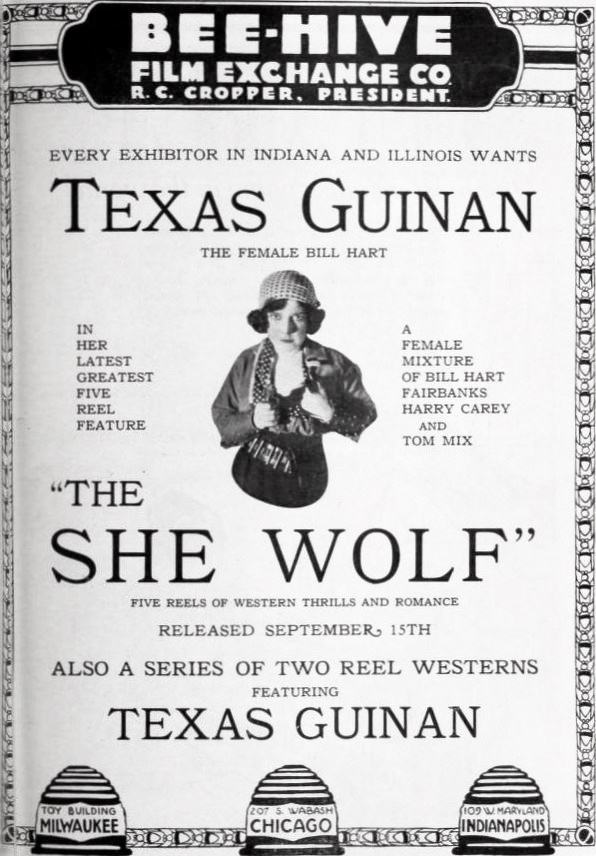
In the annals of early cinema, particularly within the rugged terrain of the Western genre, certain films emerge not just as entertainment, but as cultural artifacts, encapsulating the zeitgeist of their era while forging archetypes that echo through cinematic history. Harvey F. Thew, Raymond L. Schrock, and John Colton’s collaborative writing effort, 'The She Wolf' (1920), stands as a fascinating, if often overlooked, testament to this phenomenon. Starring the inimitable Texas Guinan, this silent picture plunges viewers into a frontier world where justice is a personal crusade, corruption is rampant, and the spirit of a singular woman can turn the tide against overwhelming odds. It's a raw, visceral narrative that speaks volumes about the burgeoning power of female protagonists in a genre traditionally dominated by stoic cowboys and damsels in distress.
At the heart of 'The She Wolf' is the magnetic presence of Texas Guinan, a figure whose real-life persona as a Wild West show performer, Broadway star, and notorious speakeasy hostess bled seamlessly into her cinematic roles. Guinan wasn't just an actress; she was an institution, a force of nature whose very name evoked a certain brand of audacious independence. In this film, she embodies the titular 'She Wolf' with an effortless blend of grit, charm, and deadly precision. Her entrance into 'The Last Hope' saloon in 'Mad Dog' isn't merely a plot point; it's an event, a seismic shift in the moral landscape of the narrative. One can almost hear the collective gasp of the audience as she strides in, a beacon of righteous fury amidst the smoky haze and underhanded dealings.
The film wastes no time in establishing the stakes. Guinan's character immediately discerns the nefarious activities unfolding: the Chinese owner, Ah Wing, and a crooked sheriff, portrayed with sneering villainy by Charles Robertson, are shamelessly cheating a stranger, Jack Richardson, at a high-stakes card game. This isn't subtle manipulation; it's overt exploitation, a stark illustration of the frontier's darker underbelly. Guinan's response is swift and decisive. Drawing her shooting irons, she doesn't just intervene; she takes control, injecting a jolt of unpredictable energy into a scene steeped in calculated deceit. This initial confrontation is a masterclass in silent film storytelling, relying on expressive gestures, intense close-ups, and the sheer kinetic energy of the performers to convey the explosive tension.
The ensuing gunfight, a chaotic ballet of bullets and bravado, leaves the stranger wounded. It's here that the 'She Wolf' reveals another facet of her character: a surprising tenderness beneath the tough exterior. She carries him to her secluded shack, a sanctuary away from the town's pervasive corruption, and diligently nurses him back to health. This act of compassion not only deepens her character but also sets the stage for a developing romantic subplot, adding a layer of emotional complexity to the predominantly action-driven narrative.
The plot thickens with the re-emergence of the crooked sheriff, who, as the head of a formidable outlaw band, orchestrates a daring mail coach robbery. This sequence, while serving as a pivotal plot device, also underscores the pervasive lawlessness that our heroine is up against. The scattering of letters on the road is a clever narrative contrivance, allowing for the accidental discovery of a crucial piece of information. Guinan’s character stumbles upon a letter from Sallie Bigby (Josie Sedgwick) to her sweetheart, John Williams (George Chesebro), revealing a dire predicament: Sallie's father is under the thumb of the insidious Chinese saloon keeper, and Sallie herself is condemned to a forced marriage unless rescued. This revelation ignites the 'She Wolf's' protective instincts, transforming her from a dispenser of rough justice into a veritable guardian angel.
The film then builds to its climax with the heroine's second foray into the lion's den. This isn't merely a repeat of the first saloon brawl; it's an escalation, a righteous fury unleashed with even greater intensity. The spectacle of 'The She Wolf' single-handedly disrupting the forced wedding, battling the forces of corruption, and ultimately spiriting Sallie away to the safety of her cabin, is a powerful visual statement on female agency in an era where such portrayals were still relatively novel. It's a narrative beat that resonates, echoing the struggles for freedom and self-determination that characterized the American frontier.
Beyond the thrilling action, 'The She Wolf' explores several compelling themes. Foremost among them is the concept of frontier justice, where formal legal structures are either absent or corrupted, necessitating individuals like Guinan's character to enforce their own moral code. The film starkly contrasts the overt villainy of the sheriff and Ah Wing with the 'She Wolf's' unwavering commitment to fairness. It's a classic Western trope, yet here, it's infused with a distinctly feminine energy, challenging the traditional masculine hero narrative.
The portrayal of women is also a key element. While Sallie Bigby represents the more conventional 'damsel in distress,' her plight serves to highlight the 'She Wolf's' extraordinary capabilities. Guinan's character is a trailblazer, not just within the narrative but also in cinematic representation. She's strong, capable, and entirely self-reliant, breaking free from the stereotypical confines often imposed upon female characters of the era. This film, alongside others of its time, contributed to a nascent discourse around female empowerment in popular culture, offering audiences a glimpse of women who could hold their own in a man's world. While perhaps not as overtly feminist as some later works, its mere existence with such a protagonist was a quiet revolution.
The resolution of the narrative, with Sallie and John Williams reunited and the stranger expressing his desire to marry his rescuer, neatly ties up the various threads. It reinforces the idea that even in the lawless West, love and companionship can flourish, and that heroism, regardless of gender, is ultimately rewarded. The stranger's proposal isn't just a romantic gesture; it's an acknowledgment of the 'She Wolf's' profound impact, a recognition of her strength and compassion.
The performances in 'The She Wolf' are quintessential silent-era acting, relying heavily on exaggerated facial expressions and grandiose gestures to convey emotion and intent. Texas Guinan, of course, is the standout. Her vivacious energy and commanding screen presence are undeniable. She projects an aura of self-assuredness that is both captivating and believable, making her portrayal of the 'She Wolf' truly iconic. Ah Wing, as the unscrupulous saloon keeper, embodies a common villainous archetype of the period, his avarice palpable even without spoken dialogue. Charles Robertson's sheriff is equally effective, his smug villainy providing a perfect foil for Guinan's righteous fury. The supporting cast, including Jack Richardson, Anna Wild, Slim Whitaker, Josie Sedgwick, Al Bridge, and George Chesebro, contribute to the film’s vibrant tapestry, each playing their part in bringing the rough-and-tumble world of 'Mad Dog' to life.
While specific directorial credits are often less emphasized in early cinema, the overall visual storytelling in 'The She Wolf' is effective. The cinematography captures the stark beauty and inherent dangers of the Western landscape, utilizing wide shots to establish settings and tighter framing to emphasize dramatic moments. The pacing, crucial for silent films, maintains a brisk tempo, ensuring that the audience remains engaged through the various twists and turns of the plot. Intertitles, the textual explanations interspersed throughout the film, are used judiciously, providing necessary exposition without disrupting the visual flow. This delicate balance of visual narrative and textual aid is a hallmark of well-executed silent cinema.
'The She Wolf' may not be as widely known today as some of its more illustrious contemporaries, but its significance, particularly for fans of silent Westerns and those interested in the evolution of female archetypes in film, is undeniable. It showcases a genre in its formative years, experimenting with narrative structures and character development that would become foundational for decades to come. The film provides a valuable window into the cultural anxieties and aspirations of post-World War I America, where notions of individualism, justice, and the untamed spirit of the frontier still held immense sway.
Comparing 'The She Wolf' to other films of its era can be illuminating. While many silent films, such as Sunlight's Last Raid, might have adhered to more conventional Western tropes, 'The She Wolf' stands out for its unabashedly strong female lead. Texas Guinan's portrayal here is a precursor to later, more complex female characters in cinema, demonstrating that women could be just as, if not more, capable than their male counterparts in navigating treacherous landscapes, both literal and metaphorical. This film offers a glimpse into how early cinema began to challenge traditional gender roles, albeit within the often-conservative framework of popular entertainment.
In conclusion, 'The She Wolf' is more than just a relic from the silent era; it is a vibrant, action-packed Western that holds up surprisingly well, especially for those who appreciate the unique artistry of early filmmaking. Its narrative, though straightforward, is imbued with a compelling sense of moral urgency. Texas Guinan's performance is a tour de force, cementing her status as a true pioneer of screen presence. The film, with its blend of thrilling action, nascent romance, and unwavering commitment to justice, remains a potent reminder of the enduring appeal of the Wild West and the indomitable spirit of those who dared to tame it, or, in this case, dared to make it a little fairer. It's a film that demands to be revisited, not just for its historical value, but for its sheer entertainment and the powerful, enduring image of its titular heroine, a true 'She Wolf' of the silver screen.
IMDb 6.5
1922
Community
Log in to comment.