DbcultAccessing Vault...
6.2/10
Senior Film Conservator
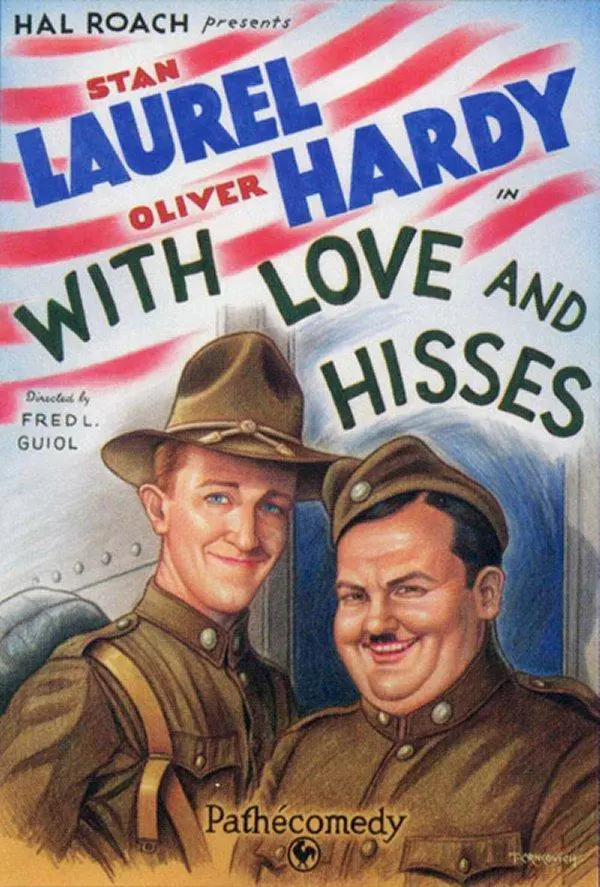
A definitive 6.2/10 rating for a film that redefined the boundaries of cult cinema. With Love and Hisses remains a cornerstone of transgressive art.
Is 'With Love and Hisses' worth your time today? The short answer is yes, but with significant caveats that demand a specific viewing disposition. This 1927 silent-era farce is a delightful, if undeniably dated, glimpse into the formative stages of one of cinema's most iconic comedic duos, making it essential for cinephiles and Laurel & Hardy completists, yet likely to test the patience of modern casual viewers accustomed to faster pacing and spoken dialogue.
This film works because it offers a raw, unfiltered look at the genesis of Stan Laurel and Oliver Hardy's undeniable chemistry, showcasing their individual comedic strengths before their partnership fully solidified. It fails because its reliance on broad, repetitive physical gags, while groundbreaking for its time, can feel simplistic and drawn out to contemporary eyes. You should watch it if you possess an appreciation for silent cinema, a keen interest in comedic history, or a deep affection for Laurel & Hardy's oeuvre; otherwise, its charms might be lost amidst the expectations of modern entertainment.
'With Love and Hisses' is less a narrative masterpiece and more a canvas upon which the foundational strokes of an enduring comedic partnership were first applied. We are introduced to Cuthbert Hope, embodied by Stan Laurel, a recruit whose very existence is a walking, talking (or rather, miming) affront to military discipline. His brain, seemingly wired for perpetual misunderstanding, ensures that every command, every drill, every mundane task becomes an opportunity for unadulterated chaos.
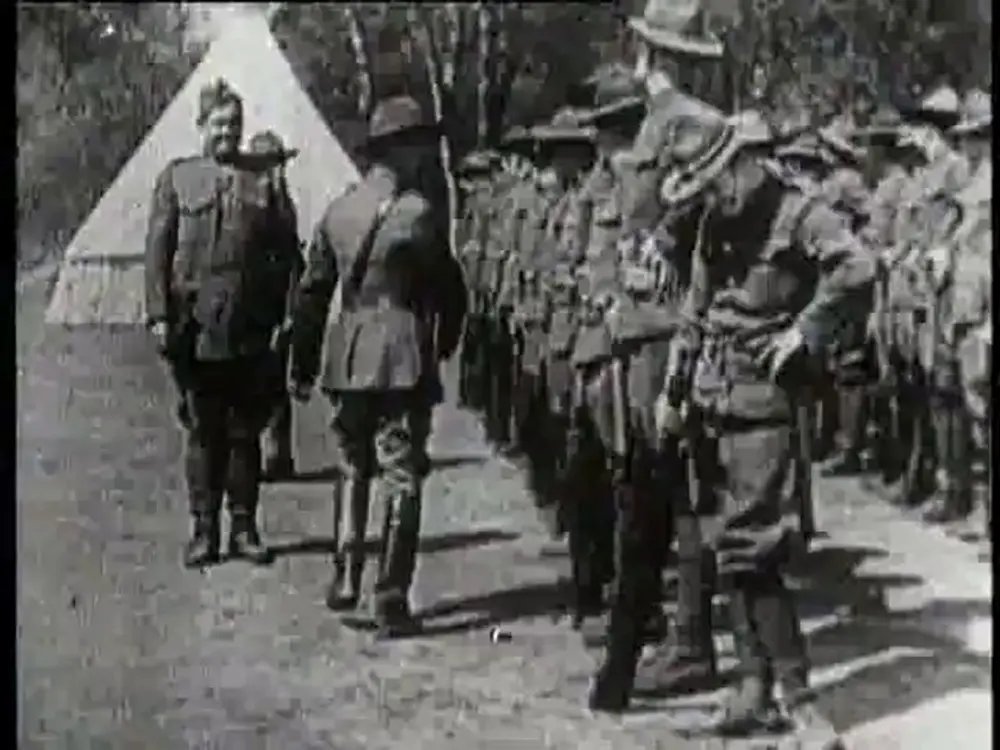
Opposite him stands the long-suffering sergeant, a role deftly handled by Oliver Hardy. This isn't the fully formed, exasperated foil we would come to adore, but rather a prototype: a man whose patience is perpetually stretched to breaking point by Cuthbert's unwitting antics. The film doesn't bother with grand schemes or intricate plots; it revels in the simple, yet potent, comedic engine of one man's inherent idiocy systematically dismantling another's authority and sanity.
From the moment Cuthbert stumbles through his enlistment, a whirlwind of absurd situations ensues. Imagine a drill where Cuthbert salutes with a broom, or attempts to march in reverse, oblivious to the synchronized movements of his peers. The film thrives on these small, yet cumulatively devastating, moments. It’s a testament to the power of physical comedy that such a thin premise could generate so much laughter, even almost a century later.
The story, if one can call it that, is a series of escalating tribulations. Cuthbert’s attempts to polish his rifle result in an explosion of cleaning supplies. His efforts to make his bed lead to a tangled mess of blankets and a collapse of his bunk. Each instance serves not only as a gag but as a further chisel stroke in defining the dynamic that would become Laurel and Hardy's signature: the dimwitted instigator and the indignant victim.
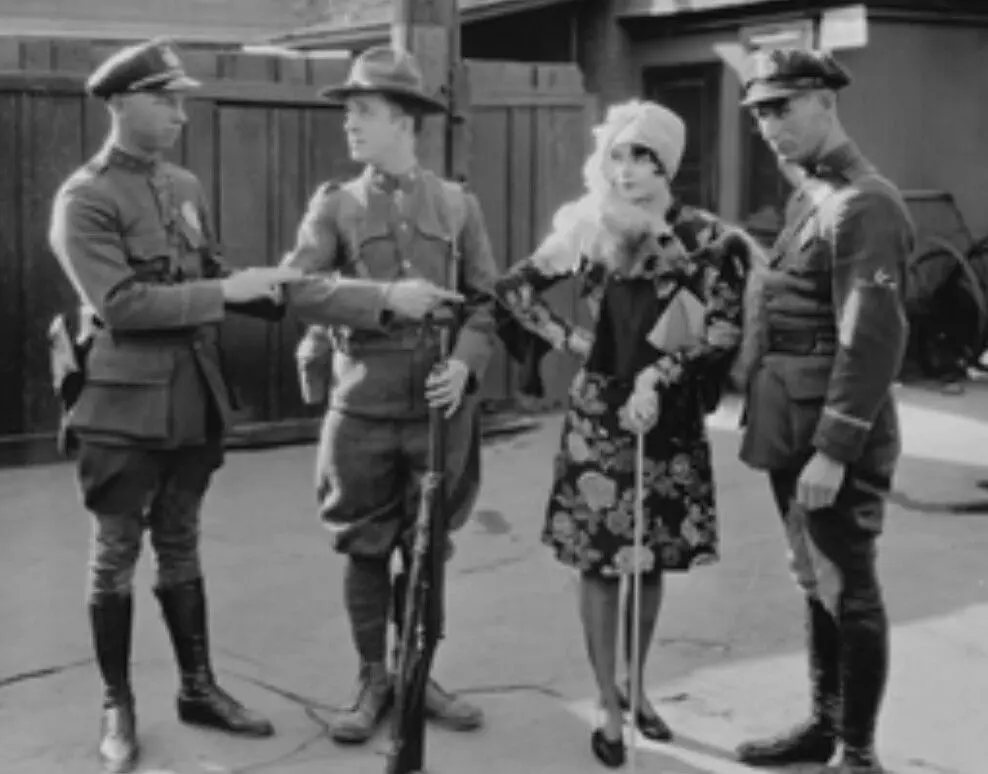
Directed by Fred Guiol, 'With Love and Hisses' is a masterclass in the mechanics of early silent comedy. Guiol, under the watchful eye of Hal Roach, understood that silent film comedy wasn't just about gags; it was about timing, visual clarity, and escalating absurdity. The pacing here is deliberate, allowing each comedic setup to breathe before delivering its punchline. This isn't the lightning-fast editing of modern comedies; it's a more theatrical, almost pantomime approach.
The film's tone is overtly farcical, leaning heavily into exaggeration. There's a joyful silliness that permeates every frame, a clear intention to simply entertain through physical comedy. Guiol uses wide shots extensively, ensuring that the audience can fully appreciate the spatial relationships between characters and the ensuing chaos. For instance, a scene involving Cuthbert attempting to follow drill instructions often features the entire squad in frame, highlighting his singular, hilarious incompetence against a backdrop of synchronized order.
What's striking is how effectively Guiol orchestrates the physical comedy. The sight gags are clear, concise, and often involve multiple characters reacting to Cuthbert's blunders. Consider the sequence where Cuthbert, attempting to clean the barracks floor, accidentally unleashes a torrent of water that floods the room, sending his fellow soldiers scrambling onto bunks and tables. This isn't just funny; it demonstrates an understanding of how to build visual comedy through cause and effect, a hallmark of the Roach studio.
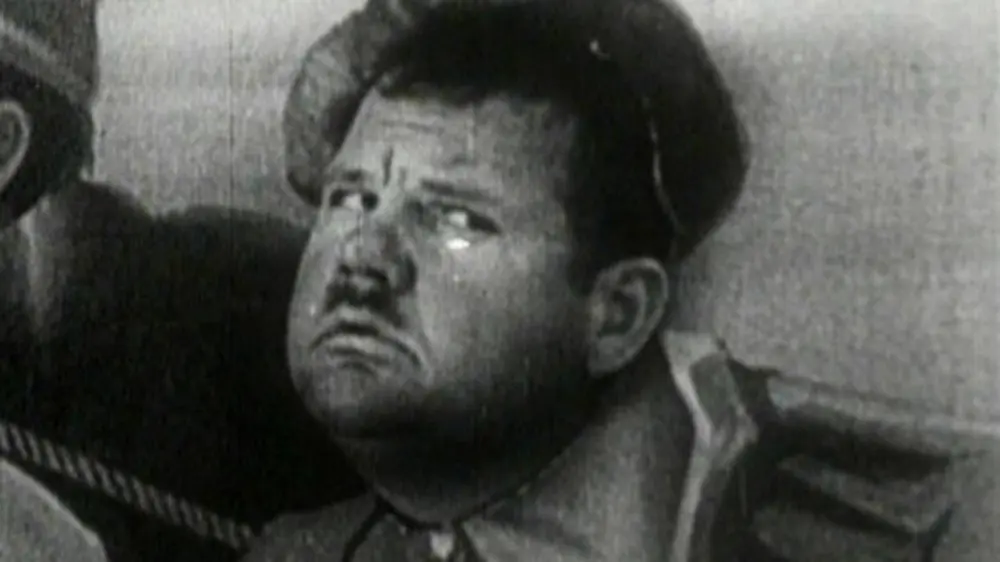
The film's reliance on reaction shots is also critical. Hardy's exasperated glances directly at the camera, a technique he would perfect, are already present here, drawing the audience into his shared suffering. This direct address, even without dialogue, fosters a strong connection and makes the audience complicit in the humor. It’s a subtle touch that elevates the film beyond mere slapstick, giving it a nascent layer of meta-commentary.
While not officially a Laurel & Hardy film in the same vein as their later output, 'With Love and Hisses' is undeniably a crucial stepping stone. Stan Laurel as Cuthbert Hope is a revelation of physical comedy. His rubbery face, his perpetually confused expression, and his gangly, awkward physicality are all on full display. He embodies the 'dimwitted' aspect of his character with an almost balletic grace, even when stumbling.
One particular scene where Cuthbert attempts to salute an officer, only to get his arm tangled in a series of increasingly elaborate and ridiculous gestures, perfectly encapsulates Laurel’s genius. It’s not just a clumsy act; it’s a meticulously choreographed piece of physical theatre that speaks volumes about his character’s inability to grasp even the simplest instruction. This performance lays the groundwork for the 'Stan' character we would come to love.
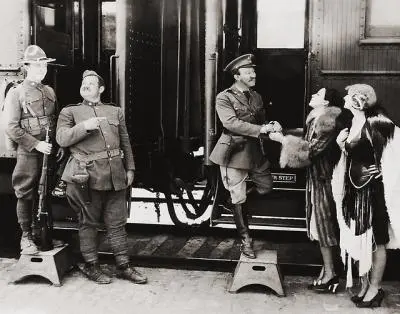
Oliver Hardy, as the unnamed sergeant, is equally compelling. He's not yet the full 'Ollie,' but the foundations are undeniably there. His slow burns, his exasperated sighs (visually conveyed, of course), and his increasingly frustrated attempts to bring order to the chaos are a joy to behold. His physicality, though less overtly clumsy than Laurel's, is equally expressive. The way he adjusts his uniform, or throws his hands up in despair after another of Cuthbert's blunders, is already iconic.
The dynamic between them, though still developing, is palpable. They are not yet the inseparable friends, but the seeds of their comedic symbiosis are firmly planted. The way Hardy's sergeant glares at Laurel's Cuthbert, a look of utter defeat mixed with a desire to strangle, is already perfect. It’s a testament to their individual talents and burgeoning chemistry that they could extract so much humor from such a straightforward premise. The supporting cast, including Viola Richard and James Finlayson, offer solid, if less memorable, contributions, largely serving as additional foils or background reactions to the central comedic duo.
The cinematography in 'With Love and Hisses,' typical of the era, is functional and clear. Shot in black and white, the film prioritizes visibility for the physical gags. There are no elaborate tracking shots or complex camera movements; the camera is largely static, allowing the action to unfold within the frame. This simplicity, however, is not a weakness but a strength, ensuring that the audience's focus remains squarely on the comedic performances.
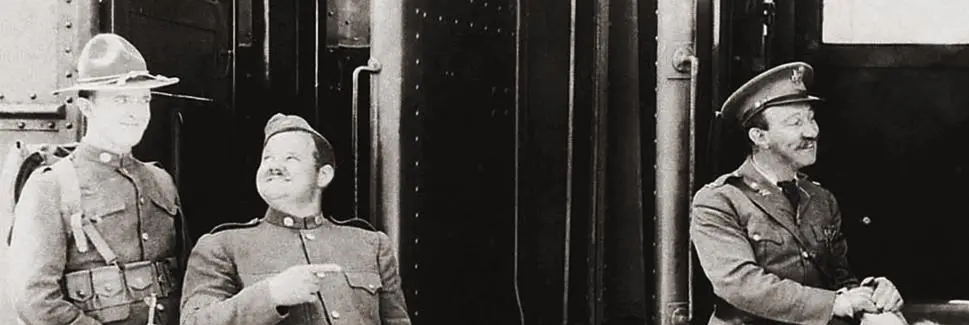
Lighting is straightforward, designed to ensure clarity rather than dramatic effect. The sets, primarily the army barracks and parade grounds, are convincingly utilitarian. They serve as effective backdrops for the physical comedy, providing props and obstacles for Cuthbert’s blunders. A scene in the mess hall, for instance, with its long tables and benches, becomes a stage for food fights and general mayhem, with every element exploited for comedic potential.
The costumes are standard military uniforms, which inadvertently add to the humor by contrasting the strict uniformity with Cuthbert's chaotic presence. The crispness of the uniforms, especially Hardy’s, only highlights Cuthbert’s disheveled appearance and his inability to maintain any semblance of order. This visual juxtaposition is a subtle but effective comedic tool.
While not a film celebrated for its visual artistry in the modern sense, its production values are perfectly adequate for its purpose. The clarity of the images ensures that every facial expression, every stumble, and every pratfall is perfectly legible, which is paramount for silent slapstick. It’s a reminder that sometimes, less is more, especially when the performers are as captivating as Laurel and Hardy.
For silent film enthusiasts and dedicated fans of Laurel & Hardy, 'With Love and Hisses' is absolutely worth watching. It offers invaluable insight into the origins of their comedic partnership. For casual viewers, it might feel slow and repetitive compared to contemporary comedies. Its historical value far outweighs its modern entertainment appeal for a broad audience. It’s a foundational text, not a casual watch.
'With Love and Hisses' is an intriguing artifact, a comedic fossil that reveals much about the evolutionary path of cinematic humor. It works. But it’s flawed. It isn't a film I would recommend to someone looking for a casual Friday night watch, unless that someone has a specific, almost academic, interest in the origins of slapstick. It lacks the polish and refined dynamic that Laurel and Hardy would achieve in their later, canonical works, such as The Covered Wagon, which, while a different genre, represents a similar benchmark in its own field, or even the more sophisticated situational comedy of Remodeling Her Husband.
However, for those who appreciate the historical context, the raw talent on display, and the sheer audacity of early silent comedy, 'With Love and Hisses' offers genuine rewards. It’s a vital piece of the puzzle that explains why Laurel and Hardy became the enduring icons they are. You see the sparks of genius, the nascent rhythm, the physical prowess that would define their careers. It’s not a masterpiece, but it’s an essential stepping stone, a fascinating glimpse into the very beginning of something truly special.
My unconventional observation? The film’s greatest strength, paradoxically, might be its almost aggressive simplicity. It forces you to appreciate the pure mechanics of physical comedy, stripped bare of all cinematic frills. There’s no complex character arc, no dramatic tension beyond the next pratfall. It’s a bold, almost defiant, statement on the power of a well-timed trip or an exaggerated grimace.
Ultimately, 'With Love and Hisses' serves as a historical document of immense value, a testament to the individual comedic brilliance of Stan Laurel and Oliver Hardy before they fully merged into the legendary duo. It’s a film that demands an informed viewer, one willing to look past the superficial constraints of its era to appreciate the foundational comedic artistry within. It’s a must-see for the dedicated, a curious diversion for the open-minded, and perhaps a skip for the impatient.
IMDb —
1932
Community
Log in to comment.