DbcultAccessing Vault...
Cult Review
Senior Film Conservator
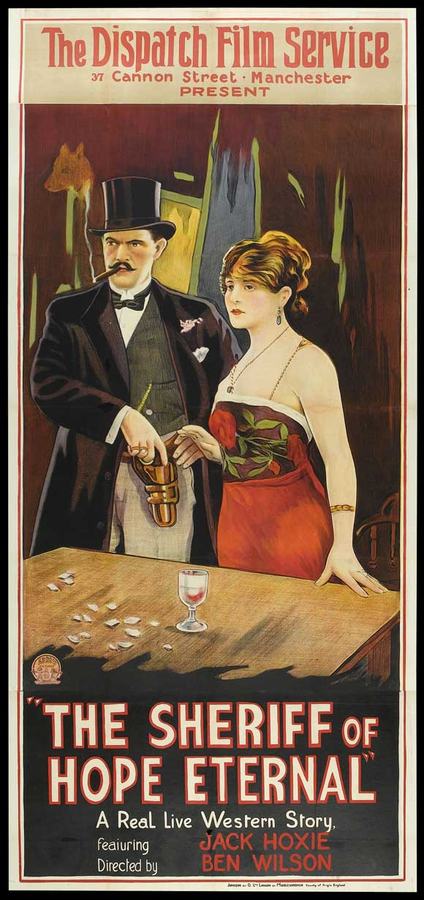
The year 1920 marked a pivotal juncture in the cinematic evolution of the American West. While many productions were content to wallow in the simplistic tropes of the 'shoot-em-up,' Roy Clements' The Sheriff of Hope Eternal emerged as a sophisticated tapestry of moral ambiguity and sacrificial devotion. Starring the ruggedly charismatic Jack Hoxie, the film transcends the limitations of its silent format to deliver a narrative that feels remarkably modern in its psychological depth. Unlike the more urban-centric melodramas of the period, such as The Merry-Go-Round, this work grounds its stakes in the visceral reality of the untamed wilderness, where the law is often as fragile as the people it seeks to protect.
At its core, the film is a character study of Drew Halliday, portrayed by Hoxie with a nuanced restraint that was rare for the era. Halliday is not introduced as a paragon of justice but as a humble stage driver. This initial vocation is metaphorically significant; he is the conduit between civilizations, the man who navigates the treacherous paths between the known and the unknown. When Hela returns from her finishing school, the contrast between her newfound refinement and Drew's rough-hewn existence creates a friction that fuels the first act. This isn't merely a romance; it is a collision of worlds, reminiscent of the thematic tensions explored in Silent Years.
The introduction of the 'sporty gambler' serves as the necessary antithesis to Drew’s burgeoning morality. This antagonist, a saloon keeper whose very presence suggests a rot within the community of Hope Eternal, provides the catalyst for Drew’s transformation. In many ways, the gambler represents the chaos of the old world—a lawless, predatory existence that must be supplanted by the order Drew eventually represents. When Drew defends Hela, he isn't just fighting for a woman's honor; he is asserting the dominance of a new social contract. This act of courage is what earns him the tin star of the Sheriff, a transition that mirrors the societal shift seen in The Ranger of Pikes Peak.
However, the burden of the badge is heavy. Clements’ direction ensures that we feel the weight of this responsibility. The cinematography, though restricted by the technology of the time, utilizes wide shots of the desolate landscape to emphasize Drew’s isolation as the sole arbiter of justice. The marriage to Hela, following the tragic demise of her father, adds a layer of domestic complexity. Drew’s role evolves from protector to provider, and finally, to a martyr. This progression is handled with a delicate touch, avoiding the saccharine pitfalls that often plagued contemporaries like Heart Strings.
The narrative pivot involving Hela’s brother and the framed murder is where The Sheriff of Hope Eternal truly distinguishes itself as a precursor to the noir-inflected Westerns of the 1940s. The gambler's machinations are cruel and calculated, demonstrating a level of villainy that goes beyond mere greed. By incarcerating the innocent brother, the gambler strikes at the heart of Drew’s family, creating a conflict between his professional duty and his personal loyalties. This tension is a hallmark of high-stakes drama, comparable to the emotional turmoil found in Man and His Angel.
The resolution of the gambler’s arc is perhaps the film’s most fascinating subversion. He is not brought down by a shootout in the street or a formal trial. Instead, he falls victim to the fury of his own mistress. This inclusion of a 'woman scorned' as the ultimate instrument of justice provides a refreshing deviation from the male-dominated heroics of the genre. Her act of violence is born of a visceral, personal betrayal, contrasting sharply with Drew’s stoic adherence to the law. It highlights the chaotic elements that still lurk beneath the surface of 'civilized' society, a theme also touched upon in Outcast.
When Hela is accused of the gambler's murder, the film reaches its emotional zenith. Drew Halliday’s decision to take the blame is the ultimate manifestation of his character arc. He is willing to subvert the very law he represents in order to preserve the woman he loves. This act of self-immolation elevates the film from a standard Western to a profound meditation on the nature of love and duty. It echoes the themes of maternal and paternal sacrifice seen in The Eternal Mother, yet recontextualizes them within the harsh, unforgiving framework of the frontier.
The final confession by the gambler’s mistress serves as a deus ex machina, but one that feels earned through the sheer intensity of the preceding drama. It allows for a restoration of the status quo, yet the characters are irrevocably changed. The 'Hope Eternal' of the title is no longer just a name on a map; it is a hard-won state of being. The innocence lost throughout the film—through death, incarceration, and false accusation—is replaced by a tempered, more resilient form of peace.
Roy Clements’ direction in this piece is remarkably disciplined. He avoids the frantic pacing common in low-budget shorts like Home Brew or the absurdist comedy of The Bullshevicks. Instead, he allows scenes to breathe, giving the actors—particularly Marin Sais and Jack Hoxie—the space to convey complex emotions through gesture and expression. The use of title cards is judicious, never intruding upon the visual storytelling but rather punctuating the most critical moments of dialogue and internal monologue.
The production design also deserves mention. The transition from the dusty trails to the relatively opulent interiors of the finishing school and the saloon creates a visual shorthand for the film's central conflict: the struggle between the primitive and the polished. This attention to detail is what separates a masterpiece from a mere 'programmer' like The Poor Rich Cleaners. Even the minor characters, played by veterans like Wilbur McGaugh and Joseph W. Girard, are imbued with a sense of history and place, making the town of Hope Eternal feel like a living, breathing entity.
When viewed alongside other 1920 releases such as The Old Swimmin' Hole or the slapstick antics of From Hand to Mouth, The Sheriff of Hope Eternal stands out for its somber tone and narrative ambition. It doesn't seek to entertain through novelty or cheap thrills; it seeks to resonate. In many ways, it shares a DNA with The Terror, not in genre, but in its willingness to explore the darker corners of the human experience.
The film’s influence can be seen in the subsequent decades of Western cinema, where the trope of the lawman caught between his badge and his heart became a staple of the genre. Jack Hoxie’s performance here solidified his status as a leading man of the silent screen, a position he would defend with a series of increasingly complex roles. While some might find the plot’s reliance on a final confession to be a relic of Victorian melodrama, it serves a vital purpose in this specific context: it provides a moral resolution that the characters themselves are incapable of achieving through force alone.
For the contemporary viewer, The Sheriff of Hope Eternal offers more than just a nostalgic trip into the past. It is a masterclass in silent storytelling, demonstrating how much can be communicated through a well-timed glance or a deliberate silence. It lacks the frenetic energy of April Folly, but it replaces that energy with a profound, lingering impact. It is a film about the cost of integrity and the transformative power of love in a world that often seems devoid of both.
In conclusion, Roy Clements has crafted a work that remains as relevant today as it was over a century ago. The themes of justice, sacrifice, and the search for a permanent 'hope' are universal. Whether you are a scholar of the silent era or a casual fan of the Western genre, this film demands your attention. It is a stark reminder that even in the most desolate landscapes, the human spirit can find a way to flourish, provided there is someone willing to stand as its guardian. Through the character of Drew Halliday, we see the best of what the frontier hero could be: not just a man with a gun, but a man with a soul.
IMDb —
1918
Community
Log in to comment.