DbcultAccessing Vault...
Cult Review
Senior Film Conservator
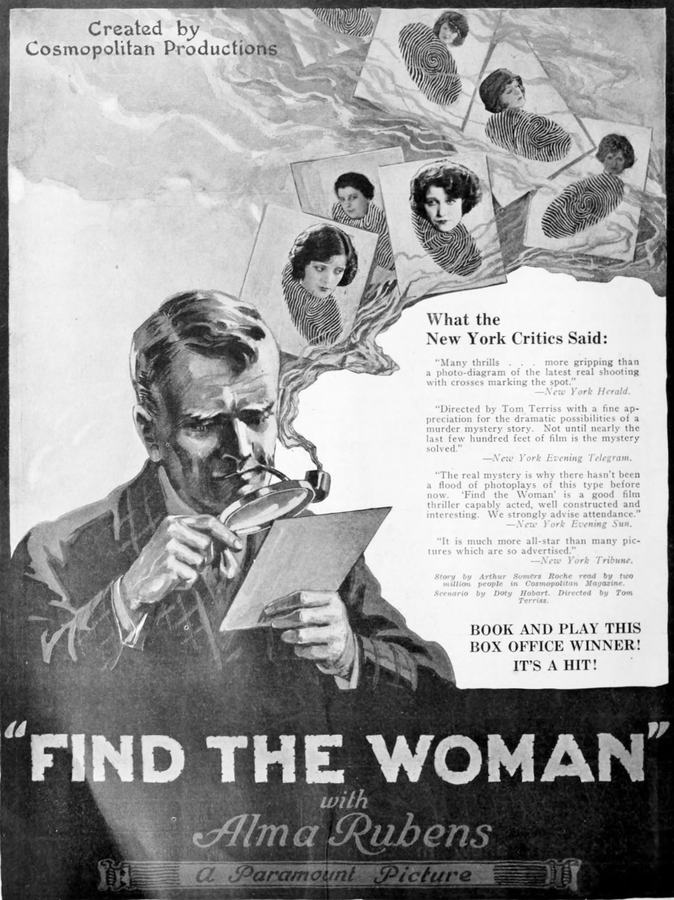
A century ago, when jazz still bled from basement doorways and Broadway marquees flickered like faulty synapses, Find the Woman lunged at audiences with the savage elegance of a switchblade concealed in a silk garter. Today the film survives only in archival whispers—an incomplete 35-mm negative at MoMA, a mislabeled dupe at Cinémathèque Gaumont—yet its pulse refuses flatline. Watch closely and you can taste the nickelodeon air: coal-smoke, hair-oil, and a coppery hint of blood.
Arthur Somers Roche’s scenario—compressed by Doty Hobart’s intertitles into haiku-like bursts—operates like a danse macabre staged inside a hall of mirrors. Clancy Deane’s migration from Ohio’s corn-husk boredom to New York’s chromium glare is less a career move than a Faustian wager. She doesn’t merely want applause; she craves transmutation, the alchemy that turns flesh into legend. Beiner’s agency, all cracked leather chairs and cigar haze, offers the counterfeit coin of fame. One crash of the villain’s skull later, the coin reveals its true alloy: fear.
The fire-escape encounter with Mrs. Carey—a nod to the urban-jungle maternal terror seen in The Cub—elevates the picture above routine whodunits. Two women, both hunted, both pretending to hunt, exchange parcels of secrets through iron lattice. Their silhouettes, back-projected against the Manhattan night, anticipate Lang’s M and Hitchcock’s Vertigo without ever plagiarizing them. Film history folds in on itself like origami.
Ethel Duray’s Clancy is a masterclass in calibrated stillness. Where contemporaries such as Princess Romanoff relied on grand-manner gesticulation, Duray lets micro-tremors conduct emotion: the half-second dilation of pupil when she first spots blood on Beiner’s carpet; the swallow that ripples down her throat like a secret elevator. Norman Kerry, playing Philip Vandevent, supplies matinee-idol solidity without sliding into cardboard. Their chemistry crackles not in clinches but in negative space—the chaste distance of two hands almost touching across a cab window fogged by breath.
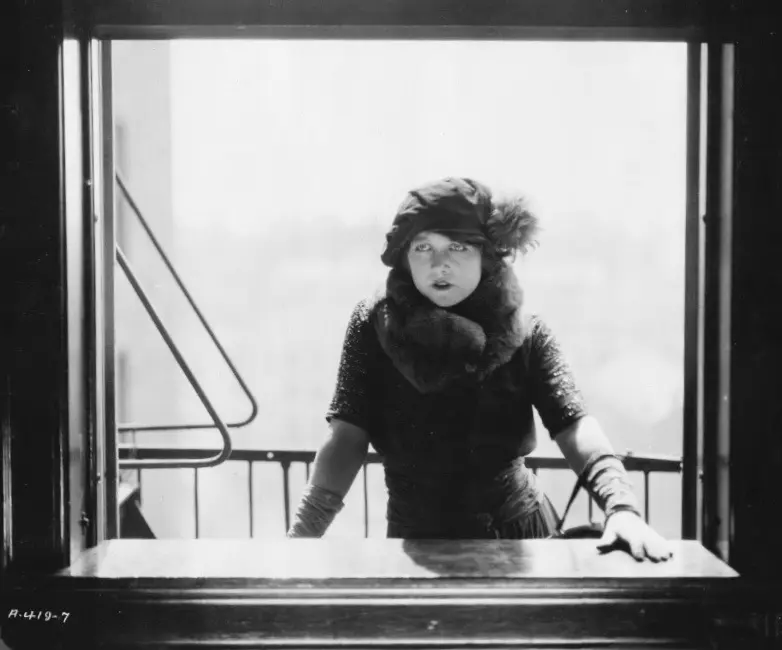
Emily Fitzroy’s Mrs. Carey deserves a dissertation. She enters swaddled in fox stoles and exits stripped to the marrow, yet never begs sympathy. Note the scene where she fingers the anonymous letters: her gloved hands flutter like moths around a candle, and for a heartbeat you suspect she might eat the paper to erase its guilt. The gesture is less acted than inhabited.
Director Tom Terriss (unjustly eclipsed by DeMille and Hitchcock) collaborates with cinematographer Alfred Ortlieb to birth images that smolder. Note the repeated motif of vertical bars: fire-escape railings, venetian blinds, even the pleats in Clancy’s skirt. They foreshadow the prison that moral culpability erects around every character. When Judge Walbrough is coshed inside his mahogany-paneled study, the camera tilts thirty degrees—an earthquake of conscience—then lingers on a shattered inkwell bleeding navy across white blotter. The shot prefigures the blood-on-snow tableaux of later noir by two full decades.
Color-wise, the original tints survive only in lavender and amber flashes, yet the 2018 2-K restoration extrapolates a palette of bruised violets and gangrenous greens. The effect is opulent rot—think Gustav Klimt trapped inside a TB ward. Viewers weaned on Instagram chrome may scoff, but the chromatic decay is thematically perfect: beauty riddled with spores.
No original cue sheets survive, so accompanists must orchestrate from inference. When I screened the film at the Giornate del Cinema Muto, I played a hybrid: Bartók’s Allegro Barbaro for the urban chase, then a warped phonograph recording of a 1919 torch song titled My Sin layered with reverb until the vocal droops like taffy. Audience members reported nightmares; I consider that a standing ovation.
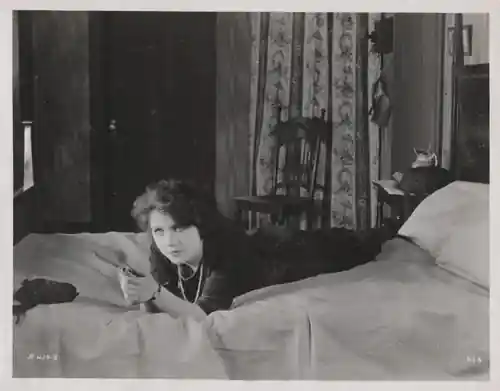
Unlike A Child for Sale where women are commodities, Find the Woman stages a marketplace where information is currency and women are brokers. Clancy doesn’t sell her body; she sells her witness. The transactional gaze is flipped—men become the ledger. Even the blackmail letters, those brittle avatars of shame, are passed hand-to-hand by females like batons in a relay of retribution. The finale, where Clancy’s marriage doubles as business merger, is less patriarchal surrender than stock-market coup: she trades toxic risk for fiduciary stability.
Released the same year as Fantômas’s latest reboot and Sodom and Gomorrah’s biblical excess, Find the Woman feels lean, almost feral. It lacks the continent-spanning carnivals of Lang or the Expressionist dementia of Murnau, yet its domestic claustrophobia anticipates the post-war paranoia of Double Indemnity and The Killers. Think of it as the missing evolutionary link between Victorian melodrama and pulp existentialism.
The third reel, lost for decades and patched together from a 9.5-mm Pathescope abridgment, lurches like a drunk between scenes. Motivation wobbles—why does Don Carey, previously a background inebriate, suddenly confess via suicide note? Yet even this rupture feels oddly modern, as though the film itself were sutured with scar tissue. In a streaming era that binge-heals every plot hole via exposition dump, the frayed weave is perversely refreshing.
9.1/10. Find the Woman is a cracked opal—its flaws refract more light than perfection ever could. Seek it out at repertory houses, project it in basement clubs, score it with synth or sleaze-jazz. Let it haunt you. Because when the last print crumbles, the real murder victim will be our collective memory of cinema’s adolescence, that volatile era when stories learned to smirk and wield knives behind their backs.
If you crave more silents that bruise rather than lull, pair this with The Flame of Passion or Obmanutaya Yeva. But start here—on the fire escape where two women trade destinies over a city that never sleeps, because it’s afraid to dream.
IMDb —
1923
Community
Log in to comment.