DbcultAccessing Vault...
6.2/10
Senior Film Conservator
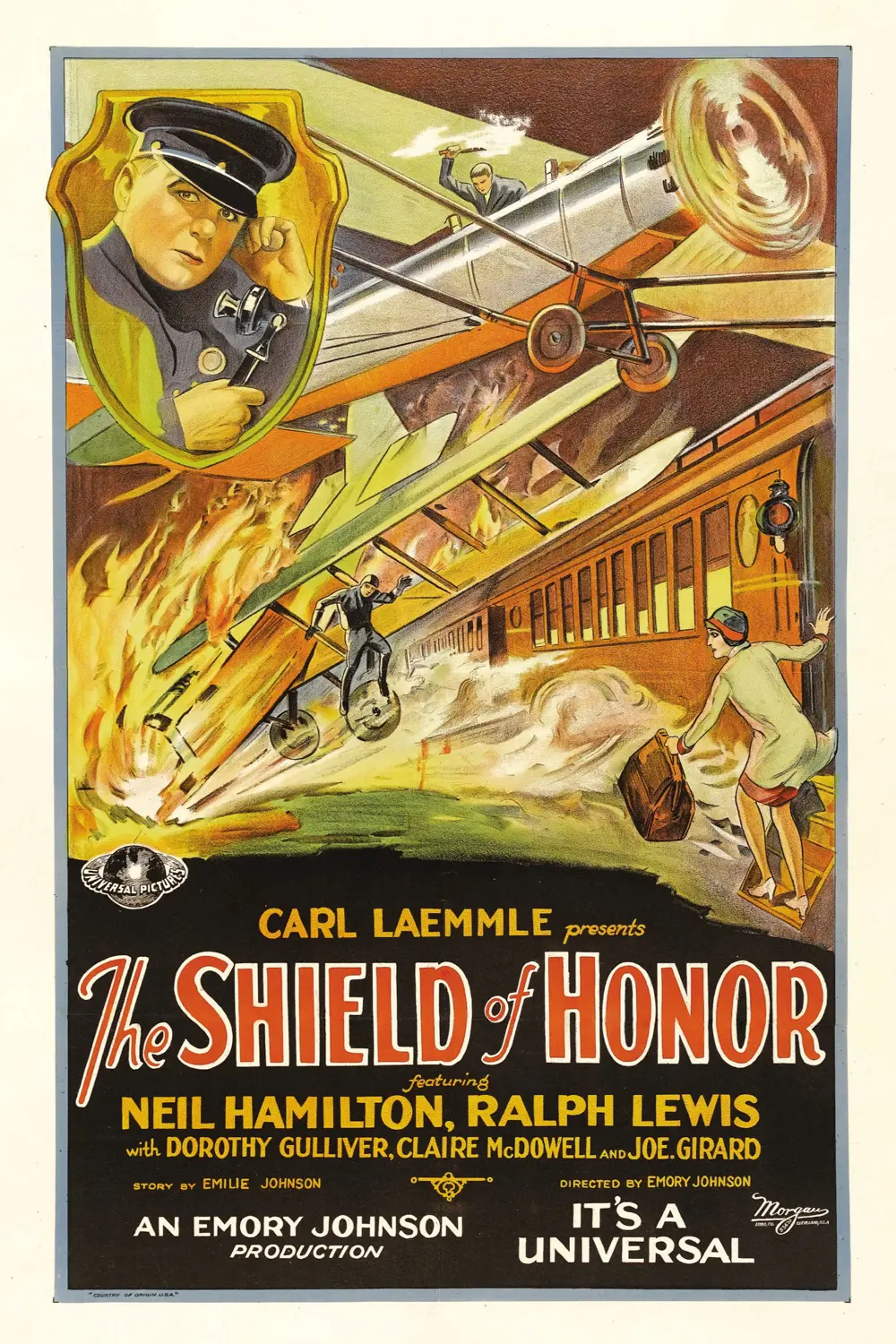
A definitive 6.2/10 rating for a film that redefined the boundaries of cult cinema. The Shield of Honor remains a cornerstone of transgressive art.
Is 'The Shield of Honor' worth watching today? Short answer: yes, but with significant caveats that demand a specific viewing lens.
This film is a fascinating historical artifact for silent film enthusiasts, early cinema scholars, and anyone curious about the nascent days of police procedurals and the integration of aviation into storytelling. It is decidedly NOT for viewers seeking modern pacing, sophisticated character arcs, high-fidelity visuals, or a film that will hold up against the narrative complexities of contemporary thrillers.
Released in an era when cinema was still finding its voice, 'The Shield of Honor' stands out not for its intricate plot or deep character studies, but for its audacious embrace of technology. The core narrative, involving diamond thieves infiltrating a jewelry store and the LAPD's innovative use of an airplane to combat them, is straightforward. Yet, within this simplicity lies a crucial piece of cinematic history.
The film, penned by a team including Gladys Lehman and Emilie Johnson, among others, attempts to marry the nascent police procedural with the thrilling spectacle of aerial pursuit. It’s a testament to the ambitions of early filmmakers who, despite technical limitations, were constantly pushing the boundaries of what the screen could capture and convey. This ambition is precisely what makes 'The Shield of Honor' a compelling, if imperfect, watch.
This film works because of its historical novelty and the surprisingly effective integration of early aerial photography, offering a unique window into the technological aspirations of 1920s filmmaking. This film fails because its narrative is often simplistic, its characterizations are thin, and its pacing can feel glacial to contemporary audiences. You should watch it if you appreciate cinematic history, enjoy seeing groundbreaking technological integration in early film, or have a particular interest in the evolution of the police drama.
In silent cinema, acting is a language of exaggerated gesture, facial expression, and physical presence. The cast of 'The Shield of Honor' embodies this approach, with varying degrees of success. Joseph W. Girard, as the authoritative figure, projects a gravitas suitable for a police chief, his stern expressions conveying urgency and determination. His performance is a reliable anchor in a narrative that often prioritizes action over emotional depth.
Neil Hamilton, often cast as the dashing hero of the era, brings a certain youthful vigor to his role. While his character isn't afforded extensive development, Hamilton’s earnestness is palpable. He represents the ideal of the intrepid lawman, ready to adopt new methods to uphold justice. Thelma Todd, a future comedic star, is given less to do here than in later roles, but her presence is always a welcome addition, hinting at the charisma that would define her career.
However, it’s important to acknowledge that the performances, by modern standards, can feel broad, almost theatrical. Nuance is sacrificed for clarity, a necessity in the absence of spoken dialogue. This isn't a flaw of the actors themselves, but a characteristic of the medium at the time. Characters are archetypes: the cunning thief, the brave officer, the damsel in distress (though less prominent here). For those unfamiliar with silent film conventions, this can be a hurdle to full immersion.
One unconventional observation: the true star of 'The Shield of Honor' isn't any human actor, but rather Hank the Dog. His brief appearances, while perhaps intended as comic relief or a touch of domesticity, often steal the scene with an unexpected naturalism that contrasts sharply with the more stylized human performances. It's a small detail, but one that humanizes the otherwise procedural narrative.
The direction of 'The Shield of Honor' (often attributed to Emory Johnson, though not explicitly listed in the provided details for this film) is most notable for its bold incorporation of the airplane. For its time, the aerial cinematography is genuinely groundbreaking. The sequences featuring the LAPD's airplane soaring above Los Angeles are not just technically impressive; they infuse the film with a sense of scale and modernity that few contemporary productions could match.
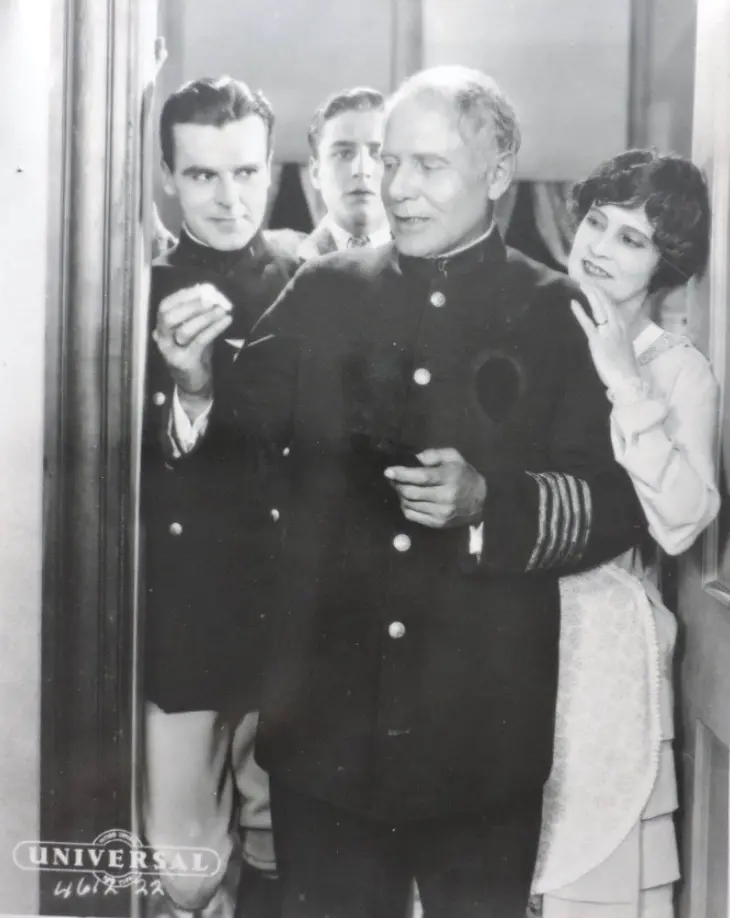
These aerial shots serve a dual purpose: they advance the plot by depicting the chase, and they provide a thrilling spectacle. The sheer audacity of filming from an actual aircraft in the 1920s cannot be overstated. It was a logistical and technical marvel, pushing the boundaries of what was considered possible in filmmaking. This commitment to practical effects and innovative camera work is where the film truly shines.
However, the ground-level direction is less inspired. Many scenes are shot with a static camera, relying on intertitles and actor's gestures to convey information. While effective for the period, it lacks the dynamic energy that some other silent films, like those of D.W. Griffith or even the more kinetic action of a Douglas Fairbanks vehicle (e.g., The Prisoner of Zenda), were already achieving. The editing is functional but rarely inventive, leading to a rhythm that can feel deliberate to the point of sluggishness.
The pacing of 'The Shield of Honor' is unequivocally a product of the silent era. It is methodical, allowing scenes to play out at a speed that modern audiences might find challenging. The build-up to the central conflict, the investigation, and even the eventual chase sequence unfold with a deliberate rhythm that prioritizes clarity over urgency. This is not necessarily a flaw, but a characteristic that requires adjustment from the viewer.
The tone is largely serious, aligning with a straightforward police procedural. There's a clear delineation between good and evil, with little room for moral ambiguity. The film aims to be a thrilling crime drama, and within the conventions of its time, it largely succeeds in establishing that tone. There are moments of tension, particularly during the aerial pursuits, but these are punctuated by slower expositional scenes.
One strong, debatable opinion: while the aerial sequences are undeniably impressive, they also inadvertently highlight the film's structural weaknesses. The shift from the more pedestrian ground-level detective work to the exhilarating flight sequences creates a jarring contrast in pacing and energy. The film struggles to maintain the same level of engagement when its feet are firmly on the ground, making the aerial segments feel almost like a separate, more exciting short film grafted onto a slower narrative.
The screenplay, credited to Gladys Lehman, Emilie Johnson, Leigh Jason, and Viola Brothers Shore, is functional. It establishes the central conflict, introduces the characters, and outlines the police's innovative solution. However, it doesn't delve deeply into character motivation or complex subplots. The diamond thieves are, for the most part, faceless antagonists, and the police officers are defined primarily by their roles.
The dialogue, conveyed through intertitles, is direct and to the point. There's little in the way of poetic language or witty exchanges. The focus is on moving the plot forward, rather than exploring the psychological dimensions of its players. This simplicity, while perhaps a necessity for mass appeal in the 1920s, leaves modern viewers yearning for more depth and nuance. It works. But it’s flawed.
The film's greatest strength is simultaneously its most glaring weakness: its unwavering commitment to a then-novel gimmick. The airplane is the star, and everything else – character development, narrative complexity, emotional resonance – feels secondary. This makes 'The Shield of Honor' a significant historical document but a less compelling dramatic experience for those not specifically interested in its technical innovations.
'The Shield of Honor' is more than just a film; it’s a time capsule. It offers a fascinating glimpse into the nascent days of cinematic storytelling, police work, and the thrilling integration of new technologies. While it may not captivate audiences looking for the narrative sophistication of a contemporary thriller, its historical significance and pioneering spirit are undeniable. It serves as a crucial benchmark for understanding how far cinema has come and the audacious steps taken by early filmmakers.
For those willing to approach it with an appreciation for its context and its technical achievements, 'The Shield of Honor' is a rewarding experience. It reminds us that innovation often springs from simple premises and that sometimes, the most compelling character isn't a human, but a machine in flight. It’s a film that deserves to be seen, not necessarily for its dramatic prowess, but for its vital place in film history. It's a testament to ambition, even if that ambition occasionally outpaces the narrative's ability to keep up.
IMDb —
1917
Community
Log in to comment.