DbcultAccessing Vault...
Cult Review
Senior Film Conservator
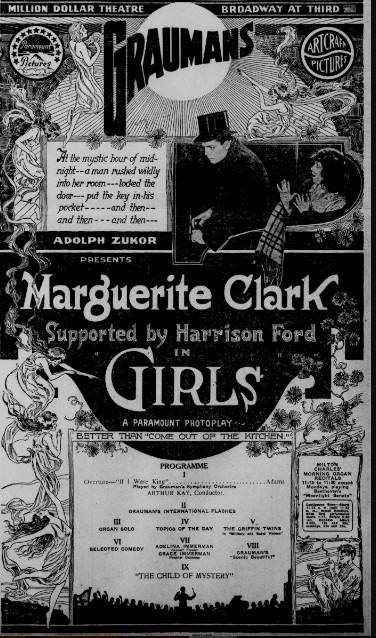
The 1920 silent drama Girls arrives like a whispered confession from an era when cinema was still learning the language of the soul. Directed with a measured hand, the film invites its audience into a cramped yet meticulously staged apartment, where three women—Pamela Gordon (Myrtle Rishell), Violet West (Helene Chadwick), and Kate West (Clarissa Selwynne)—have erected a barricade against the patriarchal tide. Their manifesto, emblazoned above the door, functions as both literal and metaphorical gatekeeping, a visual cue that the narrative will interrogate the very notion of autonomy.
From the opening tableau, the set design underscores a claustrophobic intimacy. The walls, painted a muted charcoal, absorb the faint glow of a single oil lamp, casting elongated shadows that dance across the polished wooden floorboards. This chiaroscuro not only accentuates the era’s aesthetic but also mirrors the internal darkness each heroine harbors—a fear of vulnerability that has been transmuted into obstinate self‑preservation.
Enter Edgar Holt (Thomas Persse), a man whose own marital discord propels him into the women’s sanctuary. His entrance is not a grandiose heroic stride but a frantic scramble through a hallway, his coat flapping like a wounded bird. The moment he locks eyes with Pamela, the camera lingers, allowing the audience to absorb the subtle tension that crackles between them. Edgar’s pursuit is less a pursuit of conquest and more a delicate negotiation with an entrenched fortress of ideals.
One of the film’s most striking visual motifs is the precarious window perched atop an ironing board. When Edgar is expelled, the camera follows his descent in a slow‑motion tableau, his silhouette framed against the courtyard’s dim sky. The window, a flimsy conduit between interior and exterior, becomes a symbol of the fragile barrier that separates desire from denial. This set piece is revisited later, when Edgar attempts a daring re‑entry, only to be rescued by a now‑softened Pamela—a cinematic echo that underscores the transformative power of love.
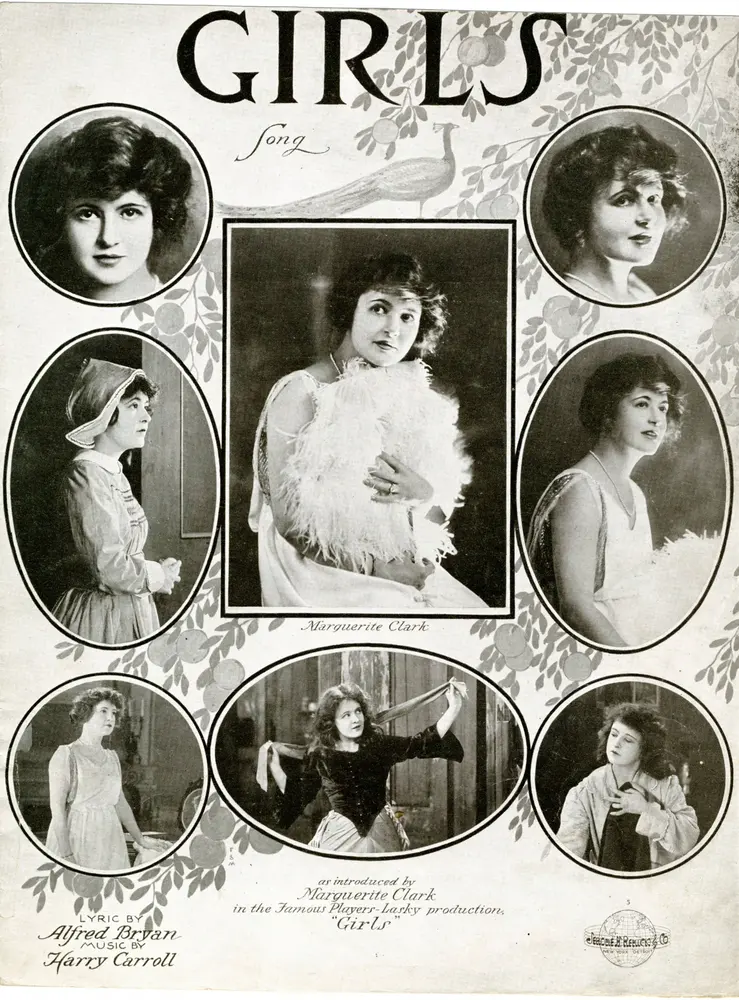
The narrative’s turning point arrives when hidden truths surface: Kate’s secret marriage and Violet’s engagement are unveiled in a sequence that feels both inevitable and shocking. These disclosures destabilize the trio’s collective resolve, especially Pamela’s, whose private yearning begins to surface. The screenplay, penned by Clyde Fitch, Alice Eyton, and Clara Beranger, deftly weaves these revelations into a tapestry of emotional realism, reminding viewers that the façade of independence often conceals an undercurrent of longing.
Myrtle Rishell’s portrayal of Pamela is a masterclass in restrained expression. Her eyes, dark pools of unspoken grief, convey a spectrum of feeling without a single spoken word—an essential skill in silent cinema. Thomas Persse, as Edgar, balances earnestness with a touch of vulnerability, his gestures deliberately measured to avoid melodrama. Helene Chadwick’s Violet and Clarissa Selwynne’s Kate provide complementary counterpoints, each embodying a distinct facet of early twentieth‑century femininity.
When situating Girls within its cinematic milieu, parallels emerge with other silent era dramas. The thematic exploration of female autonomy echoes the moral quandaries in Eyes of Youth, while the tension between personal desire and societal expectation mirrors the narrative thrust of The Love Mask. Moreover, the film’s visual austerity can be contrasted with the more opulent set designs of The Wishing Ring: An Idyll of Old England, highlighting how Girls leverages minimalism to amplify emotional intensity.
The cinematographer employs a restrained palette, allowing the stark contrast between black‑letter signage and the warm glow of candlelight to dictate mood. Close‑ups are sparingly used, yet when they appear—particularly during Pamela’s moment of rescue—they serve as visual punctuation, emphasizing the shift from resistance to surrender. The film’s editing maintains a deliberate pace, granting the audience space to contemplate each character’s internal conflict.
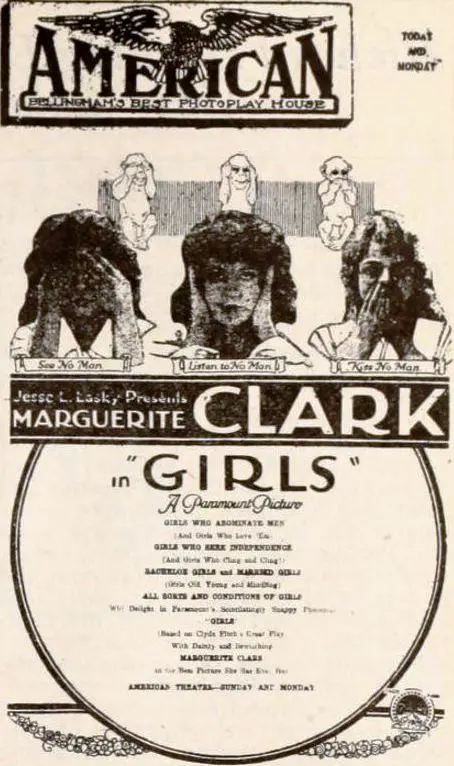
While Girls can be lauded for foregrounding women’s agency, it ultimately capitulates to a conventional romantic resolution. The film suggests that love, embodied by Edgar, can dissolve even the most fortified vows—a notion that reflects contemporary societal anxieties about the sustainability of female independence. Yet, the nuanced performances and the subtle subversion of the “happy ending” trope provide fertile ground for modern reinterpretation.
The intertitles, rendered in an elegant serif typeface, convey both exposition and poetic reflection. Their placement is judicious, never interrupting the visual flow but rather enhancing the narrative’s rhythm. The accompanying live piano score—reconstructed from period sheet music—oscillates between melancholic minor chords during moments of isolation and brighter major passages as love begins to infiltrate the women’s lives.
Though Girls did not achieve the box‑office heights of contemporaneous epics such as Durand of the Bad Lands, its subtle critique of gender norms has earned it a modest cult following among silent film scholars. The film’s emphasis on interiority over spectacle presaged later works that prioritized character study, influencing directors who sought to explore the psychological terrain of their protagonists.
In the grand tapestry of early twentieth‑century cinema, Girls occupies a niche that rewards patience and attentive viewing. Its deliberate pacing, combined with compelling performances and a visual language that speaks louder than words, renders it a compelling case study in the evolution of narrative cinema. For aficionados of silent drama, the film offers a rare glimpse into the complexities of female solidarity, the fragility of personal vows, and the inexorable pull of affection.
Ultimately, Girls stands as a testament to the power of restraint—a film that whispers rather than shouts, yet leaves an indelible imprint on the viewer’s consciousness.

IMDb —
1923
Community
Log in to comment.