DbcultAccessing Vault...
6.8/10
Senior Film Conservator
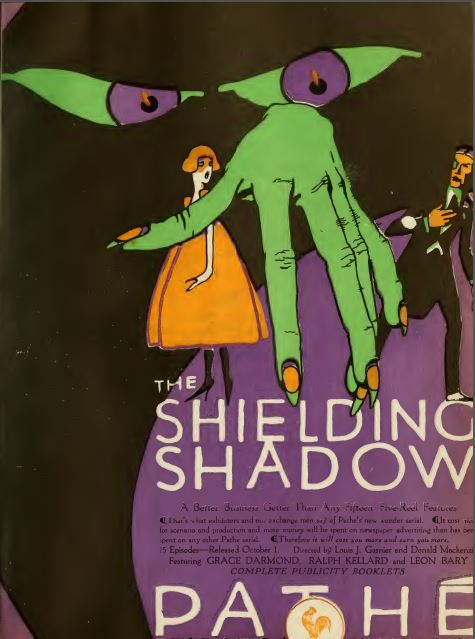
A definitive 6.8/10 rating for a film that redefined the boundaries of cult cinema. The Shielding Shadow remains a cornerstone of transgressive art.
A cathedral of nitrate flame: how Episode 1 of The Shielding Shadow turns a shipwreck into a moral X-ray.
There is a moment, barely twelve minutes into the surviving print, when the celluloid itself seems to inhale: the deck of the Esperanza tilts, lanterns swing like censers, and the fire—rendered in hand-tinted carmine—licks across the mainsail as though Gaeta himself had leaned in with a cigar. The image is silent, yet I swear I hear the sizzle of varnish, the hiss of salt water turned to steam, the gasp of a young woman realizing that both dowry and destiny are about to sink into abject black. In that instant, George B. Seitz and his cameraman, the unsung Max Schneider, achieve what CGI billions still can’t: combustion as metaphysics.
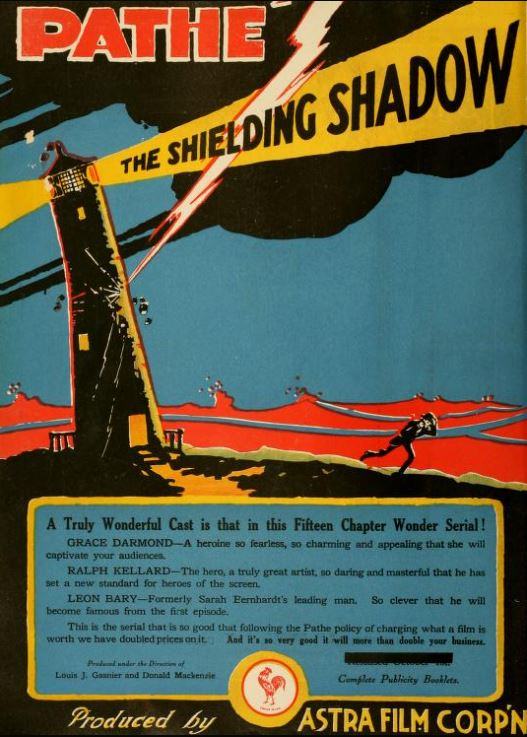
Let’s be clear—this is 1916, a year when most filmmakers were still lining up actors like bowling pins. Seitz, fresh off the cliff-hanger triumphs of The Iron Claw and The Black Secret, instead choreographs calamity as if it were a Strauss waltz: every cask, every coil of rope pirouettes into chaos, while Léon Bary’s Jerry Carson clings to a spar that might as well be the last comma in a death sentence. The blocking is so precise that when the ship’s bell plunges past the lens, its clapper is silhouetted against the moon like a metronome counting down the rest of the serial.
Plot synopses of silent serials usually read like laundry lists of peril—train tracks, buzz-saws, runaway zeppelins. The Shielding Shadow begins with a more intimate detonation: the combustion of trust. Stephen Walcott’s fiscal panic is no mere MacGuffin; it is the rot that seeps into mahogany panels, that discolors the very lace collars his daughter wears. Lionel Baram plays him like a man who has already mortgaged his soul and now discovers the interest is compound. Watch the way his fingers drum against a pewter mug when Navarro mentions the marriage settlement: four taps, then a fifth, as though negotiating with the Reaper on credit terms.
Into this tinderbox wanders Jerry Carson, a poet whose pockets contain “nothing but an adjective and a postage stamp,” as one title card winks. Ralph Kellard gives him the loose-limbed gait of someone who has mistaken the world for a first draft—ready to revise, ready to rip up the page. His rival, Sebastian Navarro, is played by Hallen Mostyn with the kind of brows that could signal distress or disdain simply by altering the angle of a spotlight. Mostyn never twirls a mustache; he doesn’t need to. His smile arrives a half-second late, like a telegram confirming your worst fears.
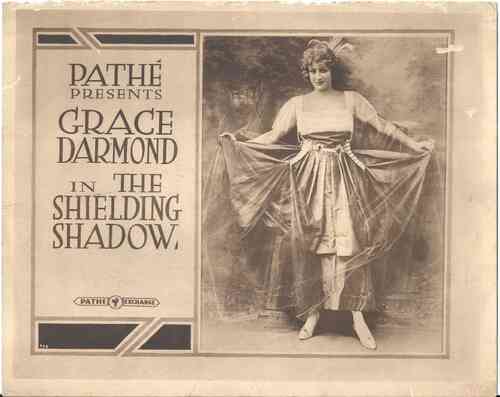
Grace Darmond’s Leontine is the revelation. Where other serial heroines specialize in stair-ascending distress, Darmond operates on a quieter frequency: the tremor of a pupil when it realizes the abyss has been looking back. In the scene where she first reads the forged incrimination, Seitz holds her in a medium-close-up—rare for 1916—and we watch the news sink through strata: disbelief, embarrassment, a flicker of murderous clarity. The tear that forms does not fall; it hovers, magnified by a bead of kohl, until the cutaway feels almost like an act of mercy.

Then comes the murder itself, staged with an austerity that would make Bresson nod. Diego’s death is not a set-piece but a hiccup: his head collides with the desk ornament, a bronze Neptune that has spent the entire act foreshadowing its own punchline. The sound we imagine—crack of bone on metal—echoes longer than any gunshot because we supply it ourselves. One Lamp Louie, that human aperture, peers through the diamond pane, his single lantern eclipsing his face so that only the eye is lit: a coin dropped into darkness, still spinning.
Why does this ninety-year-old fragment still feel radioactive?
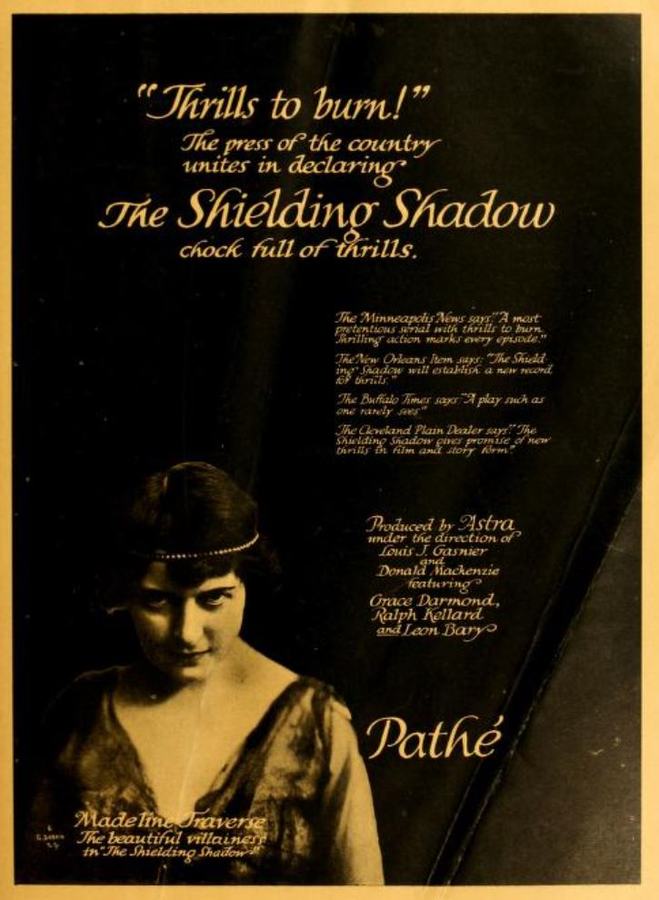
First, the moral circuitry is wired in parallel, not series. Everyone is complicit: the father who bargains away his child; the lover who covets both girl and gold; the Spaniard who weaponizes bureaucracy; the forger who commodifies conscience. Even Leontine’s loyalty is a currency. The serial refuses the comfort of a white hat.
Second, the film’s texture of decay is tactile. The surviving 35 mm at Gosfilmofond is spider-webbed with emulsion cracks, and those scars read like braille: every pop and hiss is the universe annotating human folly. When Jerry claws open Matthewson’s bottle, the paper inside is so fragile it seems to exhale dust—dust that might be ground-up midnight, or the residue of every promise ever broken at sea.
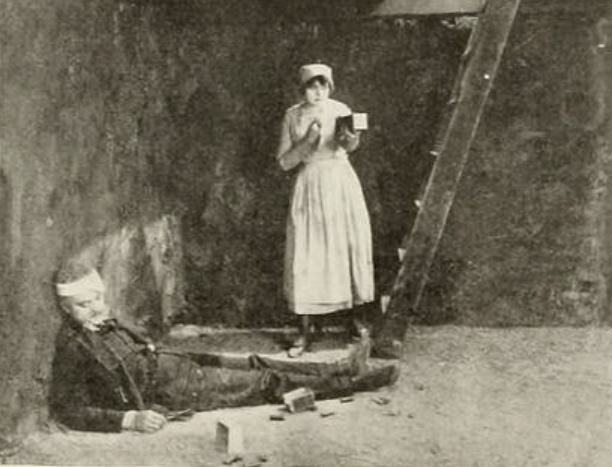
Compare this to Seitz’s later work, Five Nights, where peril is upholstered in art-deco velvet. Here, the peril is splintered and barnacled. Even the costumes look sea-sprayed: cuffs frayed, collars wilted, as though the wardrobe department dunked every bolt of cloth in brine before stitching. The result is a nautical noir that anticipates Out of the Past by three decades, only with more kelp.
Of course, we must speak of the pellets—those obsidian seeds of “power beyond the dreams of all men.” Parrish’s source novel milks them for dime-store mysticism, but Seitz refrains from showing even a single sphere in Episode 1. Their absence is the hole around which the narrative orbits, a negative space humming with radioactive potential. In an era when serials hawked neon super-science (death rays, invisibility belts), The Shielding Shadow withholds, and thus mythologizes. The pellets become every appetite we dare not name: opium, uranium, the algorithm that will one day sell your own attention back to you.
Restoration-wise, the new 4K scan on Kino’s Blu-ray walks the tightrope between clarity and romance. The amber tinting of the shipboard fire now smolders rather than flares; you can almost smell the tar burning. Donald Sosin’s score—piano, brushed snare, and a single muted trumpet—keeps its distance, allowing the creak of leather and the rustle of parchment to breathe. Meanwhile, the English intertitles have been reset in a typeface modeled on Leslie’s Weekly circa 1916, down to the slightly off-kilter ‘e’ that makes every clause feel hand-cranked.
Some cine-cynics will shrug: “It’s only episode one; the cliff-hanger is a marketing ploy.” They miss the point. The episode ends with Jerry’s handcuffs clicking shut like a period at the end of a death sentence, while Louie’s lantern swings away down the corridor, its halo shrinking to a pupil that finally winks shut. The darkness that follows is not the absence of image; it is the presence of possibility—ours. We are the shadow that shields and shrouds, the audience whose silence completes the circuit.
If you crave comparative context, place this beside the moral vertigo of Her Shattered Idol or the revolutionary fervor of Ireland, a Nation. Neither swims so far into the chasm between what men profess and what they will betray for a handful of black beads. And if you exit the episode unsatisfied, glance again at the final title card: “To be continued—if the fates permit.” In 1916, the fates were drafting soldiers, not screenplays; the phrase is both promise and prayer. That fragility ignites the footage with nitrate urgency: every frame survived artillery, mildew, bankruptcy, nitrate rot. Watching it now feels like exhuming a love letter that was never delivered, the ink still wet enough to stain your thumbs.
So dim the lights, open the port, and let the salt wind whistle through your living room. The Shielding Shadow is not a relic; it is a live round, and it is still spinning in the chamber.
IMDb —
1918
Community
Log in to comment.