DbcultAccessing Vault...
Cult Review
Senior Film Conservator

There’s a peculiar resonance to films that emerge from the crucible of conflict, particularly those like 'Our Better Selves' that grapple with the profound redefinition of identity amidst the chaos of war. This silent epic, penned by the masterful Ouida Bergère, isn't merely a tale of wartime romance; it’s an incisive character study, a commentary on societal expectations, and ultimately, a poignant testament to the human spirit's capacity for transformation. From the opulent, albeit stifling, salons of pre-war France to the brutal, unforgiving front lines, the narrative unfurls with a compelling intensity, challenging its protagonists – and by extension, its audience – to confront the true meaning of purpose and sacrifice.
At its heart, 'Our Better Selves' introduces us to Loyette Merval, a French noblewoman whose life is as adorned as it is devoid of genuine challenge, and Willard Standish, an American aristocrat whose inherited wealth has fostered a deep-seated idleness. Their marriage, while seemingly loving, is a union bound by convention and mutual, unspoken dissatisfaction. Willard’s passivity is a festering wound in their relationship; a man adrift in a sea of inherited privilege, he lacks the drive and direction that might give his life meaning. Loyette, for her part, embodies the superficiality of her class, her sensibilities finely tuned to the aesthetics of leisure rather than the rigors of reality. This initial setup is crucial, establishing the baseline from which their dramatic transformations will spring. It's a world not unlike that depicted in some contemporary social commentaries, where the trappings of wealth often masked a deeper spiritual malaise. One might draw a faint parallel to the societal critiques embedded in films like Skinner's Dress Suit, though the stakes here are immeasurably higher, moving beyond mere social climbing to existential awakening.
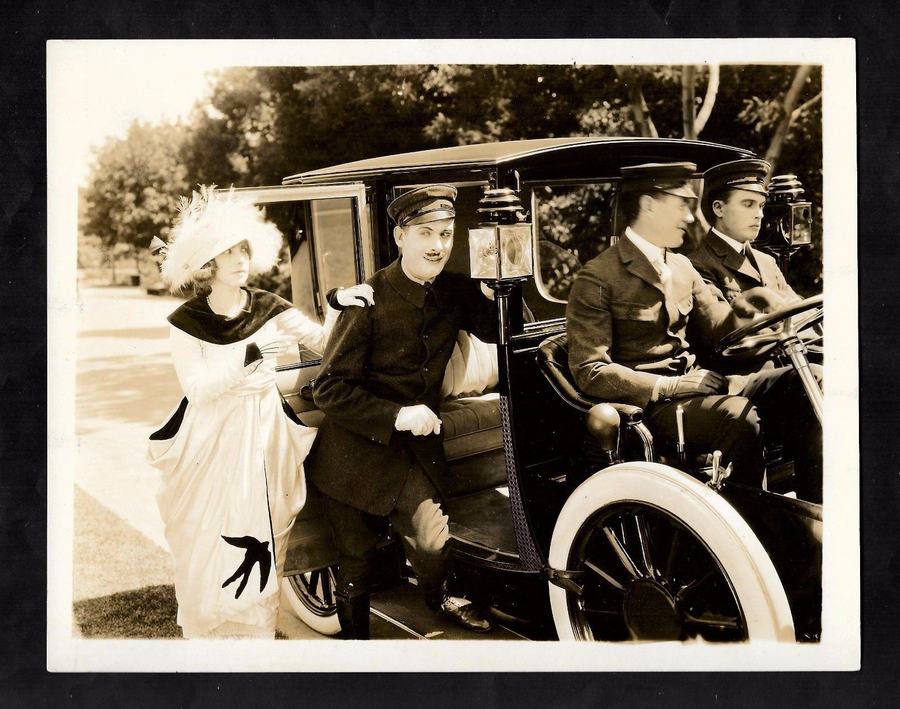
The film deftly illustrates how Willard's attempts to break free from his gilded cage are met with resistance, not least from Loyette herself. His brief, earnest endeavor to become a chauffeur—a tangible, working-class occupation—is met with her profound disgust. This reaction, while seemingly trivial, highlights the deep-seated class prejudices and the suffocating expectations that govern their lives. Loyette's revulsion isn't merely snobbery; it's a reflection of a world where status dictates identity, where manual labor is seen as a degradation rather than an honest pursuit. This moment is a stark reminder of the social chasm that existed, and the immense pressure to conform to one's station, regardless of personal fulfillment. Willard’s subsequent retreat into idleness, fueled by Loyette's disapproval, underscores the inertia of their pre-war existence, setting the stage for the cataclysm that will soon redefine everything.

The advent of the Great War shatters the fragile peace of their comfortable, yet stagnant, world. This global conflict, a monumental upheaval, serves as the ultimate catalyst for Willard's long-delayed awakening. The call to arms isn't just a national imperative; for Willard, it’s a profound personal summons. Joining the French Secret Service, he finds a purpose that had eluded him in his aristocratic ennui. The transition from indolent socialite to clandestine operative is depicted with an understated power, showcasing the war's capacity to forge character and reveal dormant strengths. This transformation isn't instantaneous or without struggle, but it marks the beginning of Willard's journey toward his 'better self,' a self defined by courage, commitment, and a willingness to face danger head-on. The sheer contrast between his former life and his new role is a powerful cinematic statement, reflecting the broader societal shifts occurring across Europe.
While Willard embraces his new, perilous role, Loyette's initial reaction to their separation is one of self-absorbed distress. Her focus remains on her social life, a testament to how deeply ingrained her prior existence was. However, as the war rages and the true gravity of their situation sinks in, her perspective slowly begins to shift. The separation, initially a source of annoyance, morphs into a gnawing concern, then a desperate longing. This slow burn of emotional evolution is one of the film's most compelling aspects. It’s not an immediate heroic leap but a gradual, painful shedding of her former frivolousness, compelled by the very real threat to her husband’s life. The war, which initially seemed to merely disrupt her comfort, now begins to demand a deeper, more profound engagement from her. It is in this period of individual struggle and growing awareness that both characters begin their true journeys of self-discovery, moving beyond the superficiality of their inherited roles.
The narrative truly ignites when Willard, wounded and vulnerable, seeks refuge in a secluded convent. This sanctuary, a symbol of peace and spiritual solace, soon becomes a focal point of the war's encroaching brutality. Loyette, driven by an urgency that transcends her former self-interest, embarks on a perilous quest to find him. Her journey, fraught with danger and uncertainty, is a stark contrast to her earlier life of cushioned comfort. It's here, in the convent, that their paths converge once more, but under circumstances vastly different from their Parisian idyll. The quiet sanctity of the convent is soon disrupted by the ominous approach of German forces, forcing the nuns to flee and leaving Willard isolated and exposed. This setting, with its inherent tension between spiritual refuge and worldly violence, provides a potent backdrop for Loyette's most audacious act of heroism.
Loyette's decision to disguise herself as a nun, concealing Willard within the sacred confines of the altar, is a moment of breathtaking courage and ingenuity. It marks a profound psychological break from her past, a complete inversion of her former self. The woman who once recoiled at her husband's attempt to be a chauffeur now risks everything, donning the habit of humility to protect him. This act is not just tactical; it's symbolic, representing her embrace of a selfless, protective love. When confronted by German soldiers, her air of innocence, a remarkable feat of self-possession under the very gaze of execution, momentarily saves her. This scene, brimming with suspense, showcases the incredible transformation she has undergone, demonstrating a fortitude and cunning previously unimaginable. It's a powerful statement on how extreme circumstances can unearth latent strengths, pushing individuals beyond their perceived limitations. The tension here is palpable, a testament to Ouida Bergère's skillful storytelling and the compelling performances of Mary Wise as Loyette and Lew Cody as Willard.
The film escalates its emotional intensity with Loyette's discovery of a heinous plot: the Germans intend to lure Allied forces onto a mined hill, ensuring a catastrophic loss of life. This revelation propels Loyette beyond mere survival into an act of desperate, selfless heroism. Without hesitation, she eliminates the German soldier on watch, a decisive and brutal act that underscores the complete eradication of her former, delicate sensibilities. This is no longer the frivolous noblewoman; this is a woman forged in the fires of war, willing to commit violence to save countless lives. It’s a moment that resonates with the raw, visceral realities of conflict, echoing the desperate measures taken by ordinary people in extraordinary circumstances, much like the quiet heroism depicted in other wartime narratives such as Fields of Honor, where the individual's courage becomes a bulwark against overwhelming odds.
Her act, however, comes at a devastating cost. Though she thwarts the immediate threat, both she and Willard are subsequently captured and, tragically, executed. This climactic sequence, while heartbreaking, is presented not as a defeat, but as the ultimate affirmation of their journey. Their sacrifice, born of love and newfound purpose, elevates their individual stories into something universal. The film refuses to shy away from the brutal realities of war, yet it imbues their deaths with profound meaning. It's a poignant reminder that heroism often demands the ultimate price, but that the spirit of sacrifice can transcend even mortality. The narrative arc, from their initial apathy to their final, selfless acts, is a powerful exploration of the human capacity for growth and redemption, suggesting that true nobility lies not in birthright, but in character forged under duress.

The film's final moments deliver a powerful, allegorical punch, transcending the grim realities of their earthly demise. Loyette and Willard meet not in a conventional afterlife, but at the River Styx, the mythical boundary between life and death. This imagery is deeply evocative, lending an almost classical, epic quality to their tragic end. Their embrace as they sail to eternity is a sublime visual metaphor for their enduring love and the ultimate realization of their 'better selves.' It suggests that their journey, fraught with personal and global conflict, has culminated in a spiritual union, a peace found beyond the mortal coil. This ethereal conclusion serves as a potent commentary on the film's title, asserting that their true essences, refined by sacrifice and purpose, have finally emerged, pure and eternal.
This ending elevates 'Our Better Selves' beyond a mere war drama into a profound meditation on love, loss, and spiritual transcendence. It offers solace in the face of tragedy, suggesting that profound love and sacrifice are not extinguished by death but are, in fact, eternal. The film thus leaves a lasting impression, not of despair, but of a triumphant, albeit costly, spiritual victory. It's a narrative choice that speaks to the enduring power of myth and the human need for meaning in the face of overwhelming adversity. The silent era, with its reliance on visual storytelling and evocative intertitles, was particularly adept at conveying such profound, symbolic endings, allowing the audience to project their own interpretations onto the powerful imagery.
Ouida Bergère's screenplay for 'Our Better Selves' is a masterclass in character-driven narrative, showcasing her keen understanding of human psychology and the dramatic potential of societal upheaval. Her ability to craft such a compelling and emotionally resonant story, navigating themes of class, war, and personal redemption, solidifies her reputation as a significant voice in early cinema. The film's strength lies not just in its dramatic plot points but in the nuanced development of Loyette and Willard, transforming them from archetypes of privilege into complex, relatable figures. The performances, particularly from Mary Wise as Loyette, who navigates a wide emotional spectrum from frivolousness to fierce heroism, and Lew Cody as Willard, whose silent portrayal of a man finding his purpose is deeply affecting, are central to the film's success. Fannie Ward’s contribution, though perhaps less central to the primary narrative, adds another layer of depth to the ensemble, painting a vivid picture of the era.
In a cinematic landscape often dominated by grand spectacles, 'Our Better Selves' distinguishes itself by its profound interiority, its focus on the moral and emotional evolution of its characters. It reminds us that even amidst the largest global conflicts, the most compelling battles are often fought within the human heart. The film's message of transformation, of finding one's true purpose through adversity, remains timeless. It’s a testament to the idea that our 'better selves' are not inherent but forged, often painfully, through the trials we face and the choices we make. The film serves as a powerful historical document, reflecting the anxieties and aspirations of an era grappling with unprecedented change, while simultaneously offering a universal narrative of growth and ultimate, transcendent love. It is a film that, despite its age, continues to resonate, prompting contemplation on the nature of sacrifice and the enduring power of the human spirit. The subtle nuances of silent acting, the evocative cinematography, and Bergère's powerful script coalesce to create a work of remarkable emotional depth and lasting impact. It stands as a profound example of how early cinema could tackle complex themes with grace and power, leaving an indelible mark on its viewers and on the history of film itself.
The narrative's exploration of personal transformation against the backdrop of global conflict finds echoes in other powerful films of the era that similarly used war as a crucible for character. While the specific plot points differ, the thematic core of individuals rising to meet monumental challenges is universal. The film's rich tapestry of character development and its ultimate message of enduring love and sacrifice make it a compelling watch, urging us to consider what truly constitutes our 'better selves' when stripped of societal artifice. It’s a film that demands reflection, proving that some stories, even without spoken dialogue, speak volumes.
IMDb 7
1933
Community
Log in to comment.