DbcultAccessing Vault...
Cult Review
Senior Film Conservator
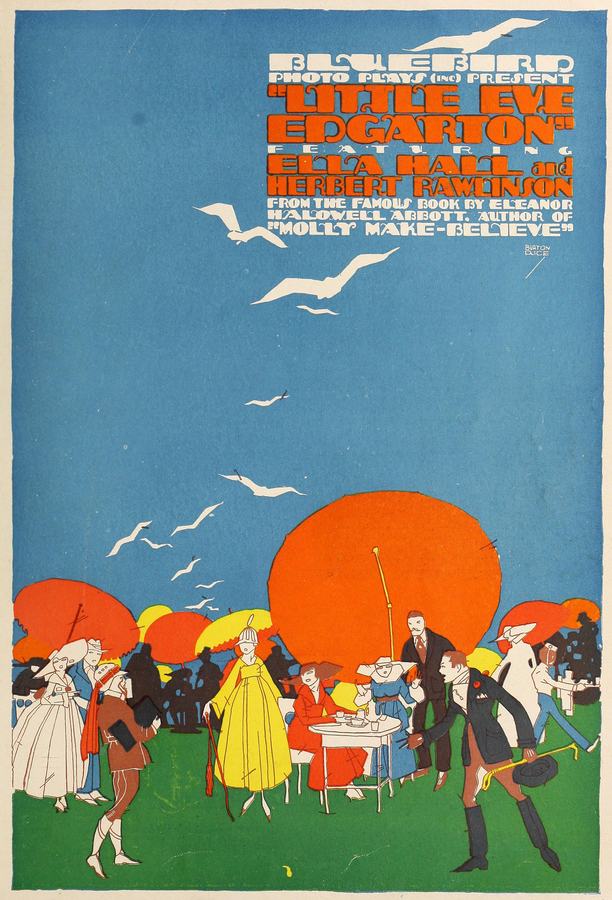
The 1916 landscape of American cinema was a period of frantic evolution, a time when the grammar of the moving image was being codified by visionaries like Robert Z. Leonard. In 'Little Eve Edgarton', we find a fascinating intersection of Edwardian social mores and the burgeoning 'New Woman' archetype.
To understand the gravity of Little Eve Edgarton, one must first dispense with the notion that silent film characters were mere caricatures of emotion. Doris Pawn delivers a performance that is startlingly modern in its restraint. As Eve, she isn't the fluttering bird of the Griffith era; she is a woman of the mind, a creature of the laboratory who views the world through the corrective lenses of 'big bow spectacles.' This visual signifier—the glasses—serves as a barrier between her and the performative femininity expected by the Los Angeles socialites she eventually encounters. It is a trope we see echoed in later decades, but here, in the mid-1910s, it feels raw and experimental.
The film opens with a sequence that establishes the nomadic, almost monastic life of the Edgartons. Roaming South Africa in search of rare specimens, Eve’s father, played with a stern, singular focus by Thomas Jefferson, has inadvertently raised a daughter in his own image—or rather, in the image of his work. There is a profound loneliness in the way Eve moves through these landscapes. Unlike the protagonists in Beulah, who are often defined by their domestic aspirations, Eve is defined by her utility to the scientific mission. She is 'part of the traveling equipment,' a phrase that stings with the coldness of patriarchal objectification.
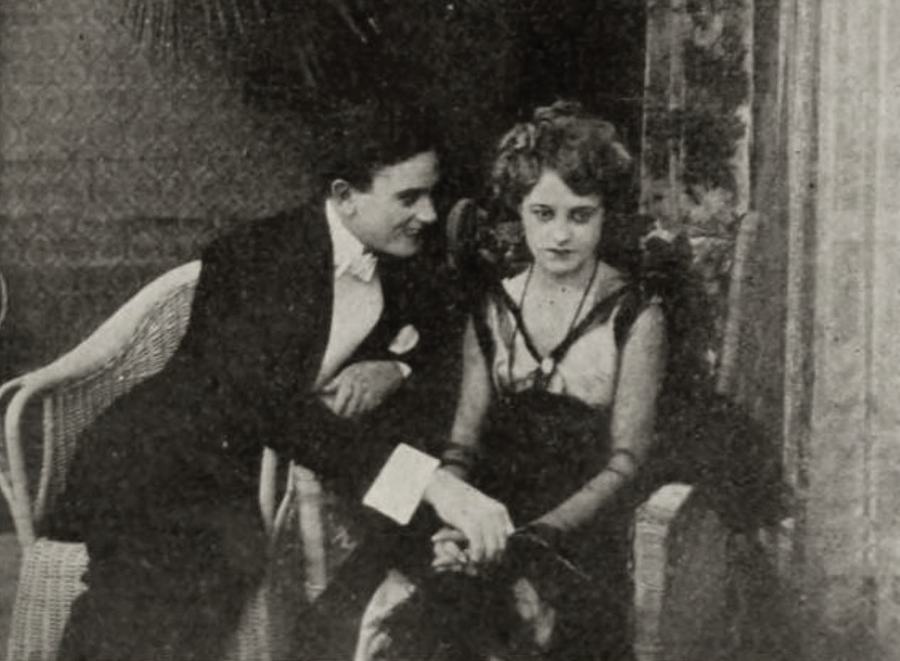
The decision to marry her off to John Elbertson, a man significantly her senior, is presented not as a tragedy, but as a logical extension of their professional partnership. It is a chilling look at how the pursuit of 'pure knowledge' can sometimes strip away the humanity of those closest to the seeker. This thematic thread of intellectual coldness vs. emotional warmth is far more nuanced than the simple morality plays found in Samhällets dom.
When the action shifts to Los Angeles, the film transforms into a sophisticated social satire. The hotel setting acts as a microcosm of early 20th-century class dynamics. James Barton (Herbert Rawlinson) represents the 'idle rich,' a man whose life is a series of 'escapades' and 'flirtatious' maneuvers. His arrival at the hotel, coinciding with the botanists' convention, creates a delicious friction. On one hand, we have the delegates—drab, serious, and obsessed with the minute details of the natural world. On the other, we have the guests—vibrant, vacuous, and obsessed with the minute details of each other’s reputations.
The 'joke' played by Barton’s cousin, introducing him to the 'unattractive' Eve, is a pivotal moment of narrative cruelty that Leonard handles with surprising sensitivity. It highlights the superficiality of the social set, drawing a sharp contrast between Barton’s initial disdain and Eve’s quiet dignity. Unlike the grand historical sweeps of Napoleon, 'Little Eve Edgarton' finds its power in these small, interpersonal violences. The way Eve is 'hobnobbing with the botanists' while the world stares at her through lorgnettes creates a sense of isolation that is palpable even through the silent medium.
The film’s most arresting sequence takes place on a mountaintop, far removed from the stifling atmosphere of the hotel verandas. The electric storm that strikes Barton is not just a plot device; it is a manifestation of the 'sublime'—the chaotic, uncontrollable force of nature that the botanists have spent their lives trying to categorize. Here, the roles are reversed. The 'flirtatious' young man is rendered helpless, and the 'plain' girl becomes a savior.
The use of 'scientific methods of massage' to restore Barton is a fascinating detail. It reclaims Eve’s education as a tool of agency rather than a badge of oddity. In this moment, she is neither a daughter nor a fiancée; she is a practitioner of life-saving skill. The cave becomes a liminal space where the old world (represented by her father and Elbertson, who discover them) must finally confront the reality of the new. The realization that 'youth courts youth' is a concession to the natural order that all their botanical catalogs could never fully capture.
Robert Z. Leonard’s direction in this film is remarkably fluid. While it doesn't possess the revolutionary montage of Strike, it demonstrates a mastery of pacing and interior blocking. The way he uses the hotel rotunda to emphasize Eve's 'noticeable' presence—not because of her beauty, but because of her refusal to conform to the visual standards of the time—is a testament to his understanding of the camera as a social observer.
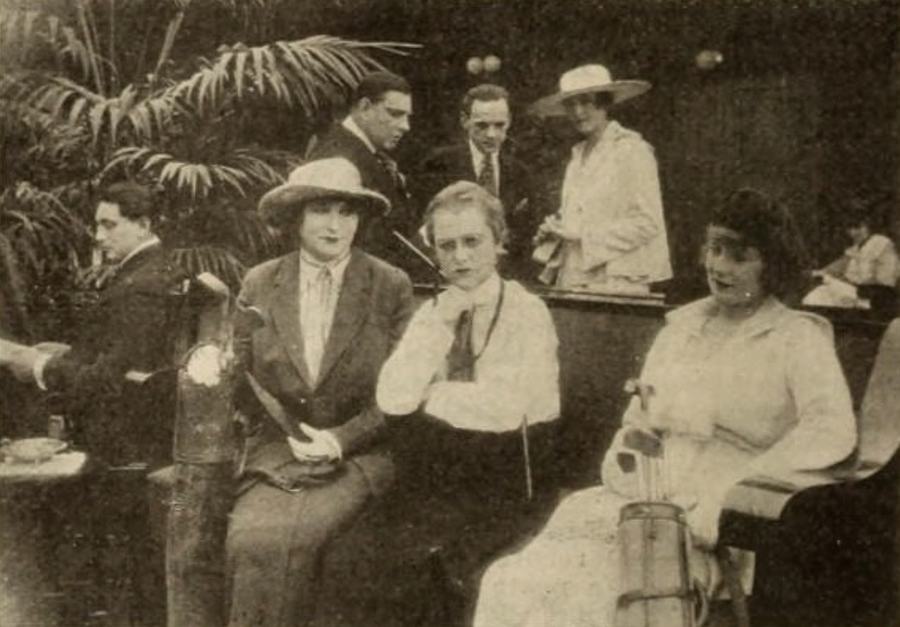
Doris Pawn’s performance deserves a deeper look. In an era where many actresses relied on the 'Delsarte' system of exaggerated gestures, Pawn is remarkably still. Her eyes, magnified by those 'big bow spectacles,' carry the weight of the film. When she eventually sheds the glasses, it isn't just a 'Cinderella' moment; it feels like the shedding of a protective shell. It is a transformation of the spirit rather than just a cosmetic upgrade, a theme explored with less subtlety in The Keys to Happiness.
What makes 'Little Eve Edgarton' endure, even as a relic of a bygone era, is its insistence on the intellectual compatibility of its leads. While Barton starts as a flirt, his 'sudden interest' in Eve is sparked by her 'quaint and unusual personality.' He is drawn to her mind, a rarity in the 'pretty girl' cinema of 1916. This elevates the film above the standard romantic fare of the period, such as Little Sunset.
The film also touches upon the tragedy of the 'father-creator' figure, a theme that resonates through literature from Hamlet to Pinocchio. Edgarton Sr. has created a daughter who is too perfect a scientist to be a contented wife in an arranged marriage. He has given her the tools to think for herself, and then is surprised when she uses those tools to choose her own partner. It is a classic irony of the pedagogical impulse.
In the final analysis, Little Eve Edgarton is a triumph of character-driven storytelling. It navigates the treacherous waters of social expectation and scientific detachment with a grace that is often missing from contemporary cinema. It reminds us that even in 1916, filmmakers were grappling with the complexities of identity, the burden of education, and the unpredictable lightning of human connection. It is a film that doesn't just ask to be seen; it asks to be studied, much like the rare botanical specimens that its protagonist so lovingly documents.
IMDb —
1923
Community
Log in to comment.