DbcultAccessing Vault...
5.2/10
Senior Film Conservator
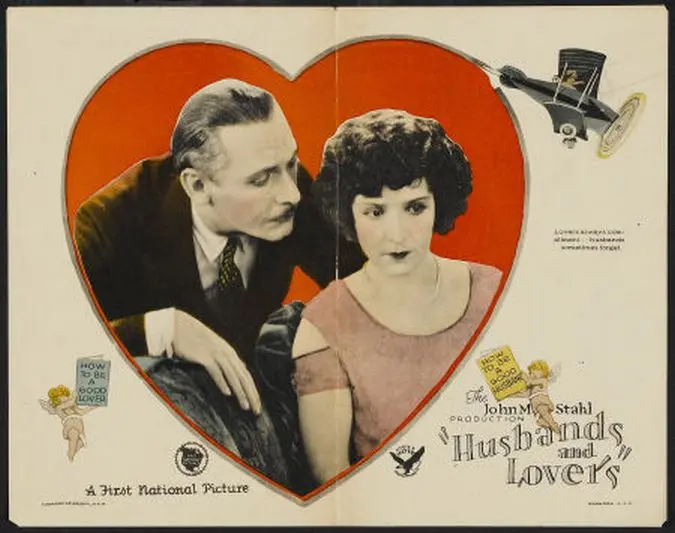
A definitive 5.2/10 rating for a film that redefined the boundaries of cult cinema. Husbands and Lovers remains a cornerstone of transgressive art.
In the pantheon of silent era domesticity, John M. Stahl’s Husbands and Lovers stands as a sophisticated precursor to the modern marriage dramedy. While many films of the mid-1920s were content to luxuriate in the surface-level hedonism of the flapper movement, Stahl—ever the keen observer of human frailty—utilizes the aesthetic shift of the era to explore the tectonic shifts within a failing union. The film avoids the melodramatic excesses found in contemporary works like The Misleading Lady, opting instead for a nuanced, character-driven exploration of neglect and its consequences.
Florence Vidor delivers a performance of remarkable elasticity. In the opening reels, she is the embodiment of the 'negligent' housewife—not negligent in her duties, but negligent of her own vitality. Her wardrobe is a muted palette of domestic servitude, her movements rhythmic and uninspired. This portrayal of marital ennui is far more grounded than the heightened stakes of Her Reckoning, making the eventual pivot into the 'New Woman' archetype all the more jarring and effective. When she finally shears her locks and dons the shimmering, fringe-laden armor of the flapper, it isn't just a fashion statement; it is a declaration of independence that resonates with the same cultural gravity as the themes in The Girl of My Dreams.
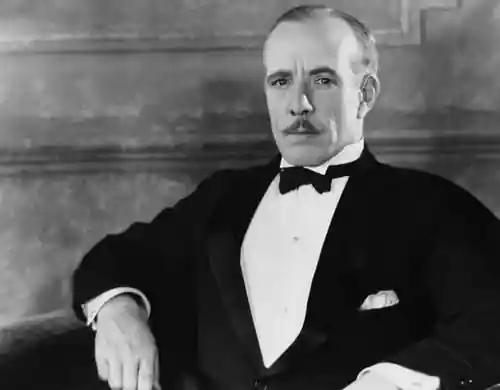
Lewis Stone, an actor often associated with a certain stoic nobility, plays James with a frustratingly relatable obliviousness. He is the architect of his own domestic discontent, a man who has confused stability with stagnation. His performance serves as a fascinating counterpoint to the more overt masculine archetypes seen in films like The Border Legion. Here, the villain isn't a bandit or a scoundrel, but the creeping rot of familiarity. James treats Grace with the same casual regard one might afford a well-worn armchair—comfortable, necessary, but entirely invisible.
The introduction of Lew Cody’s character provides the necessary friction. Cody, specializing in the 'charming interloper' role, brings a predatory elegance to the screen. His gaze is the mirror in which Grace finally sees her own reflection again. Unlike the visceral horror or moralistic weight of The Wolf Man (1923), the threat here is psychological and social. Cody’s character doesn't need to kidnap or coerce; he simply needs to acknowledge the woman whom James has forgotten. This dynamic creates a tension that is both witty and profoundly uncomfortable, highlighting the precarious nature of 1920s gender roles.
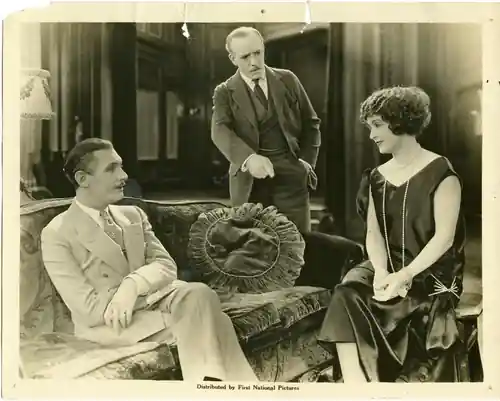
The production design and cinematography in Husbands and Lovers are integral to its storytelling. The transition from the cluttered, heavy interiors of the early scenes to the sleek, modernist spaces Grace inhabits after her transformation mirrors the thematic shift from Victorian baggage to modern liberation. One cannot help but compare the meticulous attention to costume and class to Stahl's other explorations of social standing, such as Lombardi, Ltd.. In both films, the way a character dresses is a direct manifestation of their internal evolution and social aspirations.
Stahl’s direction is characterized by a restraint that was rare for the period. He allows the camera to linger on Vidor’s face as she contemplates her reflection, capturing the flicker of doubt before the resolve sets in. This is not the broad, slapstick comedy of The Man from Mexico, nor the farcical absurdity of A Studio Rube. Instead, it is a 'comedy of manners' that occasionally dips its toes into the waters of 'comedy of errors,' all while maintaining a sophisticated emotional core. The visual storytelling is so potent that the intertitles often feel like mere flourishes rather than necessary explanations.
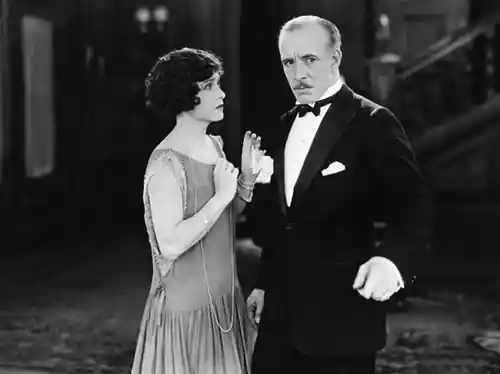
As we dissect the screenplay by Frances Irene Reels, John M. Stahl, Madge Tyrone, and Andrew Percival Younger, we see the blueprints for what would later be known as the 'woman’s picture.' The focus is squarely on the female experience—the claustrophobia of the home, the pressure to maintain a specific image, and the yearning for a life beyond the matrimonial threshold. It lacks the sweeping, problematic historical scope of The Birth of a Nation, focusing instead on the microscopic, yet no less significant, battles fought within the four walls of a New York apartment.
The film also touches upon the legal and social ramifications of infidelity and divorce, themes that were being explored with varying degrees of gravity in films like Chains of Evidence. However, Husbands and Lovers maintains its light touch, preferring to use irony and situational humor to make its points. The scene where James fails to recognize his own wife at a party because she looks 'too modern' is a masterclass in comedic timing and social commentary. It exposes the absurdity of his expectations—he wants a wife who is both a domestic servant and a social ornament, yet he is incapable of fostering the environment necessary for her to be either.
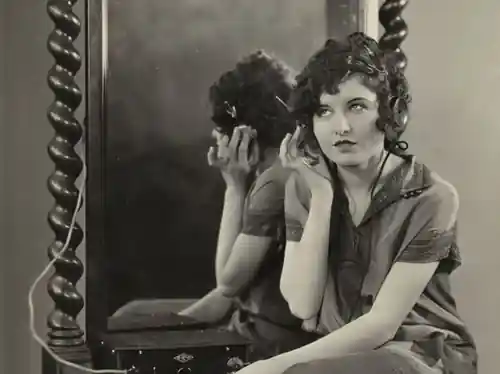
While the film concludes with a resolution that might seem conservative to modern eyes, the journey Grace takes is undeniably subversive for 1924. She does not return to her former state of dowdiness; rather, the marriage is recalibrated to accommodate her new identity. This negotiation of power within a relationship is a theme that remains timeless. It avoids the grim finality of The Evil Thereof, suggesting that through communication (and perhaps a bit of jealousy), a middle ground can be found.
The film’s rhythmic pacing, bolstered by the comedic timing of supporting players like Dale Fuller and Winter Hall, ensures that the weightier themes never become overbearing. It shares a certain lightness of spirit with The Volcano, yet possesses a sharper intellectual edge. Even when compared to international efforts like the Swedish Revelj, Stahl’s work feels distinctly American in its obsession with reinvention and the pursuit of individual happiness within the framework of traditional institutions.
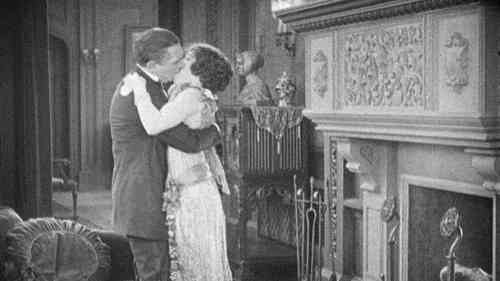
Ultimately, Husbands and Lovers is a testament to the power of the silent medium to convey complex psychological states. It is a film about the danger of taking love for granted and the transformative power of self-respect. Whether viewed as a historical artifact of the flapper era or a perennial study of marital dynamics, it remains a vibrant, essential piece of cinema. It doesn't rely on the sensationalism of Life Story of John Lee, or The Man They Could Not Hang, but on the quiet, devastatingly funny truths of everyday life. In the end, Grace’s transformation is a reminder that while husbands may be a constant, a lover—even if it is just a lover of life—is something that must be nurtured every single day.
For those seeking a deeper dive into the nuances of 1920s social satire, this film is a mandatory viewing, standing tall alongside the era's most celebrated works, far surpassing the simplistic narratives of lesser-known shorts like Black and Tan Mix Up. It is a sophisticated, luminous, and sharp-witted gem that continues to sparkle a century later.
IMDb —
1922
Community
Log in to comment.