DbcultAccessing Vault...
Cult Review
Senior Film Conservator
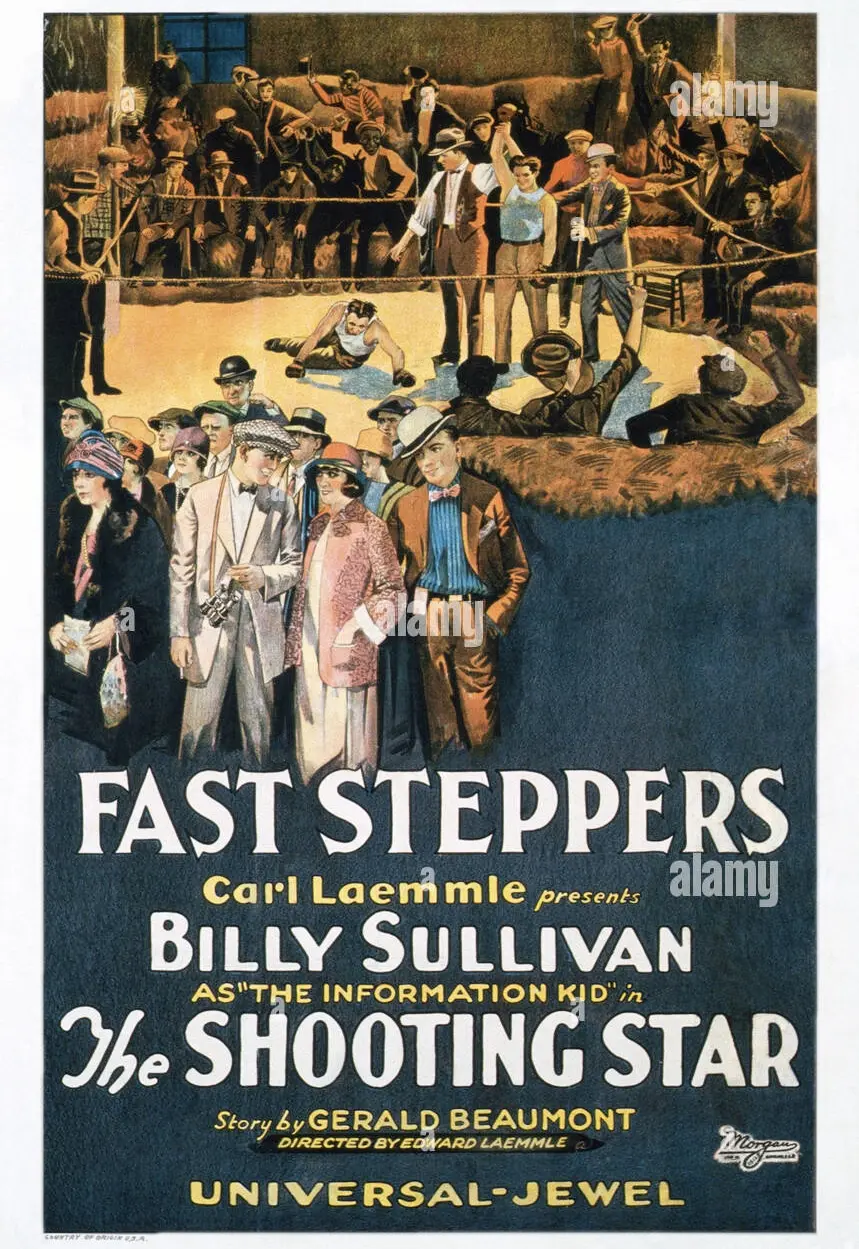
Step back in time, dear cinephiles, to an era where flickering images and emotive orchestral scores wove narratives of grand ambition and gritty determination. We're talking about the silent film epoch, a period that, despite its lack of spoken dialogue, often delivered stories with a visceral punch that resonates even today. Among these forgotten gems shines a particular flicker of brilliance: 1922's The Shooting Star. This isn't just another dusty relic from the archives; it's a vibrant, pulse-pounding drama that captures the essence of the underdog spirit, the thrill of the wager, and the unyielding pursuit of victory against formidable odds. Penned by the imaginative duo of Gerald Beaumont and Scott Darling, and brought to life by a spirited ensemble, this film stands as a testament to the enduring appeal of a well-told story, even when told without a single spoken word.
At its heart, The Shooting Star plunges us into the high-stakes world of horse racing, where fortunes are won and lost on the thunderous gallop of hooves. The narrative ignites with a sudden, pivotal turn: the favored American entry, Monitor, is sidelined, paving the way for the eponymous, yet notoriously erratic, Shooting Star to take her place in a crucial race against the formidable English champion, Iron Duke. This unforeseen substitution throws a wrench into the meticulous plans of our street-smart protagonist, the Information Kid (portrayed with compelling zest by Billy Sullivan). Having staked a considerable sum on Monitor, the Kid now faces the daunting task of transferring his wager onto the temperamental Shooting Star, a mare whose unpredictability is as legendary as her speed. The dramatic tension is palpable from this initial setup; the audience is immediately invested in the Kid's predicament, a common, yet always effective, narrative device in films of this era, much like the compelling predicaments found in other silent dramas such as The Big Adventure.
What truly elevates the plot beyond a simple underdog tale is the Kid's ingenious strategy. Recognizing Shooting Star's fiery disposition, he devises a daring plan: convince her trainer to hold her back, either by allowing her to be 'pocketed' within the pack or by orchestrating a deliberately poor start. The goal? Conserve her explosive energy for a breathtaking burst in the final quarter, a gambit that flies in the face of conventional racing wisdom. This element introduces a fascinating layer of strategic depth, transforming the race from a mere test of speed into a battle of wits. As Iron Duke, the heavy favorite, confidently makes his way to the post, the Kid's audacious scheme hangs precariously in the balance, a testament to the writers Gerald Beaumont and Scott Darling's ability to craft intricate, suspenseful scenarios without
IMDb 4.8
1928
Community
Log in to comment.