DbcultAccessing Vault...
6.7/10
Senior Film Conservator
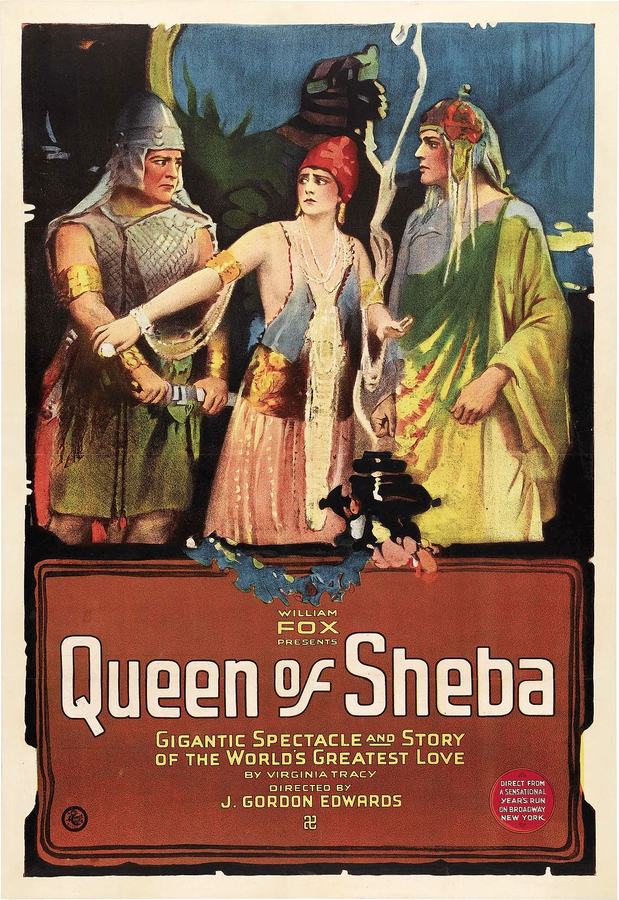
A definitive 6.7/10 rating for a film that redefined the boundaries of cult cinema. The Queen of Sheba remains a cornerstone of transgressive art.

A fever dream carved in alabaster and desert wind
Edwards’ 1921 spectacle scorches the celluloid with frankincense and forbidden desire, vaulting from scripture into a proto-feminist fable that still feels sandblasted by modern standards.
There are silents that whisper; there are silents that roar. The Queen of Sheba belongs to the latter genus, a widescreen mirage that swaggers out of antiquity with the swagger of a marketplace soothsayer and the perfume of a myrrh trader’s fever dream. Shot on three-strip Technicolor tests that were ultimately flattened into two-tone copper and teal, the film survives only in abridgments—roughly seventy-three minutes of the original nine—yet what remains combusts with erotic audacity and geopolitical chutzpah.
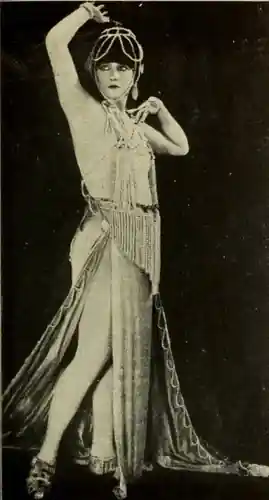
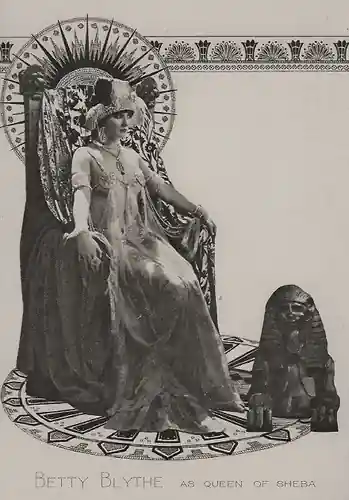
Virginia Tracy’s scenario—scribbled between cigarette bouts and bourbon, legend claims—refuses both Sunday-school piety and orientalist cliché. Instead we get a geopolitical tinderbox: a Levantine corridor where love is merely another spice to leverage or embargo. Betty Blythe’s Balkis enters like a monsoon of gold, her headdress a solar corona, each arm weighted with serpentine bangles that clack in polyrhythmic defiance of the patriarchal score. George Nichols’ Solomon is less the bearded sage of frescoes than a restless MBA of ancient monarchies, trading wives for copper futures while penning pop-hit psalms on the side.
J. Gordon Edwards, Fox’s house maestro of the gargantuan, commissions three full-scale temple courts, a 65-foot bronze seraph that pivots on hidden railway tracks, and a reflecting pool of mercury so vast it reportedly hospitalized three gaffers for mercury poisoning. The camera—hand-cranked yet ravenous—glides over these structures like a bee drunk on marigold, pausing to linger on the erotic geometry of Sheba’s navel jewels or the negative space between Solomon’s fingers, spaces soon to be filled with royal flesh.
Compare this to the relatively intimate Rose o’ the River or the pastoral hush of Heidi, and you grasp how Fox viewed Sheba as its answer to the pyramidal excess of DeMille—only here the excess is laced with languor, a narcotic slow-burn that lets every frame marinate in musk.
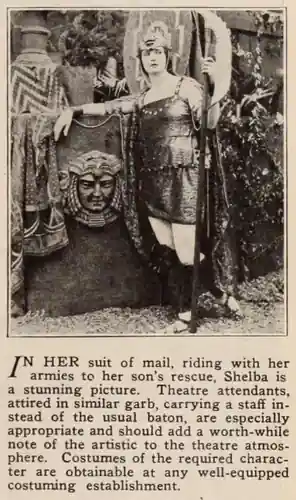
Silent-film acting often ages like milk; here it ages like oud, darkening into stranger, sharper notes. Blythe, frequently dismissed as mere eye-candy, actually orchestrates a miniature symphony of micro-gestures: the way her pupils dilate when Solomon mentions “covenant,” the fractional tightening of her jaw when bargaining camels for loyalty. Watch her listen—a lost art in any era—and you witness power negotiating with itself.
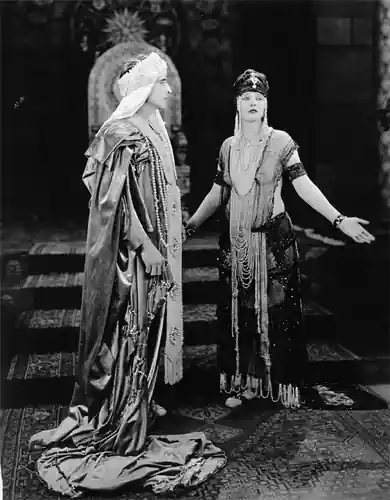
George Nichols, saddled with a role that could sink into caricature, instead opts for a languid sensuality—half surfer dude, half geopolitical shark. His eyes possess that Rudolph Valentino glaze, yet his body language is all business: every embrace calculates acreage, every kiss hedges against future drought.
Do not underestimate the subversion at play. Balkis commands armies, negotiates trade corridors, and ultimately rejects the gilded cage of Jerusalem’s court. The film’s most radical gesture arrives when she flees—pregnant yet uncolonized—refusing to let her womb become a treaty clause. In an era when The Exquisite Thief still punished wayward flappers, Sheba gifts its queen the dignity of strategic withdrawal.
Yet the film also indicts matriarchal militarism: Balkis’ own generals, decked in vulture feathers, salivate at the prospect of annexing Judean olive presses. The screenplay’s cynicism is bipartisan—power, not gender, is the ultimate aphrodisiac.
Contemporary trade papers boasted that Edwards tested Prismacolor inserts for the royal wedding—imagine saffron plumes flickering across silver nitrate like dragon breath. Alas, those fragments burned in the 1937 Fox vault fire, leaving us with monochrome prints occasionally hand-tinted in violent violet for royal robes. Even so, chromatic absence becomes poetic: the viewer must hallucinate the vermilion of pomegranates, the lapis of night sky, the gold that drips from Blythe’s earlobes like slow honey.
Rather than genuflect to canonical scripture, Tracy’s script weaponizes it. Solomon quotes “I am black, but comely” not as affirmation but as voyeuristic provocation, turning the Song of Songs into pick-up artistry. Meanwhile Balkis retorts with suras from the Quran—though toned through a theosophical prism—suggesting that divine texts are simply Tinder bios for empires. In this theological ping-pong, faith becomes foreplay; heresy, aphrodisiac.
Stack Sheba beside Napoleon und die kleine Wäscherin and you witness opposing strategies of historical pastiche—one inflates eros into geopolitical opera, the other shrinks tyranny into bedroom farce. Align it with Kämpfende Gewalten and you map the post-WWI longing for pacifist myth, though Edwards’ film ultimately admits that love, too, is merely war by other perfumes.
When the Museum of Modern Art screened its 2019 restoration, they commissioned Tamara Volskaya to craft a ney-and-oud lament that mutates into synth arpeggios—think Dead Can Dance jamming with Oneohtrix. The anachronism shocks the film awake, much like the yellow tint that floods the final reel, signaling both sunrise and warning.
Yes, reels are missing; yes, some intertitles read like soap-opera haikus. Yet absence itself becomes narrative engine—every gap invites us to populate the lacunae with our own incense, our own political hang-ups. I have watched this film drunk on midnight espresso, and I have watched it sober as a pilgrim; both times it reconfigures itself, a kaleidoscope of erotic dread.
If you seek tidy morality, consult In Defense of a Nation. If you crave a silent that hisses like skillet oil, that posits empire as prolonged one-night stand, then The Queen of Sheba is your mirage—terrible, alluring, and forever evaporating between your thirsty fingers.
4.5/5 – A scorched jewel of the silent era
Frequently Asked Questions
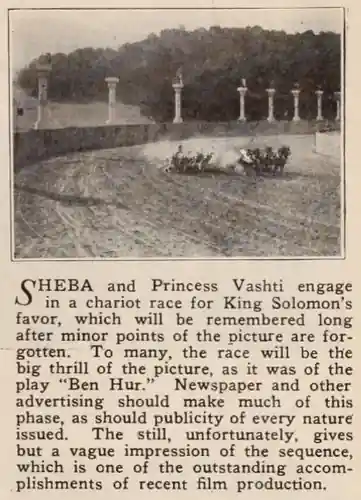
Roughly 73 minutes survive of an estimated 120. Key trims include the Prismacolor wedding and a chariot pursuit.
MoMA’s 4K restoration tours festivals; a 1080p Blu-ray from Kino Lorber is slated for late 2025.
Hollywood mash-up: Yemeni silverwork, Hindu nose rings, and Art-Deco geometry—pure orientalist fantasy.
IMDb 6.8
1933
Community
Log in to comment.