DbcultAccessing Vault...
5.9/10
Senior Film Conservator
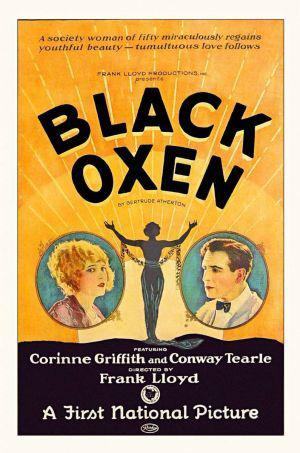
A definitive 5.9/10 rating for a film that redefined the boundaries of cult cinema. Black Oxen remains a cornerstone of transgressive art.
There is a spectral quality to 1923’s Black Oxen that transcends the usual flickering nostalgia of the silent era. Directed by Frank Lloyd and based on Gertrude Atherton’s scandalous bestseller, this film doesn't just capture a moment in time; it attempts to stop time altogether. It is a work of high-society intrigue that masquerades as a romance while secretly harboring the soul of a philosophical thriller. When we talk about the 'Fountain of Youth,' we often drift toward the fantastical, but Black Oxen grounds its miracle in the pseudo-science of the 1920s, making it feel dangerously grounded for its contemporary audience.
The film opens in the vibrating heart of Manhattan, where Lee Clavering (Conway Tearle), a man who has seen everything and impressed by nothing, finds his gaze arrested by a woman in a theater box. She is the 'Gaunt Woman'—though she is anything but gaunt in the literal sense. She is a vision of European refinement, yet she carries the ghost of an American past. Corinne Griffith, often called the 'Lady of the Screen,' portrays Madame Zattiany with a controlled, almost glacial elegance. The tension of the first act relies entirely on the impossibility of her existence. How can a woman who looks thirty be the same Mary Ogden who broke hearts at the turn of the century?
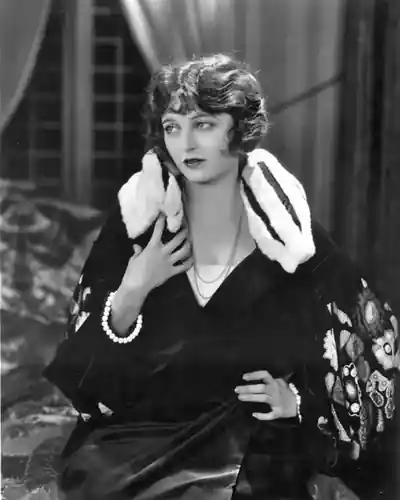
This isn't the sweeping, operatic tragedy of something like Where Love Leads. Instead, it is a clinical, almost voyeuristic examination of how society reacts to the unnatural. Lloyd’s direction ensures that the camera lingers on Griffith’s face, searching for the cracks that aren't there. It’s a performance of layers; she is playing a woman playing a girl, and the psychological weight of those hidden years provides the film’s most potent subtext.
What sets Black Oxen apart from its peers is its fascination with the Steinach method. In the 1920s, the idea of using X-rays to rejuvenate 'glandular vitality' was a genuine medical craze. By incorporating this into the plot, the film bridges the gap between the Victorian melodrama of The Battle of Life and the burgeoning modernism of the Jazz Age. The 'Black Oxen' of the title—a metaphor for the years that trample over us—are momentarily driven back, but at what cost?
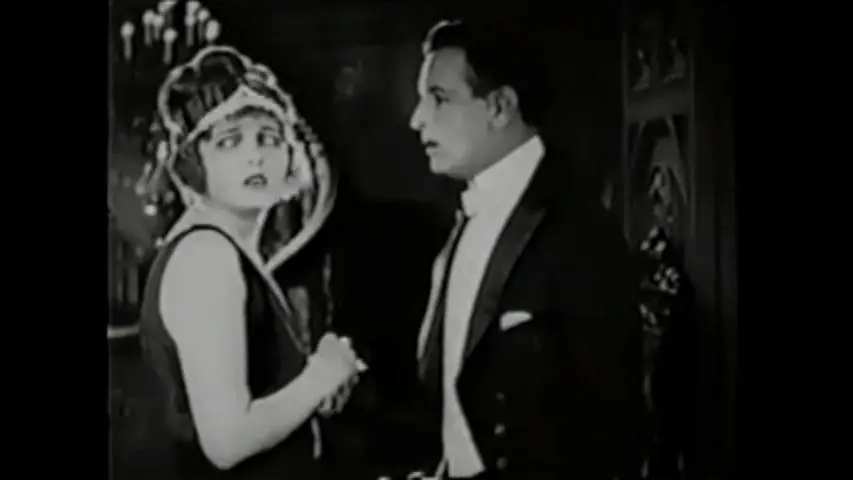
The film asks a devastating question: if the body is reset, does the heart follow? Zattiany is a woman out of time. She has the wisdom and the weariness of a diplomat, yet she is pursued by the youthful, energetic Clavering. Their romance feels doomed not because of a lack of affection, but because of a fundamental biological dishonesty. This thematic depth is far more sophisticated than the straightforward narratives found in films like Mignon, where the obstacles are usually external rather than existential.
While Griffith provides the film’s ethereal center, a young Clara Bow steals every scene she inhabits as Janet Ogelthorpe. If Zattiany represents the heavy, cultured past of Europe, Bow represents the frantic, uninhibited future of America. Her performance is a masterclass in kinetic acting. She is a 'Jazz Baby' in the truest sense—all limbs, bobbed hair, and restless energy. The contrast between her and the rejuvenated Zattiany is the film’s most brilliant structural device.

Janet is the youth that Zattiany is trying to simulate. Watching them together is like watching a documentary on the changing of the guard in Hollywood. While the film’s pacing sometimes mimics the slower, more deliberate style of Kino-pravda no. 5, Bow’s presence injects a modern rhythm that prevents the story from becoming a stodgy period piece. She reminds us that youth isn't just a lack of wrinkles; it’s a specific, unrepeatable vibration of the spirit.
Technically, Black Oxen is a triumph of lighting and set design. The Manhattan interiors are cavernous, filled with the kind of architectural detail that suggests the weight of tradition. The use of soft focus when framing Griffith creates a halo effect that is both beautiful and unsettling—it reinforces the idea that she is a dream or a mirage. Compared to the more rugged, outdoor aesthetics of The Eagle, this film is an exercise in controlled, indoor artifice.
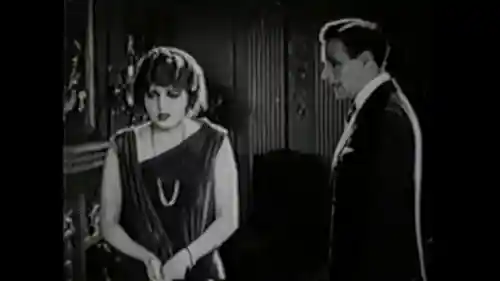
The editing by Lloyd and his team manages the complex flashbacks with a clarity that was rare for the time. We see the Mary Ogden of the past not as a separate character, but as a haunting overlay. It’s a sophisticated use of the medium that predates the psychological depth of later sound films. Even the smaller, more obscure productions like The Chimney Sweeps of the Valley of Aosta didn't quite capture the same sense of temporal layering that Lloyd achieves here.
The third act of the film dives deep into the 'scandal.' When the truth of Zattiany’s rejuvenation becomes public, the reaction of the New York elite is telling. They aren't amazed; they are repulsed. There is a primal fear of the woman who cheats nature. This social ostracization brings a level of grit to the film that you don't always see in silent romances like The Half Million Bribe or the more lighthearted The Cradle Buster.
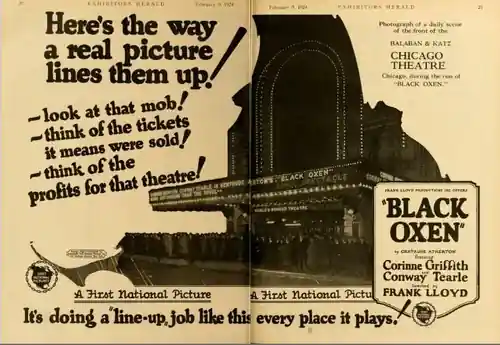
The climax involves a heartbreaking realization for Clavering. He loves the woman, but he cannot reconcile with the history she carries. The film avoids a saccharine 'happily ever after' in favor of something much more poignant. Zattiany realizes that her rejuvenation is a physical success but a social and emotional failure. She cannot belong to the world of the young, nor can she return to the world of the dead. It’s a purgatorial existence that feels far more modern than the typical resolutions of films like The Hayseeds Come to Sydney.
Looking back at Black Oxen through a contemporary lens, it’s easy to see it as a precursor to films like Mad Love or even the body-horror explorations of the late 20th century. It deals with the ethics of medical intervention and the vanity of the human condition. While it lacks the sheer bizarre energy of Private Preserves, it makes up for it with a somber, intellectual dignity. It doesn't shy away from the 'ugly' side of beauty.
The film also serves as a fascinating companion piece to The Truth About Husbands, as both films dissect the expectations placed upon women in high society. However, Black Oxen is the more ambitious of the two, tackling the very nature of time itself. It is a reminder that even in 1923, cinema was capable of handling complex, adult themes with nuance and grace.
In the end, the 'Black Oxen' of the years always win. You can delay them, you can mask their footprints with X-rays and makeup, but they are relentless. The film ends on a note of resigned wisdom. It is a cinematic experience that stays with you, much like the haunting imagery of The Heritage of France or the stark drama of The Next in Command. If you want to see a silent film that challenges your brain as much as it charms your eyes, this is the one to seek out.
The performances, particularly Griffith’s stoicism and Bow’s fire, create a chemical reaction that is rare to find. While some might find the middle section a bit talky (or 'intertitle-heavy'), the payoff is a profound meditation on what it means to grow old and what it means to be truly alive. It’s a story that resonates even more today in our era of digital filters and cosmetic obsession. We are all, in a way, looking for our own version of the Steinach method, and Black Oxen serves as a cautionary, beautiful tale of what happens when we actually find it.
Final Note: If you enjoyed this dive into 1920s cinema, I highly recommend checking out the gritty realism of El que a hierro mata for a completely different flavor of the era's storytelling.
IMDb —
1935
Community
Log in to comment.