DbcultAccessing Vault...
Cult Review
Senior Film Conservator
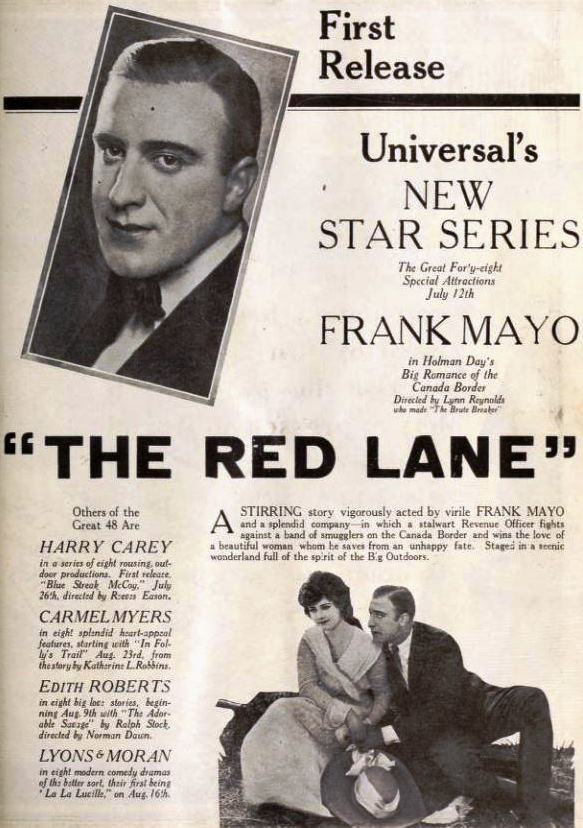
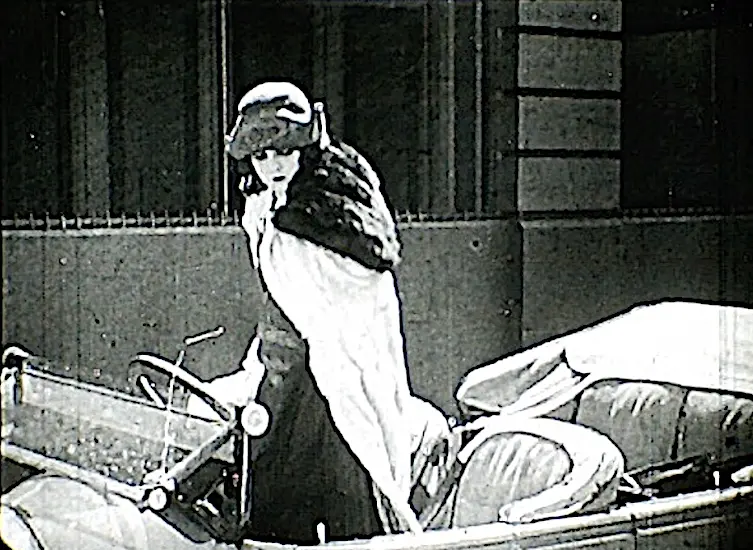
When the reels of The Red Lane begin to spin, the audience is thrust into a world where the sea’s relentless tide mirrors the inexorable pull of destiny. Lillian Rich’s Marie Beaulieu emerges from the convent’s austere silence like a bird released from a gilded cage, only to find the sky over her hometown darkened by the looming shadow of her father’s illicit empire. The film’s opening tableau, shot in stark chiaroscuro, instantly establishes a visual metaphor: the clash between sanctity and sin, devotion and defiance.
Marie’s father, portrayed with grim authority by Frank Mayo, is not merely a criminal; he is the patriarch of a tightly knit band of smugglers whose operations pulse through the coastal community like a hidden current. His demand that Marie wed Dave Roi (Harry Lamont), a loyal lieutenant, is less a matrimonial proposal than a strategic consolidation of power. The narrative thrusts the viewer into a moral crucible: will Marie submit to familial duty, or will she carve her own path?
Enter Norman Aldrich, embodied by Frank Thorne, an American customs officer whose arrival is as sudden as a storm front. Aldrich’s character is crafted with a blend of stoic resolve and underlying vulnerability, a duality that becomes the film’s emotional fulcrum. The chemistry between Rich and Thorne crackles with unspoken tension, each glance a silent dialogue that transcends the absence of spoken word. Their alliance, forged in the crucible of flight, propels the plot into a series of daring escapades that keep the audience perched on the edge of their seats.
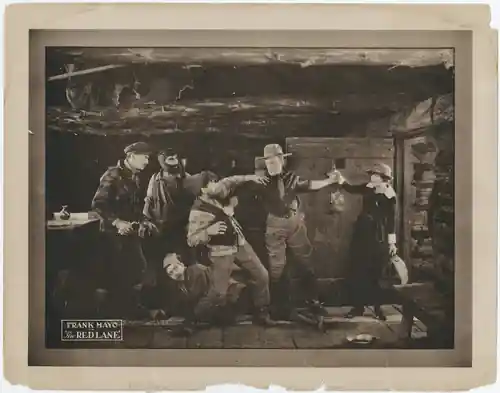
The duo’s flight to a modest inland town introduces Father Leclair (Jean Hersholt), a figure of quiet compassion whose presence offers a brief respite from the relentless chase. Leclair’s sanctuary is rendered in soft, diffused lighting, a visual lull that underscores the thematic contrast between sanctuary and the ever‑present threat of the smuggler’s reach. The town itself, populated by characters such as the half‑witted shepherd (played by Paul Weigel) and the steadfast Margaret Mann, becomes a microcosm of rural resilience, a stage upon which the drama of law versus lawlessness unfolds.
When Beaulieu’s fury erupts, the film pivots into a high‑stakes confrontation that showcases the director’s deft handling of tension. The kidnapping sequence is choreographed with a kinetic energy that feels ahead of its time; shadows dance across the cobblestones as gunfire flashes, and the audience is left breathless as Aldrich lunges to rescue Marie. In the scuffle, Beaulieu is shot—a moment captured in a lingering close‑up that freezes his expression between shock and defiance. The subsequent arrest of Aldrich for the murder introduces a legal labyrinth that the film navigates with surprising nuance for its era.
The revelation that a simple shepherd, driven by an old grudge, is the true assassin adds a layer of tragic irony. This confession, delivered in a hushed, almost reverent tone, underscores the film’s recurring motif: the unexpected sources of justice. Aldrich’s exoneration is not merely a plot device; it serves as a commentary on the fragile nature of truth in a world where power often obscures morality.
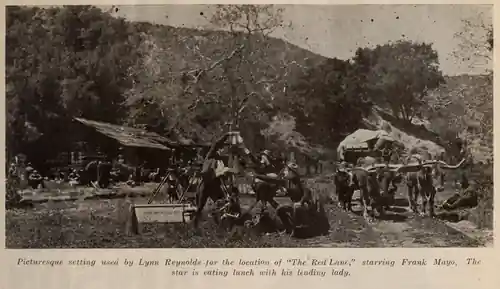
Aldrich’s subsequent election as the town’s champion against the smugglers is a narrative crescendo that blends civic duty with personal redemption. The film’s final act, wherein Aldrich and Marie exchange vows, is rendered with a tenderness that feels both inevitable and earned. Their union is not simply a romantic conclusion; it symbolizes the triumph of integrity over corruption, love over coercion.
From a technical standpoint, The Red Lane excels in its use of color accents within a monochrome framework. The director employs strategic splashes of dark orange (#C2410C) in the title cards, a vivid yellow (#EAB308) to highlight moments of revelation, and a sea‑blue (#0E7490) that washes over scenes set near the water, creating a visual palette that subtly guides the viewer’s emotional response. These hues, though limited, are employed with a painter’s precision, echoing the film’s thematic currents.
Comparatively, the film shares thematic DNA with contemporaneous works such as Draft 258 and The Bondage of Barbara, both of which explore the tension between individual agency and oppressive structures. However, The Red Lane distinguishes itself through its layered character arcs and its deft interweaving of romance, crime, and moral philosophy. Where Sleuths and Slickers leans heavily on comedic capers, and Clover's Rebellion foregrounds political insurgency, this film balances personal rebellion with societal upheaval, offering a richer, more textured narrative experience.
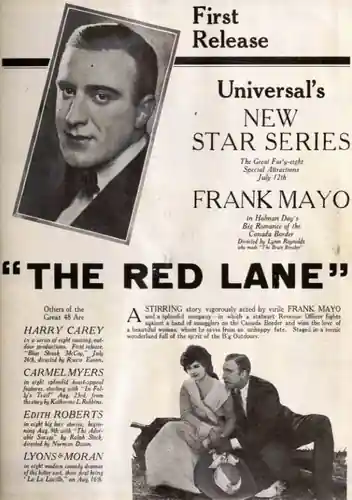
The performances merit particular commendation. Lillian Rich delivers a nuanced portrayal of Marie that oscillates between pious restraint and fierce independence. Her eyes, often the only conduit of emotion in silent cinema, convey a spectrum of feelings—from the quiet resignation of convent life to the fierce resolve of a woman refusing to be a pawn. Frank Thorne’s Aldrich is equally compelling; his measured gestures and steady gaze embody the archetype of the honorable lawman while hinting at an inner turmoil that adds depth to his heroism.
Supporting actors enrich the tapestry. Jean Hersholt’s Father Leclair provides a moral compass, his gentle demeanor a counterpoint to the film’s darker elements. The half‑witted shepherd, though a brief presence, injects a tragic poignancy that underscores the collateral damage of the smuggling war. Even the antagonistic Dave Roi, while not a fully fleshed villain, serves as a reminder of the seductive allure of power and loyalty within illicit circles.
The screenplay, penned by Violet Clark and Holman Francis Day, demonstrates a sophisticated grasp of silent storytelling. Intertitles are sparingly used, each one a carefully crafted piece of prose that advances the plot without disrupting the visual flow. The dialogue, when it appears, is crisp and evocative, allowing the actors’ physicality to carry the emotional weight.
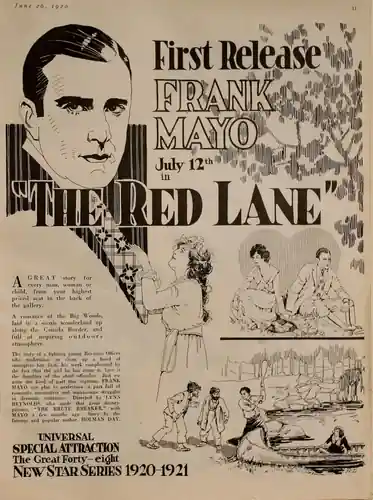
Cinematographically, the film employs a variety of techniques that were innovative for its time. The use of deep focus during the town’s market scenes immerses the viewer in the bustling environment, while tight close‑ups during moments of personal crisis draw the audience into the characters’ inner worlds. The climactic chase across the cliffs is shot with a kinetic energy that prefigures later action cinema, its rapid cuts and dynamic angles creating a palpable sense of urgency.
Thematically, The Red Lane interrogates the concept of destiny versus self‑determination. Marie’s journey from convent to rebellion mirrors a broader societal shift in the early twentieth century, where women increasingly asserted agency over their lives. Aldrich’s evolution from a rigid customs officer to a compassionate community leader reflects the era’s growing belief in reformist ideals. The film’s resolution, wherein love and law converge, offers a hopeful vision of societal harmony achieved through personal integrity.
In terms of legacy, the film occupies a unique niche within the silent canon. While it may not possess the widespread recognition of The Man on the Box or the avant‑garde flair of Lure of Ambition, its blend of narrative depth and visual artistry ensures its relevance for scholars and enthusiasts alike. The film’s influence can be traced in later works that explore the intersection of romance and crime, such as The Apostle of Vengeance and even modern neo‑noir reinterpretations.
From a preservation standpoint, the surviving prints of The Red Lane have undergone meticulous restoration, allowing contemporary audiences to experience the film’s original tonal palette. The restored version retains the grainy texture that lends authenticity, while the enhanced contrast brings the director’s chiaroscuro intentions into sharper relief.
In conclusion, The Red Lane stands as a testament to the silent era’s capacity for sophisticated storytelling. Its intricate plot, compelling performances, and deft visual composition coalesce into a work that resonates across decades. Whether you are a cinephile seeking a window into early twentieth‑century cinema or a casual viewer drawn to tales of love against the odds, this film offers a richly rewarding experience that lingers long after the final frame fades to black.
IMDb 6.8
1924
Community
Log in to comment.