DbcultAccessing Vault...
5.3/10
Senior Film Conservator
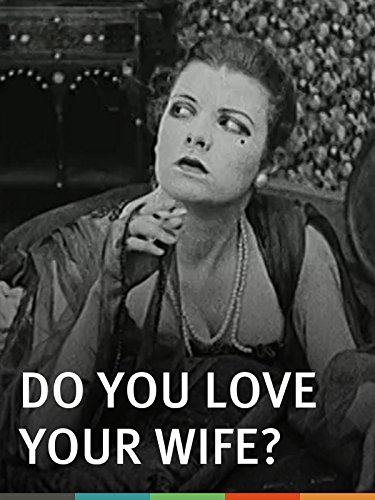
A definitive 5.3/10 rating for a film that redefined the boundaries of cult cinema. Do You Love Your Wife? remains a cornerstone of transgressive art.
Ah, the silent era! A time when physical comedy reigned supreme, when exaggerated expressions told tales more eloquently than any spoken word, and when a simple premise could unravel into an elaborate tapestry of uproarious chaos. Among the myriad gems from this period, 'Do You Love Your Wife?' stands out as a delightful, albeit sometimes overlooked, example of the genre's enduring charm. It's a film that, despite its seemingly modest narrative — 'A janitor ends up in the middle of a lover's feud' — manages to craft a surprisingly robust and engaging comedic experience, a testament to the ingenuity of its creators and the comedic prowess of its cast.
The beauty of 'Do You Love Your Wife?' lies not just in its gags, but in the meticulous way it builds its comedic tension. The film, likely a two-reeler given its era and scope, masterfully escalates a minor domestic spat into a full-blown farcical maelstrom. Our protagonist, the aforementioned janitor, is not a grand hero or a cunning schemer, but an unassuming figure, perhaps portrayed with a certain endearing haplessness by someone like James Parrott or even Bud Jamison, whose very presence seems to invite misfortune. He is the quintessential everyman, toiling away in the background, hoping to simply complete his shift unnoticed. Little does he know, destiny, or perhaps just sheer comedic timing, has other plans for him.
Imagine the scene: a luxurious home, perhaps a grand apartment or a sprawling estate, impeccably maintained by our diligent janitor. His world is one of mops, buckets, and the quiet satisfaction of a polished floor. But within these very walls, a tempest is brewing. Bunny Bixby, likely playing the exasperated husband, and Mary Burns, the potentially flirtatious or misunderstood wife, are locked in a classic battle of wills. Their disagreements, initially confined to whispered arguments and icy glares, quickly erupt into a more overt display of domestic discord. Mildred Forbes, perhaps the object of the husband's wandering eye or the wife's unfounded jealousy, adds another layer of complexity, turning a simple spat into a volatile love triangle.
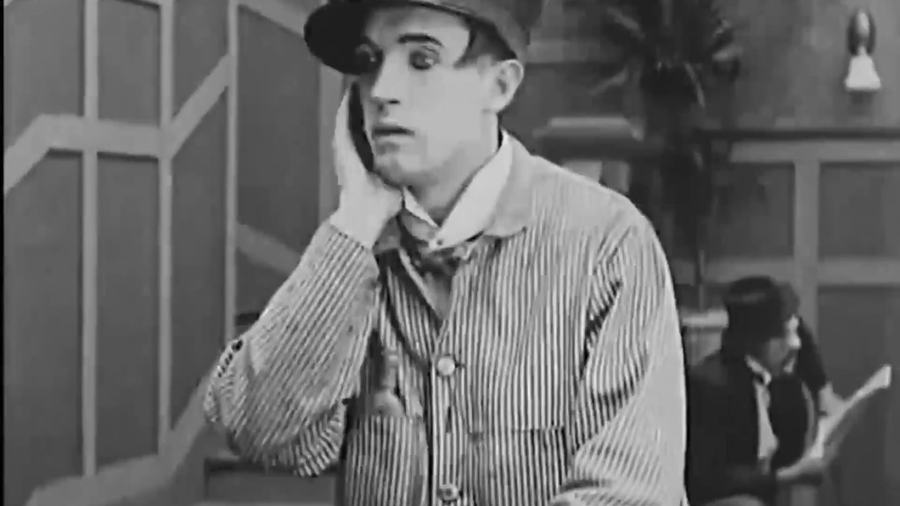
Our janitor, perhaps embodied by the subtle comedic timing of a young Stan Laurel, or the more robust physical presence of Bud Jamison, finds himself in the unenviable position of being an accidental witness. He overhears a crucial argument, stumbles upon a compromising note, or, through a series of increasingly improbable coincidences, becomes the unwitting messenger between the feuding parties. The brilliance here is the film's ability to extract humor from the janitor's utter bewilderment. His attempts to remain neutral, to simply perform his duties, are constantly thwarted by the escalating drama around him. He tries to tiptoe around the emotional landmines, but invariably steps right into the thick of it, leading to a cascade of misunderstandings and hilarious mishaps.
The ensemble cast, a staple of silent comedies, truly shines in bringing this chaotic narrative to life. Beyond the core trio and our beleaguered janitor, a host of supporting players contribute to the comedic tapestry. Noah Young, often a menacing figure in many silent films, might play a rival suitor or an intimidating friend of the husband, adding a layer of physical threat or comedic bluster. William Petterson and Charles Stevenson, frequently cast as authority figures or hapless bystanders, could easily find themselves entangled in the escalating domestic warfare, perhaps as policemen called to mediate, or as neighbors drawn into the spectacle.
The female cast members also play pivotal roles in shaping the film's comedic rhythm. Marie Mosquini and Lois Nelson, with their expressive faces and talent for physical comedy, might portray gossiping socialites or friends of the wife, adding fuel to the fire with their well-intentioned but ultimately disastrous advice. Belle Mitchell and Dorothea Wolbert, seasoned performers of the era, could bring their unique brand of character acting to roles like the stern maid or the busybody aunt, each interaction further complicating the janitor's already precarious position. Even minor roles, like those potentially filled by Gus Leonard or James Fitzgerald, contribute to the vibrant, bustling atmosphere of the film, ensuring that every corner of the screen is alive with potential for comedic interaction. This intricate web of characters ensures that the film is never dull, constantly introducing new elements of absurdity and escalating the stakes for our poor janitor.
What truly elevates 'Do You Love Your Wife?' is its unwavering commitment to the principles of silent slapstick. The humor is derived not from clever dialogue, but from exquisitely timed physical gags, exaggerated reactions, and the universal language of pantomime. We witness the janitor attempting to hide a love letter only for it to fall into the wrong hands, or trying to clean up a spill while simultaneously ducking flying objects from the feuding couple. The film employs classic silent comedy tropes with expert precision: chase sequences through the house, mistaken identities in dimly lit corridors, and the inevitable destruction of property as emotions run wild. The visual storytelling is paramount, with each actor's facial expressions and body language conveying a wealth of information – from the husband's jealous rage to the wife's feigned innocence, and the janitor's ever-present look of utter dismay.
The comedic timing, a hallmark of silent film, is impeccable. Every pratfall, every near-miss, every indignant stare is choreographed to perfection. The film understands the power of the slow build, allowing a small misunderstanding to fester and grow into a colossal comedic incident. This approach is reminiscent of other silent era domestic comedies, where the sanctity of the home is routinely upended for laughs. While perhaps not reaching the epic scale of a Salambo, a $100,000 Spectacle, which aimed for grandeur, 'Do You Love Your Wife?' finds its strength in the intimate, relatable chaos of a household gone awry. It's a testament to the fact that compelling cinema doesn't always require massive budgets or sprawling narratives; sometimes, a simple premise executed with comedic genius is all that's needed.
Beneath the surface of the madcap antics, 'Do You Love Your Wife?' subtly explores themes of domestic fidelity, jealousy, and the sometimes-fragile nature of marital bliss. The question posed by the title itself is central to the film's core conflict, albeit treated with comedic irreverence. It pokes fun at the absurd lengths to which individuals will go when consumed by passion or suspicion. In a broader sense, it also touches upon the class dynamics of the era, with the working-class janitor inadvertently becoming privy to, and a victim of, the tumultuous emotional lives of his wealthier employers. This dynamic, while played for laughs, offers a fleeting glimpse into the social hierarchies of the time, where the hired help often saw more than they were meant to.
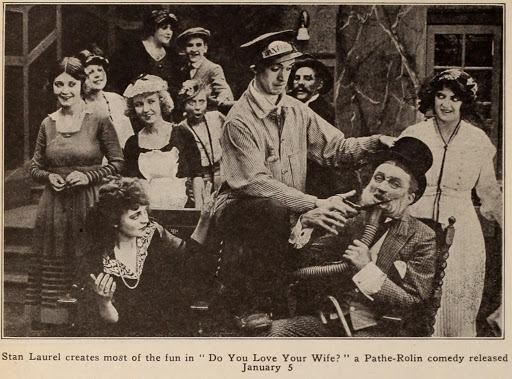
Compared to other films of its time, 'Do You Love Your Wife?' sits comfortably alongside other comedies that satirized marital life. One might draw parallels to the spirited domestic disputes found in Our Little Wife or the intricate romantic entanglements of The Winning of Beatrice, albeit with a heavier emphasis on physical comedy and escalating absurdity. The film’s focus on the chaos that ensues from a lover's feud is a timeless narrative device, one that continues to resonate even today. It highlights the universal truth that emotions, particularly those of love and jealousy, can turn even the most ordinary situations into extraordinary spectacles of human behavior. The janitor, in his quiet suffering, becomes a stand-in for anyone who has ever found themselves unwillingly caught in the crossfire of someone else's drama.
While the writers for 'Do You Love Your Wife?' are not explicitly credited in the provided information, the film's structure and execution speak volumes about the collaborative spirit and innate understanding of comedic timing prevalent in the early film industry. These were often collective efforts, with gags refined on set and improvised by the performers themselves. The absence of credited writers doesn't diminish the creative ingenuity behind the film; rather, it underscores the fluid and often uncredited nature of early cinematic authorship. The directors, often working closely with the cast, were the primary architects of these visual narratives, shaping the flow and rhythm of the comedic action.
The film's reliance on universal visual gags and physical humor means it transcends the barriers of time and language. Even without the specific cultural context of its release, the broad strokes of its comedy remain accessible. The sheer joy of watching a character repeatedly stumble into misfortune, or witnessing a domestic argument spiral into a furniture-smashing frenzy, is a primal comedic pleasure. It’s a reminder that laughter is a fundamental human response, and silent films, like 'Do You Love Your Wife?', tapped directly into that core. While other films of the era, such as For Liberty or To Hell with the Kaiser!, addressed more serious geopolitical concerns, 'Do You Love Your Wife?' provided a much-needed escape, a lighthearted diversion from the anxieties of the real world.
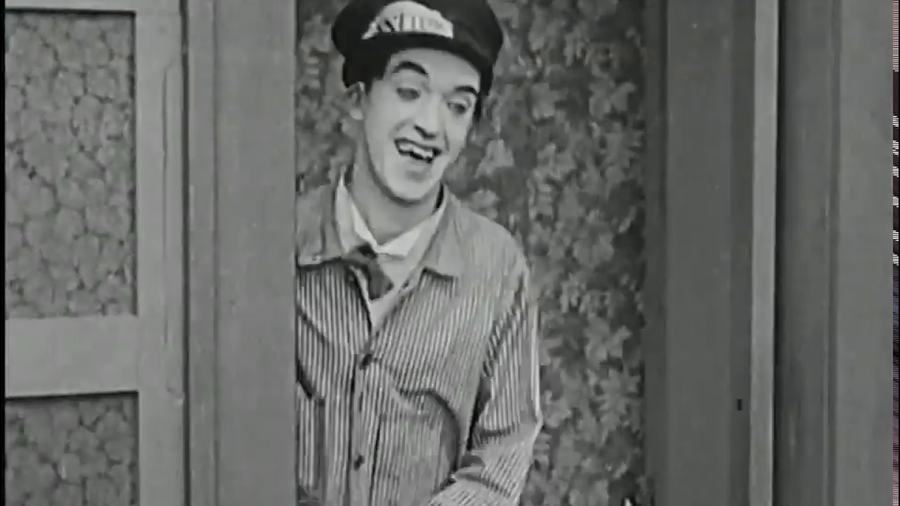
Beyond its comedic value, 'Do You Love Your Wife?' offers a fascinating glimpse into the production values and societal norms of its time. The sets, though perhaps simple by today's standards, would have been considered elaborate for a short film, meticulously designed to facilitate the physical comedy. The costumes, from the janitor's humble uniform to the more fashionable attire of the feuding couple, provide visual cues about their social standing and character. The camera work, while not as dynamic as later eras, would have been carefully composed to capture the full scope of the physical action, often employing wider shots to allow the ensemble to interact within the frame. The editing would have been sharp, cutting between reaction shots and action sequences to maintain a brisk pace, crucial for sustaining comedic momentum.
The film's narrative, while simple, is a classic template that has been revisited countless times in subsequent comedies. The idea of an innocent bystander being caught in a whirlwind of romantic chaos is a comedic goldmine, and 'Do You Love Your Wife?' executes it with an almost innocent charm. It reminds us of an era when films were often shorter, more direct, and relied heavily on the sheer talent and charisma of their performers to captivate audiences. There’s a raw energy to these early works, a palpable sense of discovery and experimentation that makes them endlessly fascinating. Even serious dramas like Der Eid des Stephan Huller - II or romantic sagas such as Kärleken segrar, while operating in a different tonal register, shared this fundamental commitment to compelling visual storytelling, albeit through different means.
Ultimately, 'Do You Love Your Wife?' is more than just a relic from a bygone era; it's a vibrant, entertaining piece of cinematic history that continues to elicit chuckles and admiration. Its strength lies in its simplicity, its clear narrative arc, and the masterful execution of its comedic set pieces. The film doesn't attempt to be profound or groundbreaking; instead, it revels in the pure joy of physical comedy and the timeless appeal of human folly. It serves as a wonderful example of how silent films, even those built around a modest premise, could deliver immense entertainment value through the sheer talent of their performers and the ingenuity of their gags. It’s a delightful reminder that sometimes, all you need for a good laugh is a janitor, a lover's feud, and a question that echoes through the ages: 'Do You Love Your Wife?'
In an age saturated with complex narratives and special effects, there's a refreshing honesty to a film like this. It strips away all the modern accoutrements and gets right to the heart of what makes us laugh: human error, exaggerated emotion, and the universal experience of being caught in a situation far beyond our control. It’s a small, perfectly formed comedic gem that still sparkles with the effervescent energy of its creation. For fans of classic slapstick, or anyone curious about the foundational elements of screen comedy, 'Do You Love Your Wife?' is an absolute must-watch, a testament to the enduring power of silent cinema to entertain and charm audiences across generations. Its legacy, though perhaps not as widely celebrated as some of its more famous contemporaries, is etched in the delightful chaos it so expertly portrays.
IMDb 5.3
1932
Community
Log in to comment.