DbcultAccessing Vault...
Cult Review
Senior Film Conservator
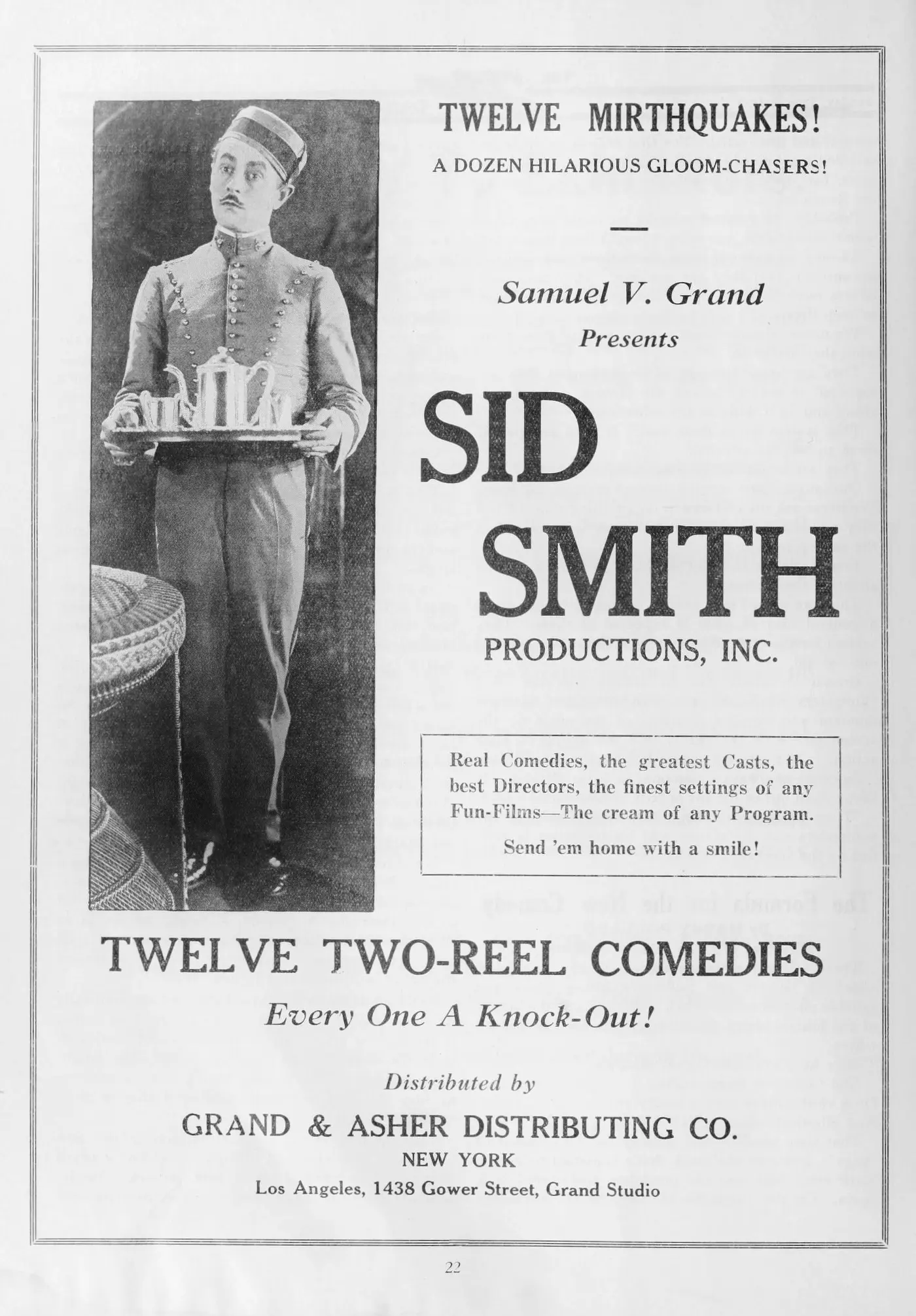
Step back into the nascent days of cinematic storytelling, where narrative prowess often hinged on universal archetypes and broad strokes of character. In this fascinating landscape, the 1921 feature, The Big Game, emerges as a delightful, if perhaps uncomplicated, exploration of courage, perception, and the sheer unpredictability of fate. It’s a film that, despite its apparent simplicity, delves into the enduring human desire to prove oneself worthy, especially in the eyes of a formidable patriarchal figure. The story, at its core, is a classic romantic comedy-adventure, a testament to the era's ability to blend genres with an earnest charm that often transcends the technical limitations of its time.
Our protagonist, Sid, portrayed with an endearing blend of diffidence and determination by Sidney Smith, finds himself in a predicament as old as courtship itself. He is smitten, irrevocably in love with a young woman whose father, a man of stern convictions and perhaps an antiquated view of masculine virtue, deems him utterly unsuitable. The father's judgment isn't based on malice or social standing, but rather on a perceived lack of mettle, a timidity that, in his eyes, disqualifies Sid from the sacred institution of marriage. This paternal skepticism sets the stage for the film's central conflict, creating a compelling dramatic impetus that resonates even today. It's a classic setup: the suitor must overcome an impossible challenge to win his beloved's hand, a trope that has fueled countless narratives from ancient myths to modern blockbusters. What makes The Big Game particularly engaging is the specific nature of this challenge: not wealth, not social climbing, but a raw, primal test of courage in the face of nature's formidable power.
The father, in an act of what he believes to be tough love, or perhaps a genuine desire to forge character, issues an ultimatum: Sid must prove his valor in the perilous pursuit of big game. This isn't merely a hunting trip; it's an existential journey, a symbolic descent into the wilderness where manhood is ostensibly forged. To aid (or perhaps to observe and report on) Sid's progress, the father dispatches him with a companion, a seasoned hunter whose reputation precedes him. This dynamic immediately establishes a stark contrast: the greenhorn alongside the veteran, the timid novice against the hardened outdoorsman. It’s a clever narrative device, allowing the audience to witness Sid’s perceived shortcomings through the lens of an experienced observer, thereby amplifying the eventual, unexpected subversion of expectations. One can't help but draw parallels to other stories of underdog triumph, such as The Pinch Hitter, where an unassuming character rises to the occasion against all odds, capturing the audience's heart with their unlikely success.
Sidney Smith, in the central role, delivers a performance that, by the standards of silent cinema, is commendably nuanced. His timidity isn't merely a caricature; it's conveyed through subtle gestures, hesitant movements, and wide, apprehensive eyes that speak volumes without a single intertitle. We see his internal struggle, the genuine fear juxtaposed with his profound love, which serves as the ultimate catalyst for his reluctant bravery. Smith masterfully balances the comedic potential of his character's inexperience with the genuine emotional stakes of his quest. He isn't a bumbling fool, but a man out of his element, driven by a higher purpose. This portrayal is crucial, as it allows the audience to root for him, to empathize with his plight, and to revel in his eventual, albeit accidental, triumphs. His performance provides a grounding force, preventing the film from devolving into mere slapstick, even when circumstances conspire to paint him as an unlikely victor.
The journey into the woods is where The Big Game truly comes alive, showcasing the era’s often ingenious methods of depicting outdoor adventure. While specific details on the cinematography are scarce, one can imagine the filmmakers employing a combination of location shooting, clever editing, and perhaps even early special effects to bring the wilderness to life. The film’s narrative highlights Sid’s undeniable status as a novice; his initial clumsy attempts at hunting, his discomfort in the wild, and his reliance on his experienced companion, likely played by Duane Thompson, are all clearly established. This contrast sets up the delicious irony that follows.
What transpires next is the film's most intriguing philosophical query: is heroism a matter of inherent skill, or can it be a product of sheer, unadulterated luck? Through a "strange set of circumstances or perhaps through luck alone," Sid manages to consistently outshine his seasoned friend. This isn't a tale of a hidden prodigy suddenly discovering his latent talents; it's a narrative that revels in the absurd and the unexpected. Sid's triumphs are less about his prowess and more about the universe conspiring in his favor, a series of fortuitous accidents that elevate him to the status of a legendary hunter. This subversion of expectations is both humorous and thought-provoking. It challenges the conventional understanding of heroism, suggesting that sometimes, proving one's worth is less about mastery and more about being in the right place at the right time, or perhaps, simply being touched by a benevolent fate.
This narrative thread, where luck plays a pivotal role, reminds us of other silent films that toyed with the concept of unforeseen fortune, such as The Phantom Fortune, where destiny's capricious hand guides characters through unexpected twists and turns. The film implicitly questions whether the father’s test was truly about inherent skill, or merely about the *appearance* of courage, however achieved. It's a delightful commentary on societal perceptions and the sometimes-superficial nature of judgment.
The dynamic between Sidney Smith's Sid and his hunting companion (presumably Duane Thompson, given his billing, even if his specific role isn't detailed in the plot summary) is central to the film's comedic and dramatic success. Thompson, likely portraying the experienced hunter, would have embodied the stoic, capable outdoorsman, providing a perfect foil for Smith's nervous energy. The interplay between these two characters, conveyed through exaggerated facial expressions and body language characteristic of the silent era, would have been key to establishing the humor and tension. One can imagine the companion's growing bewilderment and eventual grudging respect as Sid, through sheer cosmic coincidence, repeatedly stumbles into success. This kind of character interaction, relying purely on visual cues, is a hallmark of silent film artistry, demanding a high degree of skill from its performers to communicate complex emotions and reactions without dialogue. It’s a testament to their craft that such nuanced relationships could be conveyed. The comedic elements, particularly the contrast between their expectations and reality, might even draw comparisons to the farcical situations found in films like What Happened to Jones, where characters are swept up in an escalating series of misunderstandings and unexpected outcomes.
It is notable that, as per the available information, The Big Game lacks a specific writer credit. This was not uncommon in the early days of Hollywood, where stories were often developed collaboratively on set, adapted from existing plays or short stories without explicit attribution, or even conceived by directors and actors during production. The narrative structure, while effective, speaks to a period where plot outlines were often more functional than intricately detailed, serving primarily as a framework for visual gags, dramatic set pieces, and character interactions. This absence highlights the fluid, often uncredited, nature of creative input in early filmmaking, where the boundaries between writer, director, and performer were frequently blurred. The strength of the story, despite this, lies in its adherence to universal themes and its clear, purposeful progression, demonstrating that even without a singular credited scribe, compelling narratives could emerge from the collective creative energy of a film crew.
Beyond the surface-level adventure, The Big Game subtly explores several enduring themes. It's a commentary on masculinity and societal expectations, particularly the idea that a man must prove his physical courage to be deemed worthy of love and respect. Sid's journey challenges this notion, suggesting that true worth might not always align with outward displays of bravado, and that sometimes, love itself is the most powerful motivator for overcoming personal fears. The film also touches upon the transformative power of a quest, even one undertaken reluctantly. Sid enters the wilderness as one man and emerges, superficially at least, as another, forever changed by his experiences, however fortuitous they may have been. This transformation, even if built on a foundation of luck, is potent enough to alter perceptions and secure his desired outcome. The film's resolution, with Sid claiming his bride, isn't just a happy ending; it's a symbolic victory for the underdog, a celebration of the unexpected hero.
Comparing this quest for love and validation to other silent era romances offers an interesting contrast. While His Briny Romance might explore the comedic aspects of maritime love, The Big Game grounds its romantic pursuit in a more primal, nature-driven challenge. The film also shares a thematic thread with stories of moral or physical tests, albeit with a lighter touch than, say, the intense drama of The Devil-Stone, which delves into far darker ethical dilemmas. Here, the stakes are personal, not existential, but no less significant to our hero.
In conclusion, The Big Game stands as a charming relic of early cinema, a film that, despite its age and the inherent simplicity of its premise, continues to entertain and provoke thought. It reminds us that heroism isn't always about brute strength or meticulous planning, but sometimes about being open to the unpredictable currents of life. Sidney Smith's performance anchors the film, allowing us to connect with his journey from timid suitor to accidental legend. It's a testament to the enduring appeal of the underdog story, a narrative where fate, rather than flawless execution, paves the way to triumph.
The film, like many of its contemporaries, offers a window into the values and narrative conventions of its time. It’s a delightful piece for silent film enthusiasts and anyone curious about the foundational storytelling techniques that shaped the medium. While it may not possess the grand scale of some epics or the intricate psychological depth of later dramas, its straightforward charm and heartwarming message about proving one's worth, even if by a stroke of luck, ensure its place as a memorable, if understated, piece of cinematic history. It leaves us with a smile, pondering the delightful irony that sometimes, the greatest valor is found not through skill, but through a series of fortunate mishaps. And in the world of love and adventure, perhaps that's all that truly matters.
IMDb 5.9
1926
Community
Log in to comment.