DbcultAccessing Vault...
5.8/10
Senior Film Conservator
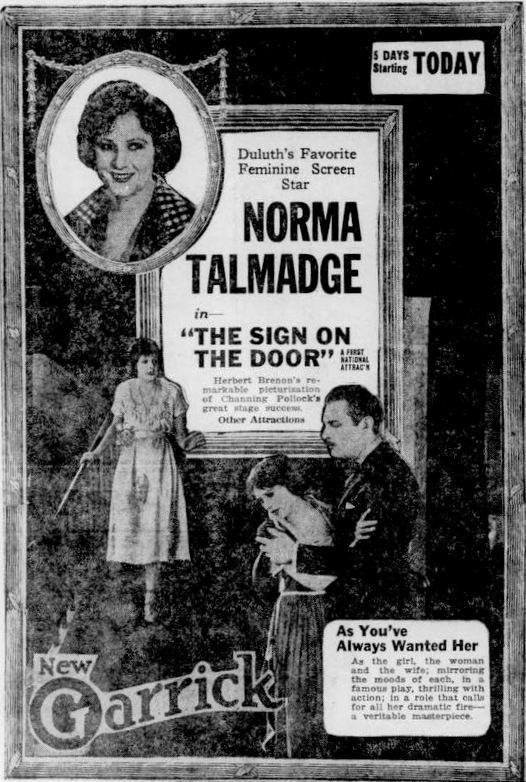
A definitive 5.8/10 rating for a film that redefined the boundaries of cult cinema. The Sign on the Door remains a cornerstone of transgressive art.
The first time we see Ann Hunniwell she is almost swallowed by cigarette haze and brassy jazz, her eyes two pale moons eclipsed by the camera’s magnesium flare. That split-second burst—half scandal, half prophecy—imprints her face on the city’s retina long before she becomes the immaculate Mrs. Regan. Herbert Brenon, directing with the kinetic cruelty of a man who has watched reputations combust, lets that photograph hang over the narrative like a guillotine blade.
Cut to half a decade later: winter light slants across Regan House, a mausoleum of propriety where Ann—now swaddled in mink and marital armor—floats through corridors scented with carnations and muted terror. Norma Talmadge, queen of the imperiled divas, plays this duality like a violin tuned to heartbreak. Watch her hands: gloved in public, trembling when they brush the memory of that café raid. The performance is silent yet sonorous; every close-up is a confession without words.
Enter Frank Devereaux—Lew Cody at his most serpentine—slithering back into Ann’s orbit via the reckless curiosity of step-daughter Helen. Frank is the serpent as socialite, his smile a calling card for ruin. He has already left Colonel Gaunt’s wife in tatters, and now he circles Helen with the patience of a man compiling a museum of conquests. The film’s moral algebra is merciless: yesterday’s victim becomes today’s potential accomplice, and Ann must decide whether to rupture her pristine present or let history repeat its lurid refrain.
Brenon and co-scenarists Mary Murillo and Channing Pollock stage these tensions in set pieces that feel cubist in their emotional angles. A ballroom sequence—white-gloved aristocrats waltzing beneath chandeliers—bleeds into a clandestine apartment where wallpaper peels like old scabs. The contrast is not mere spectacle; it’s a thesis. Respectability is a thin coat of varnish over rot, and the varnish is cracking.
When Colonel Gaunt arrives waving a pistol, the film tilts into noir before the genre had a name. Regan—stoic, granite-jawed, a man whose moral ledger is balanced to the penny—intercepts the threat. But it is Ann who storms Frank’s den, her silhouette slicing through venetian-blind shadows like a blade. The confrontation crackles: two guilt-crusted souls negotiating the price of silence. Frank taunts her with the negative that never quite disappeared; Ann counters with maternal fire. Their pas de deux is silent cinema at its most combustive—no dialogue, only eyes and gestures conducting electricity.
Then the gunshot: off-screen, abrupt, almost an afterthought. Brenon denies us the splatter, cutting instead to a gilt-edged sign that reads "Not To Be Disturbed." It hangs on Frank’s door like a sardonic punchline, turning a bourgeois courtesy into an epitaph. That placard will haunt you; it is the film’s black joke on privacy, on how the affluent slam doors to keep chaos penned.
What follows is a whodunit refracted through chivalry. Ann attempts to absorb blame, brandishing her past like a shield for her family. Regan, eyes bloodshot yet resolute, prepares to fall on his sword. Enter the district attorney—Paul McAllister in a sly, almost meta turn—who once wielded the flashbulb that caged Ann. He recognizes the cyclical farce: yesterday’s headline fodder, today’s sympathetic wife, tomorrow’s jury nullification. With a wink toward collective morality, he releases the couple, declaring no twelve citizens would convict a husband for exterminating a pest.
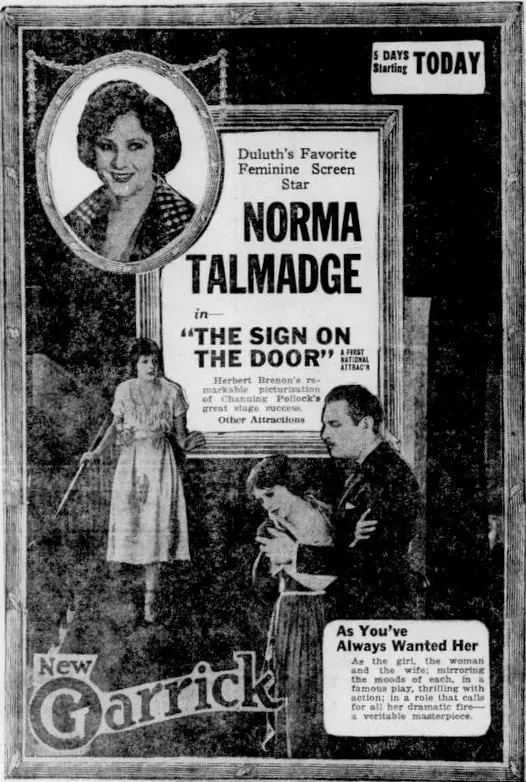
So ends this brittle bauble of Jazz-Age anxiety, its final iris closing not on triumph but on exhausted absolution. The city outside will gnash its teeth, gossip columns will froth, yet inside Regan House the chandeliers gleam once more—until the next tremor.
Talmadge’s artistry lies in micro-gesture: the way her throat contracts when she hears Frank’s name, the flutter of a handkerchief that might as well be a white flag. Compare her to the ethereal penitents in All Souls' Eve or the deceit-choked socialite of The Woman of Lies; Ann is more earthbound, more tragic because she believes she has outrun destiny.
Lew Cody, meanwhile, weaponizes charm. His Devereaux lounges in silk robes, cigarette holder angled like a conductor’s baton, seduction reduced to geometry. The performance is so delectable you almost forgive his depravity—until you remember Helen’s tear-streaked cheeks. Cody would later mine similar venality in Pitfalls of a Big City, but here the menace is distilled, uncut.
Cinematographer J. Roy Hunt (uncredited in many prints) drapes interiors in chiaroscuro that predicts film gris of the late ’40s. Note the mirror motif: Ann regards her reflection as if interrogating a doppelgänger, while Frank’s boudoir features a fractured looking-glass—visual shorthand for splintered ethics. The camera glides, rarely cuts, imbuing each scene with a liquid dread.
Exterior shots of Manhattan—stock footage though they may be—function as pulse beats. Steam coils from manholes; elevated trains screech like iron banshees. The metropolis itself is accomplice, voyeur, and jury all at once, echoing the fatalistic cityscapes in In the Clutches of the Paris Apaches or the narcotic fog of In the Power of Opium.
The screenplay’s spine is symmetry: Act I’s raid rhymes with Act III’s shooting; the photograph that shames Ann mirrors the placard that shields Regan. Every subplot—Gaunt’s cuckold fury, Helen’s naïve rebellion, even the comic butler played by Edward Brophy—feeds the central moral hydra. Dialogue cards are sparse yet diamond-cut: "A woman’s past is a house of cards; breathe and it scatters."
Compare this narrative compression to the sprawl of John Glayde's Honor, which dilutes tension across too many reels. Here, nothing is expendable; every frame perspires relevance.
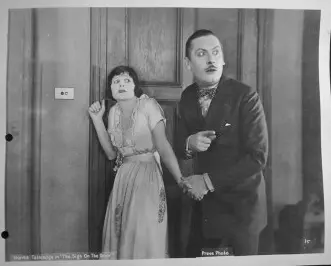
Shot during the roaring crest of Prohibition, the film drinks from a chalice of hypocrisy. Speakeasies operate under police winks; debutantes chase thrills behind veils of ermine. Ann’s persecution stems less from legality than optics: the scandal sheet’s power to commodify calamity. Her trajectory foreshadows the media circlings that would hound stars like Clara Bow within the decade.
Likewise, the notion of a husband annihilating a seducer and earning legal impunity rattles the cage of patriarchal privilege. Self-defense becomes a euphemism for property rights—Helen as chattel, Ann as redeemed Madonna. The district attorney’s absolution feels disturbingly pre-fabricated, yet historically credible in a jury system marinated in machismo.
Surviving prints lack an original score, inviting each exhibitor to improvise. In contemporary revivals, I’ve heard everything from Bartók quartets to nicotine-stained jazz. The absence is blessing: silence amplifies the creak of floorboards, the rustle of silk, the metallic gulp of a revolver cylinder. Try pairing it with Bernard Herrmann’s discarded prelude for Wuthering Heights—the dissonance curls perfectly around Ann’s dread.
Most silent melodramas collapse under the weight of moral absolutes; this one thrives in gray zones. Its DNA strands twist through Hitchcock’s Blackmail, through Sirk’s Written on the Wind, through the domestic dread saturating Little Children. The Do-Not-Disturb sign itself has become cine-lingo for "bodies behind closed doors," referenced in everything from board-room noir to sitcom farce.
Sadly, the film circulates only in 16 mm dupes and spotty DCP transfers. A 4K restoration languishes in rights limbo—corporate heirs squabbling over pennies while nitrate curls in humid vaults. Until some mogul awakens, cinephiles must content themselves with bootleg grayscale on archive sites. Even so, its power leaks through the scratches.
Silent film festivals—Bologna’s Il Cinema Ritrovato, Pordenone—occasionally project archival prints. Streamers rotate public-domain copies; quality varies from mushy VHS to tolerable 2K. For maximum chill, watch at 2 a.m. with headphones and a tumbler of rye; the sensory deprivation makes every intertitle feel like a telegram from your own repressed id.
Double-feature it with Twisted Souls for a night of spiritual corrosion, or chase it with La La Lucille to remind yourself that the same era could giggle while it bled.
Great films brandish an image you cannot un-see; The Sign on the Door gives us two—the flashbulb’s bloom and the titular placard—each echoing across a century. They remind us that privacy is a commodity, that scandal is entertainment, that justice is often just narrative consensus. Close the door if you dare; the sign is already hanging.
IMDb 5.4
1934
Community
Log in to comment.