DbcultAccessing Vault...
Cult Review
Senior Film Conservator

Stepping into the world of Robert Z. Leonard's The Love Girl is akin to unearthing a forgotten treasure from the silent era's vast cinematic vault. This isn't merely a film; it's a vibrant tapestry woven with threads of burgeoning emotion, stark moral contrasts, and the enduring power of youthful intuition. At its heart lies Ambrosia, a character whose very name evokes a sweetness, a natural purity that becomes the moral compass in a narrative fraught with urban cynicism and spiritual deception. Her journey, from the untamed freedom of the countryside to the rigid, often hypocritical, structures of city life, forms the bedrock of a story that resonates with surprising contemporary relevance.
The film opens with an idyllic portrait of Ambrosia's early life, a halcyon existence steeped in the tranquility of nature and the boundless affection of her mother. One can almost feel the gentle breeze rustling through the leaves and hear the distant murmur of a stream, a stark contrast to the cacophony that awaits her. This pastoral prelude, however brief, establishes Ambrosia not just as a character, but as an embodiment of innocence itself. Her mother's untimely demise precipitates a seismic shift in her world, transplanting her to the care of 'Aunt Grouchy' in the bustling metropolis. This transition is deftly handled by Leonard, highlighting the jarring cultural chasm between country and city. Aunt Grouchy, portrayed with a compelling blend of severity and underlying vulnerability by Grace Marvin, is the quintessential urban matriarch of her time – dignified, austere, and profoundly conventional. Her preoccupation with social standing and advantageous alliances creates an atmosphere utterly alien to Ambrosia's free spirit. It's a classic fish-out-of-water scenario, yet executed with a nuanced understanding of a child's emotional landscape.
The city, with its regimented routines and emphasis on appearances, threatens to stifle Ambrosia's inherent joyousness. Yet, it is here that the film introduces a vital counterpoint to Aunt Grouchy's rigidity: the boy next door. Their burgeoning friendship, a haven of shared secrets and boisterous play, serves as a powerful testament to the resilience of childhood. These moments of unadulterated fun, often depicted through lively sequences of romping and camaraderie, provide a much-needed emotional ballast, preventing Ambrosia's narrative from descending into unremitting gloom. It’s reminiscent of the innocent bonds forged in films like The Child of Paris, where youthful connections offer solace amidst adult complexities.

Beyond Ambrosia's personal adaptation, the film's central conflict revolves around her cousin's romantic entanglement. This young woman, whose name we infer from her plight, is deeply in love with a man of modest means. Such a union, however, is anathema to Aunt Grouchy's social aspirations. Her desire for an 'advantageous marriage,' a theme explored in countless dramas of the era, including perhaps elements in Frou Frou, underscores the societal pressures placed upon women and families. It's a struggle between genuine affection and pragmatic convenience, a timeless dilemma that continues to resonate. Aunt Grouchy's unyielding stance against her daughter's true love sets the stage for the narrative's more sinister turn.
Here, the film introduces its antagonist, the enigmatic 'Swami,' a figure who preys on vulnerability and misguided faith. Aunt Grouchy, in her desperation to control her daughter's destiny, turns to this supposed spiritual guide, a decision rooted in her fascination with Hindu mysticism. Wadsworth Harris imbues the Swami with a chilling blend of charisma and menace, making him a truly formidable villain. His methods, particularly the use of hypnotism to manipulate the cousin into breaking off her engagement, are disturbingly effective, showcasing the dark underbelly of spiritual charlatanism. This manipulation of faith for personal gain echoes the moral quandaries found in films like Body and Soul, albeit with a more overtly villainous twist. The Swami's ultimate act of kidnapping the cousin for ransom, cleverly disguised as a 'tribute to the Buddhist's god,' reveals the depths of his calculated deception and greed.
It is in this moment of profound crisis that Ambrosia, portrayed with a remarkable blend of vulnerability and nascent courage by Adele Farrington, truly shines. Alongside her steadfast young friend, she becomes the unlikely hero. Their discovery of the cousin's hidden prison and their subsequent alerting of the police underscores a recurring motif in silent cinema: the often-underestimated power of children to perceive truths hidden from their adult counterparts. This youthful agency provides a refreshing contrast to the adults' often-flawed judgments and highlights a theme of intuitive justice. Their actions are not born of complex reasoning but of simple, unwavering loyalty and a keen sense of right and wrong.
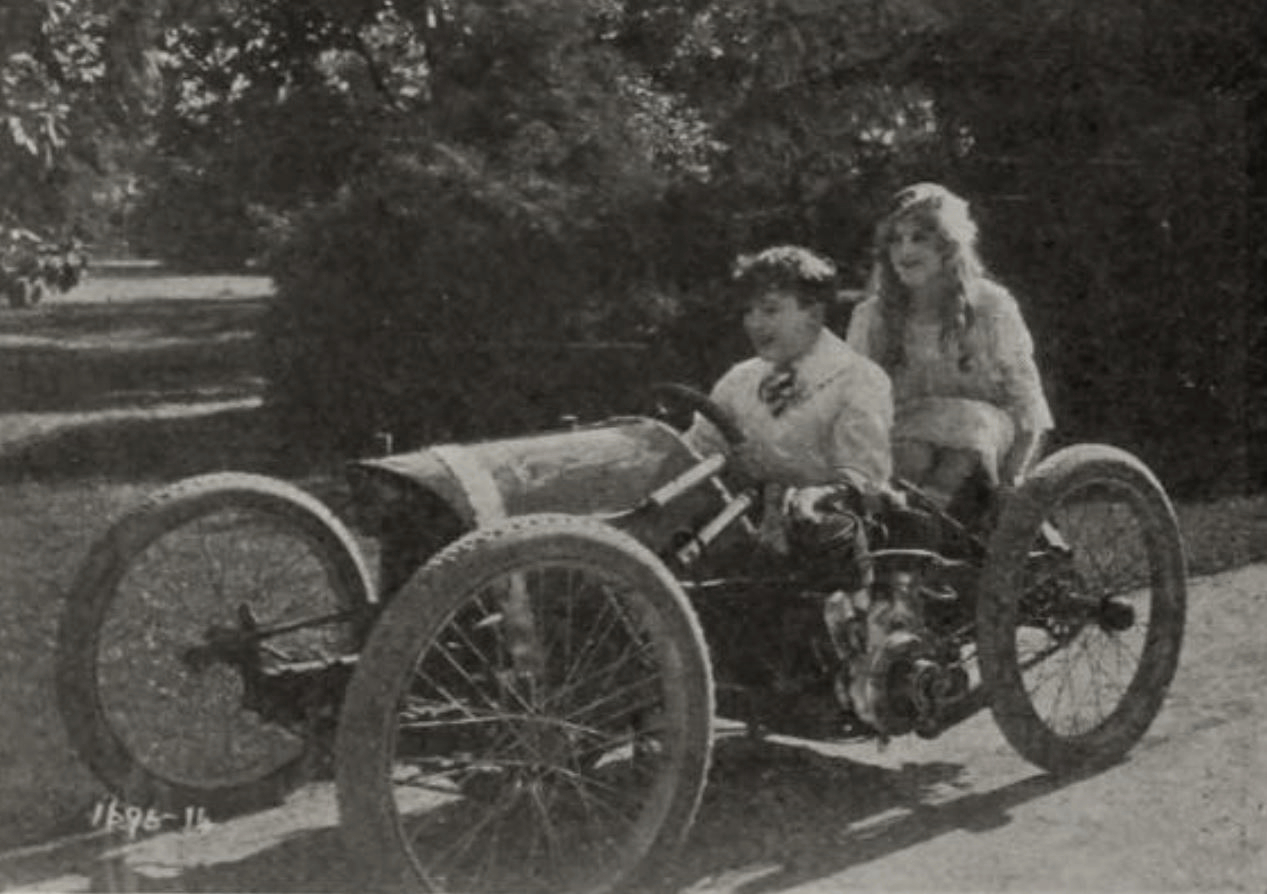
The climax of The Love Girl is masterfully orchestrated, employing parallel narratives to heighten tension. On one hand, we witness the dramatic raid on the kidnappers' den, a sequence likely filled with suspenseful cross-cutting and dynamic action, showcasing the burgeoning capabilities of cinematic storytelling in the silent era. On the other, the Swami is at Aunt Grouchy's residence, coolly attempting to collect his illicit 'tribute.' The arrival of the Secret Service men, timed to perfection, exposes his true character in a moment of gratifying comeuppance. This dual resolution provides both emotional catharsis and narrative closure, a satisfying unraveling of the villain's intricate web of deceit. The swiftness of justice, though perhaps idealized, speaks to the era's desire for clear moral outcomes.
The film's resolution is not merely about the triumph of good over evil; it's a poignant exploration of personal growth and redemption. Aunt Grouchy, witnessing the catastrophic consequences of her pride and misguided spiritual ventures, undergoes a profound awakening. Her 'eyes are opened,' a metaphorical and literal realization of her past shortcomings. This moment of enlightenment, where she conquers her 'proud disposition' and sanctions her daughter's marriage to the poor young man, is the emotional linchpin of the film. It's a powerful testament to the idea that even the most rigid hearts can soften, and that genuine love, rather than social status, is the true measure of happiness. This arc of transformation is reminiscent of the moral reckonings seen in films like The Way Back or Destruction, where characters confront their flaws to find a path to betterment. The film concludes with Ambrosia living 'happily ever after,' a simple yet resonant affirmation of the enduring power of love, family, and the wisdom gleaned from adversity.
The cast of The Love Girl delivers performances that, even through the lens of time, convey a remarkable depth of character. Adele Farrington, as Ambrosia, carries the emotional weight of the film with a nuanced portrayal of youthful resilience. Her expressive eyes and gestures communicate a spectrum of feelings, from initial heartbreak to burgeoning courage, making her a truly endearing protagonist. Grace Marvin's 'Aunt Grouchy' is not a one-dimensional villain; she is a woman blinded by societal expectations, and Marvin skillfully hints at the underlying fear and vulnerability that drive her character's stern facade. Wadsworth Harris's Swami is a standout, exuding a sinister charm that makes his villainy all the more compelling. Ella Hall, Kingsley Benedict, Harry Depp, and Betty Schade round out the ensemble, each contributing to the rich tapestry of the narrative.
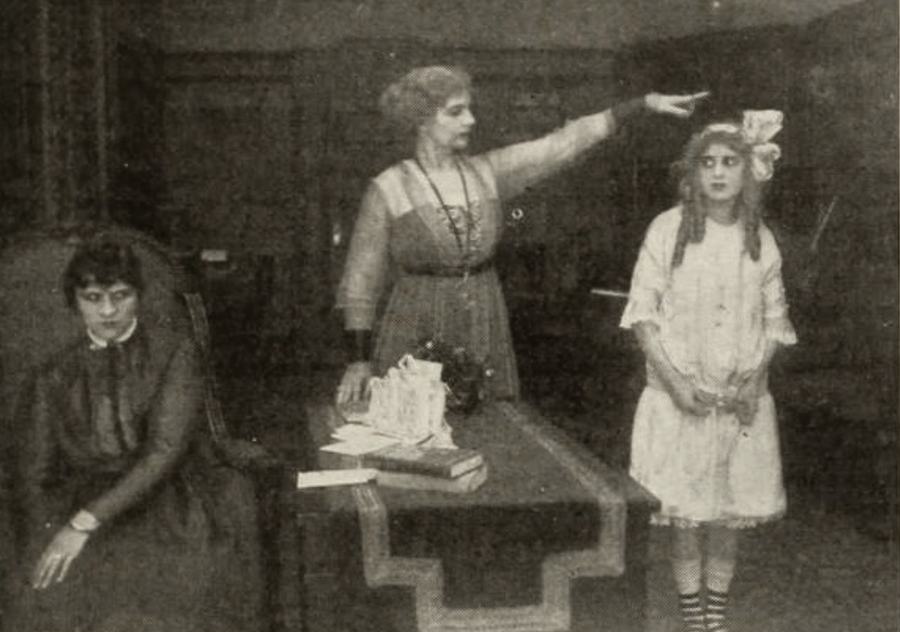
Robert Z. Leonard's writing is a masterclass in silent film storytelling. He crafts a narrative that is both intricate in its plot machinations and clear in its thematic intentions. The contrast between nature and urbanity, the pitfalls of blind faith, the resilience of youth, and the ultimate triumph of genuine affection are all woven together seamlessly. The film's ability to tackle themes of spiritual manipulation and kidnapping, while maintaining a hopeful tone, speaks to Leonard's skill in balancing drama with an underlying optimism. Comparisons to other films of the era, such as Satyavan Savitri, might highlight differing cultural approaches to spirituality, further underscoring the universal theme of discerning true wisdom from deceptive practices. Meanwhile, the theme of a child's journey through hardship finds parallels in films like The Waif, showcasing a common narrative thread in early cinema.
The Love Girl stands as a testament to the evocative power of early cinema. It's a film that, despite its age, speaks volumes about human nature, the dangers of unexamined belief, and the redemptive capacity of love and self-awareness. It reminds us that clarity often comes through crisis, and that sometimes, the most profound wisdom can be found in the innocent hearts of children. The film's narrative structure, moving from personal loss to societal critique and ultimately to familial reconciliation, provides a satisfying and emotionally resonant experience. It's a captivating blend of melodrama, suspense, and moral fable, delivering a message that remains as relevant today as it was in its own time.
For those who appreciate the nuances of silent film, the compelling characters, and a story that champions integrity over superficiality, The Love Girl is an absolute must-see. It's more than just a historical artifact; it's a vibrant piece of storytelling that continues to charm and provoke thought, solidifying its place as a quiet classic in the annals of cinema. The film's exploration of family dynamics and the quest for true happiness, despite external pressures, could also draw comparisons to the complex interpersonal relationships depicted in The Cloister and the Hearth, highlighting the enduring human search for contentment and belonging. The struggle against a powerful, deceptive figure also finds echoes in adventure tales like Bushranger's Ransom, or A Ride for Life, where protagonists must outwit cunning adversaries. Ultimately, The Love Girl serves as a beautiful reminder of the power of cinema to reflect and shape our understanding of the human condition, proving that even without spoken words, a story can resonate deeply and universally.

IMDb 6
1929
Community
Log in to comment.