DbcultAccessing Vault...
Cult Review
Senior Film Conservator
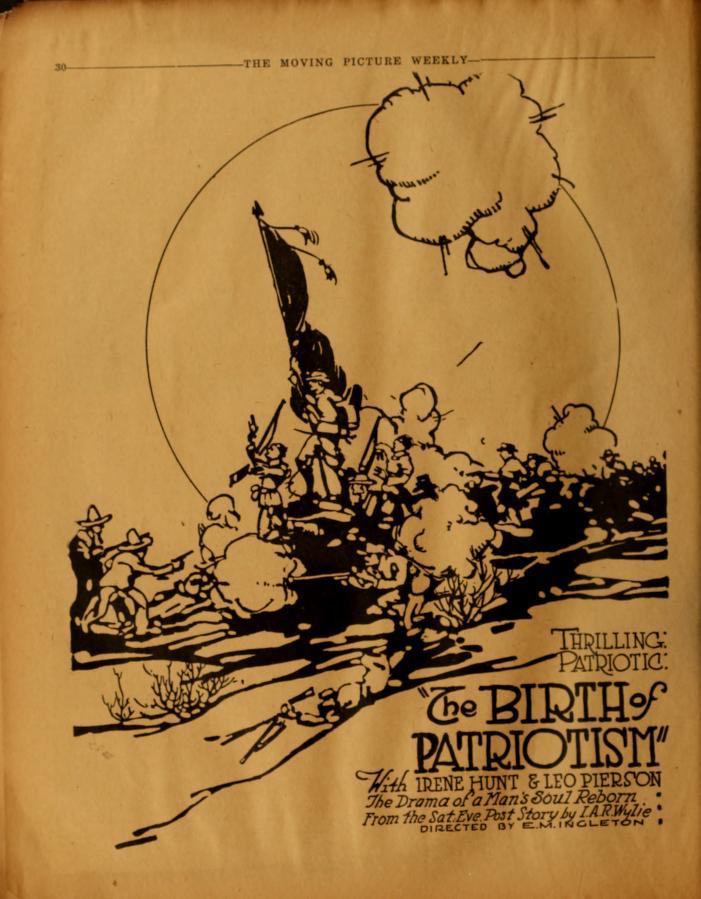
Stepping into the flickering, sepia-toned world of early cinema is always an experience, a journey back to the very nascent stages of cinematic storytelling. 'The Birth of Patriotism,' a film from an era when emotions were writ large on faces and narratives unfolded with a theatrical grandeur, offers a surprisingly nuanced exploration of human relationships against the backdrop of national crisis. It’s a work that, despite its age, still resonates with themes that feel startlingly contemporary: the erosion of marital intimacy, the allure of forbidden solace, and the transformative power of sacrifice.
At its core, this is a narrative steeped in the domestic. We are introduced to Johnny Roberts, a man whose casual negligence slowly but surely chisels away at the foundations of his marriage to Mary. Their union, once perhaps vibrant, has devolved into a wearying drudgery for Mary, a state of affairs that Johnny seems oblivious to, or perhaps, simply uninterested in rectifying. The film masterfully uses subtle visual cues – a lingering shot on Mary’s tired expression, Johnny’s dismissive gestures – to convey the widening chasm between them. This isn't a sudden, cataclysmic break, but a slow, agonizing decay, a common enough tragedy in the human experience that silent cinema, with its reliance on visual metaphor, was uniquely poised to explore. In this respect, it echoes the quiet desperation found in other domestic dramas of the era, perhaps even hinting at the profound internal struggles seen in films like The Strange Case of Mary Page, where societal expectations and personal desires clash within the confines of marriage.
The final, irreparable fissure in Johnny and Mary’s relationship arrives with a scene of stark, almost brutal honesty. Johnny, weakened by fever, returns home seeking comfort, only to be met with Mary’s accusatory gaze and a harsh indictment of drunkenness. It’s a moment of profound misunderstanding, or perhaps, a manifestation of accumulated resentment finally boiling over. In her eyes, his illness is merely a symptom of his moral failing, a projection of her own weariness and disillusionment. This accusation, whether founded or not, acts as the ultimate catalyst, severing the last fragile threads of their commitment. Johnny, wounded and alienated, seeks refuge and finds it in the unexpected tenderness of Anne, the innkeeper's daughter. Their burgeoning relationship is depicted with a delicate touch, emphasizing the solace and genuine affection that blossoms between them. For a time, their existence together is one of quiet contentment, a blissful escape from the harsh realities Johnny left behind. It’s a portrayal of a 'second chance' at happiness, albeit one fraught with the moral ambiguities of the period.
The film, however, is not content to dwell solely on domestic melodrama. The arrival of war dramatically alters the trajectory of these intertwined lives. The threat to England stirs a powerful, almost primal sense of duty in Johnny, compelling him to enlist and join the ranks of those fighting on the front. This shift introduces a grander, more epic scale to the narrative, transforming a personal drama into a story infused with nationalistic fervor. The silent film era often excelled at depicting such transformations, harnessing the power of montage and symbolic imagery to convey sweeping societal changes and individual responses to them. One might draw parallels to the powerful patriotic narratives seen in films like For Liberty or even the grand historical scope of Joan the Woman, where individual destinies become inextricably linked with the fate of a nation.
Perhaps the most compelling and forward-thinking aspect of 'The Birth of Patriotism' lies in the unexpected alliance forged between Mary and Anne. With Johnny absent and a baby to care for, Mary, in a moment of profound desperation, seeks out Anne, not in anger or jealousy, but in a plea for financial assistance. This pivotal encounter transcends the traditional love-triangle trope, instead offering a sensitive portrayal of female solidarity. The film delicately navigates their initial awkwardness, allowing a mutual understanding to blossom through shared circumstance and a common concern for Johnny’s well-being and the welfare of his child. It’s a remarkably progressive depiction for its time, eschewing catfights and rivalry for a quiet, empathetic bond. The silent performances of Ann Forrest as Anne and Irene Hunt as Mary are particularly poignant here, conveying volumes of emotion through subtle gestures and expressive eyes, making their silent pact feel deeply authentic. This portrayal of women supporting each other despite challenging personal circumstances offers a fascinating counterpoint to more typical narratives of female rivalry, perhaps even hinting at the burgeoning social consciousness that would later be explored in films like A Factory Magdalen, where women often faced dire choices and found strength in unexpected places.
The narrative builds to Johnny’s return from the war, a moment anticipated with a mixture of hope and trepidation. The reintegration of a soldier into civilian life, especially one who left behind such a complicated personal landscape, is handled with a commendable degree of emotional intelligence. It’s here that Anne’s character truly shines, embodying an act of profound, almost saintly, self-sacrifice. Upon Johnny’s arrival, she quietly, without fanfare or demand, disappears from his life, understanding that his place is with his wife and child. Her departure is a silent, selfless act of love, prioritizing the stability and conventional happiness of others over her own desires. This kind of altruistic renunciation was a powerful motif in early cinema, often used to elevate female characters to heroic, almost mythic status. Anne’s sacrifice elevates the film beyond a mere domestic drama, imbuing it with a sense of tragic nobility.
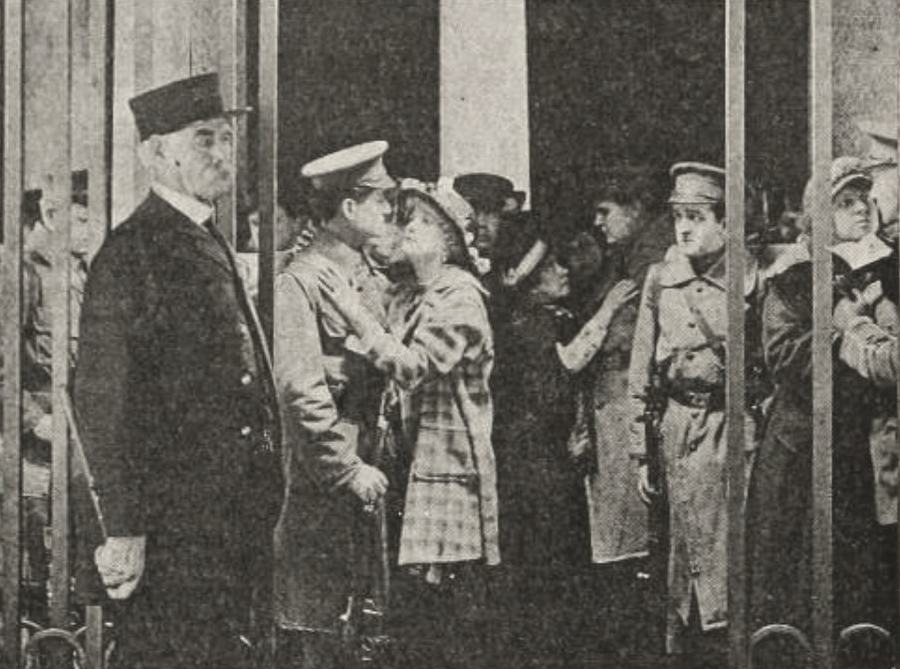
The performances in 'The Birth of Patriotism' are, as expected for the era, grand and expressive, yet manage to convey genuine emotional depth. Leo Pierson as Johnny Roberts navigates the complexities of his character’s journey from careless husband to conflicted lover to patriotic soldier with conviction. His struggles are palpable, his internal turmoil often writ large across his face. Ann Forrest, as Anne, delivers a performance of quiet strength and profound empathy, making her eventual sacrifice all the more heartbreaking. Irene Hunt, as Mary, convincingly portrays a woman grappling with disillusionment, motherhood, and eventual reconciliation. The nuanced interplay between these actors, relying solely on physical presence and facial expressions, is a testament to the power of silent acting.
E. Magnus Ingleton and I.A.R. Wylie’s screenplay, while adhering to certain conventions of the time, demonstrates a remarkable foresight in its thematic explorations. The script deftly balances the intimate drama of the love triangle with the broader canvas of wartime patriotism, ensuring that neither overshadows the other entirely. The pacing, typical of early features, allows moments of emotional weight to linger, giving the audience ample time to absorb the characters' dilemmas. The direction, while not explicitly attributed in the provided details, would have been crucial in orchestrating these performances and visual narratives. The effective use of intertitles, camera angles, and editing would have been paramount in conveying the story's emotional arc and thematic richness. The film’s ability to articulate such complex emotional landscapes without spoken dialogue is a powerful reminder of the unique artistry inherent in silent cinema, a craft that demanded a mastery of visual storytelling.
Ultimately, 'The Birth of Patriotism' is a film deeply concerned with the various forms of sacrifice. There is Anne’s personal sacrifice, foregoing her own happiness for the sake of Johnny’s family. There is Johnny’s patriotic sacrifice, risking his life for his country. And perhaps, there is also Mary’s sacrifice, in enduring the hardships of a strained marriage and the anxieties of wartime, ultimately forgiving and rebuilding. These layers of sacrifice are intricately woven together, suggesting that patriotism isn't just about fighting on the battlefield, but also about the personal renunciations made in the name of family, community, and moral duty. The film suggests that true patriotism might manifest not only in grand gestures of national defense but also in the quiet, often unseen, acts of compassion and selflessness that hold society together.
The ending, with Johnny’s return to his wife and child, is presented as a resolution, a restoration of order. Yet, Anne’s quiet disappearance leaves a lingering sense of melancholy, a poignant reminder of the cost of such resolutions. It avoids a simplistic 'happily ever after,' instead offering a more bittersweet conclusion that acknowledges the complexities of human relationships and the often-unseen sacrifices that underpin societal norms. This blend of overt patriotism and subtle personal tragedy is a hallmark of many silent era dramas, which often used grand historical events as a canvas for deeply personal, moralistic tales. While it might not possess the raw, gritty realism of later war films, its emotional sincerity and thematic depth make it a compelling watch. It is in this delicate balance, between the grand pronouncements of national duty and the intimate whispers of the human heart, that 'The Birth of Patriotism' truly finds its voice, resonating with a timeless message about love, loss, and the enduring power of the human spirit.
For contemporary audiences, 'The Birth of Patriotism' serves as more than just a historical artifact; it's a window into the evolving morality and storytelling techniques of a bygone era. It challenges us to look beyond the absence of sound and color, to appreciate the artistry of visual narrative and the profound impact that expressive acting and well-crafted intertitles could achieve. The film’s exploration of domestic breakdown, illicit love, and wartime heroism holds a mirror to enduring human dilemmas. Its portrayal of female solidarity, particularly between Mary and Anne, is notably progressive for its time, suggesting a nuanced understanding of women’s roles and relationships that transcended mere rivalry.
The film, like many of its contemporaries, asks profound questions about duty, loyalty, and the nature of true love. Is love defined by societal convention, or by genuine affection, regardless of its origins? How does personal happiness weigh against the demands of patriotism or the sanctity of the family unit? These are not simple questions, and the film, through its dramatic arc and character development, invites us to ponder them without offering simplistic answers. It’s a testament to the enduring power of cinema that a film from over a century ago can still provoke such thought and emotion, reminding us that the human heart, with all its complexities, remains a timeless subject for artistic exploration. In an era where cinema was still finding its voice, 'The Birth of Patriotism' stands as a compelling example of its early mastery, a silent symphony of human experience that continues to echo through the annals of film history.

IMDb 5.6
1928
Community
Log in to comment.