DbcultAccessing Vault...
Cult Review
Senior Film Conservator
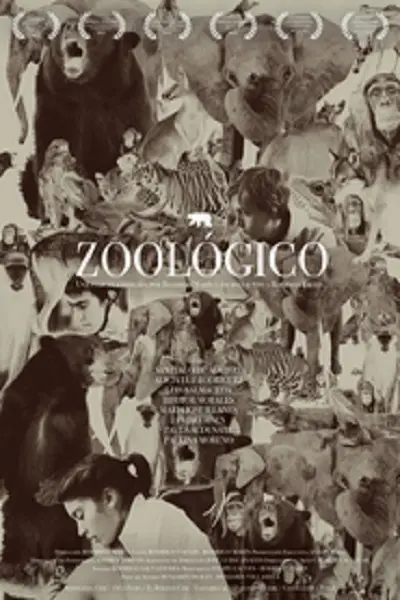
Is O Jardim Zoológico de Lisboa worth watching today? Short answer: yes, but with a significant caveat. This documentary is a slow, contemplative piece, designed for viewers who appreciate observational cinema and a nuanced approach to its subject matter, rather than fast-paced entertainment. It is unequivocally for those who find beauty in the mundane rhythms of animal life and are willing to ponder the deeper implications of a zoo’s existence. Conversely, it is decidedly not for audiences seeking a traditional, narrative-driven wildlife film or a sensationalized exposé.
The film offers a quiet, almost meditative journey through the Lisbon Zoo, presenting a perspective that feels both intimate and detached. It asks its audience to observe, to reflect, and to form their own conclusions, a refreshing departure from many more didactic documentaries. Yet, its deliberate pace might test the patience of some, making it a niche, though rewarding, experience.
This film works because it commits wholeheartedly to its observational style, allowing the animals and their environment to speak for themselves with minimal human intervention.
This film fails because its deliberate pacing occasionally veers into stagnation, potentially alienating viewers accustomed to more dynamic storytelling.
You should watch it if you appreciate a thoughtful, visually rich exploration of a complex subject, and are prepared for a film that prioritizes atmosphere and contemplation over plot.
The directorial vision for O Jardim Zoológico de Lisboa is one of quiet reverence. The film, under the direction of Rodrigo Marín, eschews overt narration or heavy-handed didacticism, instead opting for a fly-on-the-wall approach that feels remarkably unobtrusive. Marín’s greatest strength here is his ability to let the subjects breathe, to allow the inherent drama and beauty of the animal kingdom, even in captivity, to unfold naturally.
Cinematography is, predictably, the bedrock of this documentary’s success. The camera work is often stunning, capturing the intricate textures of fur and feather, the expressive eyes of an owl, or the powerful musculature of a lion in remarkable detail. There’s a particular shot of an orangutan, its hand gently grasping a piece of fruit, that feels almost tactile in its intimacy, inviting the viewer to consider the creature’s inner world.
However, this visual splendor isn't merely aesthetic; it serves a crucial narrative function. The camera often lingers, holding shots for extended periods, forcing the viewer to truly observe. This can be both a blessing and a curse. While it fosters a deeper connection to the animals and their immediate environment, allowing for moments of genuine wonder, it also contributes to the film's occasionally sluggish rhythm. One could argue that this is intentional, mirroring the slower, more repetitive existence of the animals themselves, but it undeniably impacts the film's overall accessibility.
There's a recurring visual motif of enclosures themselves – the bars, the glass, the artificial rock formations. The film doesn't shy away from these symbols of captivity, but rather integrates them into its visual language, making them as much a part of the animals' reality as the animals themselves. This subtle, yet persistent, acknowledgment of the zoo's constructed nature is one of the film's most potent, if understated, critiques.
Given that Rodrigo Marín is listed in the cast, his contribution to O Jardim Zoológico de Lisboa is less about traditional 'acting' and more about his presence, or often, his deliberate absence, within the narrative. If he is indeed the narrator, his voice is a hushed, almost reverent whisper, guiding us without dictating our thoughts. If he appears on screen, it is likely as a quiet observer, a conduit through which we view the animals, rather than a central figure.
This choice is crucial. By minimizing human voice-over and on-screen personalities, the film amplifies the voices of the animals themselves, through their movements, sounds, and interactions. It’s a powerful statement about prioritizing the subjects over the interpreters. Yet, this approach also means the film lacks a strong human anchor, which some viewers might miss.
The true 'performances' in O Jardim Zoológico de Lisboa come from the animals. The film captures their raw, unscripted behaviors – the playful antics of a chimpanzee, the stoic dignity of a giraffe, the restless pacing of a predator. These moments are not staged; they are observed, and in that observation lies their power. There's a particular sequence featuring a group of meerkats, their hyper-vigilant movements and communal behavior beautifully illustrating their innate instincts, even within a controlled environment.
The film also subtly highlights the human interaction with the zoo, not through individuals, but through the infrastructure: the feeding schedules, the cleaning routines, the distant sounds of visitors. These elements serve as a constant, gentle reminder of the human hand that shapes this 'wild' space, adding another layer to the film's thematic depth without ever becoming preachy.
The pacing of O Jardim Zoológico de Lisboa is perhaps its most divisive element. It is slow. Deliberately, unapologetically slow. This is not a film that rushes from one exotic animal to the next in a flurry of quick cuts. Instead, it savors each moment, allowing the viewer to truly immerse themselves in the scene. A shot of a hippopotamus submerging itself might last for what feels like an eternity, but in that extended duration, one begins to appreciate the sheer weight and power of the creature, and the serenity of its aquatic world.
This unhurried rhythm creates a meditative, almost hypnotic tone. The film feels less like a documentary and more like an extended, quiet visit to the zoo, where the viewer is encouraged to simply exist alongside the animals. The ambient sounds – chirps, roars, the rustle of leaves – become a crucial part of the soundscape, pulling you deeper into their world.
However, this very quality can also be its biggest hurdle. For those accustomed to the rapid-fire storytelling of modern documentaries or the dramatic tension of narrative films, the film's languid pace can feel stagnant. There are moments, particularly in sequences featuring less active animals, where the film borders on becoming a visual exercise rather than an engaging narrative. It demands a particular kind of patience and attentiveness from its audience, and not everyone will be willing or able to provide it.
The tone throughout is one of respectful observation. There's no overt judgment or moralizing about the concept of zoos. Instead, the film presents the reality of the Lisbon Zoo as it is, allowing the audience to draw their own conclusions about the inherent beauty, tragedy, and necessity of such institutions. This neutrality is a bold choice, and one that ultimately strengthens the film's impact by avoiding easy answers.
At its core, O Jardim Zoológico de Lisboa is a profound meditation on the paradox of captivity. It explores the tension between humanity's desire to conserve endangered species and its simultaneous act of confining them. The film doesn't offer easy answers or take a definitive stance, which is, in my opinion, one of its greatest strengths. Instead, it presents the reality, allowing the viewer to grapple with the complex ethical questions inherent in the zoo model.
We see moments of undeniable vitality and natural behavior, like a group of monkeys grooming each other with intricate care, yet these moments are always framed by the visible boundaries of their enclosures. This constant visual reminder subtly underscores the central theme: these are wild animals living in a human-defined space. The film doesn't need a narrator to explicitly state this; the cinematography does the heavy lifting.
An unconventional observation I made while watching was how the film, in its quietude, almost becomes a reflection of the animals' own existence. The repetitive nature of their days, the limited scope of their movements – these are mirrored in the film's contemplative pacing. It’s a subtle, almost meta-commentary on the viewing experience itself. We, the audience, are also confined, in a sense, to the frame of the screen, observing a world that is both real and artificial.
The film also touches upon the idea of spectacle. People visit zoos for entertainment, for education, for a connection to the wild. O Jardim Zoológico de Lisboa captures the animals in their rawest form, often devoid of the performative aspect that visitors might seek. It forces us to look beyond the 'show' and truly see the creature, with all its inherent dignity and perhaps, its quiet resignation. This makes it a surprisingly powerful and thought-provoking piece that lingers long after the credits roll.
Yes, O Jardim Zoológico de Lisboa is absolutely worth watching, particularly if you are a cinephile with an appreciation for slow cinema and observational documentaries. It offers a unique, unfiltered look at the daily lives within a zoo, prompting genuine reflection on complex themes without spoon-feeding answers. The film’s visual artistry alone justifies the viewing experience.
It is a challenging watch in terms of pace, demanding patience and a willingness to engage with its contemplative style. However, for those who embrace its rhythm, the rewards are substantial. It's a film that respects its subjects and its audience, inviting a deeper, more personal connection to the natural world, even when that world is contained by human design.
Ultimately, O Jardim Zoológico de Lisboa is a deeply contemplative, visually arresting documentary that offers a rare, unvarnished look into the lives of animals in captivity. It works. But it’s flawed. Its deliberate pace is both its defining characteristic and its most significant barrier to entry. For those willing to surrender to its rhythm, it provides a profoundly moving and thought-provoking experience, prompting introspection on our relationship with the wild. It’s not a film to be passively consumed; it demands active observation and reflection. While it won't be for everyone, those who engage with it on its own terms will find it to be a rich, resonant, and quietly powerful piece of cinema, far more substantial than a mere tour of animal enclosures. It’s a film that stays with you, challenging your perceptions long after the screen goes dark, much like the lingering gaze of a captive creature.

IMDb —
1924
Community
Log in to comment.