DbcultAccessing Vault...
Cult Review
Senior Film Conservator
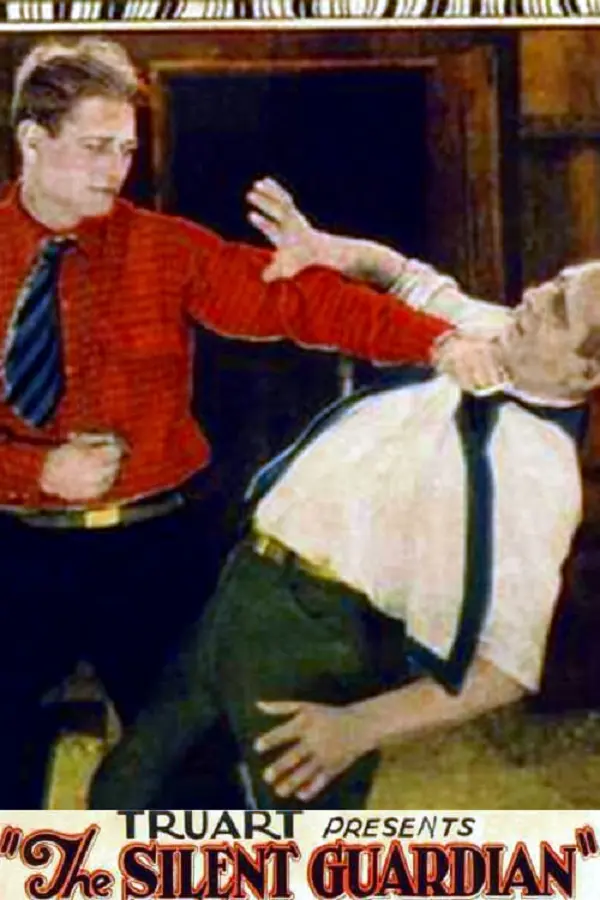
Is The Silent Guardian worth your time in an age of CGI-saturated blockbusters? Short answer: yes, but only if you appreciate the raw, physical craftsmanship of the silent era. This film is specifically for those who find beauty in the unpolished grit of 1920s Westerns and students of animal-led narratives. It is decidedly NOT for viewers who require fast-paced dialogue or complex, non-linear plotting.
The Silent Guardian is a fascinating relic of a time when the 'wonder dog' was a legitimate box-office draw. For a modern audience, the film serves as a masterclass in visual storytelling. Without the crutch of spoken dialogue, the director relies on the expressive eyes of Rex the Dog and the physical prowess of Art Acord. It is worth watching for the stunt work alone, which lacks the safety nets of contemporary production. It is a raw, often brutal look at the frontier that feels more authentic than many modern 'period' pieces.
1) This film works because the chemistry between Art Acord and his animal co-stars feels grounded in genuine trust rather than mere training.
2) This film fails because the human villainy is painted in such broad, simplistic strokes that it occasionally borders on the comical.
3) You should watch it if you want to see the roots of the 'loyal animal' genre that eventually gave us Lassie and Benji.
Art Acord was not just an actor; he was a world-champion rodeo performer, and that physicality permeates every frame of The Silent Guardian. Unlike the more polished performances seen in films like La belle Russe, Acord’s movement is jagged, efficient, and entirely devoid of theatrical pretense. He doesn’t just walk into a scene; he occupies it with the stillness of a predator.
However, the real star here is Rex the Dog. In 1925, animal stars were treated with a level of reverence that is hard to fathom today. In one specific scene, Rex is tasked with navigating a rocky crevice to deliver a message. The camera lingers on his paws, the tension in his muscles, and the sheer focus in his eyes. It is a moment of pure cinema. It works. But it's flawed. The reliance on the dog to solve every narrative hurdle can sometimes make the human characters look remarkably inept.
Writer Ewart Adamson, known for his prolific work in the silent era, crafts a story that is essentially a series of escalating tensions. While the plot might seem thin compared to contemporary dramas like Who Killed Simon Baird?, it excels in its environmental storytelling. The wilderness is not just a backdrop; it is a character that Adamson uses to test the mettle of his protagonists.
The pacing is brisk, avoiding the sluggishness often found in early melodramas like The Third Degree. Adamson understands that in a film featuring a horse named Black Beauty and a dog named Rex, the audience is there for the action. The intertitles are sparse, allowing the visual composition to carry the weight. This is a stark contrast to the dialogue-heavy aspirations of The Nervous Reporter.
The cinematography in The Silent Guardian is surprisingly sophisticated for its time. The use of natural light in the outdoor sequences creates a high-contrast look that emphasizes the harshness of the terrain. One cannot help but compare the sweeping vistas here to the more experimental visual styles found in Creation. There is a specific shot where Black Beauty is silhouetted against a rising sun that feels like a precursor to the great Westerns of John Ford.
The editing, however, is where the film shows its age. The transitions between the human drama involving Louise Lorraine and the animal action sequences can be jarring. At times, it feels as though we are watching two different films spliced together: a standard romantic Western and a high-stakes nature documentary. This lack of cohesion is a common trait of the era, also visible in works like Two Moons.
The 'Pros' of The Silent Guardian are found in its sincerity. There is no irony here; the bond between man and beast is treated with absolute gravity. The 'Cons' are largely technical and structural. The secondary characters, played by actors like Harry Tenbrook and L.J. O'Connor, feel like cardboard cutouts compared to the vibrant energy of the animals. This is a common issue in films like Big Dan, where the lead's charisma must carry a weak supporting cast.
Furthermore, the film’s resolution feels somewhat rushed. After seventy minutes of tension, the final conflict is resolved with a suddenness that leaves the viewer wanting more. It lacks the comedic payoff of Stop That Wedding or the domestic charm of A Friendly Husband. It is a blunt instrument of a movie—effective, but not subtle.
Here is a debatable opinion: Rex the Dog is a better actor than Art Acord. While Acord relies on the tropes of the stoic cowboy, Rex provides the film's only true moments of vulnerability. When Rex is injured or separated from his master, his physical acting conveys a sense of existential dread that the human actors can't match. In the silent era, animals were often used as a shortcut to emotion, but here, Rex feels like the only character with a soul. This is a surprising observation given the period, but it holds up upon multiple viewings.
The Silent Guardian is a rugged, imperfect, and deeply earnest piece of filmmaking. It doesn't have the complexity of A Sister to Salome, nor the exotic flair of L'écrin du rajah. What it does have is a sense of adventure that feels tangible. It is a reminder that before we had superheroes, we had 'wonder dogs' and the vast, open range. It is a minor classic that deserves a spot on the shelf of any serious cinephile, if only to witness the incredible Rex in his prime. It’s not a masterpiece, but it’s a damn good time for those who know what they’re looking for.
IMDb 4.9
1922
Community
Log in to comment.