DbcultAccessing Vault...
Cult Review
Senior Film Conservator
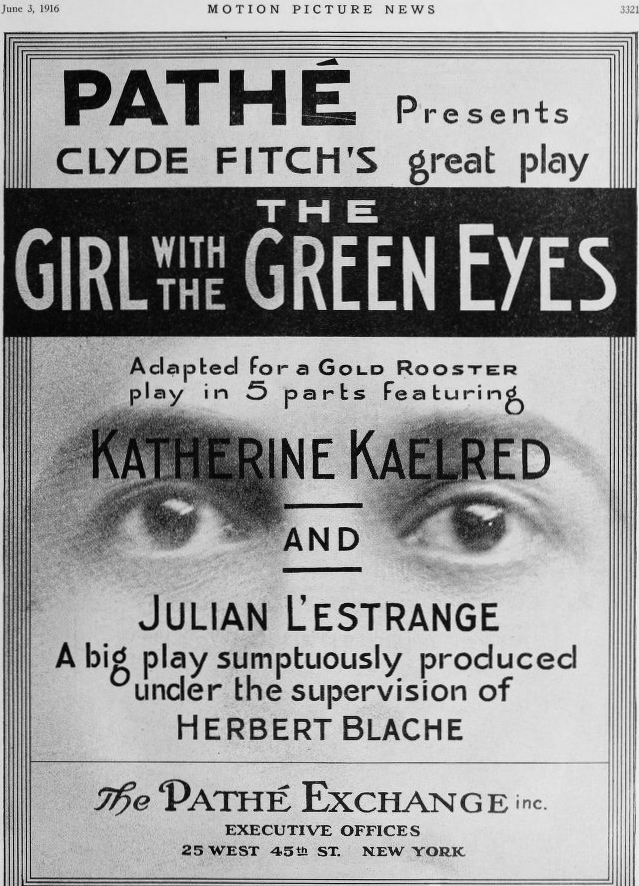
Clyde Fitch’s stage grenade, committed to celluloid during the nickelodeon’s infancy, is less a story than a fever chart—every beat ticks upward toward cardiac rupture. Travers’ nocturnal rescue of his sister is filmed like a Caravaggio: faces half-submerged in obsidian, the lake a liquid maw ready to swallow feminine virtue whole. The camera doesn’t cut; it lingers, letting the moral chill seep through kid-leather gloves.
Mrs. Travers’ green eyes aren’t mere pigmentation; they’re parabolic mirrors refracting every male glance back onto herself. The tinting—hand-painted emerald on some surviving prints—turns her gaze into a chemical spill, staining the celluloid with suspicion. When Mansfield insinuates that her husband’s "charity" is a euphemism for concubinage, Fitch stages the disclosure inside a ladies’ tea salon: porcelain clinks, crinoline rustles, and the word adultery hangs like unlit incense.
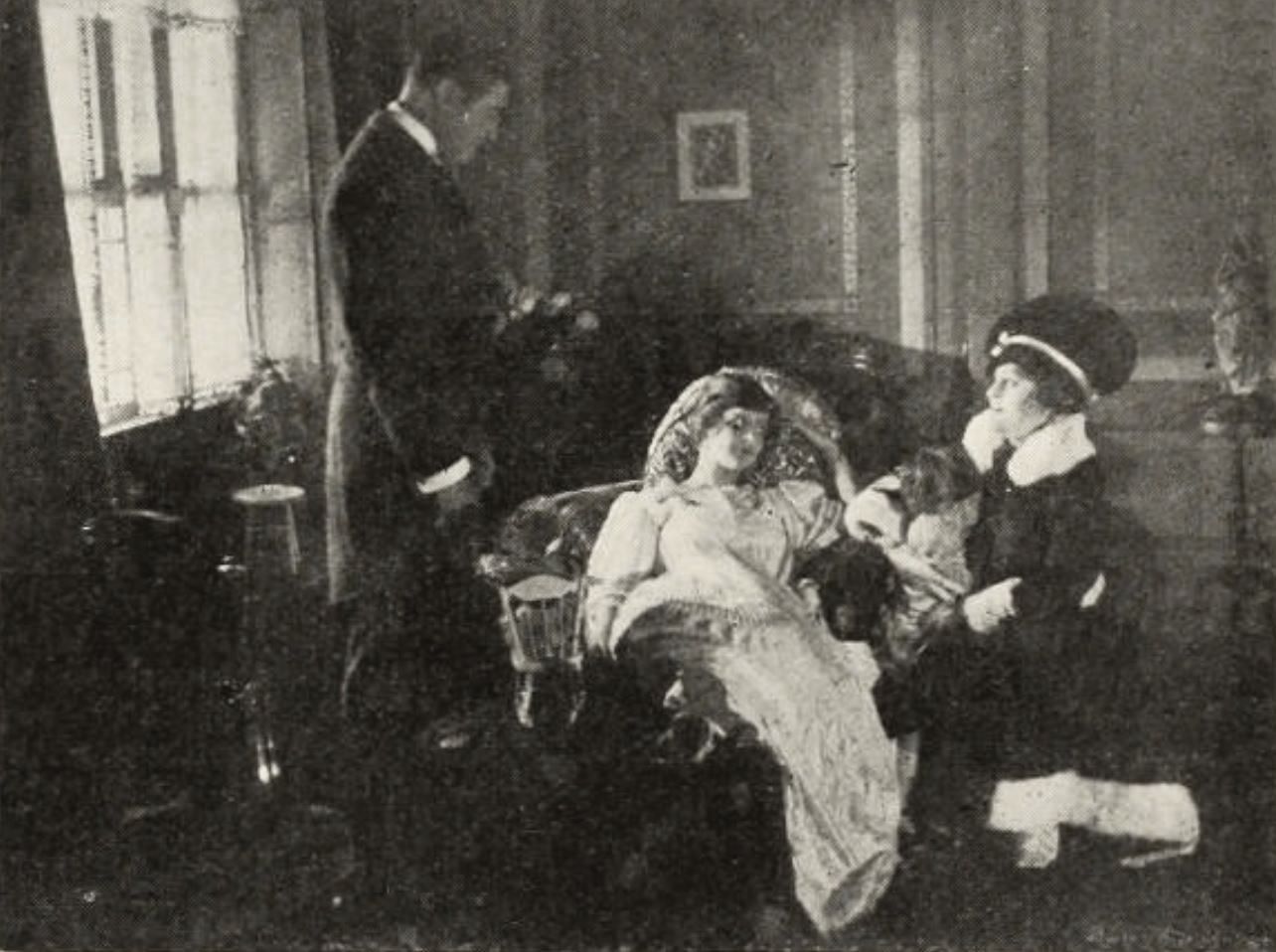
Note how destitution is always off-screen yet omnipresent. The sister’s eviction notice is never shown; instead we get the absence of furniture, the echo of empty drawers. Fitch understood that Victorian melodrama runs on negative space—what the audience fears losing rather than what it has already lost. Compare this to A Million Bid, where poverty is flamboyantly fetishized; here it’s a phantom limb that still aches.
Travers’ promised "protection" metastasizes into surveillance: he buys the apartment but keeps the key, polices the threshold, times the visits. The film’s subconscious joke is that his chivalry replicates the very patriarchal circuitry that ruined his sister. When Mansfield later taunts him with rumors of cuckoldry, Travers’ reaction is not Othello’s noble rage but something pettier—an accountant discovering embezzlement in his own ledger.
Mansfield’s gentlemen’s lounge, all cigar fog and leather upholstery, functions like a 19th-century Twitter: gossip is minted currency. The film intercuts the club’s tobacco haze with the sister’s attic gloom via match-cuts on doorknobs—one gilded, one rusted—suggesting that both spaces are nodes on the same circuitry of reputational capital. If you crave more Gothic claustrophobia, sample The Haunted Manor, yet Fitch’s horror is human, not spectral.
Mrs. Travers’ suicide attempt—laudanum in a cut-crystal tumbler—plays out in a single, unbroken shot lasting 73 seconds, an eternity for 1904. The camera watches her hand tremble, the liquid swirl, throat muscles contract. There is no orchestral swell, only the click-whirr of the projector audible in contemporary screenings, as if the apparatus itself were counting down to cardiac arrest. Miraculously, the antidote arrives not via physician but via confession: once the sister denounces Mansfield, the poison loses its efficacy—melodrama’s alchemy transmuting guilt into gastric pump.
Surviving hand-tinted prints deploy a coded palette: green (jealousy) for Mrs. Travers’ close-ups, yellow (cupidity) for Mansfield’s waistcoat, sea-blue (redemption) for the final embrace. These flashes of hue appear only when the narrative pivots on revelation—an early, proto-version of the Technicolor morality that would later bloom in Montmartre.
Lucile Watson, as the suicidal sister, modulates from catatonic despair to feral accusation without theatrical semaphore. Watch her pupils in the recognition scene—they dilate like ink blots, mapping trauma faster than the intertitles can. Opposite her, Katharine Kaelred’s Mrs. Travers weaponizes stillness; she barely moves above the clavicle, letting only the jaw hinge slacken when jealousy metastasizes into certainty. The technique prefigures the minimalist horror of Den sorte drøm, yet predates it by a decade.
Swap the gaslights for neon, the laudanum for benzodiazepines, and the plot could slide into a 2024 prestige miniseries. The text’s obsession with optics—who sees whom, when, and under what moral filter—anticipates our surveillance age. Even the title’s synecdoche (green eyes standing for the whole woman) rhymes with Instagram’s reduction of identity to a color-graded thumbnail.
Only fragments survive: a 9-minute condensation at MoMA, a 35 mm nitrate reel in a private Bologna vault, and a bootleg digitization on certain cinephile hubs. Seek them out; the flicker is worth the hunt. Fitch’s melodrama is not a dusty relic but a cautionary prism—tilt it toward the light and you’ll spot your own reflection, pupils tinted green with envy, heart balanced on the knife-edge between rescue and possession.
IMDb 6.5
1933
Community
Log in to comment.