DbcultAccessing Vault...
Cult Review
Senior Film Conservator
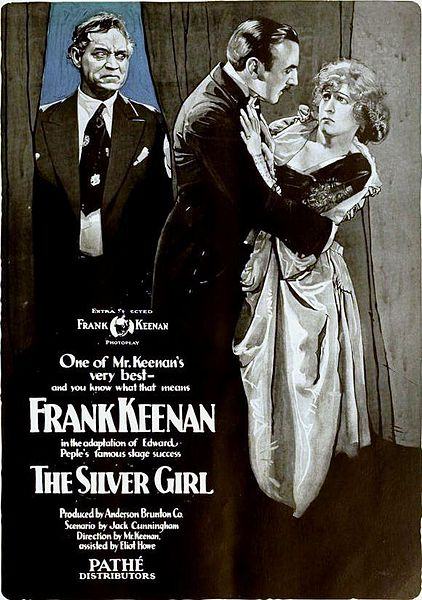
Stepping into the flickering shadows of early cinema, one often discovers narratives that, despite their age, possess a profound resonance, touching upon timeless human dilemmas with remarkable clarity. Such is the case with 1918's The Silver Girl, a film that, even a century later, continues to captivate with its intricate portrayal of love, loyalty, and the seductive allure of a life unlived. This isn't just a period piece; it's a testament to the enduring power of storytelling, a silent symphony of emotion played out against the stark beauty of the American West and the glittering facade of East Coast society.
At its core, The Silver Girl is a deeply human drama, centered on the spirited Anne Kepple, brought to life with a compelling blend of innocence and burgeoning independence by Irene Rich. Her initial predicament—a mining claim, her father's legacy, held hostage by a predatory loan shark—establishes a stark reality of frontier life, where one's fortunes could vanish as quickly as a desert mirage. Enter Jefferson Hunter, portrayed with a gravitas that belies the silent screen's limitations by Donald MacDonald. Hunter is a man of substance, a figure of the old guard, whose intervention is less an act of pure altruism and more a calculated, yet ultimately benevolent, acquisition. He reclaims Anne's claim, not out of charity, but as a prelude to a proposal of marriage, a union that initially seems more one of convenience and gratitude than passionate romance. Yet, it is in the crucible of this unconventional pairing that the film truly begins to shine, revealing the quiet dignity and profound depth of Hunter's character.
Hunter's renaming of his own mine, "The Howling Coyote," to "The Silver Girl" in Anne's honor, is a poignant gesture, a symbolic merging of their destinies and an early indicator of the depth of his affection. This act transforms a simple mining venture into a metaphor for their shared future, a testament to his devotion. The early days of their marriage are depicted as genuinely happy, a period of quiet contentment forged in the rugged, unpretentious environment of the West. Anne, despite the age difference, seems to find genuine happiness and respect in her partnership with Jefferson, a bond built on mutual esteem and a shared sense of purpose. It’s a depiction of love that matures from practicality into something far more profound, rooted in shared experiences and unspoken understanding.
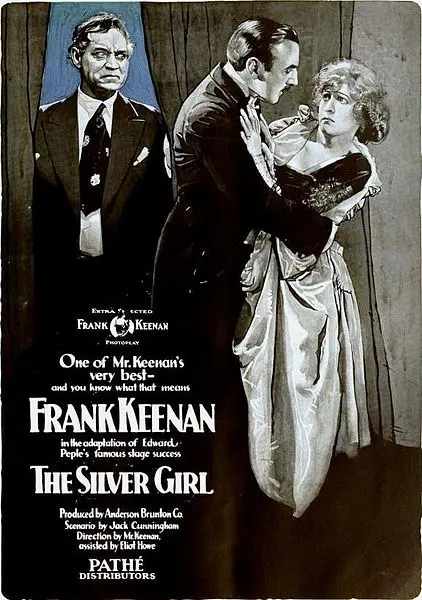
The idyllic tableau, however, is destined to be disrupted. The catalyst arrives in the form of Nathan Hargrave, a lawyer whose polished demeanor and urbane sensibilities clash sharply with the raw authenticity of the mining town. Frank Keenan masterfully embodies Hargrave as a character whose charm is as insidious as it is superficial. He represents the siren call of the East, a world of sophistication, culture, and social graces that stands in stark contrast to Anne's current existence. Hargrave subtly, yet persistently, plants seeds of discontent in Anne's mind, painting vivid pictures of New York life – a life she has never known, a world of possibilities she has, perhaps, not even considered. This psychological manipulation is one of the film's most compelling elements, showcasing how external influences can subtly erode internal contentment and stir dormant desires.
Anne's subsequent persuasion of Jefferson to journey East is not an act of malice, but rather a manifestation of a nascent curiosity, a desire to experience the broader world that Hargrave has so eloquently described. It’s a natural human impulse, a yearning for new horizons, expertly exploited by the manipulative lawyer. Their time in New York is initially enjoyable, a whirlwind of new experiences for Anne, and a display of Jefferson's willingness to indulge his wife's desires, even if they pull him away from his familiar domain. Yet, beneath the veneer of social engagements and cultural outings, Hargrave's machinations intensify, his attempts to steal Anne away becoming increasingly brazen. Here, the film delves into the delicate balance of trust and vulnerability within a marriage, demonstrating how even the strongest bonds can be tested by external pressures and internal doubts, particularly when one partner is less worldly than the other.
Jefferson's discovery of Hargrave's true intentions unleashes a torrent of pain and disillusionment. He misinterprets Anne's innocent fascination as a complete abandonment of their love, a crushing blow to a man who had offered her so much. The ensuing confrontation, culminating in Jefferson's desperate attempt to force Hargrave into a duel, is a raw display of a proud man's despair. He doesn't seek to kill Hargrave out of vengeance, but rather to force Hargrave to kill him, believing his life to be without purpose if Anne's affections have truly shifted. This self-sacrificial impulse, born of profound heartbreak, is a powerful moment, showcasing the depth of Jefferson's love and his archaic sense of honor. Hargrave's subsequent failure to shoot straight, attributed to nervousness, is a crucial narrative pivot. It not only spares Jefferson's life but also subtly underscores Hargrave's moral cowardice, his inability to follow through on the dark implications of his own manipulative actions. It’s a moment that could draw parallels with the intense emotional stakes found in films like The Crucial Test, where characters face profound moral and existential crossroads, revealing their true character under duress.
The retreat to Nevada, to the familiar rhythms of the mine and the steadfast companionship of "Chick" Wilson (Herschel Mayall), signifies Jefferson's attempt to reclaim a semblance of his former life, a life where his worth was defined by his work and his integrity, not by the fickle affections of a wife. This return to the frontier, to the stoic resilience of the West, is a powerful visual and thematic statement. It is in this stark solitude that Anne's own realization finally dawns. Her journey of self-discovery, away from the glittering distractions of New York and the insidious whispers of Hargrave, leads her back to the fundamental truth of her husband's unwavering love and his intrinsic goodness. This arc of realization, where a character must shed external influences to recognize authentic value, is a recurring motif in cinema, often seen in narratives like A Weaver of Dreams, where protagonists grapple with idealized visions versus harsh realities, ultimately finding truth in unexpected places.
The performances in The Silver Girl are particularly noteworthy for their ability to convey complex emotions without the aid of dialogue. Irene Rich, as Anne Kepple, navigates a difficult emotional terrain, transitioning from youthful exuberance to conflicted yearning, and finally to profound regret and understanding. Her expressions, her body language – every subtle gesture speaks volumes, allowing the audience to empathize with her journey, even when her choices are questionable. It’s a masterclass in silent film acting, where nuance is communicated through the eyes and the slightest tilt of the head. Donald MacDonald’s Jefferson Hunter is a study in quiet strength and deeply felt emotion. His portrayal of a man whose world is crumbling around him, yet who maintains a dignified despair, is remarkably nuanced. The heartbreak he conveys, particularly in the duel scene, is palpable, a testament to his acting prowess and ability to project internal anguish. Frank Keenan, as the antagonist Nathan Hargrave, is suitably smarmy and manipulative, his urbane charm thinly veiling a predatory nature. The supporting cast, including Kathryn Adams and Herschel Mayall, provides solid anchors, enriching the tapestry of this frontier drama with their believable portrayals.
The direction, likely by a seasoned hand from the era, ensures a steady pace and clear narrative progression. The contrasts between the expansive, rugged landscapes of Nevada and the confined, opulent interiors of New York are effectively utilized to underscore the film's central thematic conflict. The cinematography, while constrained by the technology of the time, skillfully captures the mood and atmosphere, from the dusty sun-baked mines to the elegant, if somewhat suffocating, drawing-rooms of the East. One can almost feel the grit of the West and the stifling formality of the city through the visual storytelling, a testament to the filmmakers' ability to communicate complex ideas through purely visual means. The skillful use of intertitles, far from being mere text, serves as an extension of the visual narrative, providing crucial insights into character thoughts and motivations, enhancing the emotional impact rather than merely stating facts.
What truly elevates The Silver Girl beyond a mere historical curiosity is its exploration of universal themes. The struggle between material gain and emotional fulfillment, the clash between traditional values and modern aspirations, and the enduring power of forgiveness and redemption are all woven into its fabric. Anne's journey is a powerful allegory for the choices individuals face when confronted with different paths – the familiar comfort of a proven love versus the tantalizing unknown. Her eventual return to Jefferson is not simply a happy ending; it is a profound affirmation of true worth, a recognition that genuine love and respect are far more valuable than superficial charm or fleeting excitement. This narrative of a woman's awakening to her husband's true character, often after a period of estrangement or temptation, resonates deeply, much like the emotional journeys depicted in films such as The Beautiful Lie, where characters navigate deception and the often-painful path to truth and self-discovery.
The film also serves as a fascinating window into the social mores and expectations of the early 20th century. The portrayal of marriage, the role of women, and the stark contrast between the burgeoning industrial East and the untamed West offer rich material for historical analysis. Yet, its core message remains strikingly contemporary: the importance of looking beyond superficial appearances to discern genuine character, and the sometimes painful, often circuitous, path to understanding what truly constitutes happiness and fulfillment in a relationship. It reminds us that true riches are not found in silver mines or glittering cities, but in the steadfastness of a loving heart, a lesson as relevant today as it was over a century ago.
In an era when cinema was still finding its voice, The Silver Girl stands as a remarkably sophisticated and emotionally resonant work. It's a testament to the fact that even without spoken words, the power of visual storytelling, compelling performances, and a well-crafted narrative can transcend the limitations of its medium and its time. For those interested in the foundational works of American cinema, or simply in a beautifully told story of human resilience and redemption, this film is an absolute treasure, shimmering with the quiet brilliance of its namesake, a silver thread woven through the fabric of cinematic history.

IMDb —
1934
Community
Log in to comment.