DbcultAccessing Vault...
Cult Review
Senior Film Conservator
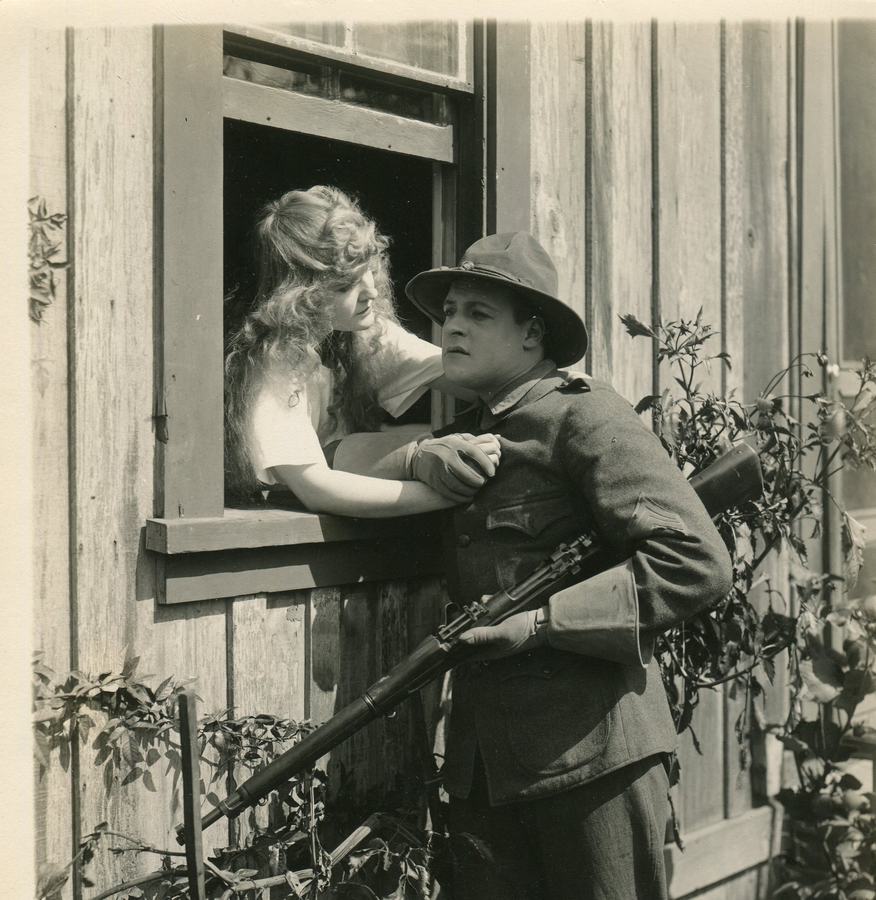
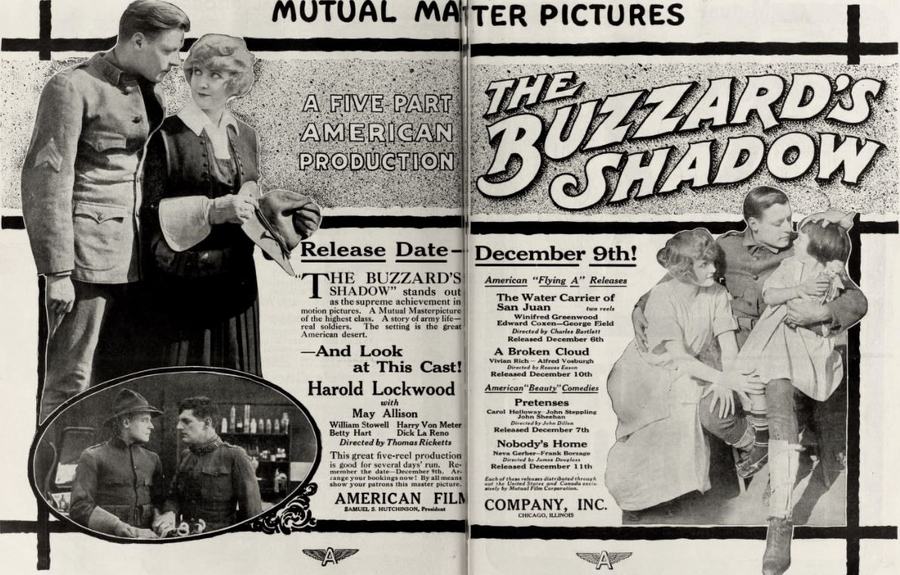
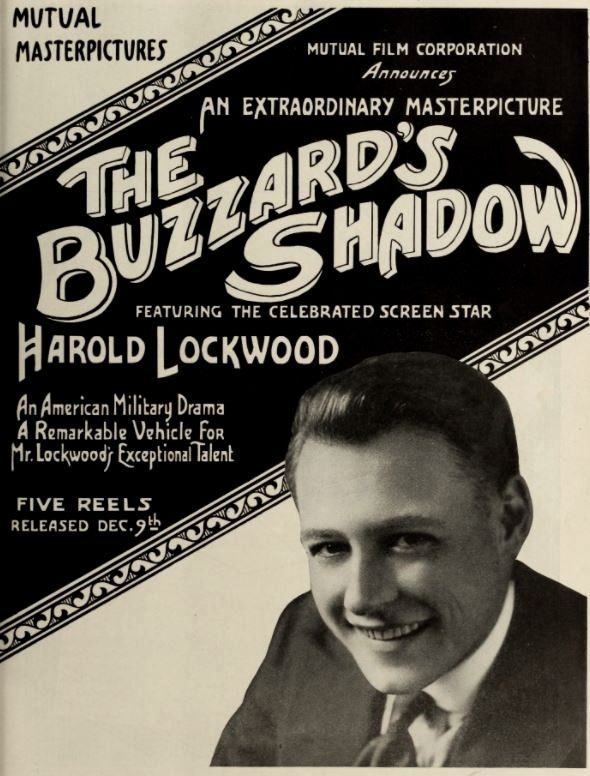
Heat mirages ripple across the 1915 nitrate like ectoplasm, turning The Buzzard's Shadow into a mirage you can almost sip—until the aftertaste of alkali and regret snaps you awake.
Lost for a century, this one-reel marvel now rides back from oblivion on the strength of a lone surviving print struck for South-American distribution. What surfaces is not the horse-opera the trade ads promised but something closer to a desert noir: a morality play where the sun itself behaves like a prosecuting attorney, grilling every secret until it crackles.
Director Tom Ricketts, usually dispatched to crank out Inspiration-adjacent melodramas, here channels a bleakness that anticipates late-period The Criminal Path. Working with Kenneth B. Clarke’s lean scenario, he strips the Western of its ritual shoot-outs and replaces them with the slow asphyxiation of conscience. The result feels like a nickelodeon double-feature wedged between Saints and Sorrows and The Strangler's Grip—only bleaker, because salvation keeps missing its cue.
Alice Corbett—embodied by Virginia Fordyce with a porcelain toughness that never slips into pity—exists in a liminal zone: not civilian, not enlisted, merely the woman who boils uniforms clean of other men’s sins. Her daughter, played by Alice Ann Rooney, is less a character than a tuning fork; whenever the child hums a lullaby, the soundtrack seems to bend toward atonality, as though the film itself fears what comes next.
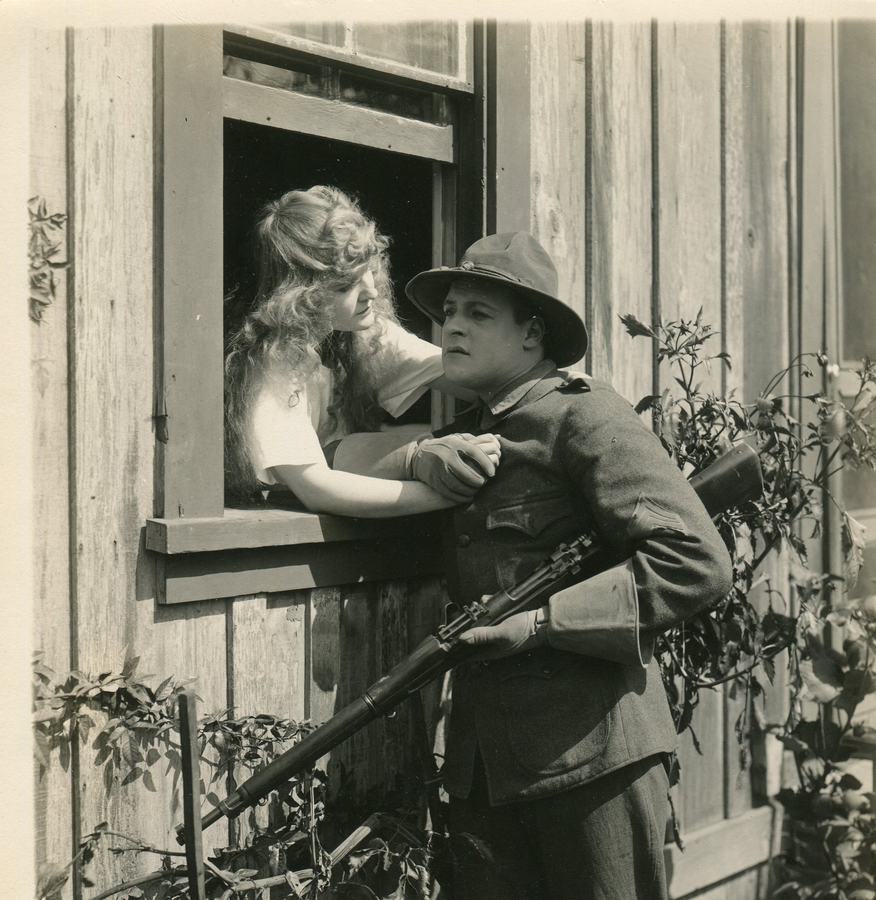
Into this domestic economy of lye soap and scarce coin steps Sgt. Barnes (Dick La Reno), a scout whose face carries the topographical loneliness of a man who has measured too many horizons. Their courtship unfolds in glances: a tin cup shared, a shadow that lingers half a second too long on her collarbone. Ricketts refuses the audience a single clinch; instead he gives us a montage of wind-thrashed sheets, implying that love here is something hung out to dry under the surveillance of heaven.
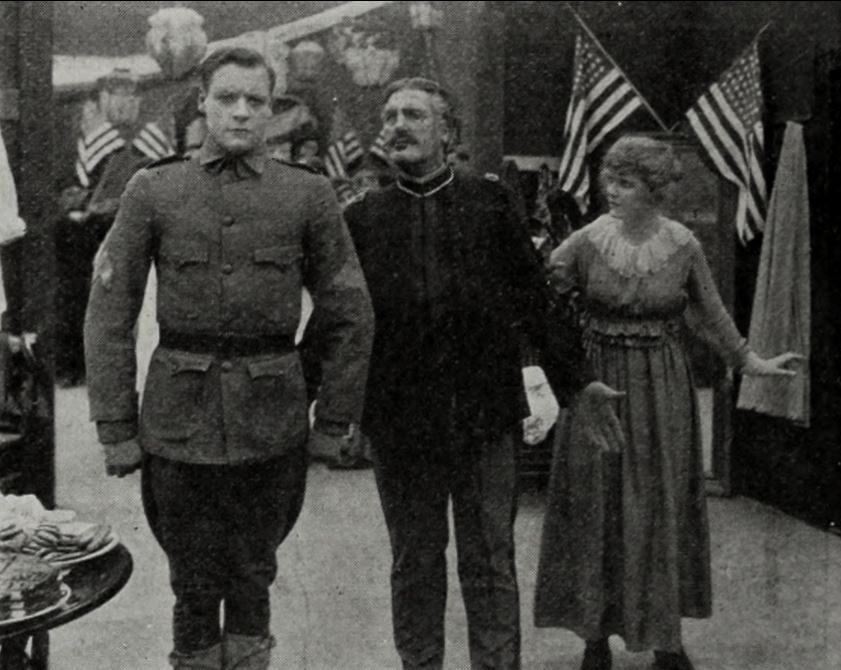
The inciting incident arrives masquerading as gaiety. Colonel Sears (Harry von Meter) throws a birthday soirée so lantern-lit it could be a Goya tapestry. Off-duty privates fiddle with bowlegged resolve, while Dr. Deschamps (Harold Lockwood) glides through waltzes like a shark testing temperature. When he steers Mrs. Sears (Betty Harte) onto the parapet, the camera tilts up: a crescent moon sharpened to a scalpel. Barnes, half-drunk on rotgut and jealousy, watches the physician plant a kiss that smells of ether and clove. The cutaway—to Alice folding a tiny pinafore—lands like a slap.
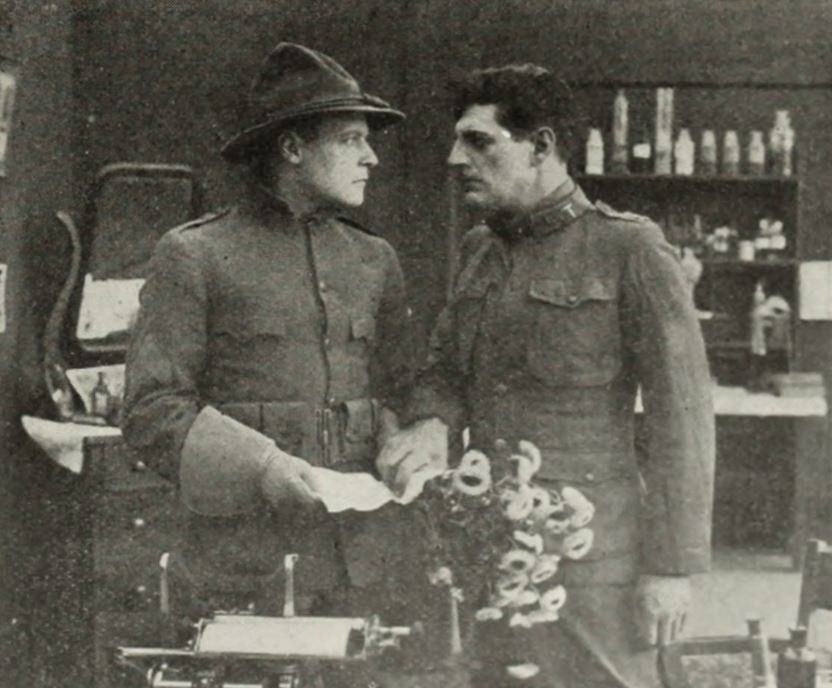
Next morning Barnes confronts Deschamps in the surgery, scalpels glinting between them like understudies for revolvers. The dialogue, delivered in terse intertitles, is a fencing match of conditional clauses: “Resign by dusk or the colonel hears everything.” Deschamps’s smile is all enamel and menace; the scene fades on his gloved hand lowering a speculum into a tray of carbolic acid, a promise that evidence can be made to evaporate.
Enter Unitah (William Stowell), listed in the continuity script only as “half-breed,” though the surviving subtitles brand him with the R-word that 1915 wore like cologne. Still, the performance complicates the stereotype: Unitah’s limp—courtesy of Barnes’s earlier beating—gives him the gait of a man negotiating with gravity itself. His alliance with Deschamps is transactional, yet the film hints at a darker fraternity: two men exiled from the privilege of whiteness and masculinity, forging revenge in the crucible of shared humiliation.
What follows is not the expected manhunt but a lesson in erasure. Barnes’s horse returns riderless; his canteen is full, his rifle unfired. The fort’s search party scours arroyos where vultures already wheel in indolent spirals. Ricketts overlays these shots with double-exposures of Alice at the washtub, her hands wringing nothing, steam rising like departing ghosts. The implication: geography itself has been bribed to swallow a moral inconvenience.
Cinematographer James Diamond, fresh from Richelieu’s candlelit interiors, here confronts the Mojave’s ferocious key light. He responds by staining daylight with umber filters, turning human skin into parchment upon which sin inks itself. Watch for the moment when Alice lifts her daughter toward a distant rider who might be Barnes—the horizon buckles, and for a heartbeat the image resembles a daguerreotype left too close to flame.
Shadows are characters. Deschamps’s first appearance is heralded by a silhouette that stretches across a surgery wall, scalpel in hand, as though Hippocrates himself has signed a pact with Mephistopheles. Conversely, Barnes’s absence is rendered via negative space: a doorway framing nothing but wind, a chair at mess whose legs project like antlers against the dusk.
Color tinting—though monochromatic by birth—survives in Spanish-archives notes: amber for daylight, cerulean for night, rose for interiors of desire. The restoration team has approximated these by digitally grading moonlight scenes toward sea-blue, while lantern sequences pulse with ember-orange. The effect is subtle yet disorienting, as though the film remembers emotions in hues the world has since trademarked.
Fordyce’s Alice is a study in controlled tremor. Her eyes telegraph every calculation: how many biscuits equal a week of flour, how many sidesteps equal safety. When she finally learns of Barnes’s fate, Ricketts holds on her face for a full seven seconds—an eternity in 1915 grammar—during which she cycles from disbelief to recognition to something akin to relief. It is the moment the film confesses that love may be less buoy than ballast.
La Reno, weathered as saddle leather, underplays heroism until it becomes indistinguishable from fatigue. His Barnes is no white-hat archetype but a man who has read the treaty signatures and knows the odds are printed in disappearing ink. In the confrontation scene he squares his shoulders not like a gunfighter but like someone settling accounts before an indifferent auditor.
Lockwood’s Deschamps prefigures the urbane sociopaths that would later populate film noir. With his center-parted hair and opera-house diction, he embodies the fear that civilized veneers are merely varnished appetite. Watch how he fingers the hem of Mrs. Sears’s gown—an idle gesture that reveals the predatory patience of a man accustomed to victims who apologize.
No musical cue sheets survive, so contemporary curators have opted for an atonal quintet: bowed cymbals, prepared guitar, a pump organ exhaling through cracked reeds. The score avoids Mickey-Mousing in favor of long drones that mimic tinnitus. During the search montage, percussionists drag chains across the stage floor, transforming the theater into an echo of the fort’s flagstone courtyard. The result unsettles; you become hyper-aware of your neighbor’s popcorn, the wheeze of the projector, your own held breath.
Beneath its 18-minute runtime, the film stages a covert symposium on manifest destiny’s unpaid invoices. The fort—ostensibly a citadel of order—functions like a company town where every glance is taxable and every kindness might be repossessed. Alice’s labor is literally on display: her washing lines traverse the parade ground like boundary markers between public and private, between the army’s myth of protection and the widow’s reality of precarity.
Gender operates as currency. Mrs. Sears trades her body for the illusion of agency; Deschamps trades his medical authority for carnal collateral; Barnes tries to barter moral capital and finds the market closed. Only the child, wordless and mostly off-frame, circulates outside the economy—until the final shot when she picks up Barnes’s fallen harmonica, implying that the next generation will inherit not land or legacy but the hollow artifact of someone else’s song.
The vultures of the title never appear on-screen, yet their absence is structuring. They are the unpaid chorus, the auditors of empire who know that all carrion is eventual. Every time a character makes a choice based on pride or appetite, you sense wings passing overhead, casting shadows that the tinting cannot color.
Place The Buzzard's Shadow beside Madame Butterfly and you see two strategies for staging racialized desire. Where Butterfly aestheticizes submission through kimonos and cherry blossoms, Buzzard dispenses with Orientalist perfume and rubs your face in alkali dust. Both films punish women for wanting outside their caste, yet Ricketts’s widow survives—not triumphant but unbroken, her gaze the film’s final, unwavering lens.
Stack it against Pyotr Velikiy and you notice parallel anxieties around institutional masculinity: czarist guards or frontier scouts, both cohorts measure virility by obedience to codes that ultimately devour them. The difference is tonal; the Russian epic bellows its tragedy across banquet halls, whereas the American miniature whispers it through laundry steam.
Restoration isn’t spotless; there are gouges that look like bullet holes, emulsion pitting that resembles smallpox scars. Yet these wounds serve the narrative: every scratch is a scar of forgetting, every missing frame a confession that history itself is an unreliable narrator.
Watch it for Fordyce’s micro-smile when Alice tastes coffee brewed by a man who does not demand payment. Watch it for the way Lockwood adjusts a cufflink the moment he decides a man’s life is worth less than his reputation. Watch it because in 2024 we still build forts—digital, political, domestic—and still pretend the vultures aren’t circling.
“The desert does not forgive; it merely outwaits you. This film remembers the wait.”
If you hunt down only one rediscovered silent this year, let it be the one where a woman’s wrung-out sheet snaps in the wind like a judge’s gavel—because The Buzzard's Shadow understands that empires collapse in laundry baskets long before they fall on battlefields.
IMDb —
1924
Community
Log in to comment.