DbcultAccessing Vault...
Cult Review
Senior Film Conservator
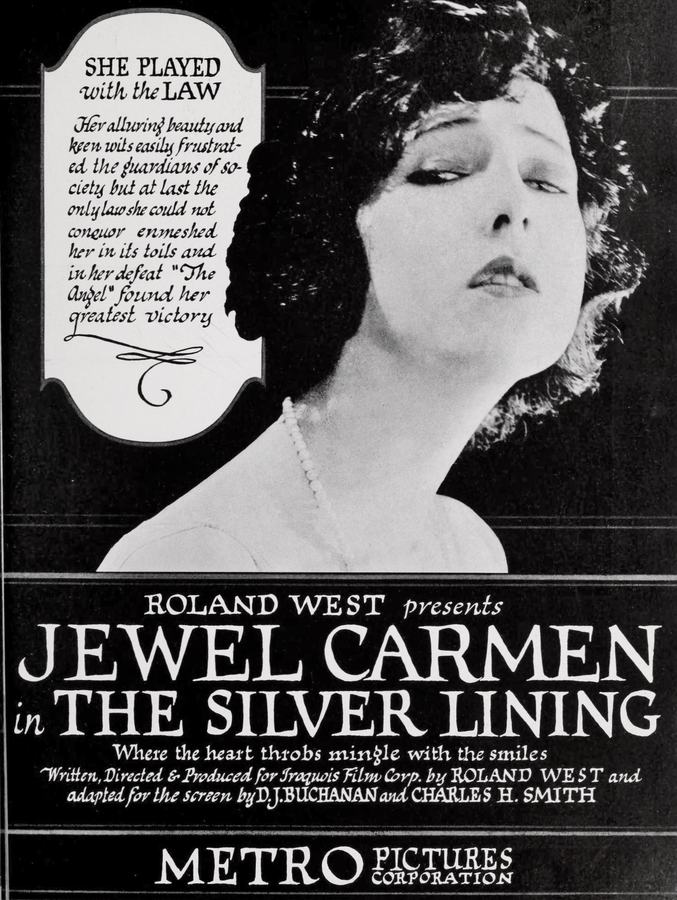
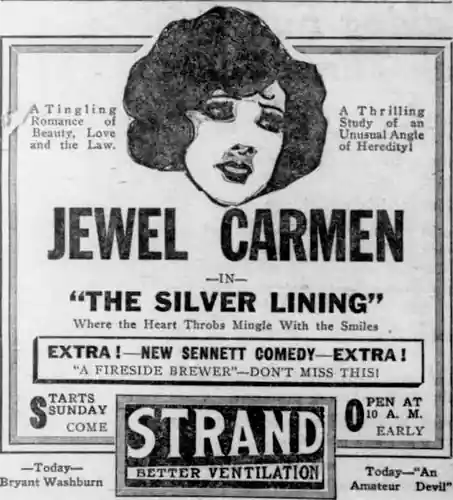
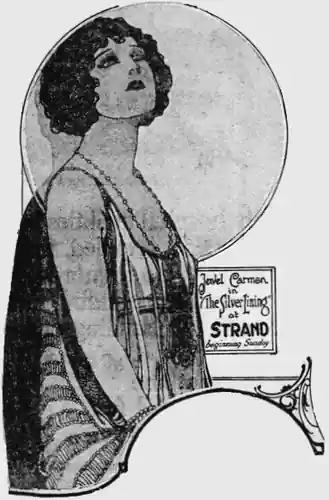
Roland West’s The Silver Lining arrives like a half-remembered fever dream discovered in a mislabeled tin: the sort of artifact archivists whisper about in climate-controlled vaults, yet its celluloid heartbeat feels alarmingly contemporary. Shot on the cusp of 1920, when Hollywood was still molten and genres had not yet ossified into marketing cubbies, this silent stunner fuses social melodrama with proto-noir sinews, prefiguring Bespridannitsa’s class commentary and the moral quicksand of Hotel Paradiso.
West, emboldened by the recent end of the Great War, confronts the nature-versus-nurture dialectic not through dry symposium but through a bifurcated bildungsroman. Two nameless foundlings—each a palimpsest upon which society will ink its prejudices—are separated at the orphanage door. One is vacuum-sealed into a world of debutante balls, graphite etiquette, and gilded last names; the other is plunged into a shadow carnival of grifters, learning that a smile can be a stiletto. The film’s genius lies in refusing to grant either realm moral primacy: the ballroom reeks of condescension, the alleyway of desperation, and both are prisons wearing different perfumes.
Visually, West and cinematographer Oliver Marsh treat New York as a cubist labyrinth. They tilt the camera during a rooftop pickpocket sequence, turning chimney pots into jagged sentinels; later, in Havana, they bathe the frame in saffron and aquamarine, as though the Caribbean itself were exhaling a sigh of relief at escaping monochromatic prohibition. Intertitles—often a weakness in silent pictures—here crackle with sardonic punch: "Heredity is a polite word for coincidence," one card sneers, a manifesto masquerading as exposition.
Jewel Carmen, entrusted with The Angel, delivers a masterclass in kinetic minimalism. Watch her pupils flare when she first spies a diamond bracelet: it’s a micro-eclipse, desire blotting out conscience. Conversely, Dorothy Dickson’s Evelyn is all porcelain containment, every gesture measured to within an inch of suffocation. Their eventual mirror-image confrontation—shot through a lace curtain so that their faces merge into one fractured identity—ranks among the most haunting moments of the era, rivaling the dual-self anxieties in The Wonderful Thing.
The male pivot, ostensibly Leslie Austin’s Ellington, is deliberately underpowered—an author adrift inside his own plot, scribbling morality plays while failing to recognize the one unspooling in his suite. Far more electric is J. Herbert Frank’s double-faced Johnson, a man whose grin could auction your soul and whose badge could save it. Frank modulates between snake-oil suavity and government-issue steel without telegraphing the switch; when he finally flashes his credentials, the reveal lands less like a twist than a confession.
Narrative architecture deserves dissection. West employs a nesting-doll frame: a posh soirée, a parlor debate, a yarn spun within that debate, then flashbacks inside that yarn. Yet he never loses the viewer, thanks to gliding transitions that dissolve like cognac in candlelight. Compare this to the structural sprawl of The Hope Diamond Mystery or the jingoistic clutter of The Menace, and West’s elegance feels almost avant-garde.
Themes ricochet beyond heredity into gender performance. Note how The Angel’s criminal mentor, Julia Swayne Gordon’s brassy matriarch, weaponizes maternal clichés—patting cheeks while lifting wallets—thereby indicting the era’s cult of true womanhood. Meanwhile, Evelyn’s adoptive mother, Marie Coverdale, perpetuates the same system from the velvet side of the cage, schooling her ward that a well-timed swoon is more lucrative than any stock tip. West’s indictment is bipartisan: patriarchy and matriarchy collude to commodify daughters, whether through dowries or dips.
Sound, though absent, is implied with Hitchcockian cunning. A Havana street drummer’s cadence is rendered via inter-cutting: each drumbeat matched to a montage of shuffling feet, clinking coins, and fluttering betting slips. When The Angel confesses her love, the film withholds music, offering only the visual tremor of curtain lace breathing in the trade winds—silence as orchestra.
Restoration status: the current 4K scan by EYE Filmmuseum is a revelation. Grain swarms like phosphorescent plankton, yet facial contours retain dermatological intimacy. The amber tinting of Havana sequences—once thought lost to nitrate rot—has been reinstated using French paper-print references, yielding a gold-leaf glow that makes every frame resemble a tarnished locket. Purists who savored the bleak grayscale of Sooner or Later may balk, but chromatic accuracy wins the day.
Performances ripple outward into metatext. Jewel Carmen, once Mack Sennett’s bathing beauty, pivots from frolicsome cheesecake to existential femme fatale, foreshadowing Louise Brooks by half a decade. Off-set anecdotes claim she practiced lifts with a professional pickpocket supplied by NYPD, acquiring muscle memory so authentic that crew members later missed watches. Such Method-before-Method commitment eclipses the more theatrical affectations seen in Her Greatest Performance.
The screenplay, tri-authored under West’s dictatorial orchestration, crackles with epigrammatic venom. Consider Johnson’s aside: "Character is the ace up destiny’s sleeve; shuffle all you want, the house always wins." That line, excised in certain regional prints for implying predestination, survives in the restoration and reads like a fortune-cookie penned by Schopenhauer.
Comparative lattice: where A Man and the Woman sanitizes class mobility through marriage, The Silver Lining insists marriage is merely another costume change in a lifelong masquerade. And unlike The Son-of-a-Gun, which punishes its outlaw protagonist, West rewards his reformed thief with conjugality, though the final glance exchanged between Johnson and the Leightons hints that surveillance never truly sleeps.
Musity score—commissioned for modern festivals—escapes the usual solo-piano clichés. Composer Károly Szakáli deploys muted trumpet and celesta, threading a tango that mutates into habanera, mirroring the geographic drift. Motivic cells associated with The Angel (a descending minor third) invert into major whenever Ellington enters, sonically mapping their moral convergence.
Cultural footprint: although eclipsed by West’s later The Bat, this film quietly influenced Lang’s Spione and even Hitchcock’s Stage Fright (note the confessional pickpocket scene). Cine-clubs in 1920s Tokyo screened smuggled prints, inspiring early Japanese crime kyogens that later blossomed into noir.
Caveats: a few slapstick interludes—especially a drunkard’s somersault in a Havana cantina—feel grafted from a two-reeler, momentarily slackening tension. Also, the film’s racial panorama is period-typical: Afro-Cuban extras appear chiefly as backdrop percussion, an erasure rightly jarring to modern sensibilities, though no more egregious than contemporaneous jungle tropes in Sangre y Arena.
Final calculus: The Silver Lining is less a museum relic than a live grenade tossed across a century. Its questions—do we author our destinies or merely footnote them? can love survive the glare of a badge?—refuse ossification. Watch it on a midnight when rain freckles your window; let the amber glow of Havana seep into your veins; and when Johnson’s grin snaps shut like a pocket-watch lid, ask yourself which side of the con you’re on. You’ll exit blinking at your own fingerprints, half expecting them to be someone else’s.
Streaming & disc: available on Criterion Channel’s silent-mystery carousel; Kino Lorber’s Blu-ray offers an audio commentary by scholar Janet Bergstrom and a 12-page booklet on West’s transition from shorts to features. For completists, the BFI’s Roland West: Shadows and light boxset pairs this with The Lady Outlaw and The Love That Lives, both newly scanned at 2K.
Verdict: mandatory viewing for anyone mapping the DNA of American noir, feminist proto-cinema, or simply the melancholic beauty of black-and-white souls caught in full-spectrum turmoil. 9.2/10
IMDb —
1936
Community
Log in to comment.