DbcultAccessing Vault...
5.6/10
Senior Film Conservator
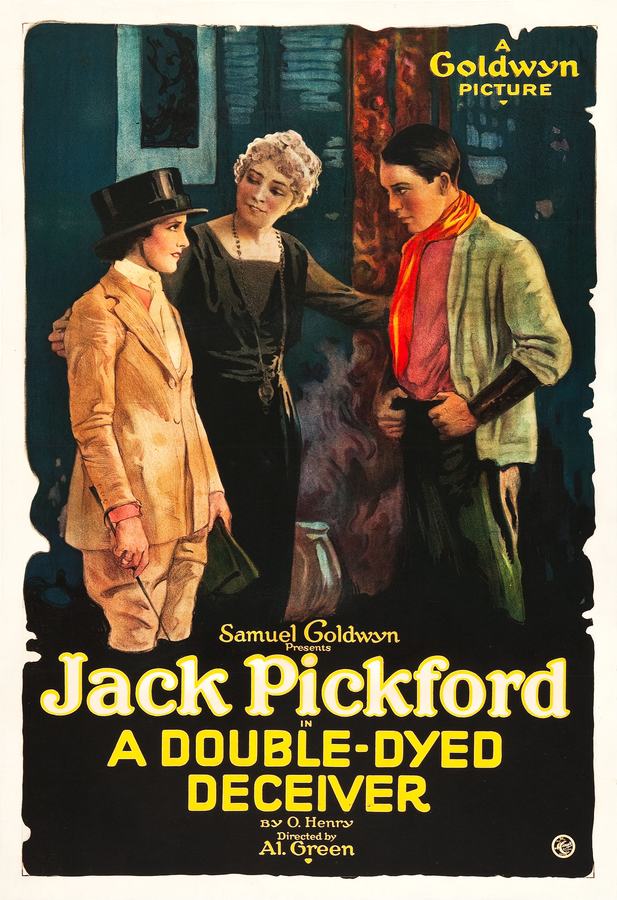
A definitive 5.6/10 rating for a film that redefined the boundaries of cult cinema. A Double-Dyed Deceiver remains a cornerstone of transgressive art.
In the annals of early cinema, certain narratives stand out not merely for their technical prowess, but for their profound psychological depth and the sheer audacity of their storytelling. A Double-Dyed Deceiver, a film rooted in the intricate literary tapestry of O. Henry, unfurls a tale brimming with irony, moral ambiguity, and a culminating twist that resonates with the author's signature blend of wit and poignant revelation. Directed with an eye for dramatic tension and character nuance, this picture transcends its era, offering a timeless meditation on identity, redemption, and the inescapable coils of fate. It beckons us into a world where a forced masquerade inadvertently cultivates genuine humanity, only to be shattered by the cruelest of ironies.
The narrative thrusts us into a vibrant, almost mythical South American landscape—described evocatively as a ‘parrot-and-monkey country,’ a land where 'it is always after dinner.' This setting, with its implied languor and detachment from the rigid strictures of conventional society, serves as an ideal crucible for the transformation of its protagonist. Here, the Llano Kid, portrayed with compelling intensity by Jack Pickford, arrives as a fugitive, a 'Texas bad man' seeking refuge from the consequences of his violent past. His very presence in this exotic locale suggests a desperate flight, a man attempting to outrun not just justice, but perhaps himself. The film skillfully establishes his initial persona: hardened, cynical, and utterly detached from the sentimental attachments that bind ordinary individuals. This initial characterization is vital, setting the stage for the profound metamorphosis that is to come.
The catalyst for the film's central deception is the consul, a character whose motivations are intriguing in their blend of pragmatism and a curious sense of opportunism. Played by Sidney Ainsworth, the consul persuades the Llano Kid to assume the identity of a long-lost son of a distinguished Castilian family. This audacious scheme is not merely a verbal agreement; it is concretized by the indelible mark of a tattooed coat of arms on the back of the Kid's hand. This detail is crucial, elevating the deception from a mere lie to an almost sacred, physical alteration of identity. The tattoo becomes a potent symbol: a brand of the fabricated lineage, a visual testament to his adopted past, and perhaps, a foreshadowing of the mark this experience will leave on his soul. It is a brilliant narrative device, lending an air of permanence to a transient charade, much like the indelible manipulation explored in films such as Trilby, where identity is reshaped by external forces.
Once integrated into the Castilian household, the Llano Kid's journey takes an unexpected turn. He is embraced with an overwhelming, unconditional love by the gladdened mother, exquisitely portrayed by Edythe Chapman. Chapman’s performance is a masterclass in conveying maternal devotion, a beacon of warmth that gradually thaws the hardened exterior of the outlaw. For the first time in his life, the Kid experiences the profound solace of a true home, a sense of belonging that transcends his violent origins. This burgeoning emotional connection is the beating heart of the film, providing a stark contrast to his past and setting up the central moral conflict. The film deftly illustrates how genuine affection can penetrate even the most fortified of hearts, fostering a sense of humanity previously unknown.
The development of romance, subtly woven into this fabric of newfound family, further complicates the Llano Kid's internal struggle. While the cast list does not explicitly detail a specific romantic partner, the mention of 'romance develops' implies a deeper entanglement, drawing him further into the life he is fabricating. This layer of attachment adds another dimension to his predicament, making the eventual choice between self-preservation and emotional integrity even more agonizing. The film excels in portraying this gradual erosion of his criminal resolve, demonstrating that the human capacity for connection can be a powerful force against ingrained malevolence. The performances, particularly Jack Pickford's nuanced portrayal, convey this internal wrestling with remarkable clarity, avoiding the pitfalls of overly simplistic character arcs.
The narrative builds towards an inevitable climax: the moment when the Llano Kid is expected to fulfill his part of the bargain—to rob the family and flee. This is the ultimate test of his transformation. Will he revert to his former 'bad man' persona, or has the genuine love and trust he has received irrevocably altered him? The film's brilliance lies in its answer: he has 'too much manhood' to break the loving mother's heart. This decision marks his true redemption, a moment of profound moral awakening. He chooses empathy over avarice, loyalty over liberation, demonstrating a capacity for self-sacrifice that was utterly absent in his previous life. This pivotal choice is where the film truly shines, illustrating the profound impact of human connection and the unexpected pathways to ethical conduct. It's a testament to the power of genuine human interaction, echoing themes of finding unexpected community and purpose seen in films like Remorse, a Story of the Red Plague, where societal outcasts forge new bonds.
However, O. Henry, through his cinematic adaptation, is rarely content with straightforward redemption. The 'surprise,' the narrative's coup de grâce, arrives with devastating impact: the man the Llano Kid killed in Texas, the very act that propelled him into this elaborate deception, was the real son of the Castilian family. This revelation shatters the carefully constructed illusion, transforming a tale of redemption into one of profound, almost unbearable tragedy and cosmic irony. His flight from justice led him directly into the arms of the victim's family, forcing him to live the life he inadvertently destroyed. It is a twist that recontextualizes every previous scene, casting a pall of tragic inevitability over the Llano Kid's journey. This is storytelling at its most sophisticated, where the audience is forced to re-evaluate every emotional beat, every moment of joy, through the lens of this crushing truth.
The performances across the board contribute significantly to the film's emotional resonance. Jack Pickford, as the Llano Kid, delivers a performance that navigates a complex emotional landscape, moving from hardened criminality to genuine tenderness with remarkable credibility. His internal conflict is palpable, making his eventual moral choice all the more impactful. Edythe Chapman, as the mother, is the emotional anchor, her portrayal of unconditional love providing the warmth and vulnerability that drives the Kid's transformation. Marie Dunn, contributing to the romantic subplot, adds another layer of human connection that deepens the Kid's attachment to his new life. The supporting cast, including Manuel R. Ojeda, Buddy McQuoid, and James Neill, each contribute to the rich tapestry of the Castilian household, making it feel like a genuine, lived-in environment that the Kid has infiltrated and, paradoxically, come to cherish.
The narrative's exploration of identity is particularly salient. The Llano Kid is forced to shed his old self, not just physically by fleeing, but existentially by adopting a new persona. The tattoo, a permanent marker of this fabricated identity, becomes a symbol of his inescapable fate. He is literally branded with the consequences of his actions, albeit indirectly. This theme of imposed or assumed identity, and its psychological toll, is a powerful one, echoed in various forms across cinematic history. The film predates many complex psychological thrillers, yet it masterfully delves into the internal world of a man grappling with who he is, who he pretends to be, and who he becomes under the influence of unexpected affection. It's a precursor to later films that explore the malleability of self, or the profound consequences of living a lie, even if that lie leads to a form of personal betterment before its inevitable collapse.
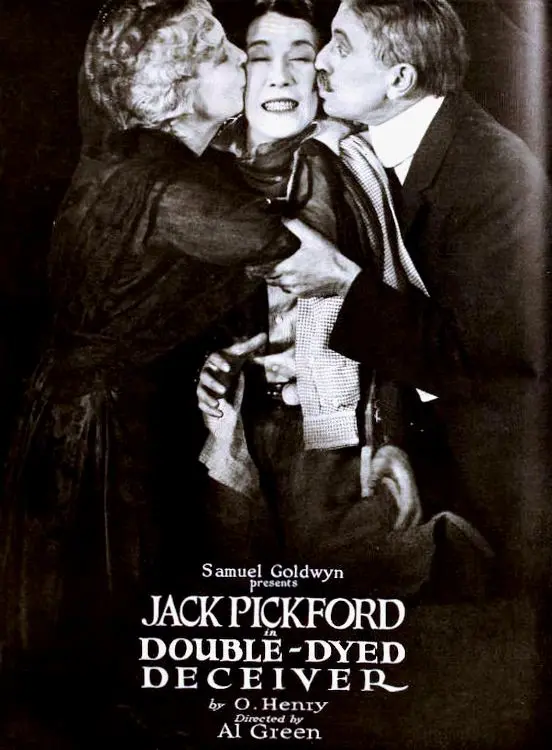
The screenplay, credited to Edward T. Lowe Jr. and O. Henry himself, is a testament to the enduring power of O. Henry's original short story. The adaptation successfully captures the essence of the author's distinctive voice: the vivid settings, the sharply drawn characters, and most importantly, the characteristic twist ending that serves not as a cheap trick, but as a profound commentary on life's unpredictable ironies. The pacing is deliberate, allowing the audience to witness the gradual softening of the Llano Kid's character, making his ultimate moral choice, and the subsequent revelation, all the more potent. The dialogue, though limited by the conventions of silent film, is conveyed through expressive intertitles that maintain the literary quality of the source material.
Beyond its central deception, A Double-Dyed Deceiver is also a study in the nature of family. The Castilian family, devastated by loss, is desperate for a return to wholeness. Their readiness to embrace a stranger, simply because he fits the desired narrative, speaks to a deep human need for connection and continuity. The mother's love, in particular, is portrayed as a force so potent it can transform a hardened criminal. This highlights the film's optimistic view of human nature's capacity for good, even if that optimism is ultimately tinged with tragedy. It suggests that love, even when misdirected or based on a lie, can still elicit genuine, transformative responses from those who receive it.
The film's exploration of justice is also noteworthy. The Llano Kid flees from conventional justice, only to find himself entangled in a form of poetic justice far more devastating. His punishment is not imprisonment, but the unbearable knowledge of his own unwitting complicity in the family's sorrow. This form of karmic retribution, where the perpetrator is forced to confront the direct impact of his actions on those he harms, is a powerful narrative device. It's a nuanced take on accountability, suggesting that sometimes, the most profound consequences are not external, but internal, gnawing at the very soul. This complex moral landscape elevates the film beyond a simple crime story to a compelling ethical dilemma.
The cinematography, while adhering to the technical constraints of the era, effectively utilizes the South American setting to enhance the mood and narrative. The 'parrot-and-monkey country' is not just a backdrop but an active participant, its exoticism reflecting the foreignness of the Kid's new life and the detachment from his past. The visual storytelling emphasizes the emotional shifts, from the Kid's initial guardedness to his eventual tenderness, often through close-ups that capture the subtle nuances of Jack Pickford's performance. The film's aesthetic contributes to its ability to convey a rich inner world despite the absence of spoken dialogue, a hallmark of well-crafted silent cinema.
In comparing A Double-Dyed Deceiver to other films of its time, one can appreciate its sophisticated thematic concerns. While films like The Daughter of the Don might focus on more straightforward romantic or adventurous narratives set in similar locales, A Double-Dyed Deceiver delves into a much darker, more morally ambiguous territory. It shares with A Man's Prerogative a concern for individual choice and consequence, but elevates it with a twist that redefines the very nature of those choices. The narrative's careful construction and the ultimate gut-punch revelation are indicative of a storytelling maturity that was quite advanced for its period, setting a high bar for dramatic irony in cinema.
The enduring appeal of A Double-Dyed Deceiver lies in its ability to grapple with universal themes: the search for belonging, the possibility of redemption, and the inescapable web of fate. The film doesn't offer easy answers, nor does it shy away from the tragic implications of its central conceit. Instead, it invites the audience to ponder the complexities of human nature, the power of love to transform, and the cruel hand of destiny that can turn a seemingly redemptive journey into a profound tragedy. Its legacy is not just as an early cinematic adaptation of a beloved author, but as a compelling piece of storytelling that continues to provoke thought and stir emotions, proving that some narratives, like some deceptions, are double-dyed indeed.
The emotional journey of the Llano Kid is a masterclass in character development. From his initial portrayal as a callous outlaw, he undergoes a profound internal shift, driven by the genuine affection he receives. This transformation is not merely superficial; it delves into the very core of his being, challenging his preconceived notions of himself and the world. The film meticulously charts this evolution, making his eventual decision to protect the mother's heart feel earned and authentic. This arc is compelling because it suggests that even the most hardened individuals possess a latent capacity for empathy and moral integrity, waiting for the right catalyst to emerge. It’s a powerful message, even if ultimately overshadowed by the tragic irony of the ending.
The very title, A Double-Dyed Deceiver, is a clever piece of foreshadowing, hinting at the layers of deceit and self-deception at play. The Llano Kid is not just deceiving the family; he is, in a way, deceiving himself about his own capacity for good. The film explores the idea that sometimes, the greatest deception is the one we perpetrate on ourselves, either about our past actions or our potential for change. The 'double-dyed' aspect could also refer to the dual nature of the deception itself: the initial lie about his identity, and the ultimate, devastating truth about the real son. This clever wordplay, characteristic of O. Henry, is skillfully brought to life on screen, adding intellectual depth to the emotional drama.
The film’s historical context also enriches its interpretation. Made in an era where moral clarity often dominated cinematic narratives, A Double-Dyed Deceiver dares to venture into more ambiguous territory. It presents a protagonist who is both villain and hero, a man capable of great cruelty and profound tenderness. This complexity was, and remains, a refreshing departure from simplistic portrayals of good and evil. It reflects a growing sophistication in storytelling, acknowledging the grey areas of human experience. The film, therefore, stands as an important artifact in the evolution of character-driven drama, pushing the boundaries of what audiences expected from a cinematic experience.
Ultimately, A Double-Dyed Deceiver is more than just a period piece; it is a timeless narrative about the intricate dance between choice and consequence, identity and fate. It showcases the transformative power of love and the devastating impact of truth. The film, through its compelling plot, nuanced performances, and a twist that lingers long after the credits roll, cements its place as a significant work in early cinema, a testament to O. Henry's genius and the enduring power of a truly well-told story. It asks profound questions about what it means to be human, to seek redemption, and to ultimately face the inescapable echoes of our past actions, leaving the audience with a poignant sense of tragic irony and a deep appreciation for the art of narrative deception.
IMDb —
1920
Community
Log in to comment.