DbcultAccessing Vault...
6.3/10
Senior Film Conservator
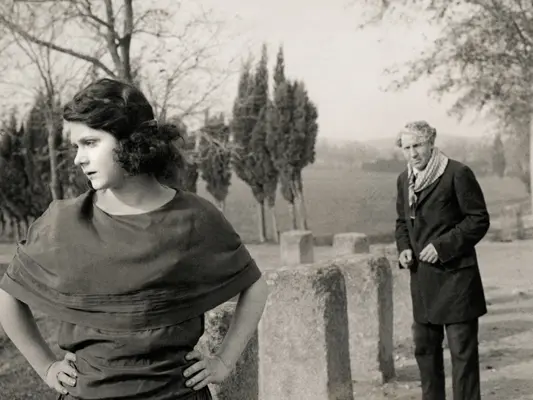
A definitive 6.3/10 rating for a film that redefined the boundaries of cult cinema. L'inondation remains a cornerstone of transgressive art.
In the pantheon of early French cinema, few figures loom as intellectually large as Louis Delluc. With L'inondation (1924), Delluc transcends the mere mechanics of storytelling to explore the concept of photogénie—the transformative power of the camera to reveal the hidden soul of things. This film is not just a narrative; it is a sensory immersion into a world where the atmosphere is thick with the scent of silt and the heavy weight of mourning. Unlike the more commercial ventures of the era, such as the sprawling adventure of Die Herrin der Welt 8. Teil - Die Rache der Maud Fergusson, Delluc chooses a localized, almost claustrophobic focus, proving that the most profound dramas are often those contained within a few square miles of riverbank.
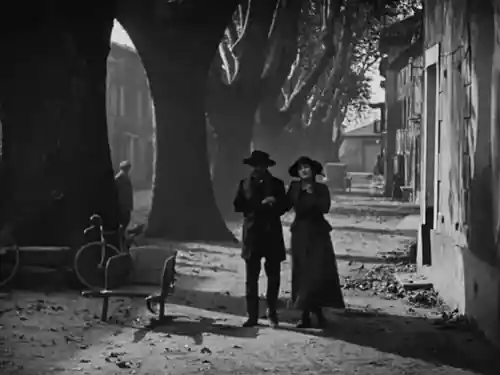
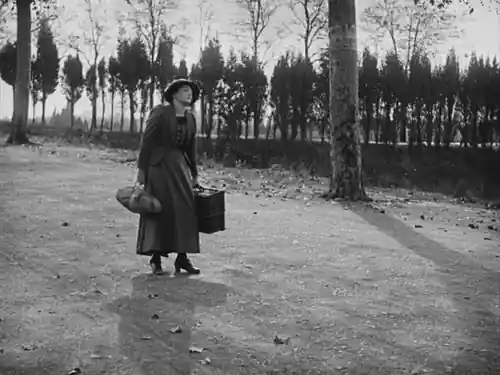
The film opens with a sequence that establishes Germaine’s displacement. Having lost her mother, she is a creature of grief, a theme explored with varying degrees of sentimentality in contemporary works like The Right to Be Happy. However, Delluc eschews the easy comfort of Victorian moralizing. Germaine's arrival at her father's house is not a homecoming; it is an exile. The Rhône river, filmed with a reverence that borders on the religious, is the primary antagonist. It is a restless, churning entity that reflects the protagonist's own lack of agency. Here, the cinematography by Alphonse Gibory and Georges Lucas captures the shimmering, silver-grey light of the valley, creating a visual texture that feels both ancient and immediate.
The central conflict—Germaine’s love for the engaged Alban—is handled with a delicate, almost agonizing restraint. While a film like The Social Code might treat such a premise with the heightened tropes of a society thriller, Delluc treats it as a natural phenomenon. Love, in L'inondation, is as inevitable and as destructive as the rising water. It is a force that ignores human contracts and social propriety, leading the characters toward an inescapable confluence of tragedy.
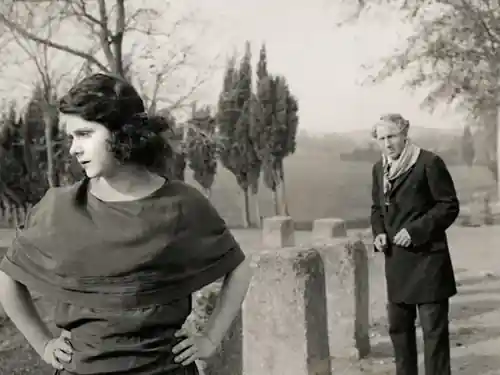
What distinguishes this work from the more straightforward dramas of the time, such as Comin' Thro' the Rye, is its commitment to rhythmic editing. Delluc was a pioneer in understanding that the duration of a shot could dictate the emotional pulse of the audience. In the scenes where Germaine gazes upon the river, the dissolves are so fluid they suggest a literal melting of her identity into the landscape. This is the essence of Impressionism: the external world is a mere projection of the internal state. The river isn't just rising; Germaine is drowning long before the first levee breaks.
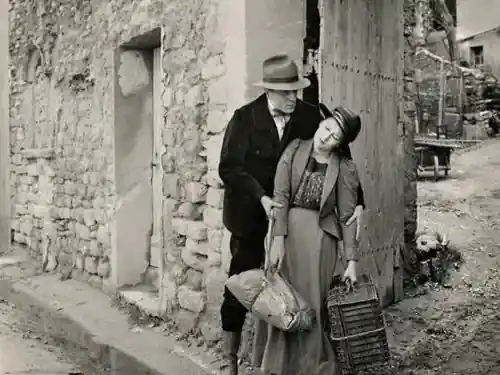
The performances are equally calibrated to this aesthetic. Ève Francis, Delluc’s muse, provides a performance of remarkable interiority. Her face is a landscape of its own, capable of conveying more through a subtle shift in gaze than most actors could with a page of dialogue. She captures the essence of a woman who is a 'waif' in the spiritual sense, reminiscent of the vulnerable characters in Waifs, yet she possesses a tragic dignity that elevates her above mere victimhood. Edmond Van Daële as the father provides a grounded, earthy contrast, his presence as stubborn and rooted as the trees that will eventually be swept away by the flood.

When placed alongside The Man Life Passed By, the existential weight of L'inondation becomes even more apparent. Both films deal with the remnants of a life, the debris of choices made and unmade. However, Delluc’s work is more visceral. He doesn't just show us the passage of time; he makes us feel the viscosity of the mud and the chill of the mist. The film shares a certain moral gravity with Some Judge, but where that film looks toward human justice, L'inondation looks toward a cosmic, indifferent justice. The flood does not care who is virtuous and who is not; it simply is.
In contrast to the lighter, more escapist fare like Her Temporary Husband or the nocturnal mysteries of One Wonderful Night, Delluc demands a total intellectual and emotional commitment from his viewer. He is not interested in providing a 'wonderful night' but rather a profound experience of 'photogénie.' This approach aligns him more closely with the psychological depth of The Dreamer, though Delluc’s 'dreams' are always grounded in the hard, physical reality of the French countryside.
The final act of the film is a masterclass in tension. As the Rhône overflows its banks, the domestic drama and the environmental catastrophe merge into a single, terrifying crescendo. The flood sequences are remarkably well-executed for 1924, utilizing practical effects and location shooting that put many contemporary studio-bound productions to shame. Unlike the stylized, often theatrical intensity of German Expressionism found in Der Eid des Stephan Huller, Delluc’s realism is raw and uncompromising. The water is real, the danger is palpable, and the loss is absolute.
We see the characters struggling against the elements, but their physical struggle is secondary to their emotional collapse. The 'burning question' of the film—much like the thematic core of The Burning Question—is how one survives when the foundations of their world are washed away. For Germaine, the flood is almost a relief, a physical manifestation of the chaos she has been carrying within her since her mother’s death. It is a purification through destruction.
Louis Delluc died shortly after the completion of this film at the tragically young age of 33, having contracted pneumonia while filming in the damp conditions of the Rhône. This biographical fact adds a layer of poignant irony to L'inondation. He literally gave his life for this vision of water and death. The film stands as his final testament to the power of the image. It avoids the melodrama of The Brute Master or the romanticism of The Lady of the Photograph, opting instead for a cold, beautiful clarity.
In the end, L'inondation is a film about the things that cannot be held back. You cannot hold back the river, and you cannot hold back the truth of one's own heart. Like the self-destructive path depicted in Burning the Candle, the characters here are driven by forces they cannot control. Delluc’s genius was in capturing that lack of control and turning it into high art. This is a foundational text of French cinema, a bridge between the primitive narratives of the early century and the sophisticated visual language of the 1930s Poetic Realism. It is a haunting, liquid masterpiece that continues to ripple through the history of film, reminding us that nature always has the final word.

IMDb 6.9
1926
Community
Log in to comment.