DbcultAccessing Vault...
Cult Review
Senior Film Conservator
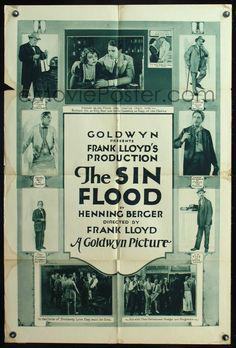
The Sin Flood, a 1922 silent film, presents a complex and thought-provoking narrative that delves into the depths of human nature, redemption, and the unifying power of love. Set in the wealthy cotton town of Cottonia, the story unfolds with the introduction of Stratton's café, a popular gathering place for the townspeople, which has been equipped with flood-proof doors as a safeguard against the Mississippi's unpredictable overflow. When the flood finally arrives, the café becomes a refuge for a diverse group of individuals, each with their own unique story and struggles.
The group, which includes Billy Bear, a young broker, and Poppy, a charming chorus girl, finds itself trapped alongside a street preacher, a tramp, a stranded Swedish engineer, and a mix of townspeople from various walks of life. As the waters rise, the group faces the daunting reality of suffocation, prompting a profound transformation in each character as they confront their mortality, confess their sins, and unite in a spirit of brotherly love. This pivotal moment in the film marks a significant shift in the narrative, as the characters, once consumed by their individual struggles and flaws, come together in a shared moment of vulnerability and introspection.

The film's use of the flood as a metaphor for the characters' inner turmoil and redemption is a powerful and effective storytelling device. As the waters rise, the characters are forced to confront their deepest fears and desires, leading to a series of poignant and introspective moments. The street preacher, for example, is compelled to confront his own hypocrisy, while the tramp is forced to confront the harsh realities of his existence. Through these moments, the film offers a nuanced and thought-provoking exploration of the human condition, one that is both deeply moving and profoundly insightful.
The film's cinematography is also noteworthy, with a range of striking images that capture the devastating impact of the flood on the town and its people. From the sweeping shots of the flooded landscape to the intimate close-ups of the characters, the film's visual aesthetic is both haunting and beautiful, adding depth and complexity to the narrative. The use of lighting, in particular, is effective in creating a sense of mood and atmosphere, with the dark, muted tones of the flooded town giving way to a brighter, more optimistic palette as the characters undergo their transformation.

In comparison to other films of the era, The Sin Flood stands out for its nuanced and thought-provoking exploration of human nature. The Unpainted Woman, for example, offers a more straightforward narrative, while Åh, i morron kväll presents a more experimental approach to storytelling. The Sin Flood, however, occupies a unique position, offering a rich and complex narrative that is both deeply moving and profoundly insightful.
The film's themes of redemption and love are also noteworthy, offering a powerful and uplifting message that resonates deeply with the viewer. As the characters undergo their transformation, they are forced to confront their deepest fears and desires, leading to a series of poignant and introspective moments. The young couple, Billy and Poppy, are particularly well-developed, their love story serving as a powerful counterpoint to the chaos and destruction that surrounds them. Through their story, the film offers a nuanced and thought-provoking exploration of the human condition, one that is both deeply moving and profoundly insightful.
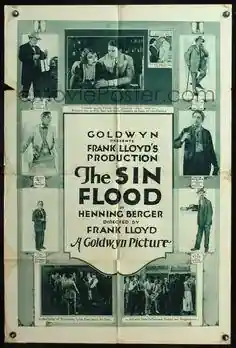
The film's cast is also worthy of note, with a range of strong performances that bring depth and complexity to the narrative. James Kirkwood, in particular, stands out as the young broker, Billy Bear, bringing a sense of vulnerability and introspection to the role. The supporting cast, which includes Will Walling, Howard Davies, and Helene Chadwick, is also excellent, offering a range of nuanced and thought-provoking performances that add depth and complexity to the narrative.
In conclusion, The Sin Flood is a powerful and thought-provoking film that offers a nuanced and insightful exploration of human nature, redemption, and the transformative power of love. With its rich and complex narrative, striking cinematography, and strong performances, the film is a must-see for fans of silent cinema and those interested in exploring the deeper themes and meanings of the medium. Whether viewed as a historical artifact or a work of art in its own right, The Sin Flood is a film that continues to resonate deeply with audiences today, offering a powerful and uplifting message that is both deeply moving and profoundly insightful.
For those interested in exploring other films from the era, Kitsch and What's His Name offer a range of interesting and thought-provoking narratives, while As in a Looking Glass and Arrah-Na-Pogue present more experimental approaches to storytelling. The Sin Flood, however, remains a unique and powerful work, one that continues to captivate audiences with its rich and complex narrative, striking cinematography, and strong performances.
IMDb —
1917
Community
Log in to comment.