DbcultAccessing Vault...
5.4/10
Senior Film Conservator
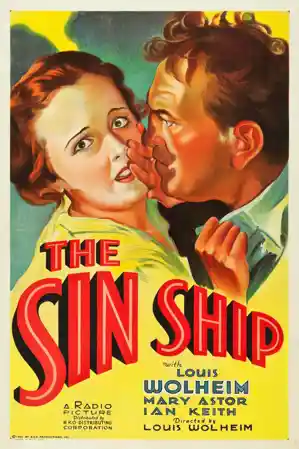
A definitive 5.4/10 rating for a film that redefined the boundaries of cult cinema. The Sin Ship remains a cornerstone of transgressive art.
Okay, so you're thinking about diving into something from 1931? The Sin Ship is a wild card. If you like your old movies a little grimy, with some surprisingly bold themes for the time, then yeah, it's worth a peek. But if you're looking for subtle performances or a plot that ties up neatly, you'll probably just get annoyed. This one's for the curious, not the casual.
The film throws us right into the thick of it aboard Captain Hogan’s (Louis Wolheim) cargo ship. He’s a real piece of work, always eyeing the ladies, especially the one named Mary (Mary Astor). She's traveling with her "minister" husband, Reverend Judson (Ian Keith). Right away, you get the vibe that something is off about this pair. 👀

Hogan, he's just... so much. He leers and demands attention. You can almost smell the stale cigar smoke and cheap booze on him. He’s the kind of guy who thinks he’s charming, but everyone around him just wants to punch him. Wolheim really commits to being a total creep.
Mary, though, she's something else. Astor plays her with this quiet strength, even when Hogan is being his absolute worst. She tries to keep her distance. You can tell she's playing a part, even before the big reveal. Her eyes, they hold secrets.
The "minister" husband? He’s super preachy, but also kinda weak. He talks a lot about salvation. But you watch him, and you just know it's a front. The way he fidgets sometimes, it's just a little too much.
There's this one scene where Hogan tries to force a kiss on Mary. It's pretty uncomfortable to watch, even by today's standards. But then, she handles it with this surprising calm. It’s not a scream, just a firm push back. That moment really stuck with me. It’s not what you'd expect from the damsel-in-distress trope.

The script, co-written by Hugh Herbert, who also acts in it (as the cook), has some snappy dialogue, but also some lines that just hang there, waiting for a laugh that never quite comes. It’s got that early talkie feel, a bit stiff in places, then suddenly very loose and natural.
Eventually, the big secret spills out: Mary and Judson aren't who they say they are. They're actually bank robbers. Not ministers. This is where the movie really picks up steam. The stakes suddenly feel much higher. The whole "spiritual change" Hogan supposedly undergoes after meeting Mary starts to feel a bit more complex. Is it real? Or is it just him being obsessed? 🤔
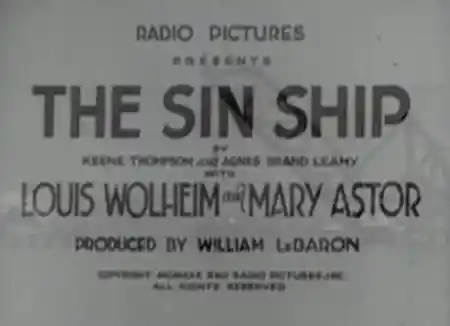
The ship itself feels like a character. It's a claustrophobic setting. The constant rocking and the tight quarters really amp up the tension. Everyone is stuck together, and there's no escape. It's a pretty effective way to keep the drama boiling.
There's a good brawl scene near the end, all fists and grunts. It feels pretty raw for its time. You can almost feel the spray from the waves. The ending, well, it’s a little rushed. It tries to give Hogan a redemptive arc. But after all his nastiness, it feels a bit unearned. Like, did he really change? Or did he just get what he wanted? I'm still not sure.

This isn't a perfect film, not by a long shot. The sound mixing is occasionally wonky, and some of the supporting characters are just there to fill space. But it’s a glimpse into what early cinema could get away with. It's not afraid to show a morally grey world.
It's a forgotten gem for film buffs who appreciate the rough edges of early Hollywood. It's not a masterclass, but it’s got some grit. And Mary Astor is just fantastic, even this early in her career. She carries a lot of the film's unexpected depth.
IMDb —
1920
Community
Log in to comment.