DbcultAccessing Vault...
Cult Review
Senior Film Conservator
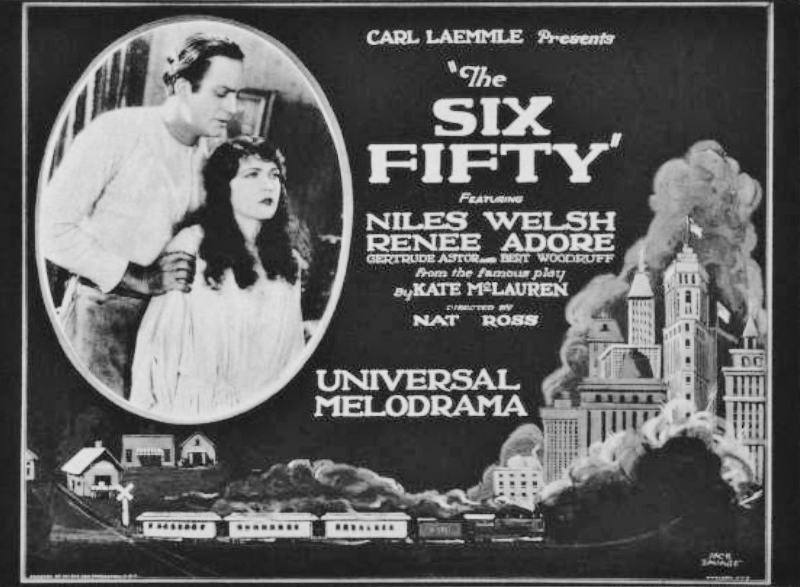
"The Six-Fifty" unfurls a poignant tapestry of yearning and disquiet, a cinematic exploration of the human spirit chafing against the confines of a circumscribed existence. This silent drama, a relic from an era brimming with profound societal shifts, transcends its seemingly simple premise—a farm wife's disillusionment with rural life and her magnetic pull towards the urban sprawl—to delve into deeper psychological currents. It’s not merely a narrative of escape, but a nuanced study of aspiration, the often-unspoken desires that fester in the quiet corners of the heart, and the seductive, sometimes perilous, allure of the unknown. The film masterfully captures a universal sentiment, one that resonates across epochs: the yearning for a life perceived as more vibrant, more meaningful, more alive.
At the core of this compelling narrative is the protagonist, brought to life with remarkable subtlety and emotional depth by Renée Adorée. Her portrayal of a young woman trapped in the monotonous rhythm of farm life is nothing short of captivating. Adorée conveys, through a lexicon of expressive glances and restrained gestures, the profound ennui that has settled upon her character's soul. We witness her daily routines, each chore a fresh burden, each sunrise a reminder of another day indistinguishable from the last. The film doesn't overtly dramatize her suffering; instead, it allows the quiet desperation to permeate the screen, a palpable sense of longing for something beyond the dust and soil. Her eyes, often fixed on the distant horizon, seem to project a future that refuses to materialize in her present circumstances. This internal conflict is the film’s driving force, a testament to Adorée’s ability to communicate complex emotions without the aid of spoken dialogue.
The stark contrast between her internal world and her external reality is painstakingly drawn. The farm, a symbol of stability and tradition, becomes for her a prison of the spirit. The very elements that define rural existence—the vast, open fields, the predictable cycles of nature, the arduous physical labor—are depicted not as idyllic comforts but as instruments of her growing confinement. This isn't a story of outright cruelty or overt marital discord, but rather a more insidious form of unhappiness stemming from a fundamental misalignment of spirit and circumstance. It's a testament to the writers—Kate L. McLaurin, Harvey Gates, Doris Schroeder, and Lenore J. Coffee—that this emotional landscape is so richly textured. Their collective vision undoubtedly contributed to the film’s nuanced understanding of female desire and societal expectation during a pivotal era.
Opposite Adorée, Niles Welch portrays the farmer husband, a figure who, while not malevolent, embodies the very stasis his wife so despises. Welch's performance is crucial in establishing the emotional chasm between the couple. He is, perhaps, a man content with his lot, bound by duty and the land, largely oblivious to the tempest brewing within his spouse. His actions are those of a hardworking man, but his lack of insight into his wife's burgeoning discontent highlights the often-unbridgeable gap in understanding that can exist even in intimate relationships. The film avoids painting him as a villain, instead portraying him as a product of his environment, a man whose world is defined by tangible realities rather than abstract yearnings. This nuanced portrayal prevents the narrative from devolving into a simplistic good-versus-evil dichotomy, lending it a greater degree of realism and emotional complexity.
The silent film era, with its reliance on visual storytelling and intertitles, often excelled at depicting such internal conflicts through subtle characterizations. Welch, through his stoic demeanor and occasional bewildered glances, effectively communicates a man whose world is slowly, imperceptibly, shifting beneath his feet, though he cannot quite grasp why. This dynamic is reminiscent of other films of the period that explored marital strain, such as the quiet anxieties present in The Place of Honeymoons, where the initial bliss of matrimony often gives way to the harsh realities of shared life. The Six-Fifty's strength lies in portraying this domestic tension not through explosive arguments but through the slow, agonizing erosion of shared purpose and desire.
The city, in "The Six-Fifty," is not merely a geographical location; it is an almost mythical entity, a repository of all the dreams and possibilities denied to our protagonist in her rural isolation. It represents freedom, excitement, anonymity, and perhaps, a chance for reinvention. The film skillfully contrasts the expansive yet confining landscapes of the farm with the bustling, tantalizing glimpses of urban life. These glimpses, often presented through her imagination or the occasional newspaper clipping, fuel her growing resolve to escape. The allure is almost palpable, a vibrant counterpoint to the muted palette of her daily existence. This urban magnet was a powerful trope in silent cinema, reflecting the mass migrations from rural areas to burgeoning cities during the early 20th century.
The narrative carefully builds towards her inevitable decision, portraying it not as a rash impulse but as the culmination of long-suppressed desires. The "Six-Fifty" itself, presumably a train or a bus, becomes a literal and metaphorical vehicle for her aspirations. It's the promise of a journey, a departure from the known into the thrilling unknown. This thematic thread of seeking a new life away from stifling circumstances can be seen in other films of the era, such as An Even Break, where characters often sought to redefine their destinies through sheer force of will or by seizing opportunities elsewhere. The city, for many, offered that promise of an "even break," a chance to shed the past and embrace a new identity.
While Renée Adorée and Niles Welch anchor the film, the supporting cast plays a vital role in fleshing out the world of "The Six-Fifty." Orville Caldwell, Bert Woodruff, and Gertrude Astor, though perhaps in less prominent roles, contribute to the film's texture and realism. Caldwell, for instance, might represent a different facet of rural life, perhaps a neighbor or a friend, providing a foil or a mirror to the main couple's struggles. Woodruff, often cast as kindly or gruff older characters, could embody the traditional values of the countryside, further emphasizing the protagonist's deviation from them. Gertrude Astor, a prolific character actress, often brought a certain dynamism to her roles, and her presence here, however brief, would undoubtedly add another layer to the social fabric depicted.
The strength of a silent film often lay in its ability to create a believable world through its ensemble, where even minor characters contributed to the overall atmosphere. Their reactions, their expressions, and their very presence underscored the protagonist's isolation or her place within the community. This collective effort in world-building is essential for the audience to fully immerse themselves in the central drama. Without a credible backdrop, the protagonist's yearnings might seem less urgent, less authentic. The writers, in crafting these ancillary roles, ensure that the world of the farm feels lived-in, making the protagonist's desire for escape all the more potent.
IMDb 7.2
1928
Community
Log in to comment.