DbcultAccessing Vault...
Cult Review
Senior Film Conservator
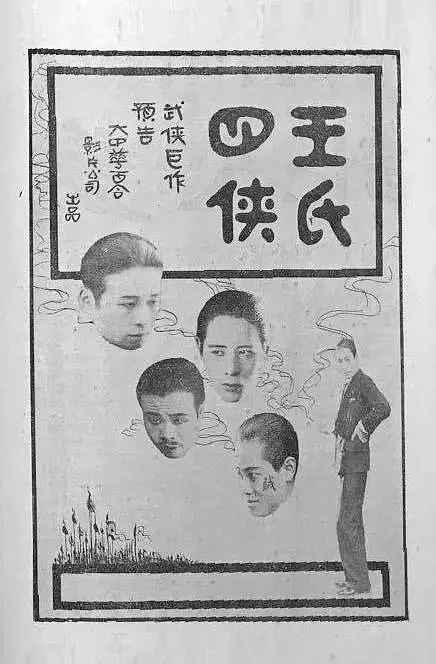
Is this 1925 relic a lost masterpiece or a dusty chore? Short answer: It is a vital historical document that requires significant patience from a modern audience, but rewards the observant with a blueprint of Chinese action cinema.
This film is for the dedicated cinephile and the historian of Asian cinema. It is absolutely not for the casual viewer seeking high-octane thrills or polished narrative beats. It is a slow, deliberate, and often clunky experience that demands your full attention to appreciate its place in the timeline of global film.
This film works because it captures the raw, unpolished energy of early Shanghai cinema before the industry became hyper-commercialized and formulaic.
This film fails because its moralizing tone is laid on with a heavy hand, often halting the narrative flow for long stretches of sermonizing that feel dated even by silent era standards.
You should watch it if you want to witness the exact moment when traditional Chinese theatricality began to evolve into a distinct cinematic language.
Wang shi si xia arrives from an era where the camera was still learning how to move. In 1925, the Mingxing Film Company was the titan of the industry, and director Shi Dongshan was one of its most promising voices. This film doesn't just tell a story; it serves as a bridge between the old world and the new. The four brothers represent a cross-section of a society in flux. One brother’s adherence to scholarly pursuits contrasts sharply with another's inclination toward the physical, reflecting the broader national debate of the time regarding how China should modernize.
When we look at other films of the same period, such as the German crime epic Söhne der Nacht, 1. Teil: Die Verbrecher-GmbH, we see a global fascination with the breakdown of social order. While the West was exploring the criminal underworld, Shi Dongshan was looking inward at the family unit. The family is the fortress. If the fortress holds, the nation holds. It’s a conservative message, certainly, but one delivered with a surprising amount of grit for its time.
The pacing is, admittedly, an endurance test. Modern audiences are used to the rapid-fire editing of contemporary blockbusters, but Wang shi si xia breathes differently. It lingers. A single conversation over a dinner table can feel like an eternity. Yet, in that lingering, we see the nuance of the actors' expressions. Yingzhi Wang, in particular, possesses a screen presence that transcends the limitations of the silent medium. His eyes tell a story of internal conflict that the intertitles (if you can find a version with them intact) often fail to capture.
Shi Dongshan was not content with merely filming a play. You can see him experimenting with depth and framing. There is a specific scene involving a confrontation in a narrow alleyway where the use of shadows predates the noir sensibilities we would see years later. It’s not quite the Expressionism of Bismarck, but it shows an awareness of how light can dictate mood. The camera remains largely static, but the blocking of the actors within the frame is masterful.
The film’s tone is a strange cocktail of melodrama and proto-action. While it lacks the sheer kinetic energy of something like Hands Up, it possesses a grounded realism that was rare for the 1920s. The fights aren't choreographed ballets; they are desperate, messy scrambles. This realism makes the moral stakes feel higher. When a brother falls, you feel the weight of that failure because the world around him feels tangible and unforgiving.
"Wang shi si xia is less a movie and more a window into a vanished world. It is the sound of a culture finding its visual voice."
The cinematography, handled with the primitive equipment of the day, is surprisingly crisp in the restored fragments that survive. There is a clarity to the outdoor shots that reminds me of Northern Lights. The way the natural light hits the traditional architecture creates a texture that you just don't get in modern digital recreations of the period. It feels lived-in. It feels real. It works. But it’s flawed.
The performances in Wang shi si xia are a fascinating study in transition. You have Naidong Wang and Wenzhu Zhou delivering performances that are clearly influenced by the Peking Opera—large gestures, exaggerated facial expressions, and a rhythmic quality to their movements. However, as the film progresses, you see them settle into a more naturalistic style. It’s as if they are discovering the intimacy of the camera in real-time.
This is particularly evident in the domestic scenes. There is a quietness to the interactions between the brothers that contrasts with the bombast of the film's climax. Compare this to the broad comedy of Smith's Baby or the sentimentality of A Kentucky Cinderella. Wang shi si xia feels much more somber, almost burdened by its own importance. It takes itself very seriously, which is both its greatest strength and its most exhausting trait.
The ensemble cast, including Yunqing Xie and Zhengxin Wang, works with a chemistry that suggests a genuine theatrical troupe. They move as a unit. Their interactions feel practiced and deeply rooted in the characters' shared history. This sense of history is vital because the film doesn't spend much time on exposition. It expects you to understand the hierarchy of the Wang family immediately. It’s a bold choice that respects the audience's intelligence, a trait often missing in the more spoon-fed narratives of The Return of Mary.
Yes, Wang shi si xia is worth watching for anyone who considers themselves a student of cinema history. It provides an essential look at the roots of the Chinese film industry and the early work of director Shi Dongshan. While the pacing is slow and the moralizing can be heavy-handed, the film’s visual compositions and historical significance make it a rewarding experience for the patient viewer.
Pros:
- Exceptional historical value as a surviving 1920s Chinese silent film.
- Strong ensemble acting that showcases the transition from stage to screen.
- Pioneering directorial techniques by Shi Dongshan.
- Authentic production design that provides a window into the era.
Cons:
- Pacing that feels glacial by modern standards.
- Overly simplistic moral conflicts.
- Limited availability of high-quality, fully restored prints.
- Melodramatic tropes that can occasionally feel unintentionally comedic.
When we place Wang shi si xia alongside its contemporaries, we see a film that is struggling with its identity. It wants to be a moral fable, like God's Country and the Law, but it also wants to be a gritty urban drama. This internal tug-of-war is what makes it so fascinating to watch today. It doesn't quite fit into the neat boxes of genre that we have constructed for silent film.
It lacks the whimsical charm of The Fox and the Crow or the experimental brevity of La p'tite Lili. Instead, it is a dense, heavy work. It reminds me of The Battle of Ballots in its earnestness. There is no irony here. There is only a sincere, if sometimes misguided, attempt to say something profound about the state of the world. Even in its quieter moments, like those found in Midst Peaceful Scenes, there is an underlying tension that never quite dissipates.
Is it a better film than Jungle Woman? In terms of narrative ambition, yes. But in terms of pure entertainment value, it’s a much harder sell. It requires a specific mindset to appreciate. You have to be willing to meet the film on its own terms, to accept its flickering frames and its silence as part of the texture of the story. It is a film that demands respect, even if it doesn't always earn your affection.
Wang shi si xia is a difficult, demanding, and ultimately essential piece of cinema history. It is the sound of a burgeoning industry finding its feet. While it may not offer the easy pleasures of a modern film, its value as a cultural artifact is immeasurable. It is a flawed work, hampered by the limitations of its time and a somewhat didactic script, but the flashes of directorial brilliance and the power of its ensemble cast make it a journey worth taking for the serious cinephile. It’s not built for runnin’—as the title of another film Not Built for Runnin' suggests—but it is built to last. If you have the patience, the Wang family has a story worth hearing.
IMDb —
1925
Community
Log in to comment.