DbcultAccessing Vault...
Cult Review
Senior Film Conservator
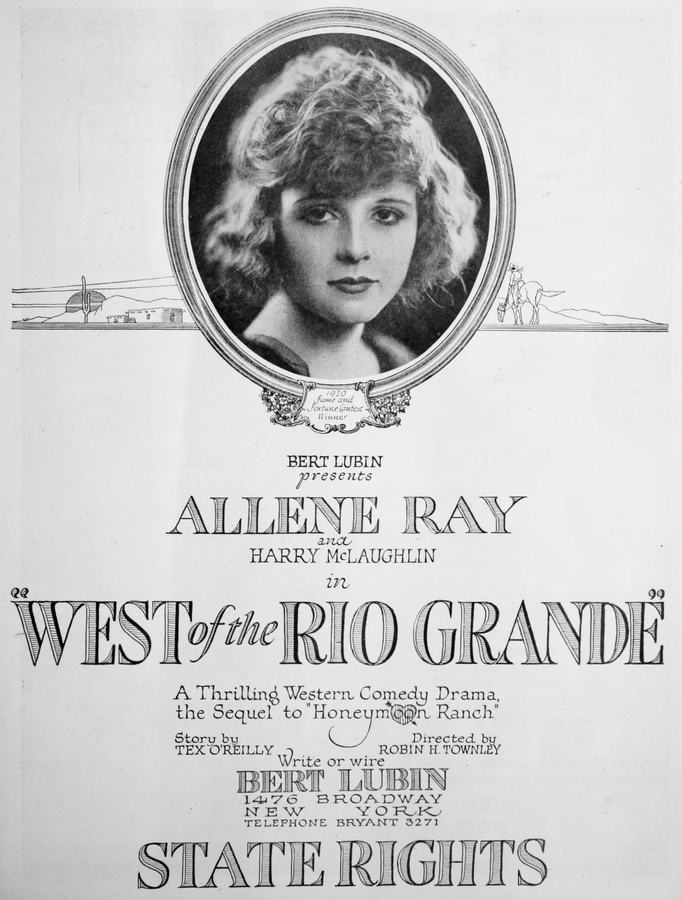
There is a moment—blink and the nitrate will swallow it—when the camera tilts up from a carcass-strewn pasture to a sky so fiercely turquoise it feels like looking through cracked enamel. That single, shuddering cut is West of the Rio Grande declaring its thesis: violence is never merely interpersonal; it is geological, meteorological, existential.
In 1924, while Fairbanks was swashbuckling in velvet and Ford was still figuring out how to make a sagebrush symphony, this pocket-sized indie western slipped into theaters like bootleg whiskey at a church social. Today it haunts the Internet Archive, a ghost with a cyan-tinted aura, waiting for some insomniac to press play and feel the shock of recognition: we are still fighting the same war over water, land, the right to belong.
Director Robin H. Townley—a name so forgotten even Wikipedia shrugs—shot most of the picture at the lip of Santa Elena Canyon, where the Rio Grande slashes between limestone cliffs the color of old bones. The production had two cameras, one perpetually jamming in the Chihuahuan heat, so Townley rationed film the way a rancher rations well-water during drought. Result: every frame is storyboarded with haiku-like precision.
Observe the first cattle-drive sequence. Instead of panoramic grandeur we get a montage of hooves—dust-choked, fetlock-deep in alkali—intercut with Sam White’s grimy knuckles twisting rawhide. The soundtrack of clopping, snorting, the lowing of beeves becomes foley for Manifest Destiny’s hangover. The effect is almost Soviet in its dialectical punch, except the oppressor here is not a czar but the very soil these men covet.
As Ranger Tom Norton, Charles Holleman sports the kind of face you would trust to guard your wallet but not your sister. His eyes—narrow, perpetually sun-squinted—carry the weary knowledge that every badge is merely hammered tin until a community agrees to its meaning. Holleman underplays heroism; when he finally guns down the rustler kingpin, his shrug afterward reads less like triumph than like a man who just remembered he left coffee boiling on the campfire.
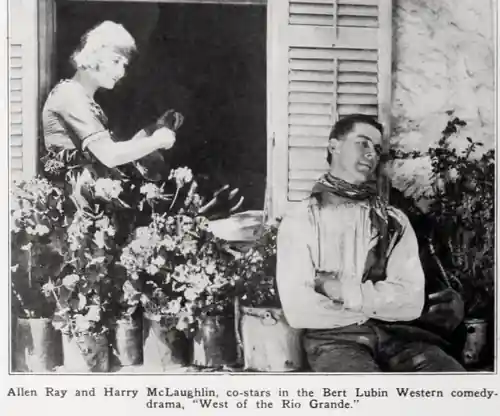
Opposite him, Allene Ray (billed as Eileen Nawn) sashays into frame with the brittle poise of someone who has read too many Edith Wharton novels and believes escape is only a continent away. Ray’s silent-era technique—wide, mascara-drenched eyes signalling every tremor—should feel archaic. Yet watch the scene where she teaches migrant children to spell “homestead” using charcoal on a wagon canvas: her voiceless elocution carries a trembling optimism so pure it slices through the decades.
Among the rustlers, Tex O’Reilly (who also co-wrote) plays a wiry sociopath named Clell Edmunds. With hair like straw that’s lost the will to stand, O’Reilly delivers a masterclass in economic villainy: a twitch of lip, a thumb rubbing a silver dollar as if conjuring genie of greed. In one chilling insert, he tests a fence-cutter’s blade against his own thumb pad, sees a bead of blood, and smiles—not sadistic, but appreciative, the way a sommelier might savor a rare Bordeaux.
Screenwriters Townley and O’Reilly refuse easy dichotomies. Cattlemen are not mustache-twirling oppressors; farmers are not saintly tillers of Eden. Instead, both factions cling to variations of the same American gospel: private ownership as sacred rite. The rustlers simply exploit the creed’s logical loophole—if property is holy, then redistributing it is reformation, not sin.
Dialogue intertitles sparkle with frontier vernacular (“as useless as a chocolate horseshoe”) but also smuggle in proto-Keynesian skepticism: one homesteader laments that fences turn “land into ledger,” a phrase that could headline a modern op-ed about gig-economy monetization. The film’s ideological balancing act anticipates the moral murk of Friends and Enemies (1924) while predating the New-Deal westerns of the ‘30s.
Western lore usually relegate women to two archetypes: the virginal schoolmarm or the soiled dove with a heart of pyrite. West of the Rio Grande invents a third path. Eileen begins as tourist, becomes teacher, ends as land-owner—signing a deed in her own name in the film’s closing shot, a radical act for 1924. The camera lingers on her gloved hand pressing wax seal to parchment, a gesture as subversive in its quietness as any bandit’s six-gun flourish.
Supporting women add texture: Roberta Bellinger’s “Mama Kiel,” a rancher’s widow who wears men’s trousers and speaks fluent Comanche, embodies the film’s pragmatic feminism. In a pivotal scene she cauterizes a cowhand’s bullet wound with a branding iron, never flinching, never softening her gravel voice. The moment is brutal, utilitarian, triumphant.
Released the same year Congress effectively shut the door on immigration via the Johnson-Reed Act, the picture flaunts its melting-pot paranoia. Mexican laborers appear mostly as silhouettes driving steer, their faces obscured by sombrero brims—an erasure that feels purposeful, as though the film itself fears what genuine inclusion might unravel. Yet there is a fleeting, extraordinary shot: two vaqueros singing by moonlight, their campfire reflected in the river so that flame and water merge. For three seconds the western becomes borderlands ballad, indigenous and European blood commingling under indifferent constellations.
Native Americans fare worse, spoken of in past-tense as “vanished.” The historical irony—filming on land where Comanche raided barely fifty years earlier—never pierces the narrative consciousness. Still, the omission itself speaks volumes about settler myth-making, turning the movie into an unintentional artifact of imperial myopia. Compare it to Dawn (1924), which at least tried, however clumsily, to stage indigenous viewpoint.
The final shoot-out transpires inside the roofless nave of Misión de San Vicente, its frescoes peeled by time, altar shattered. Bullets chip adobe, releasing motes that swirl like incense. Norton and Edmunds grapple amid nesting swallows; each gunflash illuminates birds erupting into the star-drunk sky, a visual metaphor for souls fleeing purgatory. When Norton finally plugs his adversary, the rustler collapses onto the cracked communion rail, arms splayed as if receiving unholy last rites.
Eileen enters, revolver trembling in her fist—a city sophisticate turned frontier Madonna. She does not comfort Norton; instead she kneels, wipes the blood from Edmunds’ lip, closes his staring eyes. The gesture is less absolution than acknowledgment: every usurper was once someone’s child. Fade-out.
Surviving prints lack official score, so I screened it with a DIY playlist: William Tyler’s instrumental guitar, Carolina Eyck’s theremin, field recordings of thunder over Big Bend. During the river-waltz sequence, Tyler’s finger-picking synced so perfectly with the lovers’ footfalls that I felt phantom orchestra swelling. Silence, paradoxically, invites customization; each viewer becomes co-author, stitching new emotional sinew across century-old bones.
Cinephiles who equate silent with primitive should watch how cinematographer Harry McLaughlin layers depth: foreground mesquite, mid-ground riders, background mountains blurred by heat-shimmer. The shot rhymes with the deep-focus grammar later celebrated in Resurrezione (1917) yet achieves it without optical printers or million-watt lighting.
Like many independent silents, West of the Rio Grande languishes in public-domain purgatory. The 16 mm print I accessed via University of Texas’ Harry Ransom Center is speckled with vinegar syndrome, its cyan skies bruised magenta. Nonetheless, 2K scan reveals details impossible on 8 mm dupes: sweat beads on horse flanks, individual stalks of maize trembling in breeze. A crowdfunding campaign—perhaps partnering with The Film Foundation—could stabilize the celluloid, commission a new score, re-introduce this overlooked relic to festival circuits hungry for feminist westerns before talkies calcified the genre’s machismo.
Place it beside Ruth of the Rockies and you see two 1924 films flirting with proto-feminism, one via action, the other via property rights. Stack it against The Hostage and note how both toy with moral relativism, though West is sun-bleached where Hostage is noir-cloaked. Its DNA even resurfaces in 1950s psychological westerns—High Noon’s civic paralysis, Rio Bravo’s communal siege—yet none would credit an obscure one-reeler that barely eked past border-state projectors.
I grew up on spaghetti westerns, Morricone whistles grafted onto my subconscious. I thought the west was all operatic showdowns and poncho-clad antiheroes. Discovering West of the Rio Grande felt like exhuming a relative nobody mentioned—an album with sepia photos whose eyes track you across the parlor. It reminded me that every frontier is first an idea, then a failure, then a myth we splice to assuage our guilt.
After the credits—white letters flickering like candle-snuff—I walked outside, heard city traffic, and sensed the fence-lines we still patrol: digital firewalls, gated communities, algorithmic echo chambers. The film’s rustlers now wear corporate lanyards; its homesteaders rent micro-apartments; its Ranger probably files quarterly tax reports. Yet the dilemma endures: who gets to draw the map, and who gets erased when ink dries?
West of the Rio Grande offers no map, only mirror. And in that cracked glass, if you squint past century-old scratches, you might glimpse your own silhouette against a horizon not yet devoured by neon. That, for a seventy-minute assemblage of celluloid shards, is a resurrection worth celebrating.
IMDb 5.9
1932
Community
Log in to comment.