DbcultAccessing Vault...
Cult Review
Senior Film Conservator
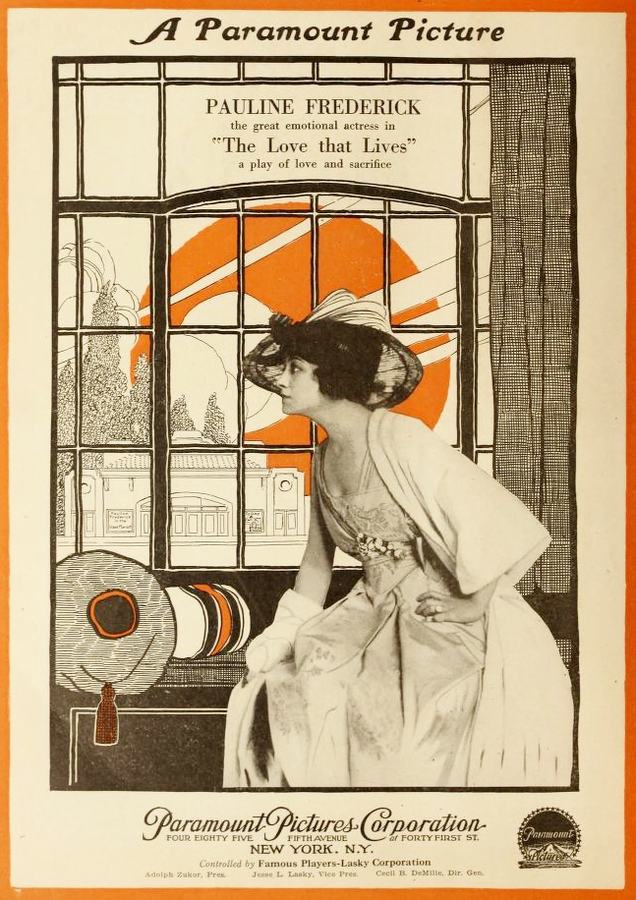
The cinematic landscape of 1917 was a crucible of evolving narratives, a period where the primitive flickers of early motion pictures began to coalesce into the sophisticated visual grammar we now recognize as the foundational language of film. Within this transformative era, The Love That Lives emerges not merely as a relic of silent melodrama, but as a searing indictment of class rigidity and a profound exploration of the maternal psyche. Directed with a surprisingly modern sensibility, the film serves as a vehicle for the incomparable Pauline Frederick, an actress whose ability to convey tectonic shifts of emotion through subtle shifts in posture and gaze remains a masterclass in the craft. Unlike the more whimsical offerings of the time, such as Charity Castle, this production plunges into the visceral muck of urban survival, refusing to provide the easy catharsis often demanded by the audiences of the Great War era.
The narrative architecture, penned by Scudder Middleton, utilizes the 'Fallen Woman' trope but complicates it with a layer of socioeconomic necessity that feels remarkably prescient. Molly McGill is not a woman led astray by vanity or fleeting passion, but one pushed into a corner by a system that offers no safety net for the widowed proletariat. The film’s opening sequences establish a world of crushing labor, where the very stones Molly scrubs seem to absorb her vitality. This is a far cry from the stylized heroism seen in The Captive God; here, the stakes are measured in bread, rent, and the physical safety of a child. When the tragedy strikes—the loss of her husband and daughter—the cinematography shifts into a darker, more claustrophobic register, mirroring Molly’s internal descent into desperation.
The introduction of John St. Polis as Harvey Brooks brings a chilling sophistication to the antagonist role. Brooks is the personification of Gilded Age entitlement, a man who views the world as a series of assets to be leveraged. When he proposes that Molly become his mistress in exchange for Jimmy’s education, the film enters a realm of moral chiaroscuro. We see the internal struggle etched across Frederick’s face—a battle between the rigid moral codes of her time and the primal instinct to preserve her remaining kin. This sequence echoes the thematic weight of Who Pays?, questioning the ultimate cost of survival in a society that commodifies virtue. Molly’s decision is presented not as a fall from grace, but as a descent into a necessary purgatory.
The subsequent time jump is handled with an elegant narrative economy. We see Jimmy (played with an earnest, rugged charm by Pat O'Malley) grow into a man of action, a firefighter who literally battles the elements that once threatened his family’s existence. There is a delicious, albeit tragic, irony in his profession. While he extinguishes literal fires, he remains blissfully ignorant of the metaphorical fire that consumed his mother’s reputation to fuel his success. The film excels in these moments of dramatic irony, particularly when Molly, having returned to her life as an anonymous scrub-woman, watches her son from the shadows. The distance between the fire station—a place of public honor—and the office buildings she cleans—places of private shame—serves as a powerful spatial metaphor for the class divide Jimmy has successfully crossed at the expense of his mother’s soul.
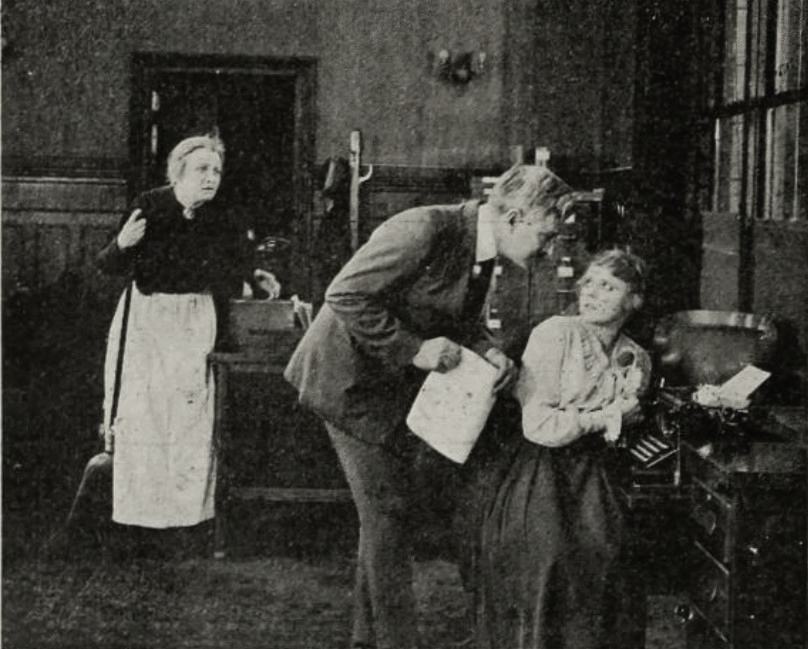
The third act of The Love That Lives is a masterwork of suspense and thematic convergence. The arrival of Dora Palmer into Brooks' office sets the stage for a collision between Molly’s past and her present. The tension is palpable; Molly, now a spectral presence in the halls she once walked as a mistress, observes the predatory patterns of Brooks with a seasoned, weary eye. Unlike the broader, more theatrical villainy found in The Menace of the Mute, Brooks’ assault on Dora is portrayed with a disturbing realism that underscores the vulnerability of women in the early 20th-century workplace. Molly’s intervention is an act of reclamation—she is not just saving Dora, she is striking back at the architect of her own ruin.
The ensuing struggle and the accidental fire that breaks out serve as the film’s grand crescendo. The technical execution of the fire sequence is remarkably ambitious for 1917, outstripping the visual flair of contemporaries like The Clodhopper. As Jimmy arrives to perform his duty, the film reaches its philosophical apex. The choice he must make—to save the young woman he loves or the aging scrub-woman he does not recognize—is a moment of staggering emotional weight. Molly’s decision to remain behind, to let the flames consume the evidence of her sacrifice, is a final act of agency. By choosing death, she ensures that the 'love that lives' is not her own physical presence, but the untainted life she built for her son. This ending is far more complex than the traditional happy endings of the era, such as those in The Girl Angle, offering instead a somber, dignified resolution that resonates with the gravity of a Greek tragedy.
Visually, the film utilizes a stark palette that emphasizes the textures of poverty and the cold brilliance of wealth. The cinematography often lingers on the hands of the characters—Molly’s chapped, water-logged hands versus Brooks’ manicured, predatory fingers—creating a tactile sense of their disparate worlds. This attention to detail is reminiscent of the gritty realism found in Peterburgskiye trushchobi, suggesting a global cinematic movement toward social consciousness. The pacing, while slower than modern standards, allows for a psychological depth that was rare for the period, moving beyond the episodic nature of films like The Kineto Coronation Series to create a cohesive, character-driven epic.
Furthermore, the performance of Pauline Frederick must be celebrated as a cornerstone of the silent era. She avoids the histrionics common in early melodrama, opting instead for a performance rooted in exhaustion and quiet dignity. Her portrayal of Molly McGill provides a bridge between the Victorian stage and the psychological realism of later decades. In comparing this work to other dramas of the time, such as The Wall Between or Enken, one finds that The Love That Lives possesses a unique grit, a refusal to look away from the transactional nature of survival. It is a film that demands empathy not through pity, but through a recognition of the sheer force of will required to navigate a world designed to crush the spirit.
Ultimately, The Love That Lives stands as a towering achievement in early social drama. It challenges the viewer to consider the invisible labor and the hidden shames that underpin the successes of the next generation. It is a haunting, beautifully rendered testament to the lengths a human heart will go to ensure that love, in its most selfless form, outlasts the individual. For those seeking to understand the evolution of the maternal martyr in cinema, or for those who simply wish to witness a powerhouse performance by one of the silent era's greatest stars, this film remains an essential, albeit heartbreaking, experience. It is a cinematic bonfire that burns away the artifice of the era, leaving behind the glowing embers of a truly universal human story.
IMDb —
1931
Community
Log in to comment.