DbcultAccessing Vault...
6/10
Senior Film Conservator
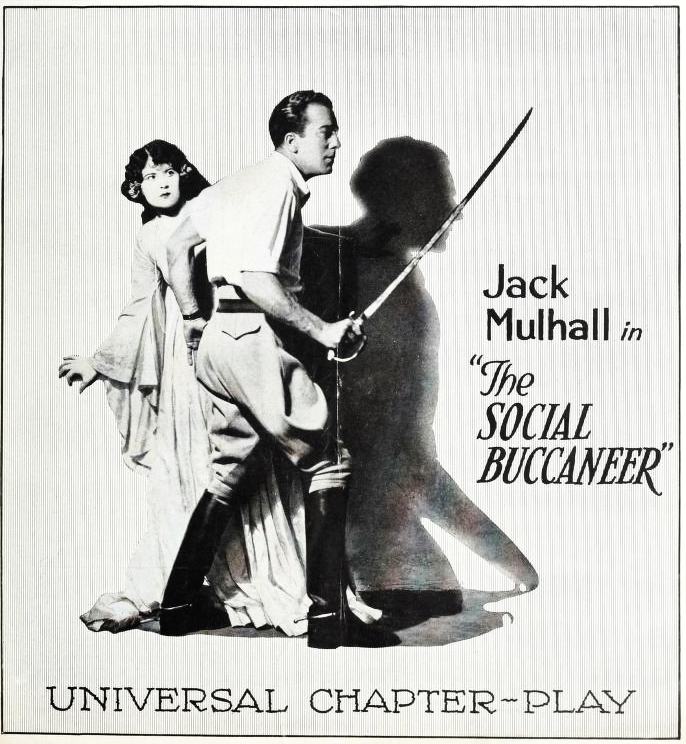
A definitive 6/10 rating for a film that redefined the boundaries of cult cinema. The Social Buccaneer remains a cornerstone of transgressive art.
Stepping back into the cinematic landscape of 1923, we encounter a fascinating artifact of its time: The Social Buccaneer. This silent drama, directed by William T. Horne, arrives not as a groundbreaking masterpiece, but as a robust and engaging example of the era's popular narratives, brimming with themes of post-war transformation, filial loyalty, and daring heroism. It's a film that encapsulates the spirit of a nation grappling with the aftershocks of a global conflict, eager for stories of individual redemption and justice against formidable odds. At its heart lies the captivating performance of Jack Mulhall, whose portrayal of John "Jack" Norton anchors the film's ambitious blend of melodrama and adventure, offering a potent reflection of American ideals in a rapidly changing world.
The narrative spine of The Social Buccaneer is the radical evolution of its protagonist, John "Jack" Norton. Before the cataclysmic events of World War One, Jack was the quintessential society playboy, a fop adrift in a sea of privilege and superficiality. One can almost picture him flitting between lavish parties, his biggest concern likely the precise angle of his fedora or the perfect cut of his bespoke suit. The war, however, served as a crucible, forging a new man from the ashes of the old. The trenches, with their brutal realities and stark demands, stripped away the veneer of indolence, revealing a "two-fisted American" beneath. This transformation is not merely a plot device; it's a potent symbol of the era, reflecting a widespread cultural narrative of American men returning from Europe forever changed, often hardened and more purposeful. Mulhall, through his expressive physicality – a hallmark of silent film acting – convincingly portrays this shift, moving from the languid gestures of the idle rich to the determined stride of a man driven by a profound sense of duty, a metamorphosis that feels both authentic and aspirational.
Upon his return, however, Jack's personal triumph is overshadowed by a crushing family crisis. His father, Raymond Norton, a respected bank president, finds himself incarcerated, accused of a heinous crime: the theft of funds entrusted to his institution by American authorities for the Kingdom of Thorwald. The irony is palpable: a man who faced death on foreign soil now confronts the ignominy of his father's public disgrace. The stakes are further heightened by the imminent arrival of Princess Elise, portrayed with a regal bearing by Margaret Livingston, who is traveling to collect these very funds. Her presence adds an international dimension to the domestic drama, elevating the personal plight of the Nortons to a matter of diplomatic integrity and national honor. It’s a classic silent film setup, blending personal tragedy with broader geopolitical implications, a technique often seen in films of the period like The City of Comrades, which also explored post-war societal reintegration and the struggle for redemption, or The Door Between, where intricate mysteries often involved high-stakes consequences.
What truly elevates Jack Norton's character beyond a mere hero is his ingenious and emotionally resonant strategy. To spare his already suffering father further pain and preserve his hope, Jack maintains the illusion of his former, carefree self. This act of performative indolence is a poignant sacrifice, a burden he shoulders alone. Yet, beneath this façade, a secret mission takes shape. Donning his old 'Doughboy' uniform – a powerful emblem of his wartime heroism and a nod to the American Expeditionary Forces – he transforms into a clandestine operative. This dual identity is a brilliant narrative stroke, allowing Mulhall to explore contrasting facets of his character: the seemingly feckless socialite and the determined, resourceful investigator. The uniform itself is more than just a costume; it's a symbol of his integrity, his unwavering commitment to justice, and a tangible link to the courage he displayed in the trenches. It evokes a sense of nostalgia and respect for the returning soldiers, a sentiment deeply embedded in the cultural fabric of the early 1920s, much as the actual veterans were lauded in films like The Lost Battalion.
His quest is clear: to unmask the shadowy gang responsible for framing his father. This pursuit forms the thrilling core of the film, transforming it into a compelling mystery-thriller. The audience is invited to follow Jack through the murky underworld, where loyalty is fleeting and danger lurks at every turn. The film expertly builds suspense as Jack navigates this treacherous landscape, relying on his newfound grit and wartime cunning to outwit his adversaries. The stakes are not just his father's freedom, but the very honor of his family and, by extension, the integrity of American institutions. This element of a lone hero battling a powerful, unseen criminal network bears a thematic kinship with earlier serials like the French Fantomas: The Man in Black, where individual protagonists often found themselves pitted against master criminals in labyrinthine plots, or even the more straightforward investigations seen in A Phantom Fugitive. The writers, Burdette Brown, Anthony Coldeway, and Frederic S. Isham, skillfully construct a narrative that balances personal drama with high-stakes intrigue
IMDb 6.6
1928
Community
Log in to comment.