DbcultAccessing Vault...
6.2/10
Senior Film Conservator
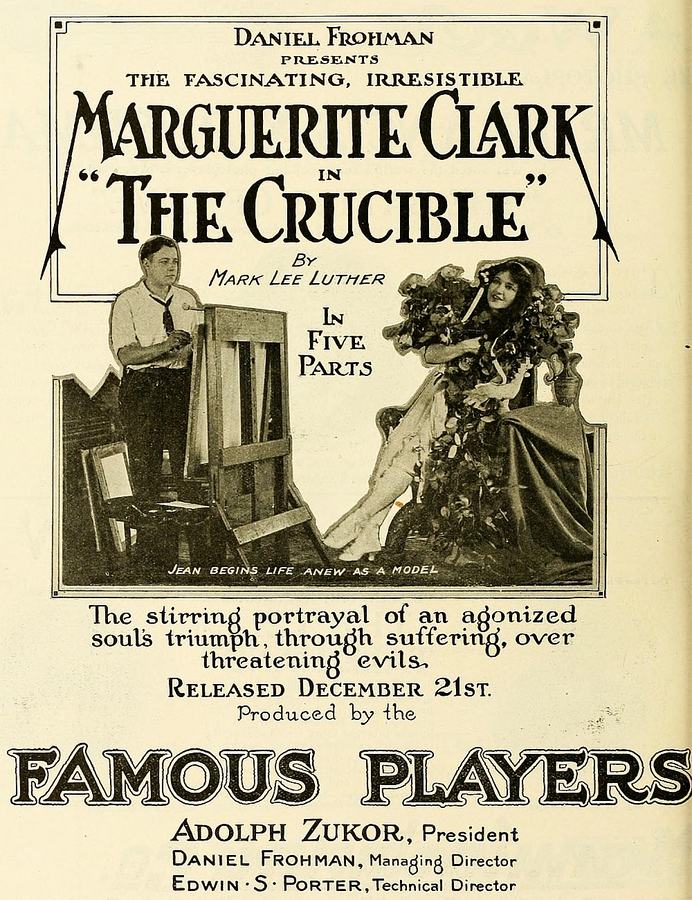
A definitive 6.2/10 rating for a film that redefined the boundaries of cult cinema. The Crucible remains a cornerstone of transgressive art.
The year 1914 stands as a monumental threshold in the history of the moving image, a period where the primitive short-form spectacles of the previous decade began to coalesce into the sophisticated feature-length narratives we recognize today. At the heart of this transition is The Crucible, a film that bridges the gap between the theatrical melodrama of the Victorian stage and the emerging visual language of the cinema. Directed by the legendary Edwin S. Porter, the visionary behind The Great Train Robbery, and Hugh Ford, this production offers a fascinating glimpse into the social anxieties surrounding gender, class, and moral reform in early 20th-century America.
While Mary Pickford often dominates the conversation regarding silent-era ingenues, Marguerite Clark’s performance in The Crucible provides a compelling alternative to the 'America's Sweetheart' archetype. Clark portrays Jean with a kinetic, almost feral energy that underscores the character's 'boyish' upbringing. Her father, a man disappointed by the lack of a male heir, imposes a masculine identity upon her that becomes a source of both strength and profound social alienation. This gender-bending premise, while handled with the era's typical heavy-handedness, allows Clark to showcase a range of physicality that was rare for female leads of the time.
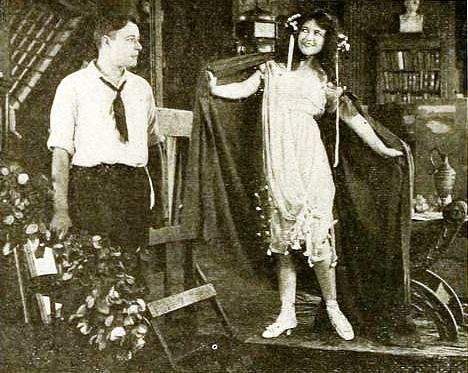
Comparing Clark’s Jean to the characters found in Tess of the Storm Country, one notices a distinct difference in the nature of their rebellion. Where Tess is a victim of external class warfare, Jean is a victim of internal identity confusion. The way she carries herself—shoulders squared, stride wide—is an affront to the delicate sensibilities of the film's antagonists. It is a performance that demands the audience reconsider the 'natural' state of femininity, a theme that would later be explored with even more subversive intent in films like A Florida Enchantment.
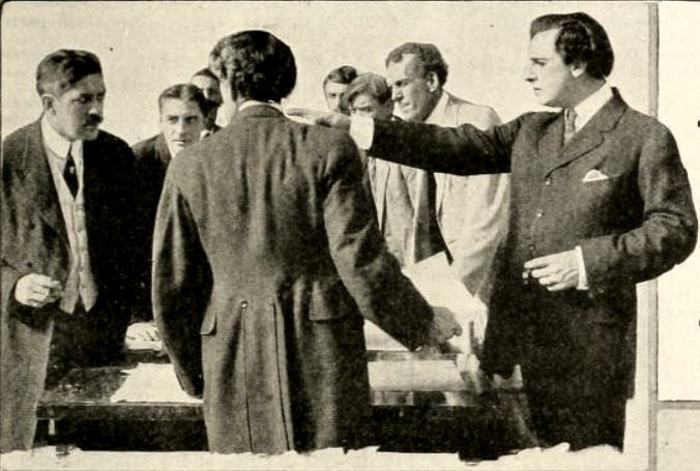
The middle act of the film, centered on Jean’s time in the reformatory, shifts the tone from a rural coming-of-age story into something approaching social realism, albeit through a highly stylized lens. The reformatory is depicted as a cold, dehumanizing space where individuality is systematically erased. Porter and Ford utilize shadow and claustrophobic framing to emphasize Jean’s entrapment, a technique that recalls the oppressive atmospheres of Les Misérables or the later social critiques found in Ingeborg Holm.
In this 'crucible,' the film’s title takes on its literal meaning: a vessel for melting down substances to remove impurities. Jean is the raw material, and the state's disciplinary apparatus is the fire. However, the film suggests that the 'impurities' being removed are actually the most vital parts of her character—her independence and her spirit. The escape sequence is staged with a sense of urgency that highlights Porter's mastery of cross-cutting and pacing, proving that even as he moved toward longer narratives, his foundational understanding of cinematic tension remained sharp.
Upon her escape, the narrative takes a turn into the romantic and the philosophical. The introduction of Craig Atwood (Harold Lockwood) represents the arrival of 'Art' as a civilizing force. Atwood is not merely a love interest; he is a sculptor of souls. The relationship between the rugged Jean and the refined Craig mirrors the Pygmalion myth, a trope frequently utilized in early cinema to justify the domestication of wild female characters. This dynamic is handled with a delicate touch, avoiding the more overt didacticism found in contemporary religious epics like Pilgrim's Progress.
The 'trials' Jean must undergo to prove her worthiness are where the film's lexical diversity of emotion truly shines. She is caught between her past life and the promise of a new, high-society existence. The script, penned by Mark Lee Luther, Edwin S. Porter, and Hugh Ford, cleverly uses the artist's studio as a neutral ground where Jean can reinvent herself. The lighting in these scenes is noticeably softer, utilizing the 'Lasky lighting' style that was beginning to revolutionize the aesthetic of American films. This provides a visual shorthand for her transformation from a rough-hewn girl into a woman 'worthy' of the artist's canvas.
To fully appreciate The Crucible, one must view it within the context of its peers. In an era where spectacles like The Last Days of Pompeii or Quo Vadis? were defining the epic, The Crucible remains refreshingly intimate. It prioritizes character psychology over cast-of-thousands grandiosity. While it lacks the historical weight of The Life of Moses or the technical complexity of The Student of Prague, it succeeds in creating a relatable emotional core.
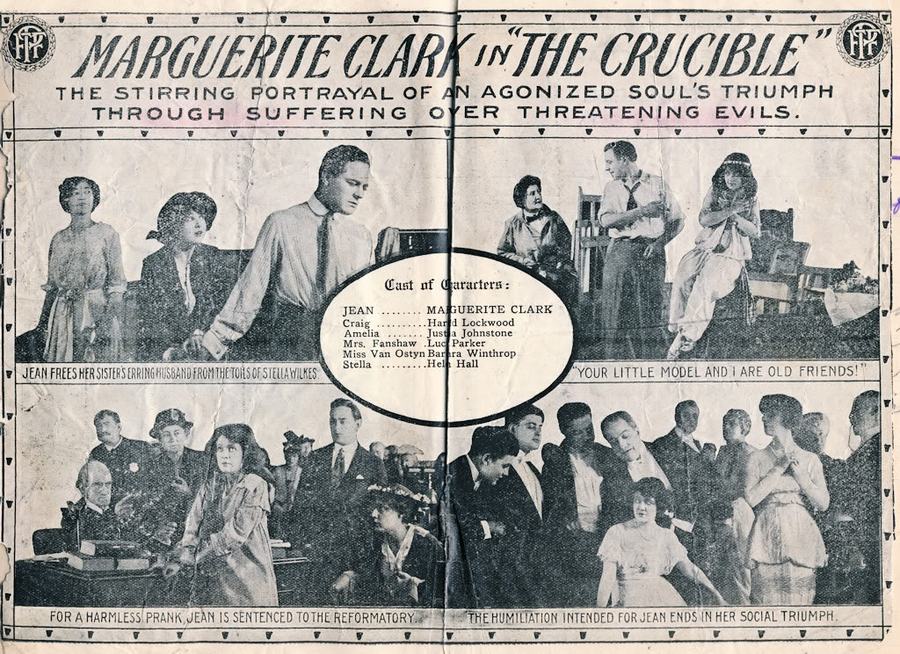
The film’s portrayal of social outcasts also invites comparison to Oliver Twist. However, Jean’s agency is far more pronounced than Oliver’s. She is the engine of her own destiny, even when the plot attempts to frame her actions as a quest for male approval. This inherent tension between the script’s conservative goals and the character’s rebellious nature is what makes The Crucible such a compelling watch for the modern cinephile.
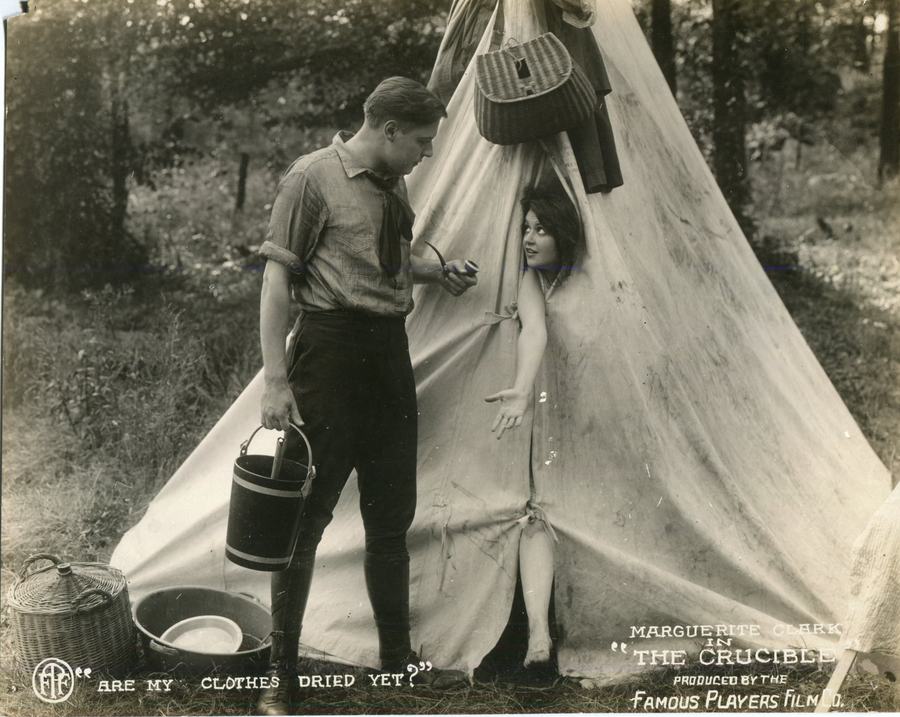
Technically, the film is a tour de force of early feature-length construction. Porter’s background as a cinematographer is evident in the depth of the frames and the deliberate use of location shooting. The scenes set in the wilderness possess a tactile quality that rivals the scenic beauty found in Glacier National Park. There is a sense of place here that anchors the melodrama, preventing it from floating away into pure theatricality.
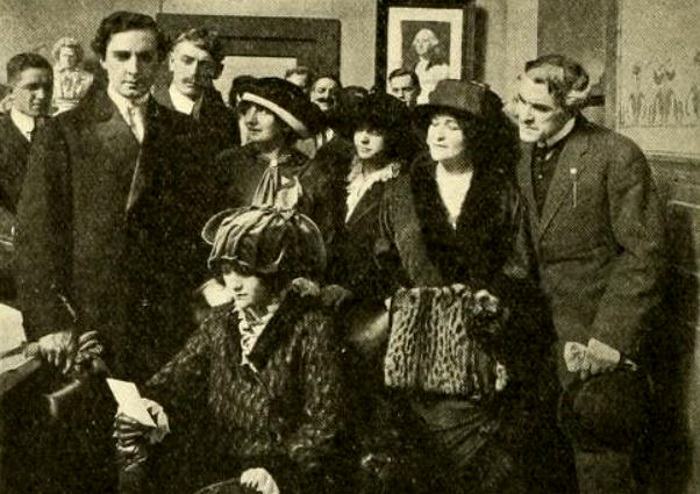
The editing, too, shows a significant evolution. We see the use of the close-up not just for novelty, but to convey Jean’s internal turmoil. When she looks at Craig Atwood, the camera lingers on her face, capturing a mixture of awe and insecurity. This is the birth of the cinematic 'soul,' a departure from the broad gestures of the stage. It is a refinement of the techniques Porter pioneered in The Life of an American Fireman, now applied to the complexities of the human heart.
In the final analysis, The Crucible is a film about the necessity of transformation. It posits that the social structures of the early 20th century were indeed a fire that one had to survive. While the resolution may feel somewhat antiquated to a contemporary audience—the idea that a woman’s ultimate goal is to prove her 'worthiness' to a man—the journey itself is fraught with a very modern sense of struggle.
It stands alongside works like Traffic in Souls as a vital document of the era’s obsession with moral purity and the dangers of the modern world. However, by centering the story on a character who starts as a social anomaly, the film inadvertently critiques the very structures it seeks to uphold. Jean’s 'boyishness' is not a flaw to be corrected, but a strength that allows her to survive the reformatory and find her way to the artist's studio. The Crucible remains a shimmering example of silent cinema's ability to speak volumes through silence, a masterclass in visual empathy that deserves its place in the pantheon of early narrative film.
Critic's Rating: 8.4/10
A seminal work that showcases the evolution of Marguerite Clark and the directorial maturity of Edwin S. Porter. Essential viewing for anyone interested in the intersection of gender politics and early film history.
IMDb 6.7
1920
Community
Log in to comment.