DbcultAccessing Vault...
6.8/10
Senior Film Conservator
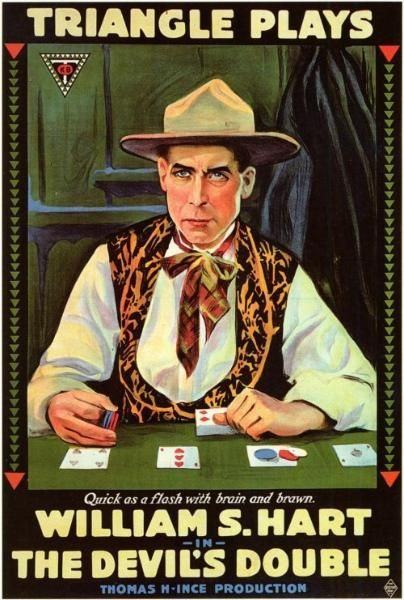
A definitive 6.8/10 rating for a film that redefined the boundaries of cult cinema. The Devil's Double remains a cornerstone of transgressive art.
The year 1916 stood as a pivotal meridian in the evolution of American cinema, a time when the raw kinetics of the early short films began to yield to the psychological complexities of the feature-length narrative. Amidst this transition, The Devil's Double emerges not merely as a relic of the silent Western genre, but as a sophisticated, almost Faustian exploration of the artistic temperament and its capacity for destruction. Directed by the stalwart William S. Hart (though often credited to the collaborative machinery of Triangle Film Corporation), this film serves as a somber departure from the galloping heroics typically associated with the 'Good Bad Man' archetype.
At its core, the film examines the necrotizing effects of aesthetic obsession through the character of Van Dyke Tarleton. Played with a brittle, febrile energy by Robert McKim, Tarleton is a man who has surrendered his humanity to the altar of his canvas. His pursuit of the perfect 'Lucifer' is not merely a professional goal but a spiritual sickness. This thematic preoccupation with the 'mad artist' mirrors other contemporary works such as The Vampires: Satanas, where the line between creative genius and moral bankruptcy becomes perilously thin.
The setting of Tophet—a name synonymous with the fires of Gehenna—provides a stark, chiaroscuro backdrop for this moral play. The desert is not portrayed here as a land of opportunity, but as a crucible of judgment. When Tarleton observes William S. Hart's Bowie Blake, he doesn't see a man; he sees a palette of sardonic sin. Hart, whose face was famously described as a 'granite mask,' utilizes every furrow of his brow to convey a sense of atavistic danger. Unlike the more theatrical villains found in Fantômas: In the Shadow of the Guillotine, Hart’s Blake is a creature of stillness and simmering resentment.
The narrative's most unsettling element is the systematic degradation of Naomi Tarleton, portrayed by Enid Markey with a poignant, fragile dignity. The film ventures into dark territory as Tarleton realizes that the only way to maintain the 'evil' in his model's eyes is to provoke Blake’s protective fury. By insulting and belittling Naomi in the presence of the outlaw, the artist becomes a voyeur of his own wife's suffering, feeding off the tension to fuel his creative output. This dynamic elevates the film above standard melodrama, touching upon the predatory nature of the male gaze and the exploitation inherent in the artist-model relationship.
One cannot help but compare this domestic cruelty to the more traditional moral struggles seen in The Vicar of Wakefield. However, where the latter finds solace in providence, The Devil's Double offers only the harsh reality of the frontier. The psychological warfare orchestrated by Tarleton is a masterclass in tension, building a pressure cooker environment that makes the eventual transition to the mountain retreat feel like a desperate flight rather than an escape.
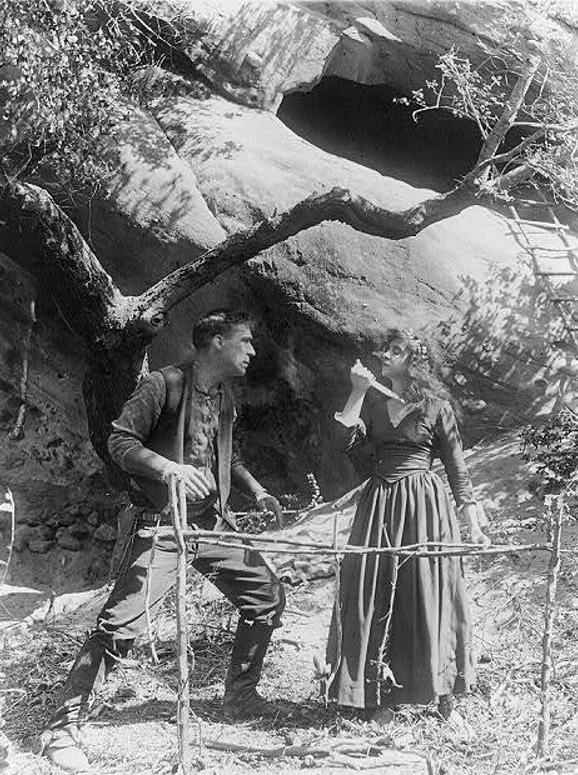
The introduction of 'Red' Gleason and Jose Ramirez serves as a catalyst for the film’s violent pivot. While Tarleton represents a cerebral, calculated evil, these outlaws embody the chaotic, senseless violence of the wild. Their intrusion leads to the artist's demise—a fitting end for a man who died spiritually long before his heart stopped beating. The subsequent sequence, where Naomi loses her mind due to the trauma, allows Enid Markey to showcase a range of emotion that was quite sophisticated for the era. Her regression to a child-like state is handled with a surprising amount of empathy, avoiding the histrionics often found in films like La Belle Russe.
Bowie Blake’s transformation during this period is where William S. Hart truly shines. The transition from the 'Lucifer' model to a tender caregiver is executed with a subtle shift in physicality. He stops being the subject of another man's vision and begins to define his own moral compass. This theme of self-actualization through the care of a vulnerable 'other' is a recurring motif in Hart's filmography, yet here it feels particularly earned because of the darkness from which it emerges.
Visually, The Devil's Double is a triumph of early location shooting. The Arizona landscape is rendered with a stark beauty that emphasizes the isolation of the characters. The use of natural light, particularly in the mountain sequences, creates a sense of authenticity that studio-bound productions of the time, such as The Man from Home, often lacked. The camera lingers on the textures of the desert—the dust, the jagged rocks, the weathered wood of the cabins—integrating the environment into the psychological state of the protagonists.
The 'painting' itself, though we only see it through the reactions of the characters and fleeting glimpses, becomes a phantom character. It represents the ego of the creator and the sin of the model. The way the film handles the 'double' aspect—the idea that Blake is both a man and a symbol—suggests a level of meta-textual awareness that was rare in 1916. It invites the audience to question whether we are watching a Western or a televised exorcism of the artist's soul.
When placed alongside other 1916 releases like Dødsklippen or the atmospheric Das schwarze Los, The Devil's Double stands out for its lack of sentimentality. It does not offer easy answers. Even the ending, which hints at a future union between Blake and Naomi, is tempered by the recognition that 'there are things to be done, that time and striving will do.' It is a mature conclusion that acknowledges the scars left by trauma and the slow process of redemption.
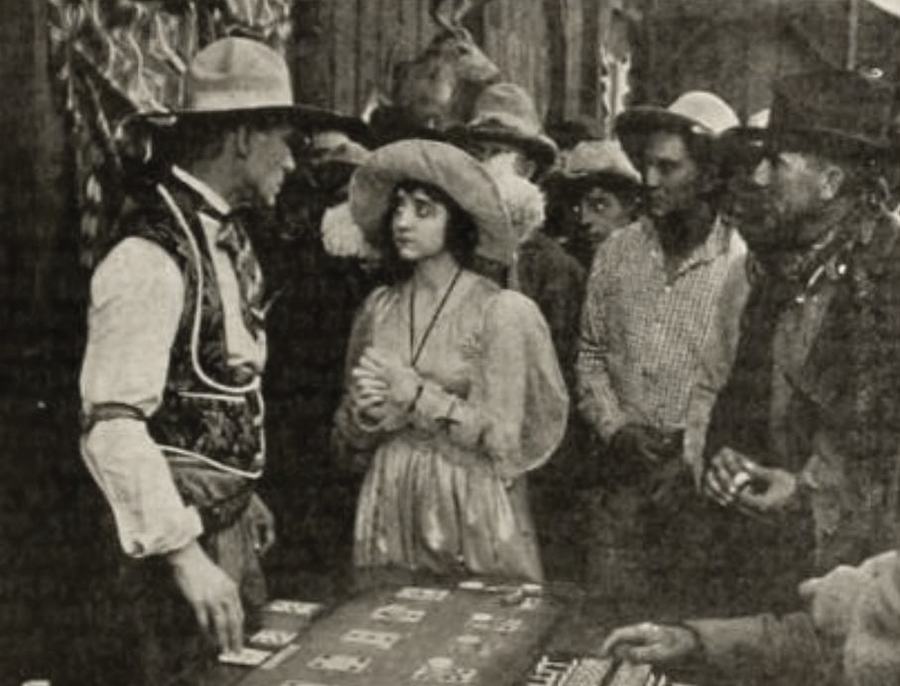
The film also shares a certain gritty realism with The Secret Sin, particularly in its willingness to explore the darker corners of human motivation. While films like By Power of Attorney might focus on legal or social conflicts, The Devil's Double is firmly rooted in the visceral and the primal. It is a story of blood, paint, and the desert wind.
William S. Hart’s performance in this film solidified his status as the premier Western star of the silent era, but it also demonstrated his range as an actor capable of nuance. His Bowie Blake is a precursor to the anti-heroes that would dominate the genre decades later. The 'sardonic hardness' that Tarleton sought to capture on canvas is precisely what makes Blake such a compelling figure; he is a man who has looked into the abyss and decided to walk away from it, not out of a sudden burst of piety, but through the grueling work of human connection.
In the grand tapestry of silent cinema, which includes everything from the ethnographic documentation of Life of the Jews of Palestine to the instructional grandeur of With Our King and Queen Through India, The Devil's Double remains a vital piece of narrative art. It reminds us that the Western was always more than just cowboys and Indians; it was a stage for the eternal struggle between the light and the dark, the creator and the created.
Ultimately, the film is a testament to the power of the face in silent cinema. Without a word spoken, Hart conveys the weight of a lifetime of sin and the flickering hope of a different future. The final exchange—'I'm takin' that chance'—is as powerful a line as any written for the screen, encapsulating the precarious nature of the human condition. For those seeking a silent film that challenges the intellect as much as it engages the emotions, The Devil's Double is an essential experience, a dark jewel from an era of cinematic discovery.
IMDb —
1923
Community
Log in to comment.