DbcultAccessing Vault...
Cult Review
Senior Film Conservator
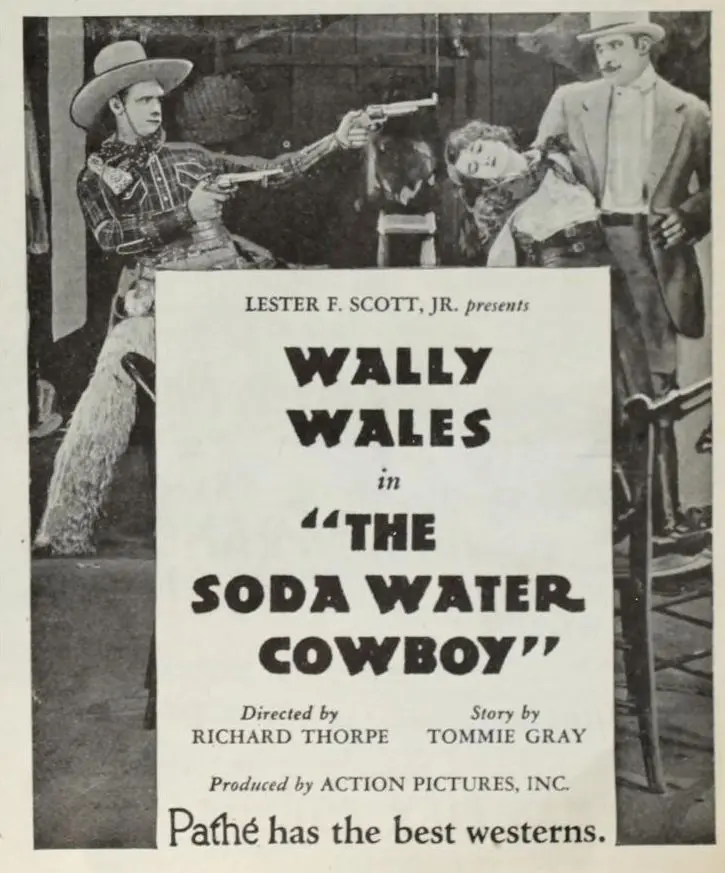
The Soda Water Cowboy is a film worth watching today, but only if you approach it with a specific, historically informed appetite. It’s a brisk, unpretentious B-Western that delivers exactly what its era promised: simple heroics, clear villains, and plenty of dusty action. However, anyone expecting narrative sophistication, deep character arcs, or even particularly memorable performances will find it a tedious exercise in genre convention.
This film works because it’s a pure, uncut distillation of the B-Western formula. It delivers on its promise of a straightforward good-versus-evil narrative, unburdened by subtext or ambition. The action sequences, while rudimentary, are frequent enough to keep the plot moving. You should watch it if you have a genuine interest in the evolution of the Western genre, enjoy the unvarnished charm of low-budget filmmaking, or simply want to see how these quick-shot productions cobbled together a story. This film fails because its narrative is as thin as a desert stream in August, the characters are archetypes rather than people, and any dramatic tension quickly dissolves into predictable outcomes.
From the moment Jim, our titular 'Soda Water Cowboy,' rides into view, the film signals its intentions: speed and simplicity. There’s no wasted motion in establishing the core conflict. Mary is good, Black Bart is bad, and Jim is the stoic force of justice. This directness is both the film's strength and its ultimate limitation. It doesn't bother with exposition beyond what's absolutely necessary, preferring to push the plot forward through action rather than dialogue.
The pacing is relentless, almost frantic at times. Director J.P. McGowan, a veteran of these quick productions, understands that keeping the audience engaged means never lingering. Scenes transition with a briskness that sometimes feels abrupt, as if the editor was working against a stopwatch. A fistfight ends, a chase begins, a new clue is found – all within minutes, without much room for the audience to breathe or reflect. This keeps things from getting truly dull, but it also prevents any moment from truly resonating.
The film's commitment to its own formula is almost admirable, even if that formula is rudimentary. It doesn't pretend to be anything more than what it is.
Slim Whitaker, as Jim, embodies the taciturn cowboy with a certain effortless authenticity. His performance isn't about emotional range; it's about presence. He projects a quiet competence, a man who lets his actions speak louder than words, mostly because the script gives him so few words to speak. His interactions with Mary (Beryl Roberts) are chaste and functional, serving only to advance the plot's romantic subplot rather than explore any genuine connection. Roberts, for her part, plays the distressed rancher with a suitable earnestness, though she’s given little to do beyond being a catalyst for Jim’s heroism.
Hal Taliaferro as Black Bart, the chief antagonist, is where the film stumbles most noticeably. Bart is a villain by declaration, not by deed. He schemes and threatens, but his menace feels strangely toothless. We are told he is ruthless, but the film rarely shows him commit truly egregious acts that would justify his villainous reputation. His henchmen, particularly Al Taylor and Hank Bell, provide more physical threat through their clumsy brawls and chases than Bart himself ever manages to convey. It's a missed opportunity to inject some genuine stakes into the narrative.
The character of Jim, the 'Soda Water Cowboy,' feels like a gimmick that the film never quite capitalizes on. His abstinence from alcohol is mentioned, but it rarely impacts the plot or his character beyond a superficial distinction. It doesn’t lead to any unique challenges or insights; he could just as easily have been 'The Quiet Cowboy' or 'The Fast-Drawing Cowboy' without altering the story. This lack of follow-through makes the quirky title feel less like a defining trait and more like a discarded idea.
The cinematography is purely utilitarian, yet it captures the vastness of the Western landscape with an unvarnished honesty. There are no grand, sweeping vistas designed for artistic effect, but the wide shots of riders crossing dusty plains convey a sense of genuine isolation and the sheer scale of the frontier. The camera is content to observe, placing the action clearly within its environment. It’s a no-frills approach that prioritizes clarity over artistry, which, for a film of this ilk, is entirely appropriate.
The sets are sparse, consisting mostly of a few saloon interiors, a dusty ranch house, and the raw outdoors. This minimalism is a hallmark of low-budget productions, but it also lends a certain authenticity to the proceedings. Redemption Gulch feels like a temporary settlement, a place carved out of the wilderness with minimal effort. This contributes to the film’s overall sense of urgency; nothing feels permanent, everything is up for grabs.
The action sequences, while frequent, are often repetitive. Horse chases through the same rocky terrain, quickdraws that end predictably, and saloon brawls that rely on exaggerated punches are the order of the day. There's a particular sequence involving a cliffside pursuit that drags on too long, losing its initial momentum. While these moments are essential to the genre, a little more variation in choreography or setting would have gone a long way in sustaining interest.
The Soda Water Cowboy is a functional, no-frills B-Western that serves its purpose as a quick, uncomplicated diversion. It's not a film that will linger in your memory, nor does it offer any profound insights into the human condition or the American frontier. Instead, it provides a straightforward example of early genre filmmaking, showcasing the efficiency and limitations of its production era. For those with a specific interest in the historical context of Westerns, or a fondness for the sheer earnestness of these low-budget efforts, it holds a certain dusty charm. Everyone else can safely pass. It's a film that exists, and that's about the extent of its ambition.

IMDb —
1933
Community
Log in to comment.