DbcultAccessing Vault...
Cult Review
Senior Film Conservator
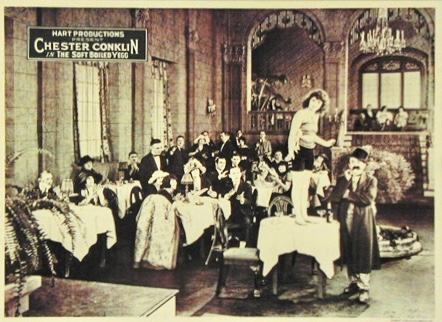
A vault of celluloid secrets swings open, and what tumbles out is not glittering ingots but the iridescent guilt of an entire city—this is the alchemical gambit Frank Terry’s screenplay performs in The Soft Boiled Yegg, a 1923 silent that most festival curators file under ‘vanished’ yet pulses with more contemporary nerve than half the streamer-funded noir pastiches premiering this year.
Watch how director William Parke tilts the camera until streetlights skew like thrown daggers; each frame could be a lost panel from Lyonel Feininger’s comic-strip apocalypse. The Marabou Club sequences—bathed in ur-Technicolor amber that prefigures As You Like It’s forest greens—juxtapose hot jazz syncopation with Weimar chill, birthing a rhythm that hammers behind your sternum long after the intertitles fade.
Ashley Cooper’s burglar has the slouched shoulders of a man perpetually ducking searchlights; his eyes, ringed in kohl exhaustion, suggest a cross between Conrad Veidt and a post-war Chaplin. When he palms those ostentatiously pristine eggs, the gesture reads less quirk than sacrament—each oval a planet he refuses to shatter. Kathleen Myers answers with a smoky alto laugh that seems to emanate from the saxophone itself, not the actress’s larynx, making her duet with Cooper feel like a pas de deux choreographed by cigarette haze.
Meanwhile Hazel Deane’s pickpocket—think Lena Rivers’ pluck grafted onto Pickpocket’s existential sleight—embodies the film’s central thesis: identity is the ultimate loot. Every lifted wallet becomes a Russian-doll confession, and Deane’s cherubic grin never wavers even as morality frays like an overplayed 78-rpm record.
The heist itself—mid-film, yet treated like a coda—explodes the genre. Instead of gold sovereigns, the safe disgorges a film canister: a city-wide blackmail dossier shot in secret. Terry’s stroke of genius reframes noir’s usual fiscal fetish; the MacGuffin is collective shame, a currency more volatile than any bullion. Suddenly the burglar’s epithet ‘soft-boiled’ metastasizes from ironic underworld handle to ontological condition—he too is only a thin membrane away from spilling.
In the rooftop finale, Parke cross-cuts between three vertiginous planes: the detective’s hand clawing toward a holster, Myers’s torch-song crescendo echoing like Delilah’s lament, and Cooper poised to hurl the reel into the river. The editing anticipates Smashing Barriers’ kinetic dialectic, yet achieves greater emotional lift because the stakes are spiritual, not merely kinetic.
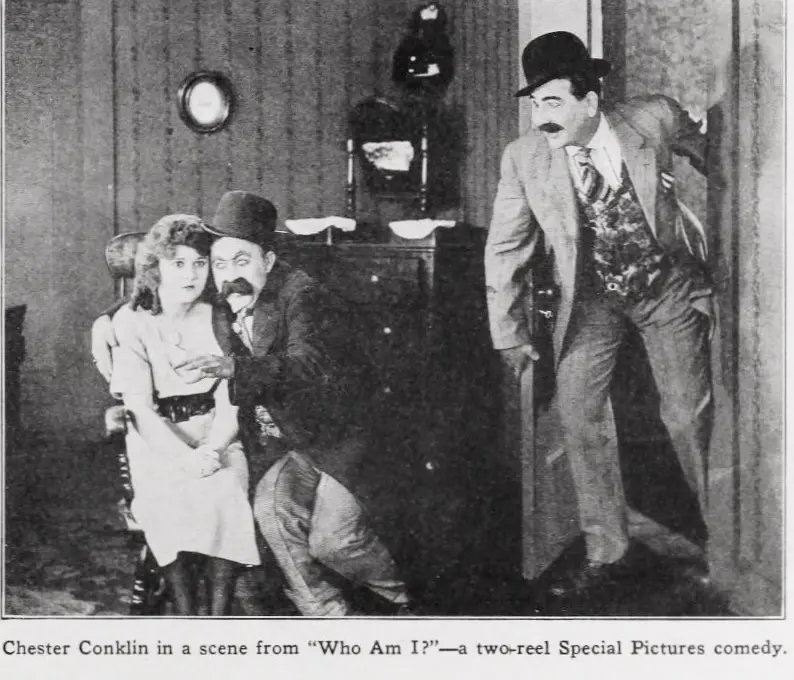
Gregg Toland before Toland, cinematographer Frank Zucker frames the climactic smash in a single shot: the burglar’s silhouette against a cyclopean moon, the canister arcing slow-motion, eggshell cracks spider-webbing across the lens as if the city itself hemorrhages luminescent yolk. It’s a visual pun—urban fragility rendered protein-thin—yet lands with mythic heft, equal to The Clarion’s trumpet-blare epiphanies.
Today’s capers fetishize methodology: blueprints, gadgets, getaway math. The Soft Boiled Yegg cares less about lock tumblers than about the existential tumult each click unleashes. Noir historians who genuflect before A Butterfly on the Wheel will find here a more radical empathy: criminals not as sociopathic outliers but as cracked insomniacs yearning for prelapsarian innocence symbolized by—you guessed it—an unbroken egg.
Contemporary screenings often retrofit hot jazz vinyl, yet the original exhibitors’ notes suggest unpianced silence punctuated by live snare rim-shots and muted trumpet. That negative space—audience foot-shuffles, distant tugboat horns—makes the film a participatory séance. Try watching it in a black-box cinema where the only soundtrack is your own cardiac metronome; you’ll swear the celluloid itself respires.
Unlike My Cousin’s damsel-in-distress scaffolding, the women here orchestrate salvation and damnation alike. Myers’s chanteuse doesn’t beg rescue; she trades the ledger of her heart for the city’s exposed negatives, a barter that reframes erotic transaction as civic defibrillation. Meanwhile Thelma Hill’s flapper-journalist, sidelined in early reels, emerges at the climax wielding a flash-camera like a paparazzo-saint, baptizing sinners with magnesium bursts.
Where The Brand of Lopez externalizes vengeance through scarred visages, Yegg internalizes penance; where Déchéance wallows in fatalistic drift, here choice—fractured, last-second, miraculous—still flickers. And measured against Höhenluft’s alpine existentialism, Parke’s urban abyss feels cozier, more human, precisely because its abyss is municipal, walkable, our shared commute.
Only two nitrate prints survive: one at Cinémathèque de Prague (missing Reel 4), another in a private San Francisco collection rumored to harbor the complete version. Festival rumors hint at a 4-K restoration funded by a Bay Area tech philanthropist who insists on egg-shaped seating in the screening tent. Until then, bootleg rips circulate among cine-club cognoscenti, watermarked yet luminous enough to seduce any noir disciple.
Because every era gets the heist myth it deserves. The twenties, drunk on bootleg gin and post-war vertigo, birthed a parable that says our greatest vault is conscience, our most coveted loot absolution. Because in an age of data-leak epidemics, a film that treats privacy as communion feels prophetic. And because sometimes the most revolutionary act is not to crack the safe, but to cradle the egg—soft-boiled, yes, but unbroken—and roll it toward dawn’s first guttering light.
IMDb —
1935
Community
Log in to comment.