DbcultAccessing Vault...
5.9/10
Senior Film Conservator
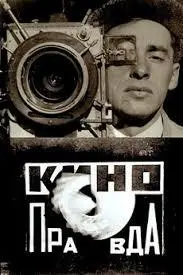
A definitive 5.9/10 rating for a film that redefined the boundaries of cult cinema. Kino-Pravda No. 17: For the First Soviet Agricoltural, Handicraft, and Industrial Exhibition remains a cornerstone of transgressive art.
Stepping into the world of Kino-Pravda No. 17: For the First Soviet Agricultural, Handicraft, and Industrial Exhibition is not merely watching a film; it is an act of historical communion, an unmediated gaze into the very crucible of a nation forging its identity in the crucible of revolution. Dziga Vertov, alongside his brilliant collaborators Elizaveta Svilova and Mikhail Kaufman, didn't just document life; they sculpted it, imbued it with an ideological fervor, and presented it with an aesthetic audacity that continues to resonate a century later. This is not entertainment in the conventional sense, nor is it a passive observational piece; it is a declaration, a visual manifesto on the power of the camera to capture and shape reality.
The very concept of Kino-Pravda, or 'film-truth,' was a radical departure from the narrative-driven cinema prevalent in the early 1920s. While films like Little Lord Fauntleroy (1921) offered escapist narratives and sentimental journeys, Vertov's series aimed for something far more visceral and immediate: the unvarnished truth of everyday life, captured raw and then meticulously reassembled to reveal deeper socio-political currents. No. 17, in particular, focuses its lens on the monumental undertaking of the First Soviet Agricultural, Handicraft, and Industrial Exhibition, but it expands far beyond a simple chronicle of an event. It becomes a panoramic tapestry of collective effort, a celebration of the nascent Soviet state's ambition to transform its agrarian roots into an industrialized powerhouse.
What immediately strikes the viewer is the sheer dynamism of Kaufman's cinematography. His camera is not a static observer; it is an active participant, a 'kino-eye' that darts, pans, tilts, and tracks with an almost breathless energy. We are pulled into the fields, witnessing the rhythmic swing of scythes, the meticulous planting of seeds, and the communal harvesting that defines agricultural life. The close-ups on weathered faces, glistening with sweat and determination, are particularly poignant, humanizing the grand, often abstract, ideals of the revolution. These are not actors; they are the architects of a new world, their expressions a testament to both hardship and unwavering resolve.
The transition from the pastoral to the industrial is handled with remarkable fluidity. Vertov and Svilova's editing is a masterclass in rhythmic montage, juxtaposing images of horse-drawn plows with the whirring gears of new machinery, the simplicity of handcrafted goods with the robust output of factories. This visual dialectic underscores the core message: the harmonious integration of traditional skills with modern innovation, all under the guiding hand of the Soviet project. The rapid cuts and sometimes disorienting angles create a sense of urgency, a feeling that history is unfolding before our very eyes, propelled forward by an unstoppable force. This is a far cry from the more linear, almost theatrical, pacing of some contemporary films, like perhaps The Great Circus Catastrophe, which, despite its title, likely adhered to more conventional cinematic storytelling.
While Dziga Vertov is often the name synonymous with Kino-Pravda, the indispensable role of Elizaveta Svilova as editor cannot be overstated. It is her meticulous, almost surgical, work in the editing room that transforms raw footage into a cohesive, ideologically charged narrative. Svilova understood Vertov's vision implicitly, crafting a rhythmic structure that mimics the pulse of a working nation. Her cuts are not arbitrary; they are deliberate, each juxtaposition designed to evoke a specific emotional or intellectual response. The repetition of certain motifs – a worker's hands, the turning of a wheel, the collective gaze – creates a powerful, almost hypnotic effect, reinforcing the themes of unity and progress.
Consider the way Svilova builds tension and release, the ebb and flow between intense close-ups and sweeping wide shots, or the interplay of quiet moments of contemplation with bursts of frenetic activity. This sophisticated approach to montage was revolutionary, pushing the boundaries of what cinema could achieve beyond mere storytelling. It sought to create meaning not just through plot, but through the very arrangement of visual information, much like a poet arranges words to create a profound emotional impact. This contrasts sharply with the often straightforward, cause-and-effect editing prevalent in many films of the era, where the primary goal was to advance a clear narrative, as seen in a drama like Mrs. Dane's Confession.
The exhibition itself, which serves as the nominal subject, becomes a powerful metaphor for the Soviet Union's aspirations. It is a showcase not just of products, but of people, ideas, and a burgeoning national spirit. The film captures the meticulous displays of agricultural bounty – plump grains, robust livestock – alongside the intricate craftsmanship of artisans and the gleaming machinery of new industries. Each exhibit is presented not as a static object, but as a testament to human ingenuity and collective effort. There's an underlying sense of pride, an almost defiant optimism, radiating from the screen, despite the immense challenges the young Soviet state was undoubtedly facing.
Vertov’s camera lingers on the faces of the visitors, their expressions a mix of curiosity, wonder, and shared purpose. These are the citizens for whom this new society is being built, and their engagement with the exhibition is portrayed as an active participation in the national project. The film doesn't shy away from depicting the scale of the exhibition, emphasizing its grandeur and its role as a unifying force. It’s a powerful piece of propaganda, yes, but one executed with such formal innovation and conviction that it transcends mere political messaging to become a work of profound artistic merit. One might even draw a distant parallel to the careful staging and presentation of dramatic elements in a film like The Claw, though Vertov's 'staging' is of reality itself, meticulously framed and edited.
What distinguishes Kino-Pravda No. 17 from a simple newsreel is its visionary aesthetic. Vertov and his team were not content with merely recording events; they sought to understand and articulate the underlying rhythms and structures of life through cinematic means. They experimented with slow-motion, fast-motion, split screens, and superimpositions – techniques that were groundbreaking for their time and pushed the boundaries of visual language. This formal experimentation was not gratuitous; it was integral to their philosophy, designed to reveal truths that the naked eye might miss, to elevate the mundane to the monumental.
The use of rhythmic intertitles, often appearing as bold, declarative statements, further enhances the film's propagandistic yet poetic quality. These are not just explanatory captions; they are active participants in the montage, guiding the viewer's interpretation and reinforcing the ideological framework. The absence of a traditional storyline frees the film to explore themes in a more abstract, almost musical way. It's a symphony of images and ideas, a visual poem to the collective spirit. This approach stands in stark contrast to the clear character-driven narratives found in films like The Man and the Moment, where individual destinies drive the plot, rather than the grand sweep of social transformation.
The impact of Kino-Pravda No. 17, and indeed the entire series, extends far beyond its historical context. It laid foundational groundwork for modern documentary filmmaking, influencing generations of directors who sought to capture 'unscripted' reality. Vertov's theories on the 'kino-eye' and the power of montage continue to be studied and debated in film schools worldwide. His relentless pursuit of 'film-truth' challenged the very definition of cinema, arguing that the camera could reveal a reality more profound than any staged drama. This philosophy echoes even in contemporary action films like Hard Boiled, where the raw, visceral energy of the camera work creates an immersive, almost documentary-like intensity, albeit in a fictional context.
Moreover, the film serves as an invaluable historical document, offering a rare, candid glimpse into the early years of the Soviet Union. It captures the aspirations, the struggles, and the sheer human effort involved in building a new society from the ground up. It's a testament to the power of cinema not just as an art form, but as a tool for historical preservation and ideological dissemination. While films like Drankersken might offer insights into social issues of their time through dramatization, Kino-Pravda No. 17 provides a direct, unmediated window into a specific historical moment.
In conclusion, Kino-Pravda No. 17 remains a compelling, essential viewing experience. It is a vibrant, pulsating artifact from a pivotal moment in human history, crafted by artists who believed fervently in the transformative power of cinema. It challenges us to reconsider our notions of documentary, propaganda, and art itself. Vertov, Svilova, and Kaufman didn't just record their world; they actively participated in its construction, leaving behind a cinematic legacy that continues to inspire and provoke. To watch it today is to engage in a profound act of witnessing, a direct connection to the unblinking eye of a revolution, forever preserved on celluloid.
The film's relentless energy, its innovative editing, and its unwavering commitment to capturing the 'truth' of its time make it a masterpiece of early cinema. It demonstrates how a series of seemingly simple newsreel clips, when imbued with a powerful vision and executed with technical brilliance, can transcend mere reporting to become a profound work of art. It’s a testament to the fact that sometimes, the most compelling narratives are those that emerge organically from the fabric of reality itself, meticulously observed and artfully arranged. This is not just a film about an exhibition; it is an exhibition of life, labor, and the audacious spirit of a nation reimagining its future.
Community
Log in to comment.