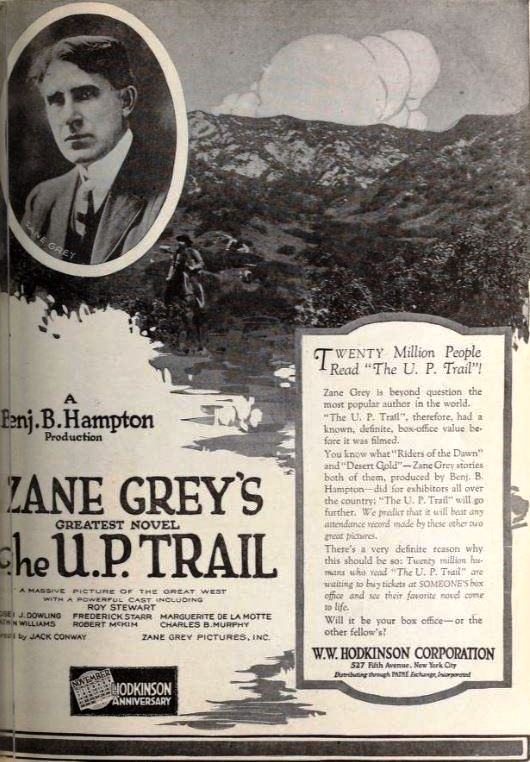
Ah, the American West! A landscape of myth, hardship, and the relentless march of progress. Few tales capture its raw, untamed spirit quite like The U.P. Trail, a cinematic journey from 1919 that, even a century later, still resonates with a profound emotional power. Based on the sprawling novel by the legendary Zane Grey, and brought to the screen by the narrative prowess of William H. Clifford, this film isn't merely a historical artifact; it's a vibrant tapestry woven with threads of ambition, love, sacrifice, and the sheer, unyielding will to build a nation.
From the very first frame, we are plunged into the heart of a colossal undertaking: the construction of the transcontinental railroad. This wasn't just about laying steel tracks; it was about conquering an immense, often hostile wilderness, connecting disparate worlds, and forging a new destiny. Our protagonist, Warren Neale, portrayed with a stoic intensity by Roy Stewart, embodies this pioneering spirit. He's not just an engineer; he's a visionary, a man whose hands are as capable of drafting blueprints as they are of taming the wild. His dedication to the Union Pacific — the 'U.P. Trail' of the title — is almost spiritual, a testament to the era's belief in Manifest Destiny, albeit one tempered by the brutal realities of the frontier.
A Chance Encounter, A Fateful Bond
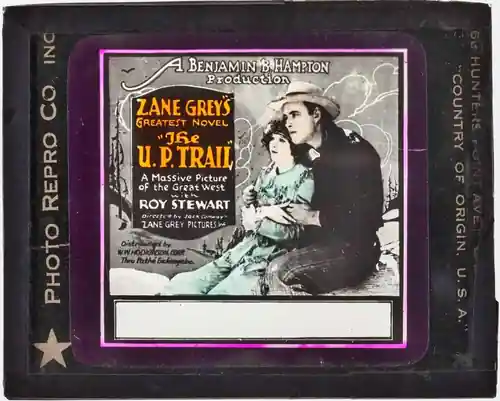
The narrative truly ignites with a moment of stark tragedy that is, ironically, the genesis of profound connection. Neale discovers Allie Lee (Marguerite De La Motte), a young woman thrust into unimaginable horror, the sole survivor of a brutal Indian massacre. This scene, though silent, speaks volumes about the fragility of life on the frontier and the sudden, devastating turns of fate. De La Motte, with her delicate yet resilient portrayal, immediately draws the audience into Allie's trauma and subsequent recovery. Neale, rather than being solely defined by his engineering prowess, reveals a deep well of empathy and care. It's in these quiet moments of healing, of shared vulnerability against the vast, indifferent landscape, that their friendship slowly, organically, ripens into love. This isn't a rushed, Hollywood romance; it's a bond forged in the crucible of shared adversity, a quiet flame flickering against the vastness of the American wilderness.
The U.P. Trail captures the raw, untamed spirit of the American West, weaving a vibrant tapestry of ambition, love, and sacrifice.
Scene from The U.P. Trail
Cinematic perspective: Exploring the visual vocabulary of The U.P. Trail (1920) through its definitive frames.
The film, much like other great silent era epics such as The Birth of Character or Heir of the Ages, understands the power of visual storytelling to convey complex emotions without dialogue. The sweeping vistas, the close-ups on nuanced expressions, all contribute to a sense of grand scale juxtaposed with intimate human drama. The relationship between Neale and Allie becomes the emotional anchor, a beacon of tenderness amidst the brutal realities of frontier life.
A Shadow Falls: Abduction and Despair
Just as happiness seems within reach, the narrative takes a dark turn, plunging our lovers into a maelstrom of despair. Neale, needing provisions, makes the fateful decision to leave Allie in the care of Slingerland (George Berrell), a grizzled but trustworthy trapper, while he ventures to the bustling, yet morally ambiguous, town of Benton. Benton, a frontier boomtown, serves as a microcosm of the West's dual nature: a place of opportunity and progress, but also a den of vice and lawlessness. This stark contrast between the tranquil solitude of Slingerland's cabin and the chaotic energy of Benton is a classic Western trope, expertly deployed here to heighten the tension.
In Neale's absence, the villain emerges in the form of Jose Durade (Robert McKim), a menacing figure who claims Allie as his daughter. McKim's portrayal of Durade is chilling, a true embodiment of frontier villainy, echoing the kind of ruthless antagonists seen in films like The Target or The Reckoning. Durade's brutal murder of Slingerland and the subsequent abduction of Allie is a gut-wrenching sequence, expertly staged to maximize the emotional impact. The audience feels Neale's anguish even before he does.
Neale's return to an empty cabin, the silence speaking volumes of the violence that transpired, propels him into a desperate, half-crazed search. Stewart's performance here is particularly poignant, conveying the raw agony of a man who has lost everything. His collapse from exhaustion is not merely physical; it signifies the crushing weight of his emotional burden. It's a moment that allows the audience to fully empathize with his plight, a testament to the power of silent cinema to communicate profound human suffering.
Scene from The U.P. Trail
Cinematic perspective: Exploring the visual vocabulary of The U.P. Trail (1920) through its definitive frames.
The Unexpected Heroine: Beauty Stanton
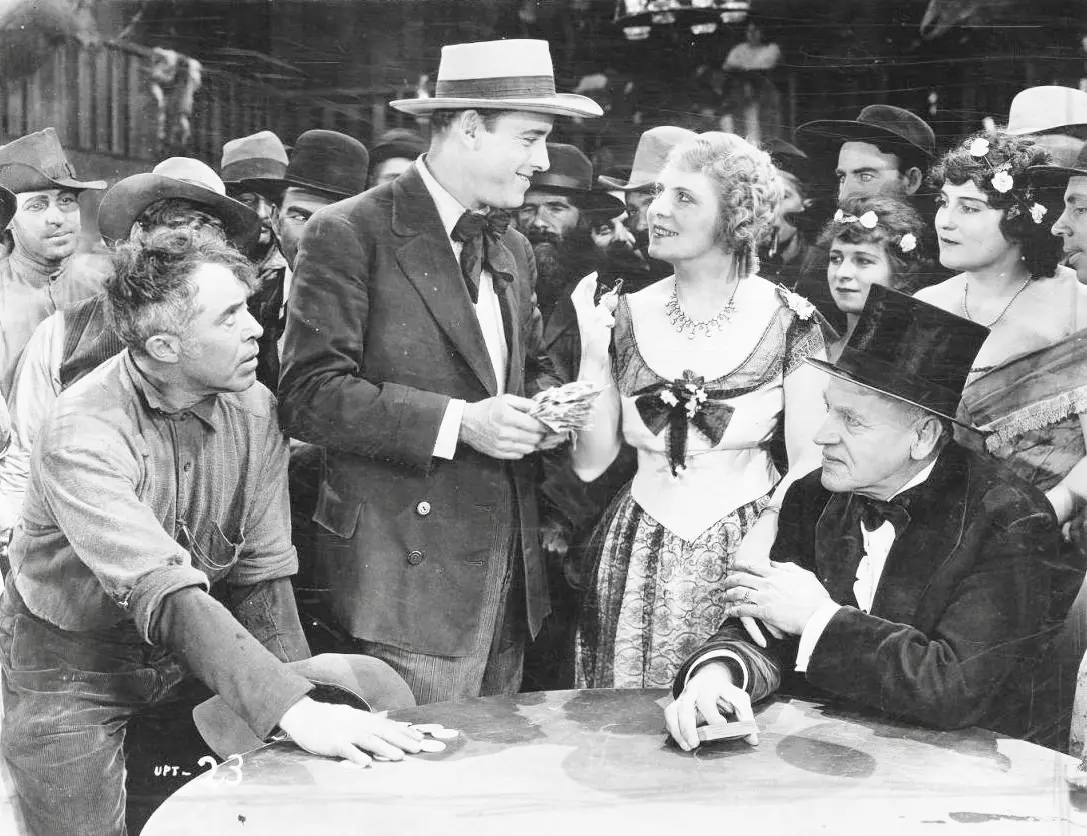
Enter 'Beauty' Stanton, magnificently portrayed by Kathlyn Williams. Beauty is not your typical damsel in distress; she's a dance hall mistress, a woman of the world, hardened by life but possessing a surprising depth of character. Her introduction offers a fascinating counterpoint to Allie's innocence. Beauty represents a different facet of frontier womanhood, one often overlooked but undeniably vital. She's a survivor, a pragmatist, yet beneath her tough exterior lies a heart capable of profound love and sacrifice. Her unrequited affection for Neale, a quiet undercurrent throughout her scenes, adds a layer of tragic romance to her character, reminiscent of the complex female leads found in films like The Foolish Virgin or The Sultana.
Beauty's discovery that Durade is holding Allie captive in his own dance hall sets the stage for her heroic intervention. This isn't a passive role; it's an active, dangerous pursuit of justice and compassion. Her rescue of Allie is a pivotal moment, not just for the plot, but for the thematic development of the film. It highlights the idea that heroism can emerge from unexpected places, from individuals who might not fit society's conventional molds. Williams imbues Beauty with a fierce determination, making her actions believable and deeply moving.
The dynamic between Beauty, Allie, and Neale is handled with surprising nuance for a film of its era. There's no petty jealousy or catfighting; instead, there's a shared understanding, an acknowledgment of the dire circumstances that bind them. Beauty's selfless act of bringing Allie back to Neale underscores her true nature, transcending her profession and revealing a nobility of spirit that is truly captivating. It speaks to a broader theme of redemption and the power of love, even unrequited love, to inspire great deeds.
The Climactic Confrontation and Enduring Legacy
Durade, fueled by a thirst for revenge, gathers his gang and descends upon Beauty's establishment, setting the stage for the film's explosive climax. The ensuing battle is a classic Western showdown, a chaotic ballet of violence and desperation. The film doesn't shy away from the brutality, depicting the consequences of unchecked greed and vengeance. In this climactic melee, both Durade and Beauty are mortally wounded. The poetic justice of Durade's demise is contrasted with the tragic beauty of Beauty's sacrifice.
Scene from The U.P. Trail
Cinematic perspective: Exploring the visual vocabulary of The U.P. Trail (1920) through its definitive frames.
Beauty's dying moments are perhaps the most poignant of the entire film. With her last breaths, she offers her blessing to Neale and Allie, a final act of profound generosity and love. It's a powerful scene that elevates her character from a mere plot device to a truly heroic figure, someone whose sacrifice paves the way for the happiness of others. This theme of selfless sacrifice for a greater good or for the beloved is a recurring motif in cinematic history, seen in everything from The Eagle's Wings to modern dramas. Her blessing is not just a release, but an empowerment, urging them to continue their journey, both personally and in their contribution to the grander scheme of the U.P. Trail.
The film concludes with Neale and Allie setting out together, not just as lovers, but as partners in the monumental task of completing the railroad. This ending is deeply satisfying, offering a sense of hope and purpose amidst the preceding turmoil. It emphasizes that the building of the nation, much like the building of a relationship, requires resilience, collaboration, and an unwavering vision. The railroad, in this context, becomes more than just a physical structure; it's a symbol of progress, connection, and the enduring human spirit.
A Timeless Western Narrative
The enduring appeal of The U.P. Trail lies in its ability to blend grand historical ambition with intimate human drama. Writers William H. Clifford and Zane Grey crafted a narrative that is both epic in scope and deeply personal in its emotional core. The performances, particularly from Roy Stewart, Marguerite De La Motte, and Kathlyn Williams, are remarkably expressive, conveying a wealth of emotion without uttering a single word. Even supporting roles, like Joseph J. Dowling and Charles Murphy, contribute to the rich tapestry of frontier life.
The film's exploration of themes like survival, love, loss, and redemption places it firmly within the pantheon of classic Westerns. It showcases the harsh realities of the frontier – the constant threat of violence, the isolation, the sheer physical toil – but also celebrates the resilience, courage, and unexpected kindness that blossomed in such unforgiving conditions. Comparing it to contemporary films like The Avalanche or The Money Master, one can appreciate its unique blend of action, romance, and moral complexity.
In an era dominated by rapid technological change and shifting societal norms, The U.P. Trail stands as a powerful reminder of the foundational myths of America. It speaks to the relentless drive to build, to connect, and to find love and purpose against all odds. It's a film that deserves to be rediscovered, not just for its historical significance, but for its timeless portrayal of the human spirit confronting the vast, challenging canvas of the American West. So, if you're looking for a dose of classic storytelling, with heroes and villains, sacrifice and triumph, all set against the breathtaking backdrop of a nation in the making, then this cinematic gem is an absolute must-watch. It's a journey worth taking, a trail worth following.