DbcultAccessing Vault...
Cult Review
Senior Film Conservator
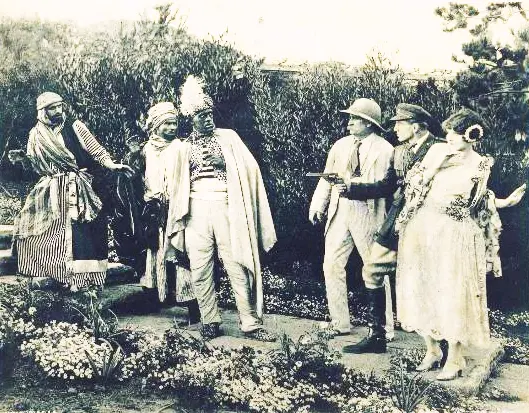
In the pantheon of silent cinema, few locales evoke as much rugged mystique as the Khyber Pass, a narrow aperture through which the British Empire’s anxieties and aspirations were perpetually filtered. The White Panther (1924), directed with a surprisingly kinetic sensibility, is more than a mere adventure serial; it is a fascinating, if occasionally uncomfortable, artifact of its time. It captures a world where the boundary between the 'civilized' and the 'savage' is as thin as the edge of a scimitar, and where the concept of honor is a currency traded in blood.
The film opens with a lush, almost pastoral depiction of the Persian hillsmen, yet this tranquility is merely a prelude to the storm. Yasmiri, portrayed with a haunting vulnerability that rivals the performances seen in A Daughter of the West, finds herself ensnared in an emotional labyrinth. Her love for Tommy Farrell is not merely a romantic subplot; it is a transgressive act that threatens the equilibrium of her father’s chieftaincy. Unlike the whimsical escapism found in Aladdin and the Wonderful Lamp, the 'Orientalism' here is grounded in a gritty, sweat-stained reality.
Tommy Farrell, played by Stanley Bigham, represents the precariousness of the British officer class. He is a man caught between the rigid protocols of the Governor’s mansion and the raw, unbridled passions of the frontier. When he 'dishonors' Yasmiri—a term the film leaves provocatively ambiguous—he sets in motion a cycle of violence that mirrors the tragic inevitability of The Sport of the Gods. The hillsmen, led by a cast that includes a young, menacingly effective Boris Karloff, are not depicted as mindless villains but as a collective entity driven by a coherent, albeit brutal, moral code.
Enter Bruce Wainright, the 'White Panther'. Rex 'Snowy' Baker brings an athletic dynamism to the role that feels remarkably modern. Wainright is a proto-superhero, a man of two worlds who operates in the shadows to protect the victims of desert bandits. His presence in the film provides a necessary counterpoint to Farrell’s moral vacuity. While Farrell is the architect of chaos, Wainright is the restorer of order. The film’s handling of this dichotomy is sophisticated; it suggests that while the Empire may be flawed, individuals of character can still achieve a form of secular redemption.
The kidnapping of Irene, the Governor’s daughter, shifts the film into a higher gear of suspense. The planned sacrifice is a sequence of pure expressionist dread, reminiscent of the darker turns in Shattered. The cinematography utilizes the stark contrasts of the desert sun and deep cavernous shadows to create a visual language of impending doom. It is here that Wainright’s heroism is truly tested, as he holds back the 'angry natives'—a trope that, while dated, is executed with genuine tension and choreographic flair.
One cannot discuss 1920s cinema without acknowledging the burgeoning presence of Boris Karloff. Years before he would become the definitive face of Frankenstein’s monster, Karloff was honing his craft in roles like this. In The White Panther, he possesses a stillness that is more terrifying than any overt aggression. His performance adds a layer of gravitas to the tribal council scenes, elevating them above the standard melodrama of the era. He provides a sense of interiority to the antagonists that was often missing in contemporary works like Cyclone Smith Plays Trumps.
Jack Natteford’s screenplay is a masterclass in structural pacing. He manages to balance the intimate tragedy of Yasmiri with the macro-political stakes of the British garrison. The film avoids the sluggishness often associated with 1920s dramas, such as the occasionally meandering The Exiles. Instead, it maintains a relentless forward momentum. The climax, featuring the arrival of the cavalry, is a quintessential piece of silent-era spectacle. The editing during the standoff is sharp, cutting between the desperate defenders and the approaching dust clouds of the British horsemen.
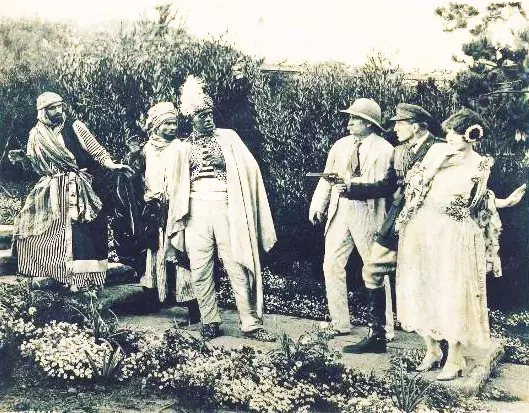
The visual storytelling is complemented by a production design that makes the most of its locations. The Khyber Pass is rendered not just as a setting, but as a character in its own right—indifferent, ancient, and lethal. This environmental storytelling is a far cry from the domestic confines of Where Is My Wife? or the whimsical sets of The Handy Man. There is a weight to the world-building here that feels earned.
When comparing The White Panther to other films of the period, its unique flavor becomes even more apparent. While A Child of Mystery relies on gothic tropes, The White Panther leans into a rugged naturalism. It shares some of the thematic DNA regarding lost assets and moral bankruptcy found in Hoarded Assets, yet it transposes these themes onto a much grander, more exotic stage. Even the visceral intensity of From Dusk to Dawn feels somewhat contained when placed alongside the sprawling vistas of the Persian hills.
Furthermore, the film’s depiction of military life and the 'great game' of colonial chess offers a fascinating counterpoint to the documentary-style realism of Kitchener's Great Army in the Battle of the Somme. Where the latter provides a sobering look at modern warfare, The White Panther romanticizes the skirmishes of the frontier, turning them into a crucible for character and courage.
The resolution of the film is bittersweet, avoiding the sanitized 'happy ending' common in films like A Perfect 36. Tommy Farrell’s death in a feud is a necessary narrative purging; he is a character who cannot coexist with the new order established by Wainright. His demise is a stark reminder of the cost of colonial arrogance. The subsequent marriage of Irene and Wainright is less a romantic triumph and more a symbolic union of the Empire's best qualities—duty and strength.
However, the true heart of the film remains with Yasmiri. Her fate is a poignant echo of the themes found in Oltre l'amore—a love that transcends boundaries only to be crushed by them. The film does not shy away from the tragedy of her position, caught between a culture that demands her silence and a lover who fails her. This emotional depth elevates the movie from a standard B-picture to a work of significant artistic merit.
As we look back at The White Panther from the 21st century, it stands as a testament to the ambition of early 20th-century filmmakers. They were not content with small stories; they wanted to capture the world in all its messy, violent, and beautiful complexity. While some might find the 'white savior' narrative problematic, the film’s focus on the consequences of individual actions and the inescapable weight of tradition provides a layer of complexity that is often overlooked. It possesses a certain 'bohemian' spirit of rebellion against the status quo, much like Az utolsó bohém.
In conclusion, The White Panther is a vital piece of cinema history. It offers a rare glimpse into the early career of Boris Karloff and showcases the incredible physical prowess of Rex 'Snowy' Baker. Its blend of high-stakes action and intimate human drama ensures that it remains a compelling watch even a century after its release. For those willing to look past the technical limitations of 1924, there is a rich, evocative world waiting to be rediscovered in the shadows of the Khyber Pass.
Critic's Note: The restoration of this film is a priority for silent film enthusiasts. The interplay of light and shadow in the final act is a masterclass in visual tension that prefigures the noir aesthetics of the 1940s.
IMDb 5.3
1926
Community
Log in to comment.