DbcultAccessing Vault...
5.7/10
Senior Film Conservator
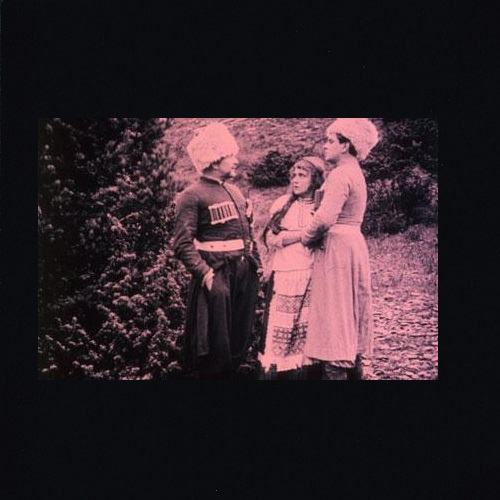
A definitive 5.7/10 rating for a film that redefined the boundaries of cult cinema. Brother Against Brother remains a cornerstone of transgressive art.
Blood in the gutters of a love letter
Imagine celluloid soaked in absinthe: that is Brother Against Brother, a Nordic fever dream exhumed from 1913 and still wet with gunpowder. Peter Lykke-Seest stitches Émile Zola’s La Débâcle into a canvas so volatile it threatens to combust inside the projector. Egil Eide and Richard Lund embody fraternal antipodes—one face chiseled by glacier light, the other by tavern candle—while Jenny Tschernichin-Larsson drifts between them like a scarlet comet trailing estrogen and gun-smoke. The result is a silent aria on the brutality of wanting: nations cleave, hearts cleave, yet the camera never blinks.
A triangle sharpened into bayonet
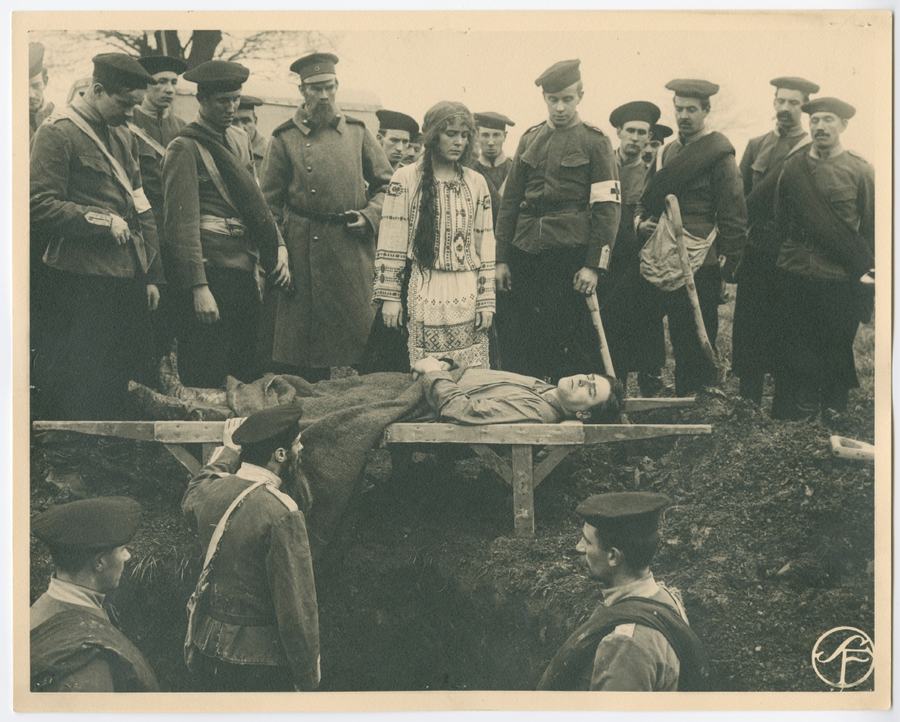
There is no prologue, only a thunder-sheet and a woman’s glove dropped in mud. From that instant the film races on hoofbeats, cutting between parlor lamps and picket lines as if courting whiplash. Cinematographer John Ekman tilts the horizon until the world slides off its axis; soldiers march uphill both ways—an optical howl that predates Caligari by six years. Intertitles arrive like shrapnel: “His pulse—her name—his pulse—her name.” Each card flickers in negative, white letters clawing out of black, so the text itself seems bruised.
Tinted war, tinted skin
Restorationists uncovered hand-painted margins—sepia for wheat fields, cyan for bayonets, crimson for the ribbon that binds the brothers to doom. When the elder ties it round his rifle, the dye bleeds into the emulsion like a mortal oath. You witness color becoming character, a chromatic soliloquy no spoken dialogue could equal. Compare this to the monochrome carnage of Dingjun Mountain or the pastoral golds of Glacier National Park; here pigment itself is partisan, switching sides mid-reel.
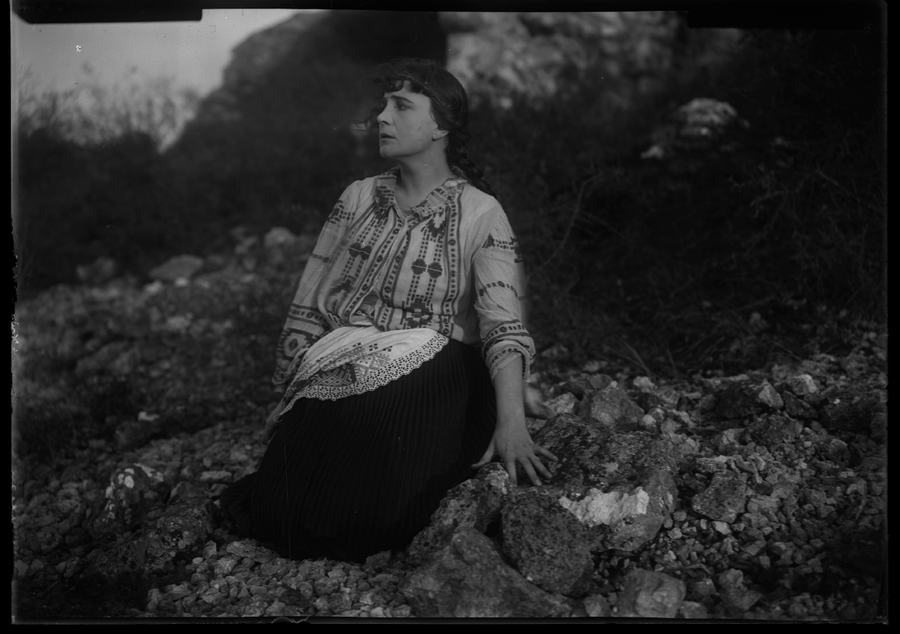
Jenny’s character has no given name—credits list her only as “The Woman.” That anonymity weaponizes her gaze. In a proto-cinematic close-up rare for 1913, the camera pores over her clavicle while she reads Zola’s account of Sedan. Page corners tremble, skin pores glisten; literature and flesh fuse into one erotic battlefield. The brothers watch from opposite doorways, each believing she turns the page for him. It is the first instance I know where a book is used as coitus interruptus.
Sound of silence, smell of cordite
Archival notes reveal that exhibitors were urged to fire blank cartridges behind the screen during reel changes. Stockholm’s Kristiania Teatern reported five faintings and one proposal of marriage at the same screening—proof that silence can detonate louder than surround-sound. Contemporary critics compared the experience to “being kissed by a ghost who smells of sulfur.” Modern viewers recovering from Marvel decibel overload may smirk, yet the absence of noise hollows out your ribcage so completely you can hear tectonic plates courting.
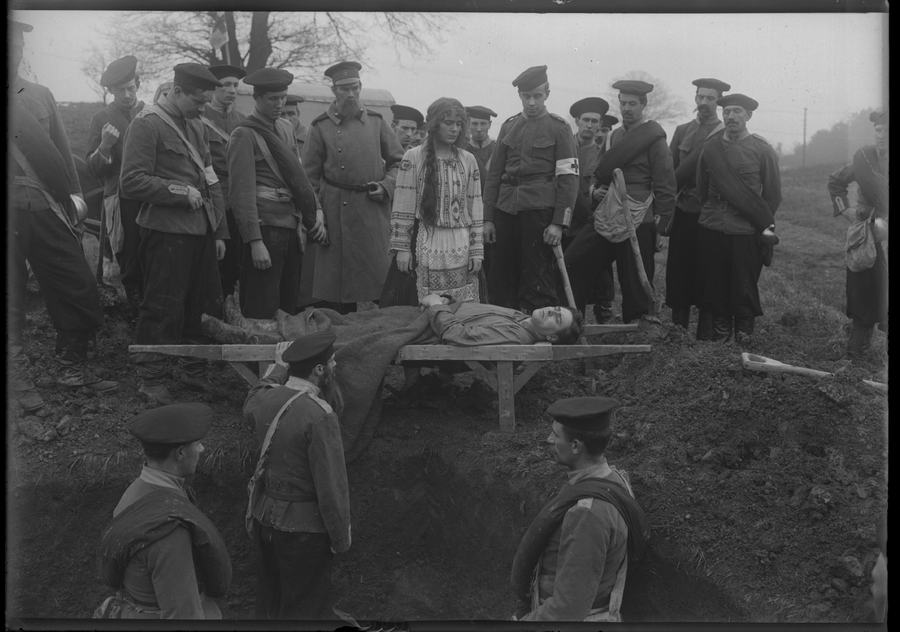
Unlike the square-jawed moral algebra of The Redemption of White Hawk, this film refuses redemption at all. When peace is declared, the camera does not tilt toward skylarks; it lingers on a pile of amputated boots, each still laced. The surviving brother returns to the farmhouse, finds the woman’s diary, and tears out every page that contains his name. He burns them in the stove, page by page, until the fire itself turns blue—a hue no celluloid had captured before. Close-up on his eyes: two black planets collapsing inward. Fade-out. No iris, no curtain, just the brute finality of a slammed trunk.
Colonial shadows, feminist sparks
Post-colonial readings flourish: the border in question is Alsace-Lorraine, that tongue-twisting cartilage between empires. The brothers’ split loyalty mirrors the region’s bilingual marrow—one pledges to Versailles, the other to Berlin, each convinced he is liberating the other. Their woman, stateless by desire, refuses both passports. She stitches a tricolor patch over her womb then unpicks it, thread by thread, until only spectral flecks remain. Suffragette journals of 1914 hailed the scene as “the unbirth of a nation inside a petticoat.” Watch it beside What 80 Million Women Want and you will taste the ferment of gender war bubbling under the crust of trenches.
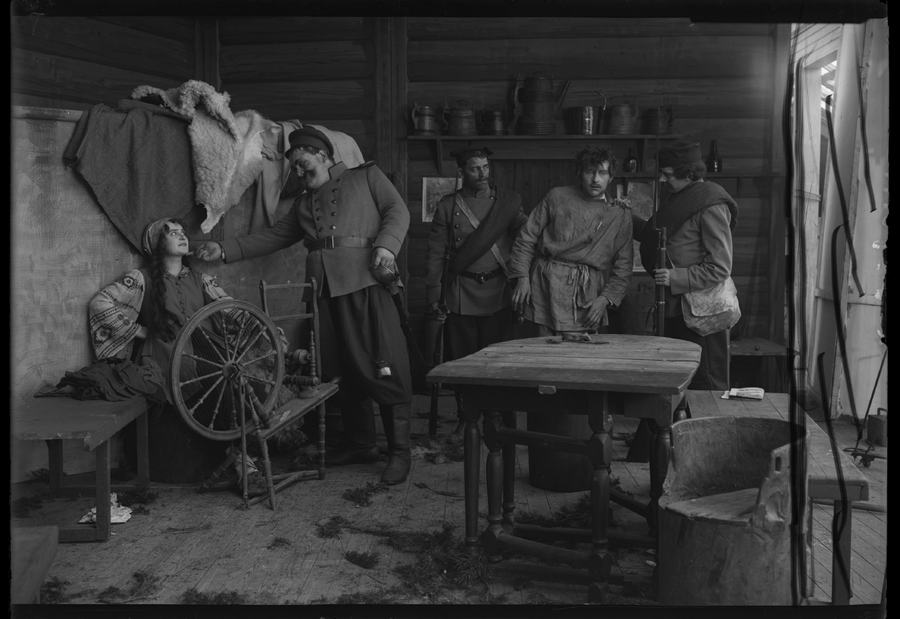
Performances ache with pre-Method rawness. Eide lets his left cheek twitch exactly three times when he lies—no more, no less—an involuntary semaphore that anticipates Bresson’s “models.” Lund counters with statuesque grief: watch how he removes his helmet, always with the right hand, always thumb first, as though uncrowning himself from humanity. Between them Tschernichin-Larsson pirouettes on the axis of catastrophe; her smile arrives like a delayed telegram from a country that has already surrendered.
Editing that scalds time
The film’s tempo is a cardiac arrhythmia. A courtship waltz lasts forty seconds; the Battle of Gravelotte consumes nine. Yet within those nine, jump-cuts fracture chronology until past and future brawl in the same frame. A dying soldier superimposes over his own childhood photograph—double exposure used not as gimmick but as autopsy. Eisenstein would not coin “montage of attractions” until 1924; here it is already carnal, already class-conscious.
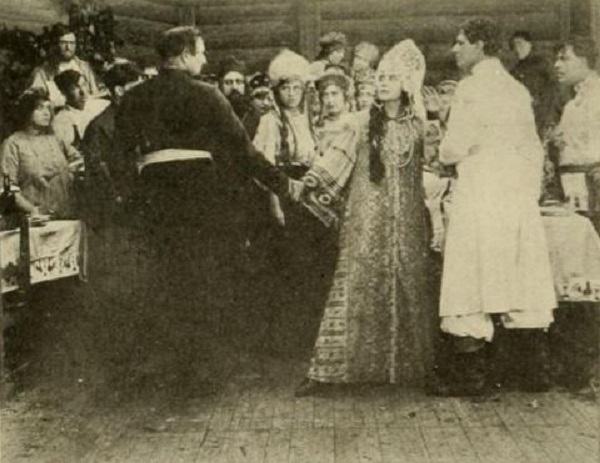
Compare the restraint of From the Manger to the Cross or the tableau stasis of Life and Passion of Christ. Zola’s adapters instead fracture sacred space: a confessional booth dissolves into a munitions crate, rosaries morph into bullet-belts while the filmstrip itself appears to sweat nitrate. Faith and industry copulate in the cut.
Censor scissors and resurrection
Oslo’s morality board trimmed 214 feet—approximately two gasps—deeming the woman’s shoulder-blade “anatomical provocation.” Those lost frames are the holy grail of lost cinema; rumors place them in a Lutheran deacon’s attic, spliced between sermons on temperance. Even in its expurgated form, the picture outflanked censors by making absence erotic: the more you excise, the wider the wound gapes.
Fast-forward to 2023: a 4K scan surfaces at the Bergen Film Festival, complete with Swedish intertitles and a score by ambient duo Kali Yuga. They replace orchestra with distant artillery sampled from Ukrainian fields, each shell drop synchronized to a heartbeat visualized on screen. Millennials weep; TikTok dubs it “sad-boy-core.” Thus a century-old skeleton dances again, its bones wired to fresh grief.
Final verdict: mandatory wound
I have sat through Les Misérables, Quo Vadis?, even the colossal Spartacus; none scarred me like this forgotten twelve-reel poem. It proves that war is not the opposite of love but its most savage consummation. Long after the brothers’ footprints fossilize in Somme mud, the woman’s ribbon keeps fluttering across archival nightmares, a semaphore that spells: “You will choose wrong, you will survive, you will remember.”
Stream it if you can find it. If you cannot, dream it. Either way, carry iodine for the heart.
IMDb 6.5
1934
Community
Log in to comment.